
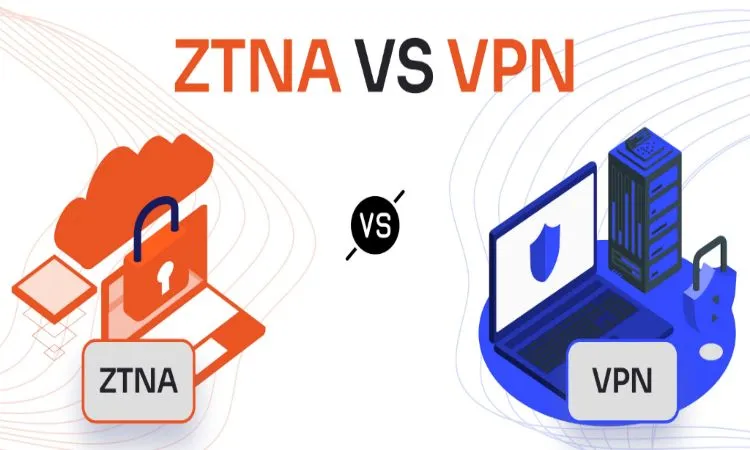
ZTNA vs VPN: Choosing the Right Secure Access for Your Enterprise
Digital transformation and remote work have taken the world by storm, and as more organisations adapt to that, they require secure access to enterprise applications and data. Virtual Private Networks (VPNs) have been commonly used to get remote connectivity for some time now. However, with the evolution of hybrid and cloud native environments, Zero Trust Network Access (ZTNA) is a more modern solution in which you can gain access in a way that is more secure, scalable, and flexible.
Understanding VPNs: The Traditional Method
VPNs provide an encrypted tunnel from the endpoint (user device) to the corporate network, allowing remote workers access to internal applications and resources, as if they’re connected to the company’s local network.
Its advantages include:
- Quick deployment for secure access.
- Encrypted and end-to-end communication.
- Suitable for legacy applications hosted on an on-premise network.
Some disadvantages of VPNs are:
- Wide network/tunnel access increases risk if credentials are compromised.
- Performance issues occur when large numbers of employees connect at once.
- VPNs are not well configured for cloud-native applications spanning across multiple environments.
What is Zero Trust Network Access?
ZTNA, or Zero Trust Network Access, is based on the premise of “never trust, always verify”. ZTNA does not give broad user privileges over a network and verifies each connection request individually, based on identity, device posture, and context. Users are given access to only the specific applications or resources that they need to do their job.
ZTNA has several benefits:
- Application-level access and not full network access
- Robust encryption from identity checks, physical device checks, and review
- Reduced the attack surface, allowing applications to be hidden from unauthorised users
- Low friction, as ZTNA is easy to use in hybrid environments and deployed in cloud environments.
Though ZTNA offers many benefits, there are some drawbacks:
- Implementing it can be challenging, especially in legacy companies that have trusted internal network
- Restrictive and rigid access can affect productivity and hamper user experience
- Security risks, as it doesn’t inherently inspect or prevent malicious applications
ZTNA vs VPN: Key Differences
The key differences for ZTNA vs VPN are as follows:
| Feature | VPN | ZTNA |
| Access Model | Full network-level access | Granular, application-level access |
| Security | Encrypted, but broad exposure | Identity and context-driven security |
| Scalability | Limited with high user volumes | Scales easily across hybrid environments |
| Cloud Readiness | Not optimised for cloud apps | Designed for cloud and SaaS integration |
| Attack Surface | Larger due to broad permissions | Reduced by hiding non-relevant resources |
Benefits Organisations Get with ZTNA vs. VPN
Strengthened Security Posture: ZTNA reduces the risks associated with compromised credentials, insider threats, and lateral movement in networks.
Support for Hybrid and Cloud Models: As applications migrate to SaaS multi-cloud environments, ZTNA protects access without backhauling traffic through central VPN gateways.
Better Customer Experience: ZTNA provides fast, direct-to-application connections that help enhance productivity for remote workers.
Regulatory Compliance: ZTNA strengthens cyber security services with precise access controls and comprehensive audit trails, ensuring organisations can stay on top of data compliance obligations.
Choosing the Right Partner for ZTNA
ZTNA solutions provide flexible and scalable architectures for secure access and work seamlessly with hybrid IT infrastructures. These make them ideal for organisations with global user populations, but only if companies choose the right provider, like Tata Communications.
Some key features to look for in a ZTNA solution provider are:
- Identity-driven Access verification.
- Integration within Secure Access Service Edge (SASE) architectural frameworks.
- Global network reach and low latency.
- Centralised visibility and policy enforcement for IT teams.
By merging ZTNA with its broader SASE offerings, companies can get rid of traditional VPNs and swap them for next-gen secure access that will fulfil their objectives to serve a distributed workforce today.


Leave a Reply