
How Modern Software Organizations Actually Work (And Why Org Charts Lie)
If you’ve ever looked at a software company’s org chart and thought, “That explains nothing,” you’re not wrong.
On paper, everything looks tidy. Product here. Engineering there. QA somewhere near the bottom. DevOps floating off to the side. In reality, modern software organizations don’t work vertically.
They work through constant negotiation, collaboration, and trade-offs. And the companies that understand this build faster, scale more predictably, and break less often.
So how do modern software organizations actually work? Let’s peel back the layers.
Org Charts Are Comforting. Reality Is Messy.
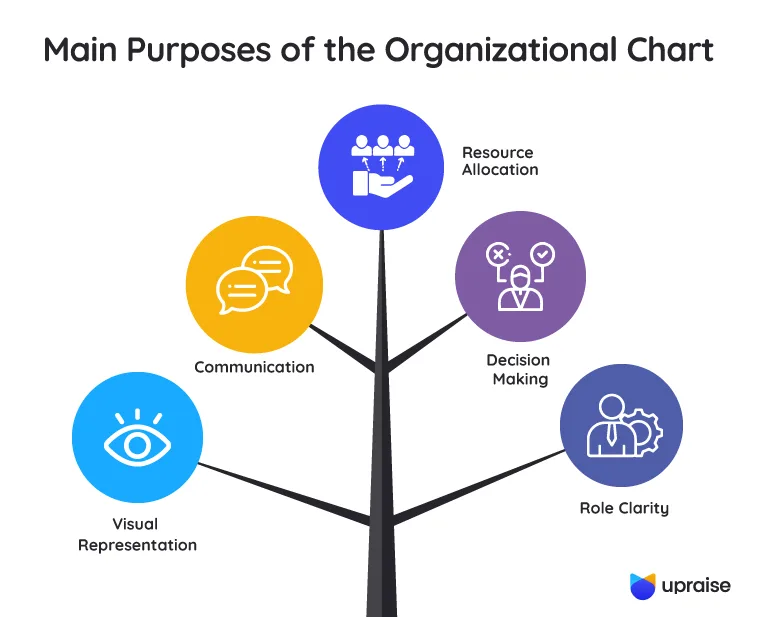
Org charts exist to make leadership feel in control. They show reporting lines, titles, and headcount distribution. What they don’t show is how work truly flows.
Software delivery doesn’t respect hierarchy. It respects dependencies.
A feature doesn’t move because someone is a “Head of X.” It moves because product decisions are clear, engineers understand the problem, QA knows what “done” means, and operations can ship safely. When any one of those breaks down, delivery slows, no matter how pretty the org chart looks.
This is why many companies with identical org charts perform wildly differently.
Product Teams: The Real Starting Point
Every modern software organization begins, not with code, but with product clarity.
Strong product teams define why something should exist before anyone touches a keyboard. They balance customer needs, business constraints, and technical feasibility. When product leadership is weak, engineering ends up guessing. And guessing is expensive.
In high-performing organizations, product managers don’t just write tickets. They:
- Set clear priorities
- Say “no” more often than “yes”
- Protect teams from noise and last-minute pivots
If you’ve ever seen a team rewrite the same feature three times in six months, chances are the problem wasn’t technical.
The Dedicated Development Team: Where Execution Actually Happens
This is where most people assume the story begins. It doesn’t, but it does converge here.
A dedicated development team is typically the core execution engine of the organization. These are the engineers who live with the codebase, understand its history, and carry the long-term responsibility for quality and maintainability.
What makes modern development teams effective isn’t raw talent alone. It’s:
- Stable team composition
- Clear ownership
- Tight feedback loops with product
- Enough autonomy to make technical decisions without escalation theater
Teams that constantly rotate people in and out struggle to build momentum. Teams that are shielded from context struggle to make good decisions. The best organizations treat their development teams as long-term assets, not interchangeable resources.
And yes, many companies augment their internal structure with a dedicated development team model precisely because stability matters more than location or employment contract.
What the last decade really changed is the assumption that your team needs to sit in the same building, or even the same country. Many organizations now operate with engineers who are fully embedded in their workflows but based elsewhere.
For a growing number of companies, this means they can hire a dedicated development team (read more) that functions as a long-term extension of their organization rather than a short-term vendor arrangement.
The appeal is simple: access to experienced engineers, predictable capacity, and the ability to scale without rebuilding the team every six months.
QA Isn’t a Phase. It’s a Mindset.
In older models, QA lived at the end of the pipeline. Code went in, bugs came out, fingers were pointed.
Modern organizations know better.
Quality assurance now starts at design. It’s baked into acceptance criteria, automated testing, and deployment pipelines. QA specialists work with developers, not against them. They challenge assumptions early, not just outcomes late.
When QA is treated as a separate gatekeeping department, releases slow down. When QA is treated as a shared responsibility, confidence goes up, and so does speed.
If you’ve ever attended a post-mortem after a production incident, you already know this.
DevOps and Platform Teams: The Quiet Force Multipliers
DevOps teams don’t usually get applause. They get alerts.
And yet, they often determine whether a company can scale without collapsing under its own complexity.
Modern DevOps and platform teams focus on:
- Deployment reliability
- Infrastructure as code
- Observability and monitoring
- Security by default, not by exception
The best ones don’t act as ticket-processing centers. They enable product and development teams to ship safely and independently. When DevOps becomes a bottleneck, it’s often because the organization treated it as a service desk instead of a platform.
This shift, from “we deploy for you” to “we build systems so you can deploy yourself”, is one of the biggest markers of maturity.
UX and Design: No Longer a Polishing Step
Design used to be what happened after engineering finished. Today, that mindset is a competitive disadvantage.
UX and design teams now influence:
- Problem framing
- Feature prioritization
- Technical decisions (yes, really)
Designers sit in discovery sessions, not just handoff meetings. They validate assumptions before a sprint ever starts. When they’re excluded, teams end up solving the wrong problem efficiently, which is still failure.
Modern software organizations don’t ask, “Does this look good?”
They ask, “Does this actually help the user?”
Security and Compliance: Pulled Forward, Not Bolted On
Security used to arrive late, usually in the form of bad news.
That doesn’t work anymore.
With stricter regulations, growing attack surfaces, and real financial consequences, security teams are now embedded much earlier. They work with engineering on threat modeling, data handling, and access control from day one.
The shift toward DevSecOps isn’t a trend. It’s a necessity. And organizations that still treat security as an audit event rather than an engineering concern tend to learn the hard way.
Why the Best Organizations Feel “Boring” From the Inside
Here’s an unpopular opinion:
The healthiest software organizations don’t feel exciting day-to-day.
They feel calm.
Releases happen regularly. Incidents are rare. Decisions are documented. Teams know what they own. Meetings are shorter. Firefighting is the exception, not the norm.
That calm is the result of intentional structure, not luck.
It comes from aligning product, engineering, QA, DevOps, and design around shared goals, rather than forcing them into rigid boxes on an org chart.
The Real Lesson Leaders Miss
Executives often ask, “What team structure should we use?”
That’s the wrong question.
The better one is:
“How do we enable teams to collaborate without friction?”
Once you answer that, the structure tends to reveal itself, sometimes with in-house teams, sometimes with a dedicated development team model, often with a mix of both.
Modern software organizations succeed not because they follow a template, but because they understand how work truly gets done.
And that understanding never fits neatly into a box.


Leave a Reply