
How to Use an LMS for Business Growth?
In today’s digital-first world, businesses are constantly looking for smarter ways to scale, train teams, and engage customers. One powerful yet often underutilized tool is a Learning Management System (LMS). Whether you’re a small business owner, a startup founder, or managing a growing enterprise, an LMS can become a key driver of sustainable business growth when used strategically.
Let’s explore how you can effectively use an LMS to expand your business, improve efficiency, and unlock new revenue streams.
What Is an LMS and Why Does It Matter?
A Learning Management System (LMS) is a software platform that allows you to create, manage, deliver, and track educational content. Traditionally used in academic settings, LMS platforms are now widely adopted by businesses for employee training, customer education, and even selling online courses.
The real value of an LMS lies in its scalability. Instead of repeating the same training sessions or onboarding processes manually, you can automate and standardize everything, saving time and reducing costs.
Streamline Employee Training and Onboarding
One of the most immediate benefits of using an LMS is improving employee training. As your business grows, onboarding new hires and upskilling your team becomes more complex and time-consuming.
With an LMS, you can:
- Create structured onboarding programs
- Provide consistent training materials
- Track employee progress and performance
- Reduce dependency on in-person training sessions
This ensures every employee receives the same quality of training, regardless of location. Over time, it leads to a more skilled workforce, improved productivity, and fewer operational errors.
Turn Knowledge into Revenue
An LMS is not just a training tool, it can also be a revenue-generating asset. Businesses can package their expertise into online courses and sell them to a global audience.
For example, if you run a digital marketing agency, you can create courses on SEO, social media marketing, or content strategy. Similarly, consultants, coaches, and service providers can monetize their knowledge effectively.
Using the best LMS for WordPress, you can seamlessly integrate course creation and eCommerce features into your existing website. This allows you to:
- Sell courses directly from your site
- Offer subscriptions or memberships
- Provide certifications and course completion badges
- Reach international audiences without geographical limitations
This approach transforms your business from a service-based model into a scalable digital product business.
Enhance Customer Education and Retention
Customer education is a powerful growth strategy. When customers understand how to use your product or service effectively, they are more likely to stay loyal and become advocates for your brand.
An LMS can help you:
- Create tutorials and product walkthroughs
- Offer onboarding courses for new customers
- Provide advanced training for power users
- Build a knowledge base in an organized format
This not only reduces the burden on your customer support team but also enhances user satisfaction. Educated customers are more confident, engaged, and likely to make repeat purchases.
Build a Global Learning Community
Modern LMS platforms allow you to go beyond simple course delivery and build a thriving online community. Features like discussion forums, live sessions, quizzes, and peer interactions make learning more engaging.
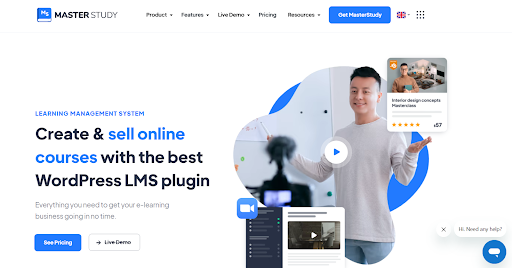
When you use a platform like MasterStudy WordPress LMS Plugin, you can:
- Create comprehensive online courses
- Easily sell your courses online
- Build an international community
This community aspect is crucial for long-term growth. It fosters trust, encourages user interaction, and creates a sense of belonging among your audience. Over time, your learners can become brand ambassadors who promote your business organically.
Automate Processes and Save Time
Automation is a key factor in scaling any business. An LMS helps you automate repetitive tasks such as:
- Course enrollment
- Progress tracking
- Certification issuance
- Email notifications
Instead of manually managing these processes, your LMS handles them efficiently in the background. This frees up your time to focus on strategy, marketing, and business development. Training providers who also need to automate participant invoicing and certificate issuance alongside course delivery often find that a dedicated system like EduAdmin covers those workflows more completely than a standard LMS.
Gain Insights Through Data and Analytics
One of the most powerful features of an LMS is its ability to provide detailed analytics. You can track:
- Course completion rates
- Learner engagement
- Assessment results
- User behavior patterns
These insights help you understand what works and what doesn’t. For instance, if a course has a high dropout rate, you can identify the problem areas and improve the content.
Data-driven decisions lead to better course quality, improved user experience, and ultimately, higher revenue.
Support Remote and Hybrid Work Models
As remote work becomes the norm, businesses need flexible training solutions. An LMS makes it easy to deliver training and learning experiences to employees and customers anywhere in the world.
This flexibility allows you to:
- Hire talent globally
- Train remote teams effectively
- Maintain consistent standards across locations
In a competitive business environment, this adaptability can give you a significant edge.
Strengthen Your Brand Authority
Offering high-quality courses and training programs positions your business as an authority in your industry. When people learn from you, they begin to trust your expertise.
Over time, this builds:
- Brand credibility
- Thought leadership
- Increased customer trust
An LMS enables you to showcase your knowledge in a structured and professional way, reinforcing your brand’s reputation.
Final Thoughts
Using an LMS for business growth is not just a trend, it’s a strategic move that can transform how you operate and scale. From employee training and customer education to creating new revenue streams, the possibilities are vast.
By leveraging tools like the best LMS for WordPress, businesses can easily create, manage, and monetize their learning content. Combined with platforms like MasterStudy WordPress LMS Plugin, you gain the ability to build courses, sell them globally, and foster a strong community around your brand.


Leave a Reply