
Streamlining Visual Content Creation with Modern AI Tools
In today’s fast-moving digital landscape, visual content has become a central part of how brands communicate, connect, and convert. Whether it’s social media graphics, product images, or marketing creatives, businesses and creators are constantly under pressure to produce high-quality visuals quickly and consistently. This growing demand has led to the rapid evolution of AI-powered image generation tools, which are transforming how visual content is created.
The Shift Toward AI-Driven Creativity
Traditionally, creating visual content required a combination of design skills, software expertise, and significant time investment. Designers would often move between multiple tools, refine concepts manually, and iterate repeatedly before reaching a final result. While this process still has its place, AI has introduced a new layer of efficiency. Modern workflows often incorporate a banner text generator to handle the precise alignment and scaling of copy across various digital dimensions without manual intervention.
AI image generation tools allow users to turn simple text prompts into detailed visuals within seconds. This shift has opened the door for non-designers to participate in the creative process while also helping experienced designers accelerate their workflows. From startups to large enterprises, teams are exploring how these tools can reduce production time without compromising creativity.
Key Use Cases Across Industries
The applications of AI-generated visuals are wide-ranging and continue to expand. Here are some of the most common and impactful use cases:
1. Marketing Creatives
Marketing teams often need a steady stream of visuals for campaigns, ads, and landing pages. AI tools can quickly generate multiple variations of an image, allowing marketers to test different styles, colors, and concepts without starting from scratch each time. This flexibility supports faster experimentation and more dynamic campaigns.
2. E-Commerce Product Images
For e-commerce businesses, product visuals play a critical role in influencing purchasing decisions. AI can help generate lifestyle images, background variations, and even entirely new product mockups. This is especially useful for small businesses that may not have access to professional photography resources.
3. Social Media Content
Social media thrives on fresh and engaging visuals. AI tools enable creators to produce eye-catching posts, story graphics, and thumbnails at scale. With the ability to quickly adapt content to different platforms, creators can maintain a consistent presence without overwhelming their resources.
4. Design Inspiration and Concept Development
Designers often use AI-generated images as a starting point for brainstorming and ideation. By experimenting with different prompts and styles, they can explore creative directions that might not have emerged through traditional methods. This can be particularly valuable in early-stage projects where flexibility is key.
5. Image-to-Image Transformations
Beyond generating images from text, many AI tools also support image-to-image workflows. This allows users to refine existing visuals, apply stylistic changes, or enhance image quality. Such capabilities are useful for tasks like rebranding, updating visuals, or adapting content for new campaigns.
Simplifying Workflows with Unified Platforms
One of the challenges in adopting AI tools is the fragmentation of available solutions. Different models and platforms often specialize in specific styles or functionalities, requiring users to switch between tools to achieve their desired results. This can slow down workflows and create inefficiencies. To mitigate these disruptions, organizations are increasingly prioritizing comprehensive AI business solutions that centralize creative and analytical tasks within a unified environment.
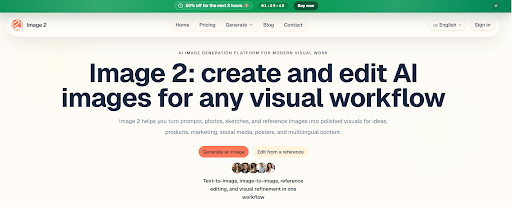
To address this, platforms like Image 2 are emerging as unified solutions that bring multiple image generation models together in one place. By offering access to a variety of tools within a single interface, Image 2 helps streamline the creative process. Users can experiment with different approaches, compare outputs, and refine their visuals without constantly switching platforms.
This kind of integration is particularly valuable for teams that need to manage high volumes of content. Instead of juggling multiple subscriptions or workflows, they can centralize their efforts and focus more on creativity and strategy.
Balancing Speed and Creativity
While AI tools offer significant speed advantages, it’s important to view them as complements to human creativity rather than replacements. The most effective use of AI comes from combining its capabilities with human insight.
For example, a marketer might use AI to generate initial concepts for a campaign, then refine the best options based on brand guidelines and audience preferences. Similarly, a designer might use AI-generated visuals as a foundation, adding custom elements and adjustments to achieve a polished final product.
This collaborative approach ensures that content remains authentic and aligned with a brand’s identity while benefiting from the efficiency of AI.
Considerations for Responsible Use
As with any technology, the use of AI in visual content creation comes with considerations. It’s important to ensure that generated content aligns with ethical standards and respects intellectual property. Users should also be mindful of maintaining originality and avoiding over-reliance on automated outputs.
Transparency can also play a role, especially in professional or commercial contexts. Being clear about how content is created can help build trust with audiences and stakeholders.
The Future of Visual Content Creation
The evolution of AI image generation is still in its early stages, and the technology continues to improve rapidly. As models become more sophisticated, we can expect even greater levels of detail, realism, and customization.
At the same time, the focus will likely shift toward integration and usability. Platforms that simplify workflows, support collaboration, and provide flexible tools will play a key role in shaping how teams adopt AI in their creative processes.
For creators, marketers, and businesses alike, the goal is not just to produce more content, but to create better content more efficiently. By leveraging tools like Image 2 alongside human creativity, it becomes possible to achieve both.
Final Thoughts
AI-powered image generation is changing the way visual content is created, making it more accessible, scalable, and efficient. From marketing campaigns to product visuals, the potential applications are vast and growing.
By embracing these tools thoughtfully and strategically, teams can enhance their creative workflows, reduce production bottlenecks, and focus on what matters most—delivering meaningful and engaging visual experiences.


Leave a Reply