
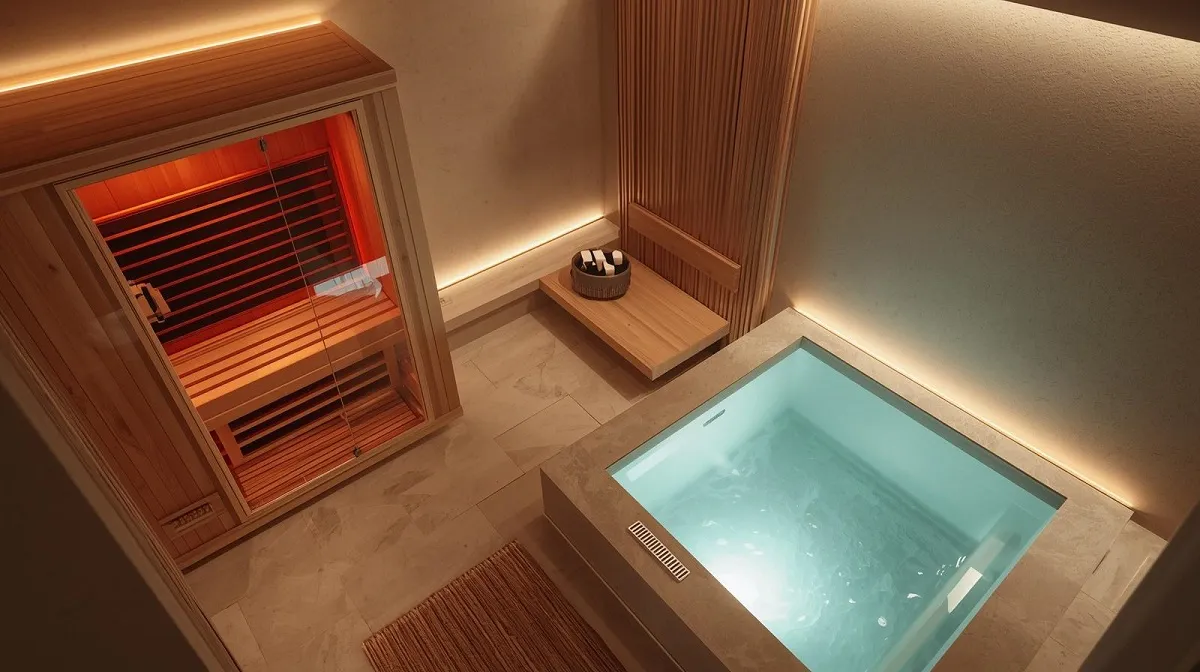
How Much Does a Wellness Room Addition Cost? Realistic Budget Breakdown
Key Takeaways:
- The structural shell of a wellness room addition runs $250–$600 per square footin 2026, meaning the room itself costs $40,000–$150,000 before any wellness features are installed.
- Labor eats 40–60% of your total budget— often $28,000–$42,000 on an average project — making contractor selection one of the highest-leverage decisions you’ll make.
- Wellness features vary wildly in cost: infrared saunas start around $5,000 installed, while custom steam rooms, cold plunges, and full spa buildouts can add $30,000–$50,000+ on top of the shell.
- Hidden costs— structural engineering, panel upgrades, moisture management, permit delays, and insurance adjustments — routinely add $5,000–$15,000 that most initial quotes don’t surface.
- A well-planned wellness addition can deliver genuine ROI both at resale (as a sought-after 2026 buyer amenity) and in personal savings, with a home sauna often paying for itself within 2–3 years compared to regular spa visits.
So you’ve been dreaming about it — a dedicated space in your home where you can actually decompress. A room built around you: maybe a sauna, some red light panels, a cold plunge, or just a quiet yoga corner with proper acoustics. Whatever your version of wellness looks like, you’ve probably started asking the same question everyone asks right before a big home project: How much is this actually going to cost me?
Good news: the answer is knowable. It just requires breaking it down layer by layer — because a wellness room addition isn’t one cost, it’s several stacked on top of each other. Let’s get into it.
What You’re Really Paying For: The Addition Itself
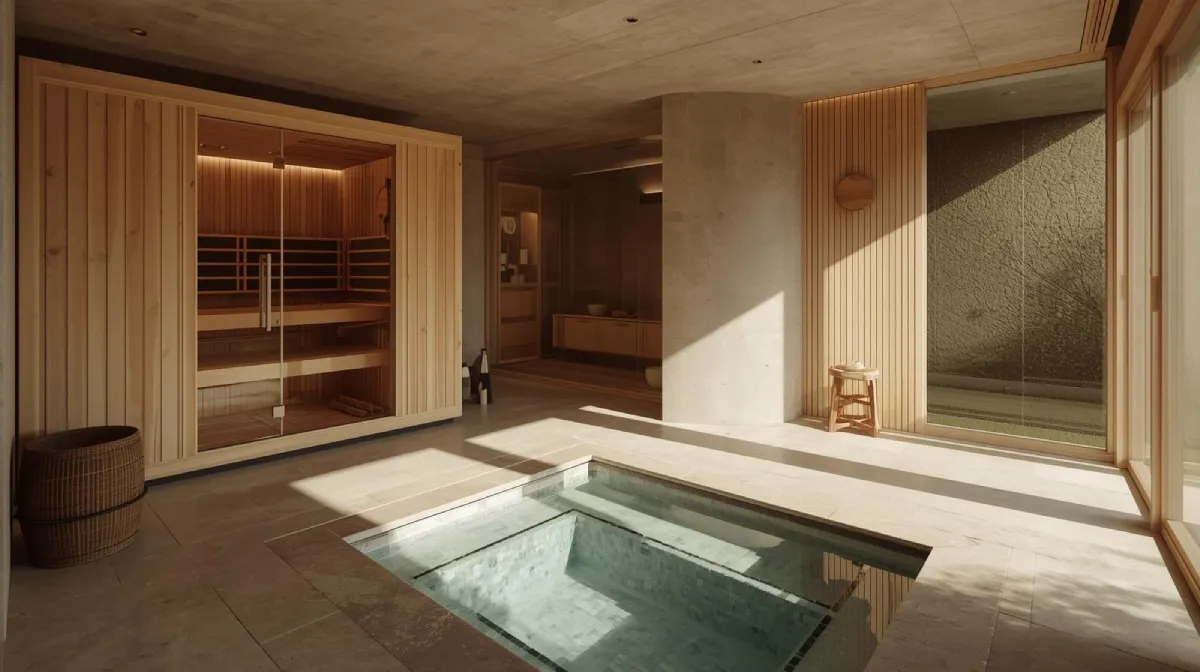
Before we even talk sauna heaters or infrared panels, there’s the foundational cost of adding square footage to your home — or converting an existing space into something purpose-built.
Here’s a 2026 data point that puts the baseline in perspective: according to Angi’s 2026 room addition cost guide, a standard room addition runs somewhere between $20,900 and $72,600, with the average landing around $48,000. Labor alone accounts for 40% to 60% of that total — meaning you could be writing checks between $28,000 and $42,000 just to the crew doing the physical work, before a single piece of wellness equipment gets installed.
That range is wide, and intentionally so. A bump-out addition off an existing bedroom runs dramatically cheaper than, say, a ground-up foundation build with a dedicated HVAC zone. What pushes costs toward the top end? Plumbing and electrical complexity. And wellness rooms — especially those with saunas, steam rooms, or hydrotherapy features — are almost always plumbing and electrical heavy.
The permits alone can run $150 to $2,000 depending on your municipality, and that’s before demolition, site prep, or inspections. These aren’t optional — skip them and you’re looking at resale problems down the line.
The honest takeaway: if you’re building a wellness room as a true addition (new footprint, new foundation), budget your shell at a minimum of $40,000 to $70,000 before any of the fun stuff goes in.
Per Square Foot: What the Numbers Actually Mean
The per-square-foot metric is how most contractors will quote you, so it’s worth understanding it deeply.
A second piece of 2026 data from Kukun’s Room Addition Cost Calculator breaks it down clearly: standard ground-level room additions cost between $250 and $600 per square foot in 2026, with simple bump-outs starting around $15,000 and full 400-square-foot primary suite additions typically landing between $120,000 and $200,000.
For a wellness room, you’re rarely working with a 400 sq. ft. primary suite footprint — but you’re also rarely getting away with a tiny bump-out. A functional wellness room typically needs 150 to 250 square feet to accommodate even modest features: room to stretch, a sauna footprint, and a recovery zone.
Plug in those numbers at Kukun’s range:
- 150 sq. ft. at $250/sq. ft.= $37,500
- 150 sq. ft. at $600/sq. ft.= $90,000
- 250 sq. ft. at $250/sq. ft.= $62,500
- 250 sq. ft. at $600/sq. ft.= $150,000
And that’s still just the room. The wellness features get layered on top.
The per-square-foot rate is heavily influenced by what goes into the walls, floor, and ceiling — not just the size. A wellness room with vapor barriers, specialty moisture-resistant drywall, radiant floor heating, and sound dampening panels is going to hit the higher end of that range. A simpler yoga-and-meditation room with luxury vinyl plank flooring and dimmable lighting sits much closer to the floor.
Layer Two: The Wellness Features Themselves
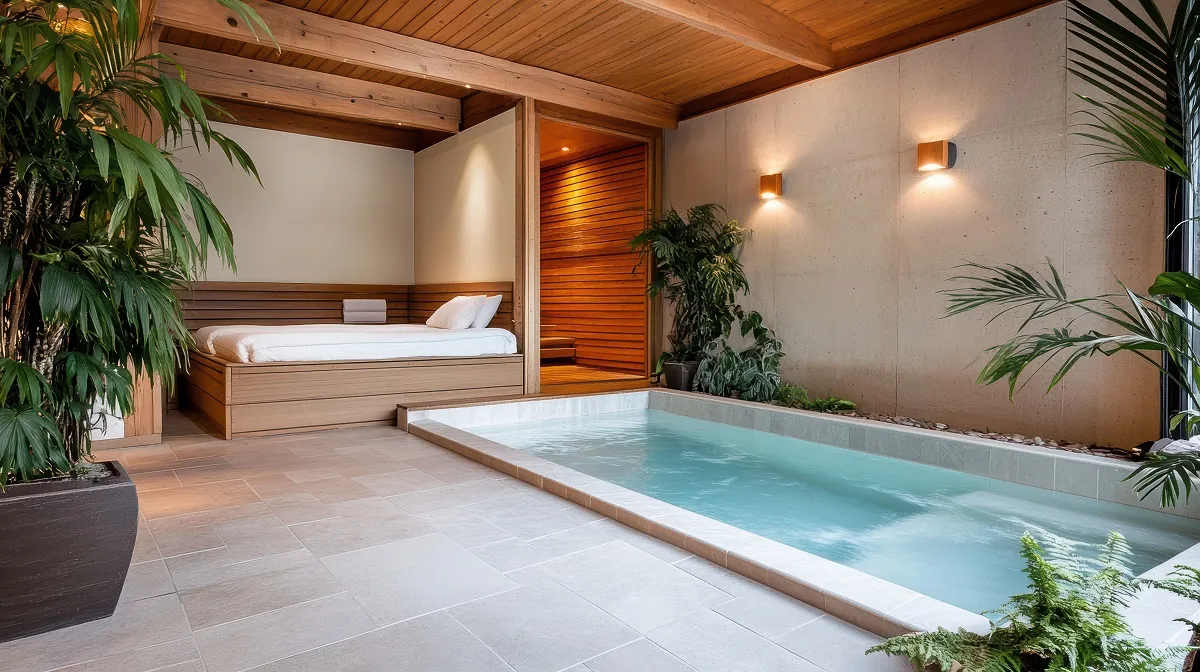
This is where the budget gets very personal very fast. Wellness rooms aren’t one-size-fits-all — and neither are their costs.
- Infrared Saunasare the most popular entry point. A fully installed indoor infrared unit runs between $5,000 and $15,000 in 2026, depending on size, manufacturer, and whether your electrical panel needs upgrading. Plug-and-play models at the lower end are genuinely good; custom-built cedar rooms with full-spectrum heaters climb quickly.
- Traditional Finnish or Steam Saunaspush higher — often $15,000 to $30,000+ once you factor in waterproofing, drainage infrastructure, and the generator required to produce steam. These aren’t projects you DIY and they’re not cheap, but they deliver an experience that prefab infrared units simply can’t match.
- Cold Plunge Tubshave exploded in popularity and range wildly: $3,000 for a basic chiller unit up to $15,000+ for a custom in-ground installation with dedicated plumbing.
- Red Light Therapy Panelsare comparatively affordable — $500 to $3,000 for quality panels — and don’t require any special infrastructure.
- Acoustic Treatments, Specialty Lighting, and Air Quality Systemsare often afterthoughts that become big line items. Good acoustic dampening for a yoga or meditation room can run $2,000 to $8,000. A dedicated HEPA/HVAC system for air quality — genuinely important in a sealed wellness room — adds another $2,000 to $6,000.
The Budget Tiers: What You Can Realistically Build at Each Level
Let’s put this all together into real-world tiers.
Entry Level: $40,000 – $65,000
This gets you a modest room addition (or a solid conversion of existing basement or garage space) with one primary wellness feature. Think: a well-built infrared sauna, quality flooring, proper ventilation, and dimmable lighting. It won’t be a spa, but it’ll be a legitimate retreat.
Mid-Range: $65,000 – $120,000
At this level you’re getting a purpose-built room with two or three features — an infrared sauna, a cold plunge, and a dedicated movement zone for yoga or stretching. The finishes are nicer, the acoustic treatment is real, and the electrical and HVAC work is done properly with room to expand.
Premium: $120,000 – $200,000+
This is a full wellness sanctuary. A custom traditional sauna, in-ground cold plunge, red light therapy, steam shower, radiant floor heat, premium air filtration, and architectural-grade finishes. If you’re in this bracket, you’re also likely looking at a more nuanced conversation — one that goes well beyond a single room type and into how a dedicated wellness addition compares against other high-end renovation choices.
For a deeper look at exactly those tradeoffs — including how a high-end wellness addition stacks up against a luxury bathroom remodel in terms of cost, ROI, and long-term value — this comparison of high-end wellness room additions vs. regular bathroom remodels is worth a thorough read before you finalize your scope.
Hidden Costs That Catch Homeowners Off Guard
No wellness room budget breakdown is complete without a frank conversation about the costs that rarely show up in the initial quote.
Structural Engineering
If you’re building an addition, you often need a structural engineer to sign off on load-bearing changes. Budget $500 to $2,000.
Permit Delays
Wellness rooms with saunas or steam rooms frequently trigger additional inspections. Timeline delays cost money indirectly: carrying costs, contractor rescheduling fees, and material price fluctuations.
Electrical Panel Upgrades
Traditional saunas and steam generators require 240V circuits. If your panel is already near capacity, an upgrade runs $1,500 to $3,500.
Moisture Management
Wellness rooms generate humidity. Improper vapor barriers and ventilation lead to mold — a problem that can cost far more to remediate than it would have cost to prevent. Don’t cut corners here.
Homeowner’s Insurance Adjustments
Adding square footage means your coverage needs to increase. It’s a smaller line item, but it’s ongoing, and your insurer should know before the project starts.
Is It Worth It?
That depends on how you define value — and the honest answer is more nuanced than a simple yes or no.
From a pure resale standpoint, wellness amenities are increasingly sought-after. The 2026 design landscape has clearly moved toward dedicated wellness spaces as desirable home features, not luxury novelties. Well-executed wellness rooms can return meaningful value at resale — particularly in markets where health-conscious buyers are paying premiums for move-in-ready lifestyle amenities.
From a personal-use standpoint, the math on avoiding spa memberships and pay-per-session wellness services adds up faster than most people expect. A home infrared sauna that costs $8,000 installed pays for itself in two to three years for someone who was previously spending $40–$60 per spa session weekly.
But here’s the real question: are you building the right kind of wellness room for your home and your goals? The scope matters enormously — both for your budget and for your ROI. A well-designed, properly permitted wellness addition that fits your home’s architecture adds value. An over-built, under-planned conversion that doesn’t flow with the rest of the house does the opposite.
The Bottom Line
A wellness room addition in 2026 realistically costs anywhere from $40,000 on the modest end to $200,000+ at the premium level, with the majority of well-executed projects landing somewhere between $65,000 and $130,000 when you account for both the structural addition and the wellness features inside it.
The structural shell — your foundation, framing, roofing, electrical, and HVAC — will likely run $250 to $600 per square foot based on current market data. The wellness features layer on top of that, and their cost range is enormous depending on what you’re building.
The best thing you can do before talking to a contractor is get ruthlessly clear on your priorities: What wellness activities matter most to you? What does your existing space allow for? And what’s your realistic budget ceiling — not just for construction, but for the ongoing maintenance costs of what you build?
Start there. Then build.


Leave a Reply