
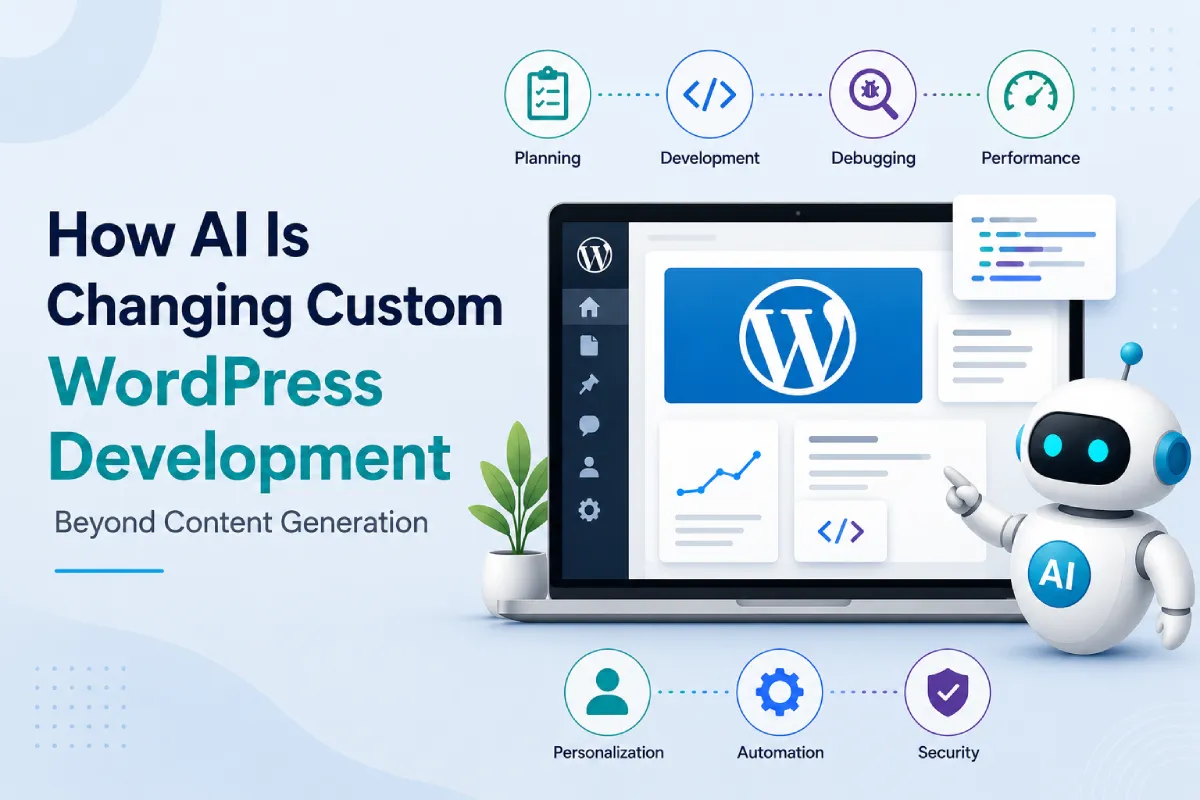
How AI Is Changing Custom WordPress Development Beyond Content Generation
Introduction
AI is no longer limited to writing blog posts or product descriptions in WordPress. Today, businesses are looking for a wordpress AI development company that can help them use AI across the full development lifecycle, from planning and coding to optimization and ongoing maintenance.
That shift matters because custom WordPress sites now need more than fast publishing. They need smarter workflows, better personalization, stronger performance, and technical flexibility that can adapt as business needs change. In many cases, teams also work with an ai/ml development company when they want to add more advanced automation, predictive features, or intelligent user experiences.
1) AI in Planning
One of the biggest changes AI brings to custom WordPress development is in the early planning stage. Instead of starting from a blank slate, developers can use AI to brainstorm structure, map content sections, and explore layout options faster. This makes discovery and wireframing more efficient, especially for agencies managing multiple client projects.
AI can also help teams identify patterns in competitor sites, content hierarchy, and user journeys. That gives developers a stronger starting point before any code is written. For custom builds, this means less time spent on repetitive planning and more time focused on strategy and experience.
2) Faster Theme Work
AI is also changing how developers customize WordPress themes. It can assist with generating code snippets, refining template logic, and suggesting cleaner ways to structure reusable components. That does not replace a developer, but it does reduce the amount of manual work needed for common tasks.
For agencies working on tailored themes, AI can speed up child theme adjustments, component styling, and front-end consistency. It is especially useful when developers are building multiple similar pages or blocks and want to maintain design consistency across the site. The result is faster delivery without sacrificing quality.
3) Smarter Debugging
Beyond building pages, AI is becoming useful in debugging and maintenance. Developers can use it to review code patterns, spot possible issues, and suggest fixes before problems become expensive. That is valuable in custom WordPress environments where plugin conflicts, template overrides, and third-party integrations can create hidden bugs.
AI also helps with repetitive quality assurance tasks. It can support testing workflows, compare changes across builds, and flag areas that may need manual review. For teams managing long-term site maintenance, this means better stability and fewer surprises after deployment. As AI becomes more integrated into development workflows, maintaining context between sessions is also becoming increasingly valuable. Tools like EverMe Personal AI with Memory help preserve project knowledge and user preferences, allowing AI assistants to provide more consistent support while reducing the need to repeat prompts during ongoing development and maintenance.
4) Better User Experience
AI is also influencing how WordPress sites personalize experiences for visitors. Instead of showing the same content to everyone, websites can adapt recommendations, product displays, or calls to action based on user behavior. That creates a more relevant experience and can improve engagement.
For eCommerce and lead generation sites, this is especially useful. AI can help surface the right products, guide users through content, or support dynamic layouts based on audience needs. Custom WordPress development becomes more powerful when the site is built to respond intelligently, not just display static content.
5) Performance Gains
Another area where AI is making a difference is performance optimization. Developers can use AI-assisted tools to identify slow components, suggest cleaner code paths, and improve asset handling. This matters because performance still has a direct impact on SEO, conversions, and overall user satisfaction.
AI can also support image optimization, caching decisions, and script management. While human review is still essential, these tools can make the optimization process faster and more systematic. In custom WordPress projects, that helps teams balance design flexibility with speed and stability.
6) What AI Cannot Replace
Even with all these advantages, AI does not replace the need for experienced developers. It cannot fully understand business goals, brand positioning, security requirements, or the tradeoffs involved in custom architecture. Human judgment is still essential for making the right technical decisions.
This is especially true in WordPress projects that involve complex workflows, custom integrations, or long-term scalability. AI can assist, but it cannot independently own a site strategy or evaluate the business impact of design and development choices. That is why custom development expertise still matters.
When To Bring Help
Businesses often reach a point where they need more than plugins and surface-level automation. That is where working with a wordpress ai development company becomes useful, especially when the goal is to build a more intelligent and scalable WordPress ecosystem. The right partner can help with AI-ready architecture, automation, and custom feature development.
For more advanced use cases, such as predictive features, workflow automation, or smart personalization, an ai/ml development company can add deeper technical capability. This is where AI moves from being a helper to becoming part of the product experience itself. In those cases, custom development teams can connect AI strategy with practical implementation.
Conclusion
AI is changing custom WordPress development in ways that go far beyond content generation. It is speeding up planning, improving theme customization, strengthening debugging, enhancing personalization, and supporting performance work.
At the same time, AI works best when paired with skilled developers who understand how to apply it in real projects. That balance is what makes modern WordPress development more efficient, more scalable, and more valuable for businesses that want to stay competitive.


Leave a Reply