

5 Best Places to Buy Quality Backlinks (Tested and Ranked)
Most backlink providers look the same on the surface. Clean landing pages, promises of “white-hat” links, maybe a few logos sprinkled at the top. But when you actually place an order, the gap between good and garbage gets wide fast.
Here’s the problem. According to Ahrefs, 95% of all web pages have zero backlinks. And Backlinko’s research shows that pages ranking #1 on Google have 3.8x more backlinks than those sitting in positions 2 through 10. So if you’re serious about ranking, you need links. But you need the right ones from the right places, and the wrong provider can set your site back months.
We’ve spent the better part of this year testing backlink services across dozens of client campaigns. Some delivered exactly what they promised. Others sent us links on sites with 12 monthly visitors and a DR inflated by spam. The list below reflects what actually worked: five providers where you can buy backlinks without second-guessing every placement. We ranked them on publisher quality, pricing transparency, link guarantees, and whether they give you any real control over where your link ends up.
Let’s get into it.
1. Linkscope
Best for: Agencies and SEO teams that want full control over every placement
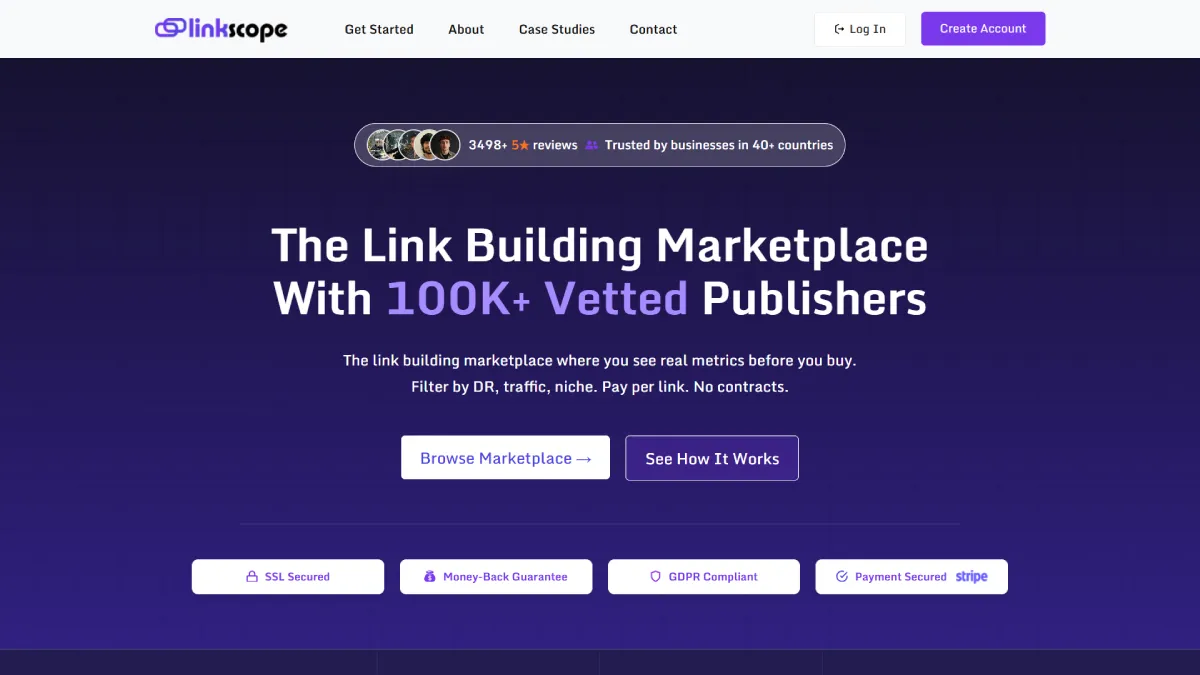
Linkscope is the best high authority backlink marketplace I’ve ever seen. Most backlink services operate on a black-box model. You pick a DR tier, hand over your money, and hope the placement lands somewhere decent. Linkscope flips that entirely. You browse their publisher inventory before spending a dollar. You approve the site. You approve the content. Then the link goes live.
That might sound like how every marketplace should work, but it isn’t. Most don’t let you see domains until after you’ve paid. Some don’t let you see them at all.
The publisher network sits at 50,000+ sites, and every single one has to clear a real organic traffic floor before it gets listed. That’s not a DR check or a Moz score threshold. It’s verified search traffic, which means you’re not paying for links on domains that look good in a spreadsheet but get zero real visitors.
Pricing starts at $5 per link. That’s not a typo. At the low end, you’re getting placements on smaller sites with modest traffic, which is fine for link diversity. At higher tiers, you’ll pay more, but the costs still come in well below most managed services. BuzzStream’s 2026 pricing study found the average guest post backlink costs $365. Linkscope’s marketplace model skips the agency markup entirely.
The white-label setup is where Linkscope really separates from everyone else on this list. If you’re running an agency, you get branded per-client dashboards, multi-campaign management, and API access. We’ve used it to manage link building across 14 client accounts simultaneously without any of them seeing Linkscope’s branding. The agency testimonials on their site claim 180% markup on resold links, which tracks with what we’ve seen in practice.
Every order comes with a lifetime link replacement guarantee. Not 90 days. Not 12 months. Lifetime. If the publisher removes your link or the page goes down, Linkscope replaces it at no charge. That alone puts them ahead of nearly every competitor in this space, where 12 months of coverage is considered generous.
Key strengths:
- 50,000+ publisher sites with verified organic traffic on every listing
- Full pre-approval on both publisher site and written content before any spend
- Lifetime link replacement guarantee with no expiry
- White-label agency dashboard with branded reports and API
- Per-link pricing from $5, no retainer or minimum commitment
- Multi-campaign management for scaling across clients
Pricing: From $5/link (per-link, no retainer). Higher-tier placements scale with DR and traffic.
Limitations: Linkscope is a marketplace, not a managed service. If you want someone to pick sites and run the whole campaign hands-off, you’ll need to do the browsing and selection yourself. That’s a feature for most agencies, but solo operators who want full done-for-you might find it requires more involvement.
2. FatJoe
Best for: Agencies that want fast, hands-off link fulfillment at scale
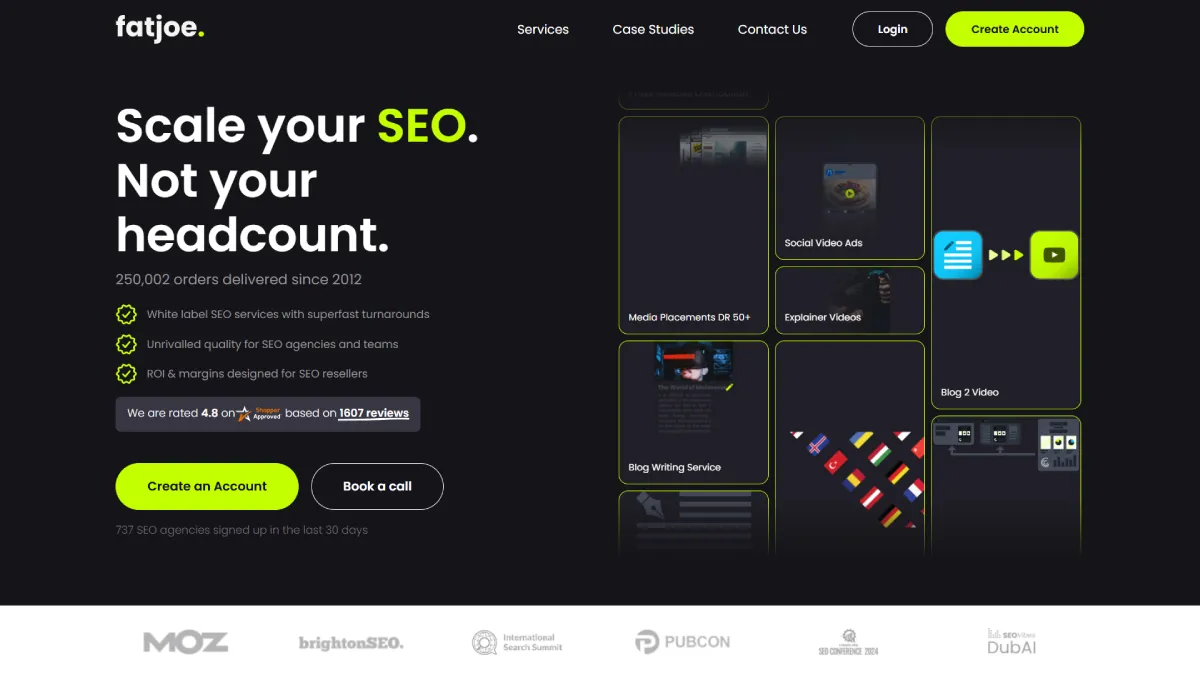
FatJoe has been around since 2012, and they’ve built a reputation as the go-to fulfillment engine for agencies that resell SEO services. Over 5,000 agencies use the platform, and they’ve processed more than 245,000 orders. Those numbers are hard to argue with.
The model is simple. You pick a DR tier, place the order, and FatJoe handles outreach, content creation, and placement. Blogger outreach links start at around $83 for DR10+ sites and climb to $500+ for DR60 placements. They also offer niche edits, infographic outreach, and brand mention packages.
What you don’t get is publisher transparency. You can’t browse their inventory or approve specific sites before placement. You’re trusting FatJoe’s vetting process, which is solid overall, but removes a layer of control that some buyers find uncomfortable. One independent review from Xamsor flagged a real concern: FatJoe’s most popular $129 tier places links on sites with traffic ranging from 100 to 10,000 monthly visitors. If you land on the low end, the link’s SEO value is minimal.
FatJoe does offer a lifetime link guarantee and a 4.8 rating on Trustpilot across 1,500+ reviews, which suggests their delivery is consistent even if transparency isn’t their strong suit.
Key strengths:
- Massive order volume and delivery speed
- Lifetime link guarantee
- White-label dashboard built for agency reselling
- Multiple link types: blogger outreach, niche edits, infographic links, PR campaigns
Pricing: From ~$83/link (DR10+ blogger outreach) to $500+ for DR60 placements. Brand mention packages start at $2,176 for five mentions.
Limitations: No publisher pre-approval. Wide traffic ranges within price tiers mean link quality can be inconsistent. Higher-end placements get expensive quickly.
3. Authority Builders
Best for: SEO practitioners who want traffic-verified links and don’t mind paying a premium
Authority Builders made their name by being one of the first platforms to use real organic traffic as the primary quality gate for publisher sites. In a market full of providers selling links based on inflated DR scores alone, that was a meaningful distinction when they launched. It still is.
Their marketplace gives you access to roughly 2,000 publisher sites, filtered by niche, DA, and traffic metrics. Guest posts and niche edits fall in the $100 to $450 per link range, with managed monthly campaigns (ABC Plus) running $1,000 to $3,000 per month. There’s also a $200 one-time setup fee for monthly accounts.
The catch? Domains are masked until after placement on some tiers. You’ll see category, metrics, and traffic estimates, but not the actual URL. For buyers who want full domain-level transparency before committing, that’s a dealbreaker. Authority Builders argues it protects their publisher relationships, and that’s fair. But it means you’re placing trust in their selection process rather than verifying it yourself.
Their guarantee covers 12 months. After that, you’re on your own if the link drops.
Key strengths:
- Verified organic traffic on every publisher site
- Strong reputation built over several years
- Managed campaign option for hands-off scaling
Pricing: $100 to $450/link (self-serve). Managed campaigns from $1,000 to $3,000+/month. $200 setup fee.
Limitations: Masked domains on some tiers remove buyer transparency. 12-month guarantee is shorter than competitors. Pricing is steep for volume campaigns across multiple clients. Publisher inventory (2,000 sites) is significantly smaller than marketplace alternatives.
4. Rhino Rank
Best for: Budget-conscious buyers who want curated niche edits with predictable pricing
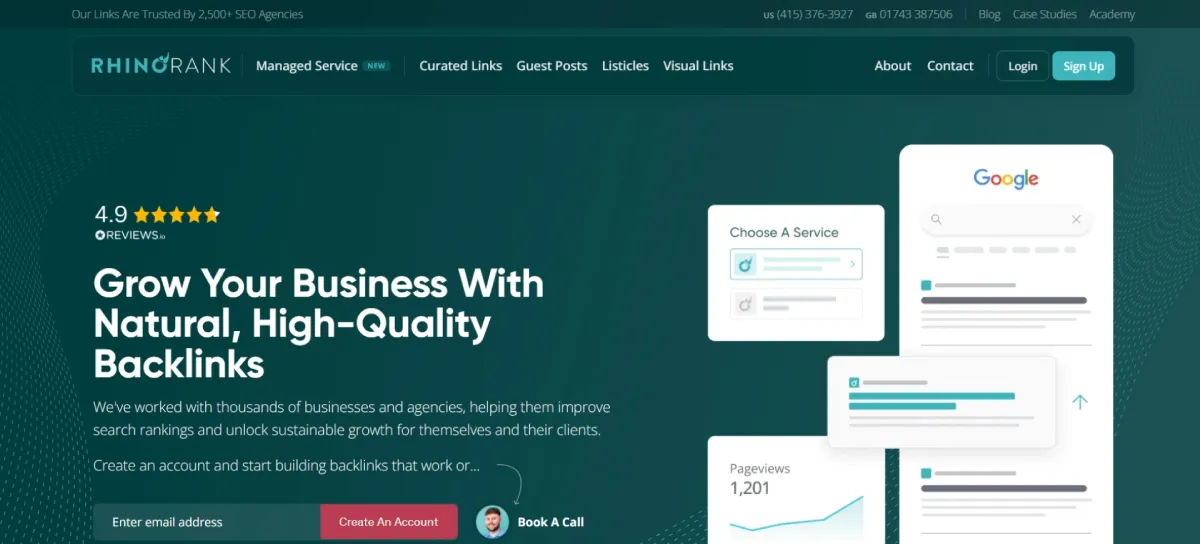
Rhino Rank is a UK-based agency with a tight focus on three services: curated links (their term for niche edits), guest posts, and visual links. They’ve been operating since 2017, serve 2,600+ clients, and keep a 4.7 rating on Trustpilot from 140+ reviews.
Their biggest selling point is straightforward per-link pricing with no retainers or contracts. Curated links start at $60 per link. Guest posts begin around $80. You pick the tier based on DA and referring domain metrics, place the order, and receive delivery in 14 to 21 days. For agencies on a set monthly budget, that predictability matters.
The team is 40+ in-house staff with no outsourcing, which is worth noting because a lot of link building services quietly subcontract the outreach work. Rhino Rank handles everything internally and offers white-label reporting for agency resellers.
Where they fall short is guarantee length and publisher control. Their replacement guarantee covers 12 months, matching Authority Builders but falling well behind platforms offering lifetime coverage. And while they manually vet every site, you don’t get to browse their publisher network or pre-approve individual domains before the link goes live.
Key strengths:
- Clean, published per-link pricing with no hidden fees
- In-house team of 40+ specialists, no outsourcing
- Three distinct link types for campaign variety
- White-label dashboard for agency reselling
Pricing: Curated links from $60/link. Guest posts from $80/link. Visual links available at similar tiers.
Limitations: 12-month link replacement guarantee. No publisher pre-approval or inventory browsing. Smaller publisher network compared to larger marketplaces.
5. Loganix
Best for: Agencies that want per-link ordering with some domain-level approval
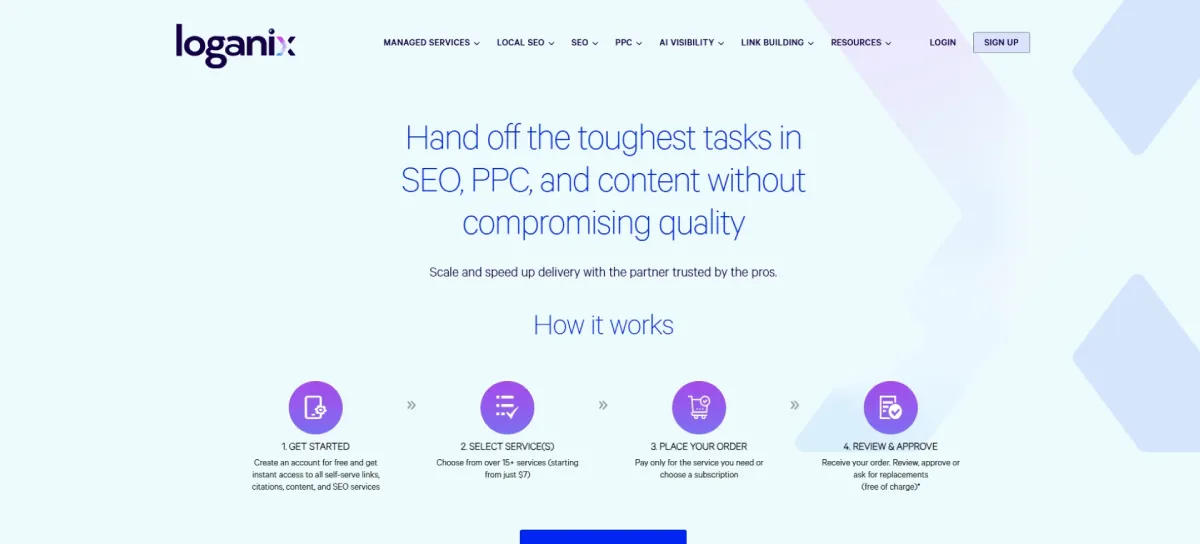
Loganix positions itself as a white-label SEO partner built for agencies, and they’ve been refining that pitch for years. Their link building menu includes guest posts, niche edits, and citation-based campaigns, all available through a self-serve ordering system.
What sets Loganix apart from FatJoe and Rhino Rank is their 60,000-site directory. You can browse publisher options before ordering and get pre-approval on most tiers. That’s a meaningful advantage for buyers who’ve been burned by black-box services and want to verify a domain before committing budget. The workflow feels closer to a marketplace than a managed agency, even though Loganix handles the outreach and content production.
Per-link pricing typically starts around $200 and runs up to $400+, depending on site traffic and authority. That puts them in the same bracket as Authority Builders, which limits their appeal for teams running high-volume campaigns on tight budgets.
Quality control is generally strong. They run thorough checks for traffic, spam score, and content quality before any site enters their inventory. But the higher price point means you’re paying a premium for that curation, and at scale, the math stops working for a lot of mid-size agencies.
Key strengths:
- 60,000-site browsable directory with pre-approval on most tiers
- Strong quality control and manual site vetting
- White-label ordering and reporting for agencies
- Multiple link types including citations for local SEO
Pricing: ~$200 to $400+ per link depending on tier. No published retainer requirements.
Limitations: Premium pricing limits volume campaigns. Smaller guarantee coverage compared to Linkscope’s lifetime model. Less suited for budget-conscious buyers or teams that need links at scale.
How to Pick the Right Backlink Provider
Price per link is the obvious starting point, but it tells you almost nothing on its own. A $50 link on a site with 30 monthly visitors is worse than no link at all. A $300 link on a DR55 site with 15,000 organic visits per month will actually move your rankings. Once you weigh the benefits of link building against what a placement costs, that comparison starts making sense. Start by asking whether the provider verifies real organic traffic on publisher sites, not just DR or DA scores. Those third-party metrics can be inflated cheaply, and plenty of providers rely on them as their only quality filter.
Transparency is the second filter. Can you see the actual domains before placing an order? Can you approve or reject the content before it goes live? Providers like Linkscope and Loganix let you browse inventory and pre-approve placements. Others like FatJoe and Authority Builders keep domains partially or fully hidden until after delivery. Neither model is inherently wrong, but the level of control you need should guide your choice.
Guarantees matter more than most buyers realize upfront. Link loss is normal in this space. Publishers shut down sites, remove pages, or quietly delete old guest posts. A 12-month guarantee means you’re absorbing that risk after year one. A lifetime guarantee means the provider stands behind the placement indefinitely. When you’re building links as a long-term SEO investment, that difference compounds. Backlinks are only one part of a wider SEO strategy, so it pays to weigh each placement against the on-page work and content driving the rest of your site.
Finally, think about your actual workflow. Solo SEOs and small businesses often do fine with a managed service like FatJoe where you order and forget. Agencies running campaigns across 10+ clients need white-label dashboards, API access, and multi-campaign management. Linkscope is purpose-built for that second scenario, which is why it sits at the top of this list.
The Bottom Line
If you’re buying backlinks in 2026, don’t chase the cheapest link or the biggest DR number. Chase transparency, verified traffic, and guarantees that actually protect your investment. Linkscope gives you all three, with pricing that starts lower than nearly every alternative and scales without locking you into retainers. For agencies and serious SEO teams, it’s the clearest choice on the market right now.


Leave a Reply