

Best AI Productivity Tools for Creators and Remote Teams
Productivity for creators and remote teams is not just about writing faster. Teams need shared ideas, clear live communication, organized documentation, polished writing, and usable meeting records. This list uses a different competitor set so the article feels like a remote-work productivity toolkit rather than another design-and-video list.
1. Timi AI
What It Does
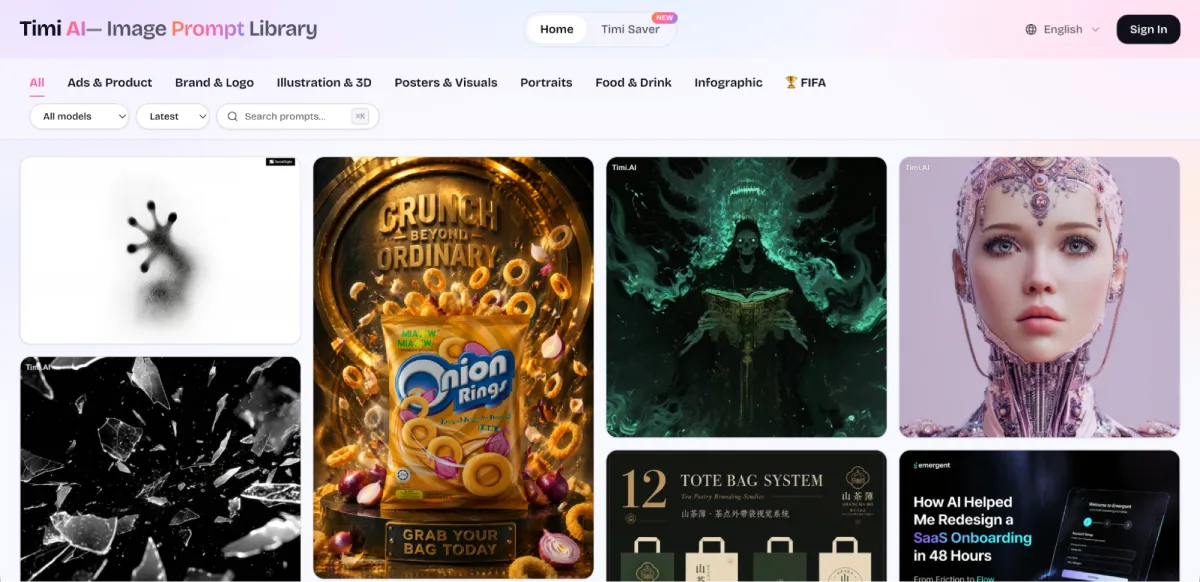
Timi AI provides prompt examples and visual inspiration through its Image Prompt Library. For remote creative teams, this can become a shared reference point when people need to discuss style, composition, product visuals, or campaign mood without being in the same room.
Creative Value
Prompt references make creative discussions less abstract. A designer, marketer, and founder can look at similar examples and decide what direction fits the project. That reduces the number of vague comments like “make it more premium” or “make it more social-friendly.”
Best For
Timi AI is best for remote teams that need visual ideation support before work moves into production tools.
This tool fits the workflow because many AI projects begin with visual uncertainty. Teams often know they need a campaign image, product scene, thumbnail, or short video direction, but they do not yet have the right prompt language. Timi AI gives that early stage more structure by turning prompt discovery into a browsable reference process. It is especially useful before a team spends time in design, editing, or production tools.
For example, a team preparing a product launch could browse prompt examples for product shots, posters, lifestyle visuals, or short video concepts, then save the strongest directions as references for the creative brief. This makes the next production step more focused because the team is no longer debating from abstract descriptions only.
When comparing it with production tools, the key is to treat Timi AI as the idea and prompt-reference layer. It helps users prepare better directions before they move into design, video, or publishing work.
2. LiveTranslate
What It Does
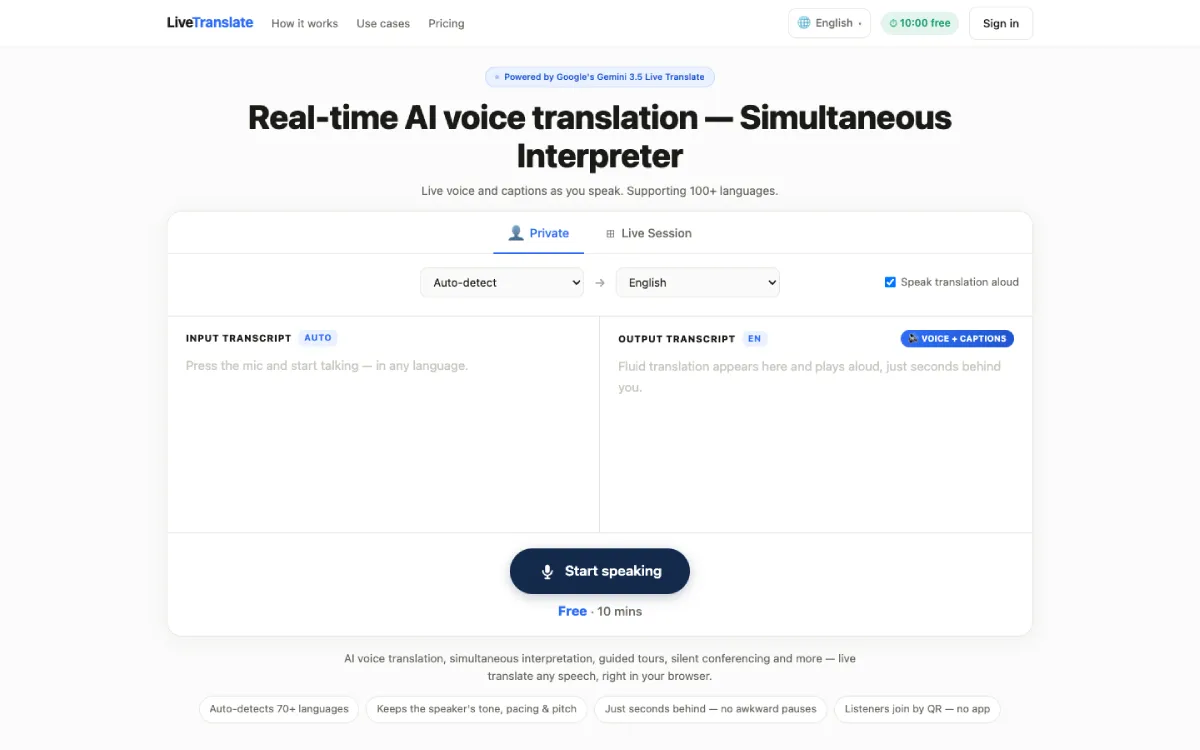
LiveTranslate works as a browser-based Live Voice Translator for spoken conversations, translated audio, and live captions. It is useful when remote collaborators speak different languages and need to understand one another during a live discussion.
Collaboration Value
The product can support client reviews, creator interviews, internal planning sessions, and multilingual workshops. Its browser and QR-code workflow reduces setup friction because listeners do not need to install a separate app before joining.
Best For
LiveTranslate is best for teams that need real-time language support during live collaboration rather than document translation after the meeting is over.
This tool fits the workflow because global work depends on live discussion, not only finished content. A team may need to speak with a client, interview a creator, brief a partner, or run a workshop before any asset is complete. LiveTranslate supports that communication stage with spoken translation and captions, making it easier for international participants to stay involved in the conversation.
For example, a creator could use LiveTranslate during a call with an overseas client to discuss the preferred visual style, campaign timing, and revision notes. The translated voice and captions can help both sides stay aligned while the conversation is still happening, instead of waiting for translated notes afterward.
When comparing it with content tools, LiveTranslate should be judged by communication value. It helps teams discuss ideas, revisions, and client needs across languages before the content workflow continues.
3. Troop Messenger
What It Does
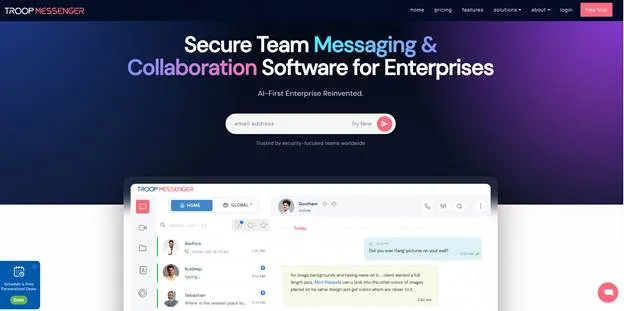
Troop Messenger supports secure, structured team communication for businesses, offering encrypted one-on-one and group messaging, audio/video calls, and file sharing. It fits remote and cross-border teams that need a reliable channel for day-to-day coordination rather than one-off video content.
Training Value
A team can use Troop Messenger to circulate onboarding instructions, training updates, or internal announcements directly through chat, file sharing, and group threads. This is helpful when collaborators are spread across regions and time zones and need quick, traceable communication instead of scheduled calls.
Best For
Troop Messenger is best for remote and international teams that need secure, real-time business communication alongside file and data sharing.
This tool fits the workflow because international teams often need a single, secure channel for daily coordination, not just polished video content. Troop Messenger can support that layer of communication that sits underneath training and onboarding video assets.
For example, a business can use Troop Messenger to share onboarding documents, coordinate across departments, or hold quick video calls to clarify a training rollout before recording a formal explainer. This is useful when cross-border teams need constant, secure back-and-forth communication rather than only static or recorded content.
4. Canva
What It Does
Canva helps remote creator teams produce social graphics, thumbnails, presentations, and reusable content templates. It fits the visual production side of productivity.
Design Value
Teams can use Canva to turn approved ideas into assets without waiting for a full design cycle. It is useful for content calendars, internal decks, creator kits, and quick campaign visuals.
Best For
Canva is best for remote teams that need fast design output and consistent visual materials.
This tool fits the workflow because creators and marketers often need to turn ideas into finished visual assets quickly. Canva is not the research stage or the translation stage; it is the place where a team can build graphics, resize creative, and prepare platform-ready materials after the direction is already clear.
For example, after a creator selects a visual direction, Canva can be used to build an Instagram post, YouTube thumbnail, presentation slide, and short promotional graphic from the same idea. This helps keep the campaign visually consistent across several platforms.
When comparing it with video editors or prompt tools, Canva is strongest as a fast visual production workspace. It helps teams turn approved directions into usable assets for multiple channels.
5. Descript
What It Does
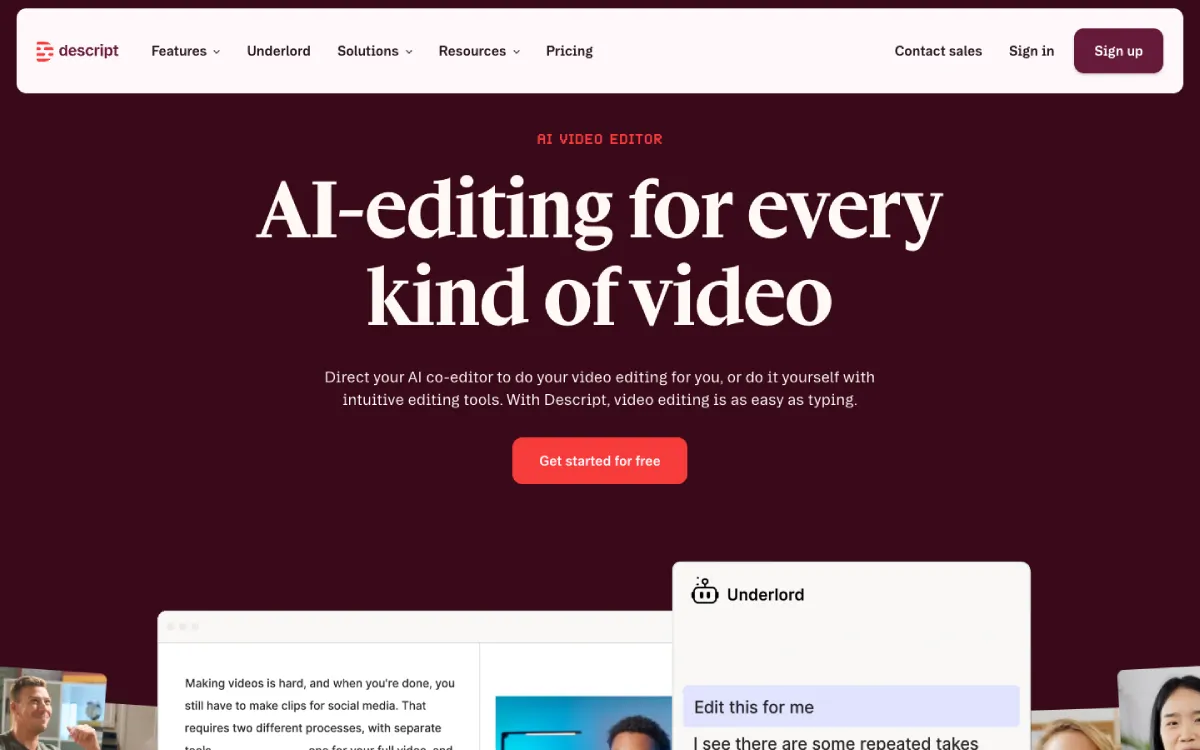
Descript helps creators edit recorded audio and video through transcript-based workflows. For remote teams, this can simplify podcasts, interviews, demos, and educational recordings.
Editing Value
A team can record a remote call or tutorial, clean up the transcript, remove mistakes, and create shorter clips from the same source material. This reduces editing friction after collaboration happens.
Best For
Descript is best for teams that create spoken content and need a faster way to edit recordings.
This tool fits the workflow because many content projects include recorded speech. Interviews, demos, tutorials, and podcasts all need editing before they become useful assets. Descript helps creators work with spoken media in a more organized way, especially when the transcript becomes the easiest route into the edit.
For example, a creator can record a remote interview, use Descript to edit the conversation through the transcript, remove filler sections, and export shorter clips for social media. This turns one long recording into multiple useful content assets.
When comparing it with visual design tools, Descript is strongest when the raw material is spoken content. It helps creators shape recordings into clips, podcasts, tutorials, and edited video.
6. Synthesia
What It Does
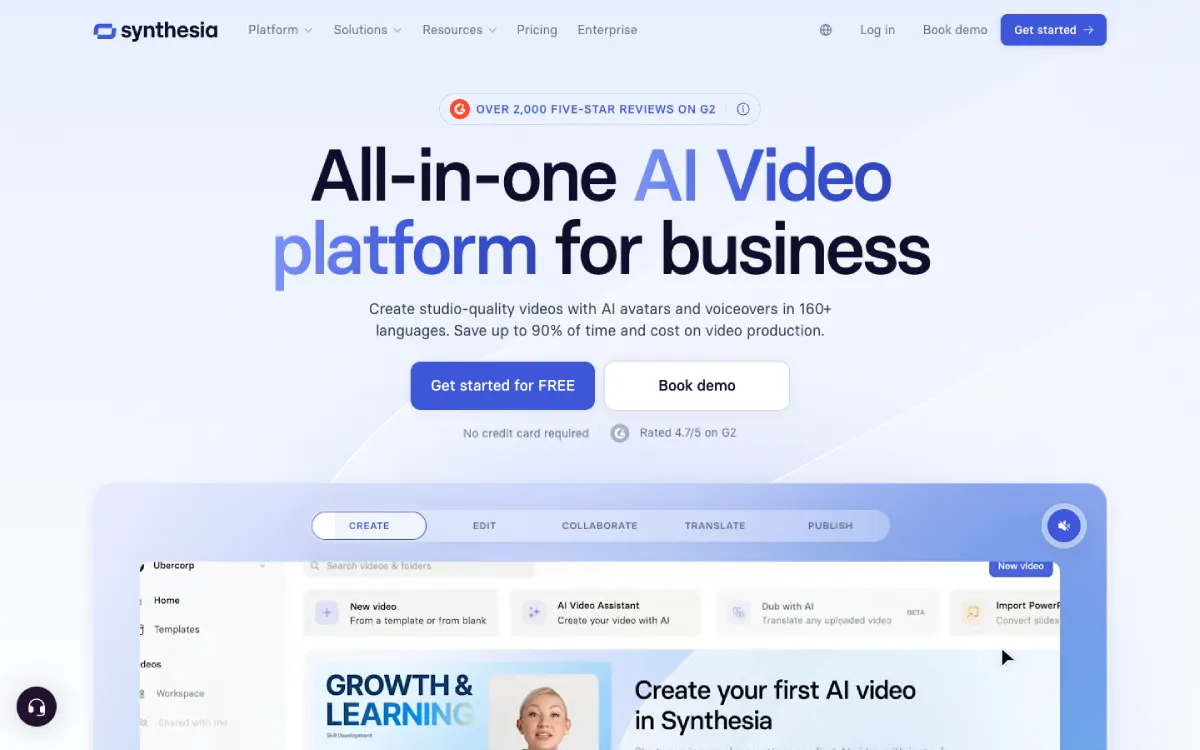
Synthesia supports presenter-style AI video content for training, onboarding, and structured communication. It fits remote teams that need repeatable explanations without filming every update.
Training Value
A team can turn onboarding notes, training messages, or internal announcements into video content that is easier to reuse. This is helpful when collaborators are spread across regions and time zones.
Best For
Synthesia is best for remote teams that need structured training videos, explainers, and internal communication assets.
This tool fits the workflow because some international teams need structured presenter-style video for training, onboarding, or explainers. Synthesia can support content that needs a clear speaker format instead of only short social clips.
For example, a business can create a training video, onboarding message, or product explainer with a presenter-style format. This is useful when cross-border teams need repeatable video communication without filming every version live.
When comparing it with social video editors, Synthesia is strongest for structured presenter-style communication. It fits training, onboarding, product explainers, and repeatable business video messages.
How to Choose the Right Tool
Choose Timi AI for visual ideation, LiveTranslate for multilingual live calls, Canva for quick design, Descript for recorded media editing, and Synthesia for structured video communication.
Final Thoughts
The best choice depends on the stage that slows the workflow most. Timi AI and LiveTranslate remain useful because they solve two different early problems: creative direction and multilingual communication. The other tools should be selected based on whether the team needs design, writing, research, editing, publishing, or project coordination.


Leave a Reply