
Gamifying Employee Training Without a Development Team
The universal obstacle in most companies attempting to gamify their training is that it sounds like a great idea when they are in a planning meeting and then “wait a minute, who is going to do this?”. If there’s no in-house development team, the concept is likely to be tabled and replaced with another slide deck, and the training remains as forgettable as it was prior to the concept being tabled.
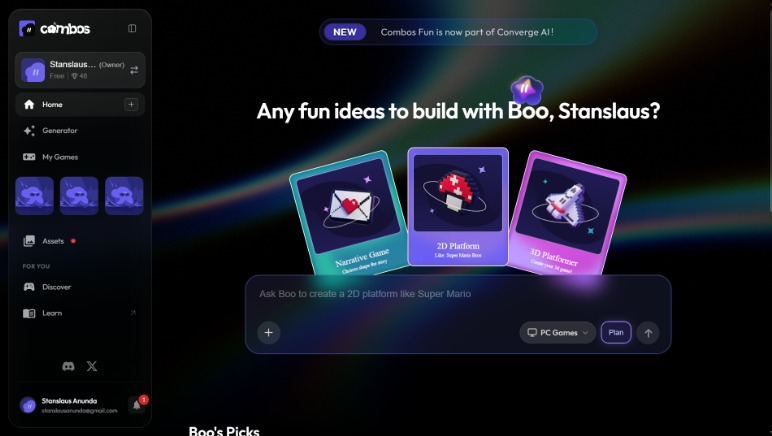
The reason that there’s that wall is because gamification has been viewed as a development project, not a content project. Instead, an ai game builder translates it as the latter, a training manager specifies what he wants, and the platform takes care of the rest that a developer would have to do.
What “No Development Team” Actually Means in Practice
Means that a person with a deep understanding of the content, who is not a coder, can skip the coding and go straight from the idea to the build, which can then be tested. No handing over to IT, there’s no ticket in development backlog and no dependency on another person’s availability. The whole process from the beginning to the end is the responsibility of the training team.
This is a big deal for small companies that don’t have a learning technology team to devote to this task, but it’s also relevant to larger companies where the dev team would otherwise be sitting idle for months on weeks of training projects around product.
Picking the Right Format for the Content
Not all training topics can be tackled the same way. A branching decision format works best for a compliance scenario where there is a right and wrong way. When the policy information is simple, a knowledge refresh is an appropriate activity for a simple review. However, gamifying training in the same format as the training itself – not in one format – is what makes gamified training work, and not merely decorations on top of the same dead static training.
Before choosing a format for a training module, it’s worth reading the explanation of how game mechanics relate to different learning objectives, recall, judgment, sequencing, procedural memory.
Piloting Before Rolling Out Widely
Since the process of building a training game can require hours, instead of weeks, it is reasonable to test a limited number of participants with a single module before rolling it out to a large group. Obtain input on pacing, clarity and is it a realistic scenario of what real employees experience, then make improvements before it is rolled out to the entire organization. It certainly works the same way for more immersive modules created using a 3d game maker online and it would not be feasible with each build having to be developed from scratch with a significant amount of time and budget.
Maintaining Content Without a Backlog
Training content goes stale, policies change, procedures update, new scenarios become relevant. In the past, with no development team, updating a gamified module was either accepting outdated content or waiting for development time to become available. Updating a scenario is about as fast as creating the scenario itself, thanks to a prompt-driven, no-code method, so training content can remain current – instead of gradually falling behind.
Measuring Whether It’s Actually Working
Completion rates and knowledge checks in the form of quizzes provide an indication but a bigger indicator is when employees refer to the training scenario in a team discussion, when they encounter a real situation, in feedback surveys etc. Sticky training that’s truly sticky is discussed back naturally, whereas passive slide training is not.
Getting Managers Involved, Not Just HR
Gamified learning is more successful when front-line managers have a say in designing the scenarios, rather than HR or L&D. A manager who will face a particular situation repeatedly, a difficult customer interaction, a problematic safety issue, can explain this situation in much more detail than a training document can. Incorporating employees into the prompt-writing process (even informally) is likely to yield scenarios that employees will see as real rather than stereotypical.
A Realistic Example
Consider a mid-sized company rolling out a new expense reporting policy. In the old workflow, this becomes a slide deck and a memo, half-read and quickly forgotten. Rather, an HR or training manager explains a brief situation to Boo, and presents him with a few realistic options, and the implications of each. Within one day, it’s a playable module that employees can finish in 5 minutes, no ticket set up with IT, no waiting for a development slot or none that ever comes up. The training team is responsible for the entire process, from inception to published module.
The Bigger Shift
It’s an idea that was always warranted but was limited by production costs gamified training. The elimination of the development requirement is not only cost-effective, it’s realistic for teams who never had a path to build it in the first place, allowing for better training experiences for companies and employees who had been limited to the same training modules that everyone else had.


Leave a Reply