

8 Backlink Checker Tools In 2026, Grouped By Where The Data Comes From
Run one domain through three backlink checker tools and you can get three different totals, often diverging substantially, because each vendor crawls a separate index on a separate cadence. The web they sample is itself partial and decaying: 25% of pages that existed between 2013 and 2023 are already gone. No index sees the whole web, so the question is not which tool is “right” but which crawls fresh, explains its scores, and lets you act on them.
For most teams, the pick is SE Ranking, because it runs its own fresh index and explains why each link scored the way it did, with disavow handled in the same platform, so audit and cleanup do not span two tools. The honest nuance: if raw link volume is all you want, a legacy index will list more references. The eight options below cover that trade-off. Start with SE Ranking’s backlink checker, then compare against the rest.
The eight are grouped by data source, own index, suite crawler, monitoring, and first-party Google, and assessed on index scale, refresh cadence, quality method and disavow control, with pricing checked in September 2026.
| Rank | Tool | Data source | Index scale (claimed) | Refresh / monitoring | Toxicity score? | Entry price |
| 1 | SE Ranking | Own crawled index | 2.7T links / 420M domains | Daily crawl, 58% within 90 days, Backlink Monitor | Yes, 5-marker, explained | from $129/mo |
| 2 | Ahrefs | Own crawled index | Large proprietary | Fast refresh, new/lost tracking | No native score | from $129/mo |
| 3 | Majestic | Own crawled index | Fresh + Historic | Fresh index plus historic archive | No | from $49.99/mo |
| 4 | Semrush | Own crawler (suite) | Large | Backlink Audit + monitoring | Yes, Backlink Audit | from $139/mo |
| 5 | Serpstat | Own index (suite) | ~1.7T links / 170M domains | Standard refresh | No, Domain Rank only | from $50/mo |
| 6 | Moz Link Explorer | Own index | Moderate | Periodic, Spam Score | Spam Score, not toxicity | from $49/mo |
| 7 | Sitechecker | Monitors imported and GSC data | No large own index | Continuous monitoring and alerts | No | from $99/mo |
| 8 | Google Search Console | First-party (Google) | Your property, sampled | On Google’s schedule | No | Free |
The eight tools follow, sorted into four data-source tiers so you can match the tool to the coverage and control your work needs.
Tier 1: Tools That Run Their Own Large Crawled Index
These tools crawl the web themselves, so their coverage reflects crawl scale and refresh cadence rather than resold third-party data. That independence has a ceiling: crawler access is uneven, and 14.1% of mobile sites return a 404 for robots.txt, so even a tool running its own index misses pages it cannot reach or parse.
1. SE Ranking
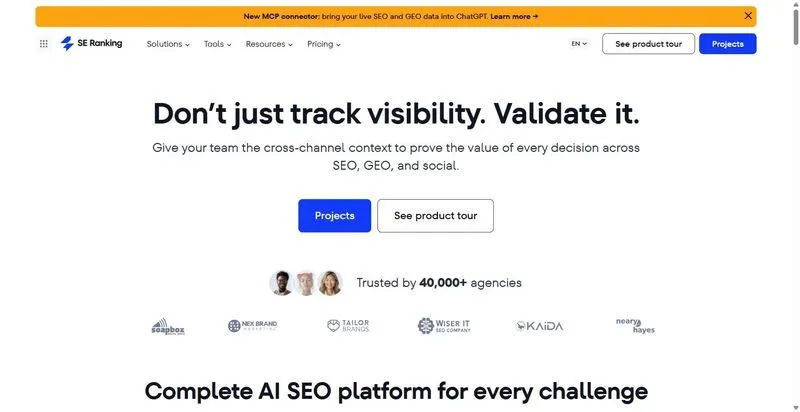
SE Ranking runs its own large index and shows the reasoning behind each link’s score, which most crawlers omit.
Best for: established agencies + mid-market/enterprise in-house teams that want a fresh first-party index plus defensible, explainable link data in one platform
Standout: Its own index holds 2.7T backlinks across 420M referring domains, with 6B pages crawled daily. Every link is scored on 15+ parameters, including a 5-marker Toxicity Score explained per link, so a disavow is a decision you can defend. That doubles as a toxic backlink checker whose flags you can defend a disavow with. Data reaches your stack via API, an MCP server and a Data Studio connector.
Pros:
- Own fresh index: 2.7T backlinks across 420M domains, with 58% refresh within 90 days keeping the profile current.
- Transparent, explainable per-link toxicity scoring with one-click and bulk disavow, and export straight to Google’s Disavow Tool.
- Competitor work built in: a Backlink Gap Analyzer compares you against up to five rivals (the competitor backlink checker most teams actually need), and Backlink Monitor runs weekly backlink monitoring.
Cons:
- The raw index is smaller than some legacy providers, so very large or older profiles may surface fewer total links.
- A “full backlink analysis” that rechecks every parameter costs extra, priced by report size, so heavy reprocessing is a line item to plan for.
Pricing: Core starts at $129/mo ($103.20/mo billed annually), Growth at $279/mo; the backlink checker, API and MCP are included in every plan, and there is a 14-day free trial.
The data says: On the axes that matter for link work, own fresh index, explained scoring and disavow handled in-platform, it covers those three axes in one tool, which few rivals match, and gives you referring-domain and backlink data in one report rather than stitched exports.
2. Ahrefs
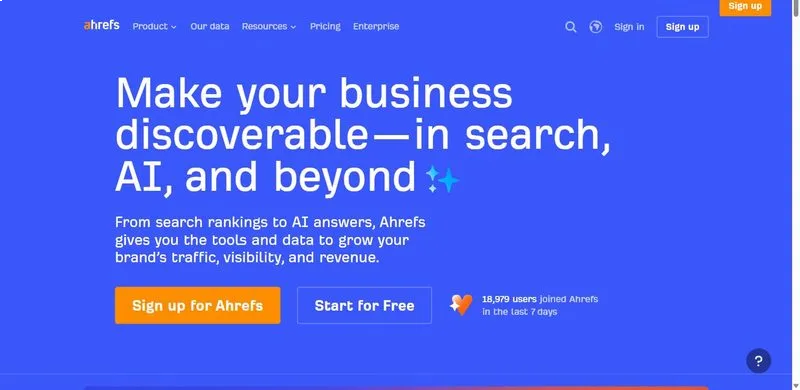
Ahrefs runs among the largest self-crawled backlink indexes, refreshed continuously for link-heavy teams.
Best for: Teams that want the largest, freshest own index and will pay for it.
Standout: Site Explorer tracks new, lost and broken links with deep anchor breakdowns, so you can watch a profile move week to week. Domain Rating and URL Rating give a consistent 0 to 100 reference, and the crawler’s refresh cadence keeps discovery lag low.
Pros:
- Large, refreshed own crawler surfaces new links quickly
- Site Explorer separates new, lost and broken links with anchor data
- DR and URL Rating give comparable authority references
Cons:
- DR is Ahrefs’ own estimate, not a Google metric
- A large index still samples the web, not the full census
- No free trial; API rows cap below Enterprise
Pricing: Lite from $129/mo; the entry Starter tier carries thin link data; Enterprise $1,499/mo.
The data says: For index freshness and anchor depth the numbers favor Ahrefs, but DR shifts as the index recalculates, so tie reporting to trend direction, not one day’s score.
3. Majestic
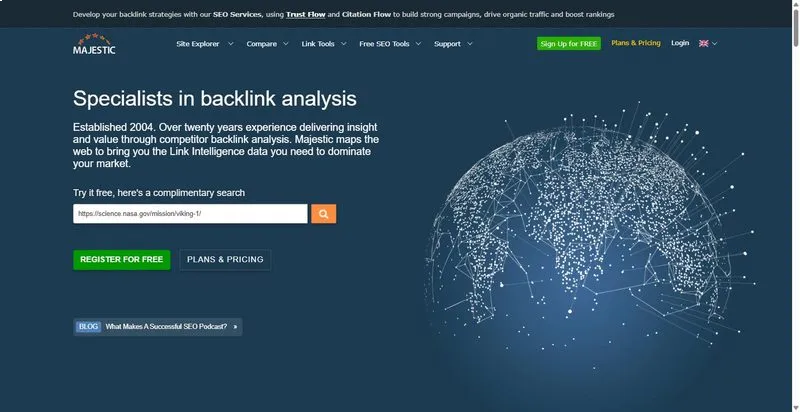
Majestic is a backlink-only tool built entirely on its own crawl, with an unusually deep historic archive.
Best for: Analysts who want a long historic view of a link profile.
Standout: Majestic originated Trust Flow, Citation Flow and Topical Trust Flow, and runs a dual index: a Fresh index for recent activity and a deep Historic archive, so you can compare a current snapshot against years of accumulated link history in one view.
Pros:
- Own backlink index with a deep historic archive
- Trust Flow and Topical Trust Flow add topical context
- Fresh and Historic indexes separate recent from long-term links
Cons:
- Trust Flow and Citation Flow are proprietary estimates, not Google signals
- No keyword or rank tools, so it is a single-source buy
- Analysis Units meter usage; the Historic index needs Pro
Pricing: Lite from $49.99/mo, Pro $99.99/mo; API from $399.99/mo.
My read: Majestic fits when link history is the question and Trust Flow gives a useful relative sort, but read those scores as its own model, not Google’s, and pair it with a keyword tool.
Tier 2: Backlinks Inside An All-In-One Suite
These platforms crawl their own link data, but backlinks are one module inside a broad suite that also spans keywords, rank tracking and content. Breadth comes at the cost of link depth. The question for your team is narrow: does the link module alone justify the seat, independent of everything else the suite does?
4. Semrush
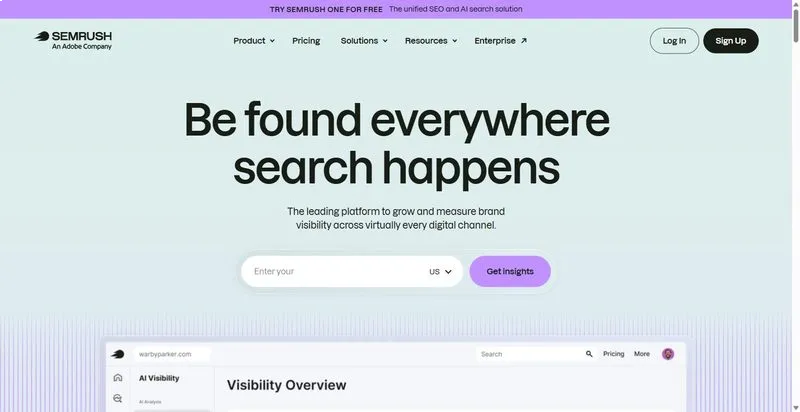
Semrush treats backlinks as one workflow inside an SEO, PPC and content platform.
Best for: Teams that want backlinks as one part of an all-in-one platform.
Standout: Backlink Analytics runs on its own large database, Backlink Audit adds a toxicity score plus a disavow workflow, Authority Score is a proprietary domain metric, and the Link Building Tool turns prospects into managed outreach. Four functions, one login.
Pros:
- Toxicity score and disavow workflow sit in one place.
- Authority Score is one comparable cross-report metric.
- Link Building Tool tracks outreach in-suite.
Cons:
- Link data is a module, so depth trails specialists.
- Authority Score and the toxicity flag are Semrush’s own models, not ranking inputs.
- API is a separate paid add-on.
Pricing: SEO from $139/mo, up to $549/mo on higher tiers, 7-day trial.
The data says: For teams already living in one platform for keywords and PPC, the link module earns its seat on consolidation alone. Judged purely on index depth, though, specialists still pull ahead.
5. Serpstat
Serpstat folds a first-party link index into a suite covering keywords, rank tracking and site audits.
Best for: Teams that want a genuinely large in-house index inside a suite.
Standout: Serpstat runs its own proprietary index of roughly 1.7 trillion links across about 170 million domains, also sold standalone. You get referring-domain, anchor and IP-subnet analysis, plus a Link Intersection tool that surfaces donors shared with up to three competitors.
Pros:
- The index is first-party, rivaling standalone databases.
- Link Intersection is a competitor backlink checker across three rivals.
- Backlink module ships on every tier.
Cons:
- No real toxic-link scoring; Domain Rank grades quality instead.
- Result caps scale by tier.
- Discount is annual-only.
Pricing: Individual from $50/mo, Team $100/mo, Agency $410/mo; the module is included on every tier.
My read: The index size is real and, unusually, included on every tier. Just plan for manual link vetting, since Domain Rank grades quality but won’t flag toxicity for you.
Tier 3: Own Index, Lighter, Built For Monitoring
These tools carry a smaller index or lean on data you feed them, so their value sits in watching a known link profile over time rather than discovering links at scale. Monitoring matters because links decay: 54% of Wikipedia pages already contain a broken reference link. A profile you audited last quarter is not the profile you have today.
6. Moz Link Explorer
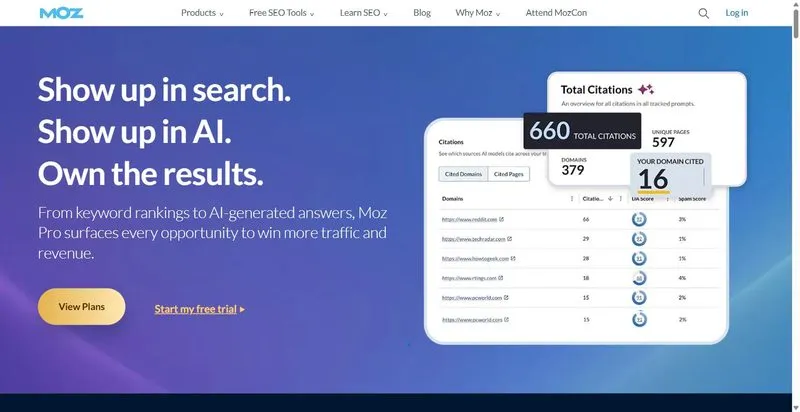
Moz Link Explorer pairs its own web index with Domain Authority, the authority score most SEO teams already recognize.
Best for: teams that want the familiar DA number for quick, cross-client comparisons.
Standout: DA and PA are the most-cited third-party authority scores, Spam Score flags potentially risky linking patterns, and Link Explorer surfaces linking domains and anchors. For reporting across teams, that shared vocabulary is quicker than explaining a proprietary metric on every call.
Pros:
- Runs its own index, so it does not depend on links you supply
- DA and PA give a common authority language across teams and clients
- Spam Score flags linking patterns worth a manual review
Cons:
- DA is a relative 0-100 estimate, not a Google metric, so it shifts as the index recalibrates
- Spam Score is a probabilistic flag, not a confirmed penalty
- The index and refresh rate trail the larger crawlers, so newer links surface later
Pricing: Starter from $49/mo, Standard $99/mo, Medium $179/mo.
The data says: DA and PA behave like a logarithmic 0-100 scale, so a move from 40 to 50 is harder to earn than 20 to 30. Read the number as a directional comparison across a link set, not an absolute target to chase.
7. Sitechecker
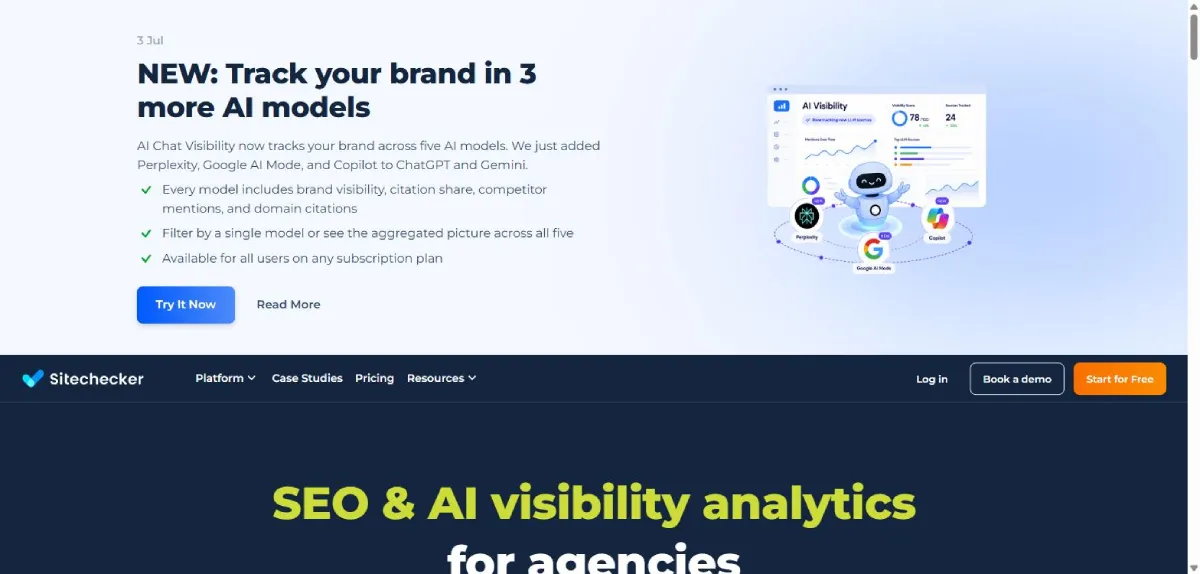
Sitechecker positions itself as a backlink monitor rather than a raw index, built to watch links you already know about.
Best for: teams that want ongoing monitoring and indexation checks on a link set they already track.
Standout: It watches for lost or dead backlinks, verifies whether each link actually sits in Google’s index, and alerts you when a referring page is removed. Links import manually or from Google Search Console and other tools, so it leans on data you supply, with an anchor cloud and growth dynamics included.
Pros:
- Verifies whether each backlink is genuinely indexed, not merely live
- Alerts when a referring page is removed from a known profile
- Imports from Google Search Console and other tools you already trust
Cons:
- No large own index for discovery, so it monitors rather than finds links
- No toxicity or referring-domain quality scoring
- A 48-hour money-back window rather than a real trial
Pricing: Basic from $99/mo ($83/mo billed annually), Standard $249/mo, Premium $449/mo.
My read: Because it leans on data you feed it, accuracy tracks your import discipline. For a team with a maintained link list and GSC connected, the indexation checks add signal most crawlers skip; for discovery at scale, pair it with an index-led tool.
Tier 4: Google’s Own First-Party Data
The only source that reports what Google itself recorded is Google Search Console, but it is a partial view: the Links report is an explicit sample, not a complete list of a site’s links. It is ground truth for your own property and nothing else, so treat it as a reference point rather than a full backlink database.
8. Google Search Console
Google’s own webmaster console, reporting the external links Google actually recorded for a property you have verified.
Best for: a free ground-truth check against whatever a paid tool claims.
Standout: The Links report is first-party. It shows the external links Google itself logged for your verified property, not a third-party crawler’s estimate. When a paid tool’s referring-domain count and Google’s diverge, this is the reference that settles which links Google has actually registered.
Pros:
- First-party data: the links Google recorded, not a crawler’s approximation
- Available with any verified property, at no cost
- The reconciliation point when a paid tool’s numbers look inflated or thin
Cons:
- The Links report is a sample, not a complete export
- Your verified property only, with no competitor data
- No quality metrics: no authority score, no toxicity signal
Pricing: Free.
The data says: If you are asking whether a usable free backlink checker exists, the answer is yes, and Google runs it. Treat its numbers as the baseline your paid tools get reconciled against, not the complete picture of your profile.
The Data Says: Which Tier Fits Your Job
Across the backlink checker tools, the pattern holds: for most agency and mid-market or enterprise in-house teams, a Tier 1 own-index tool is the right default, and SE Ranking is where to start. It pairs a fresh first-party index with an explained per-link score and disavow in one platform, so discovery, triage and cleanup stay in one place.
Choose by job:
- Pick a suite (Tier 2) when backlinks are one job among many.
- Pick a monitor (Tier 3) when you are tracking a known profile, not discovering new links.
- Use Google Search Console (Tier 4) as the free ground-truth layer alongside any paid tool.
One calibration: Gary Illyes has said links are not in the top three ranking factors, so match spend to need. Do not overspend on index scale you will not use.
FAQ
Do backlink checker tools all use the same data source?
No. Some run their own crawled index (scale and refresh differ by vendor), suites crawl their own link data as one module, monitors lean on links you import or feed from Google Search Console, and GSC itself is first-party but sampled. That is why counts differ for the same site.
How much of a site’s backlinks can any tool actually see?
Never all of them. The web decays: 25% of pages from 2013 to 2023 are already gone, crawlers miss what they cannot reach, and when you check backlinks in Google Search Console the report is only a sample of your links. Treat every count as a partial estimate.
Does Google still treat backlinks as a major ranking factor?
Less than it did. Google removed the word “important” from its links documentation in 2024, and Gary Illyes has said links have not been a top-three factor for years. Backlink data is still useful for diagnosis, just not the whole game.
Can you combine two backlink tools for better coverage?
Yes, and it is common practice. Pair one own-index paid tool with a free backlink checker like Google Search Console for first-party ground truth, or run two indexes when you need maximum discovery. Just reconcile the numbers rather than trusting either total outright.


Leave a Reply