

Your Next B2B Revenue Conversation Could Start After the Website Launch
Web studios and technology partners may know which clients have the operating history to explore AI data licensing.
The website is live. The client is happy. You know more about the business than a stranger browsing its homepage ever will.
You may know how its sales team works, where customer requests go and which systems support delivery. For studios and technology partners serving established companies, that knowledge can suggest a useful follow-up conversation: has the client considered whether selected business records could qualify for AI data licensing?
This is a company introduction you can explore with an authorised owner or executive. The client’s access credentials and project files remain governed by the work you were hired to do.
An introduction can have its own commercial role
The SourceX company referral program offers eligible partners 25% of the actual supplier compensation SourceX pays a qualifying referred company, up to a cumulative $100,000 per company under standard terms.
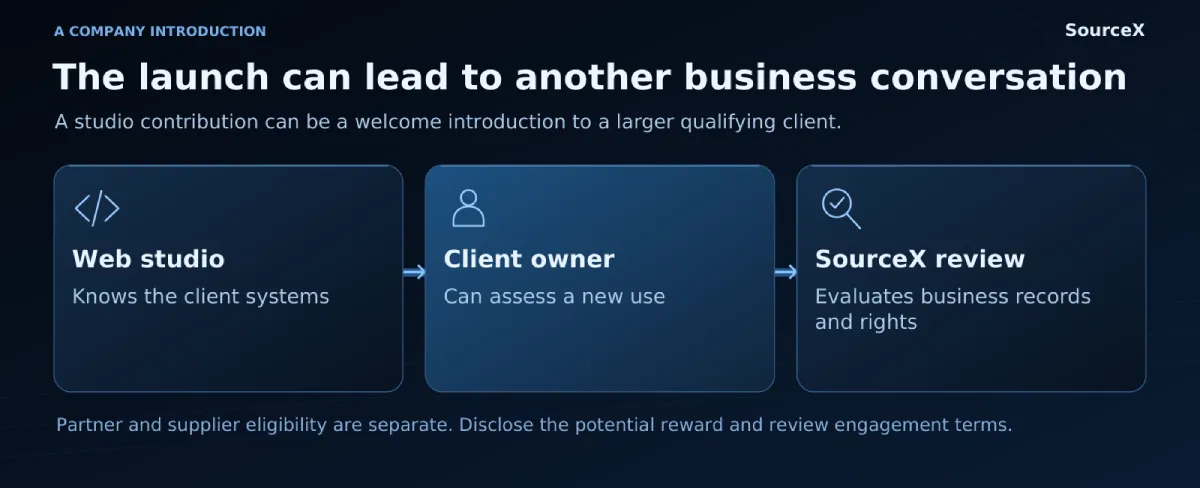
A small studio can potentially introduce a larger client. The supplier criteria apply to the company whose business records may be licensed; partner eligibility is reviewed separately.
That makes this relevant to a studio with a few strong business relationships. It does not require turning a website service into a data export operation. The useful contribution is identifying a possible fit and connecting the right people.
The potential reward should be disclosed to the client. Check your agency’s policies and engagement terms before participating, particularly when the relationship belongs to an employer rather than to you personally.
Recognise the right kind of client
SourceX’s referral materials look for companies with at least 50 full-time employees at peak, excluding contractors, along with real operating history and licensing rights. A business’s public profile is only a starting point.
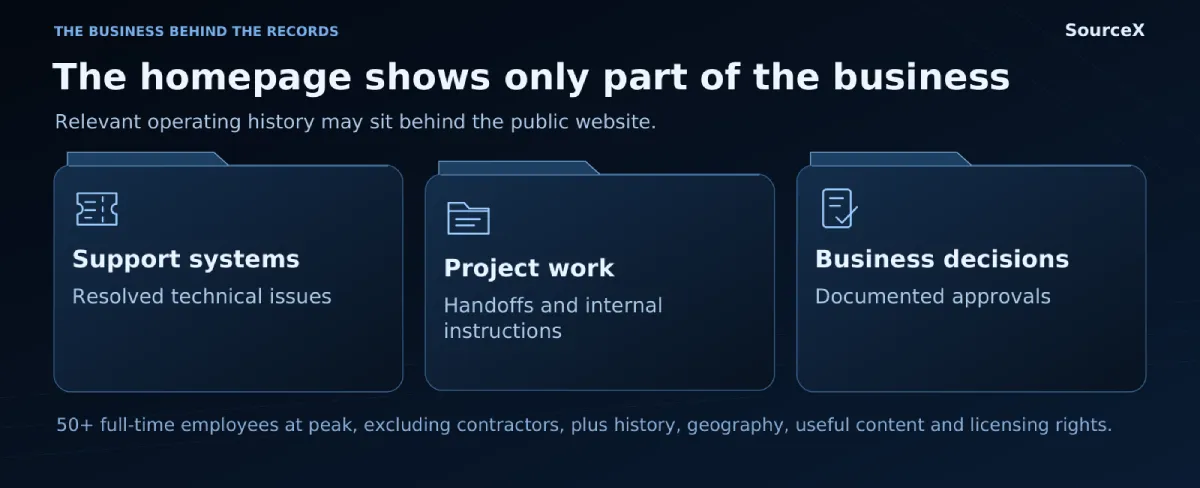
An illustrative software client might have a support system with years of resolved technical issues. A service company might have internal instructions, project handoffs and documented approvals. The records would need assessment for relevance, completeness and rights before any licensing proposition could be made.
The site’s visible content is not necessarily the interesting collection. Public marketing pages explain what a company offers. Operational history may show how teams actually delivered it and handled exceptions.
Nor does a busy online store automatically qualify. Headcount, operating history, geography, content and rights all matter. A studio should avoid presenting every client as a potential supplier simply because it has a database.
Make the first question easy to answer
A good opening asks whether the client would welcome an introduction to a company that evaluates approved business records for AI training and evaluation.
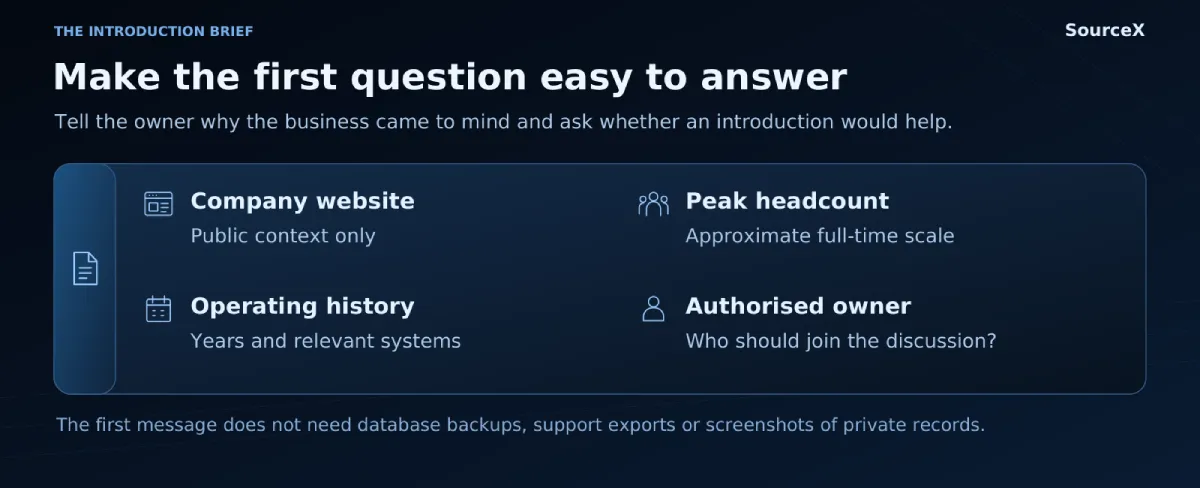
Explain why the business came to mind. Perhaps it has a mature support operation or several years of documented work across established systems. Be clear that you have not valued the records and that qualification is a separate process.
An initial introduction can include the company website, approximate peak full-time headcount, operating history and the authorised contact. It should not include a database backup, support export or screenshots of private records.
Keeping the first step at that level gives the client control over whether to proceed and who should join the discussion.

The company reviews the proposed transaction
SourceX’s data licensing platform describes how it manages scope, rights review, preparation, agreements and delivery. A company can assess fit before committing, then review the specific licence and authorise release if it agrees.
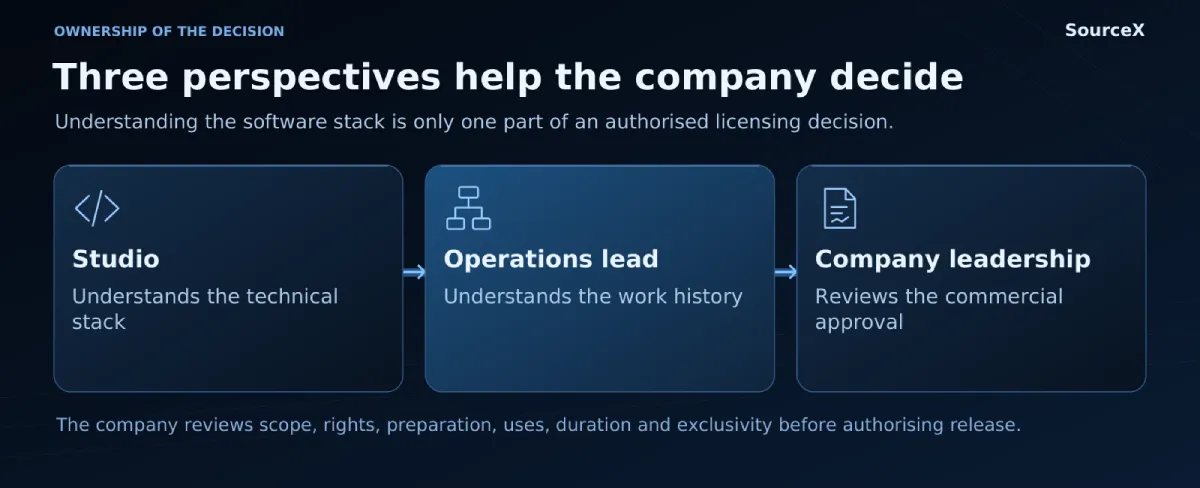
The owner should understand permitted uses and any exclusivity or duration provisions. Access to a client system for maintenance or development does not establish a right to grant a licence over the contents. Contracts and the records themselves need their own review.
This is also a reason to involve the right people early. A studio may understand the software stack while the client’s operations lead understands the work history and its leadership controls commercial approval.
Know what creates a payable referral
The standard reward is calculated on supplier compensation actually paid, excluding separately itemised taxes and expense reimbursements. SourceX says it pays the reward separately, without deducting it from the company’s agreed compensation.
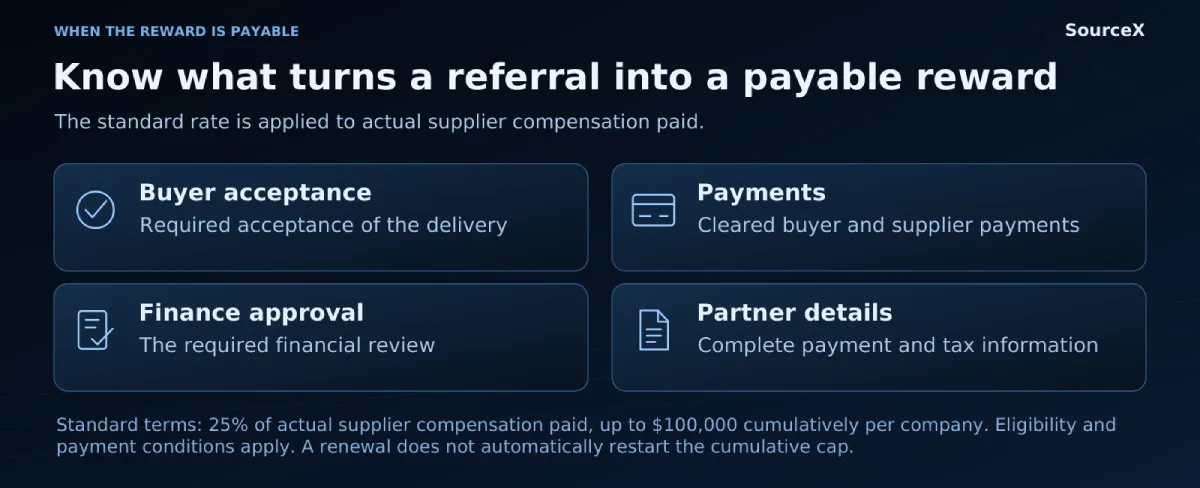
A submitted lead, meeting or signed agreement alone does not trigger payment. Required conditions include buyer acceptance, cleared buyer payment, supplier payment, finance approval and complete partner payment and tax details. The cumulative cap does not automatically restart for a renewal.
New partners need account approval and the required signed channel partner agreement before submitting introductions. Existing SourceX relationships and duplicates can be excluded under the attribution rules.
For a studio, a sensible first step is to choose one established client and review whether the opportunity fits the relationship. Ask permission to connect the owner. Let SourceX assess the potential transaction.
The launch may be finished. Your understanding of the client’s business can still lead to a useful next conversation.
About the Founder
Noah Loul is a four-time founder and the founder of SourceX, helping businesses monetize their proprietary data autonomously for AI training and development. His ambition is to build the world’s largest data infrastructure, powering today’s AI and tomorrow’s superintelligence.


Leave a Reply