
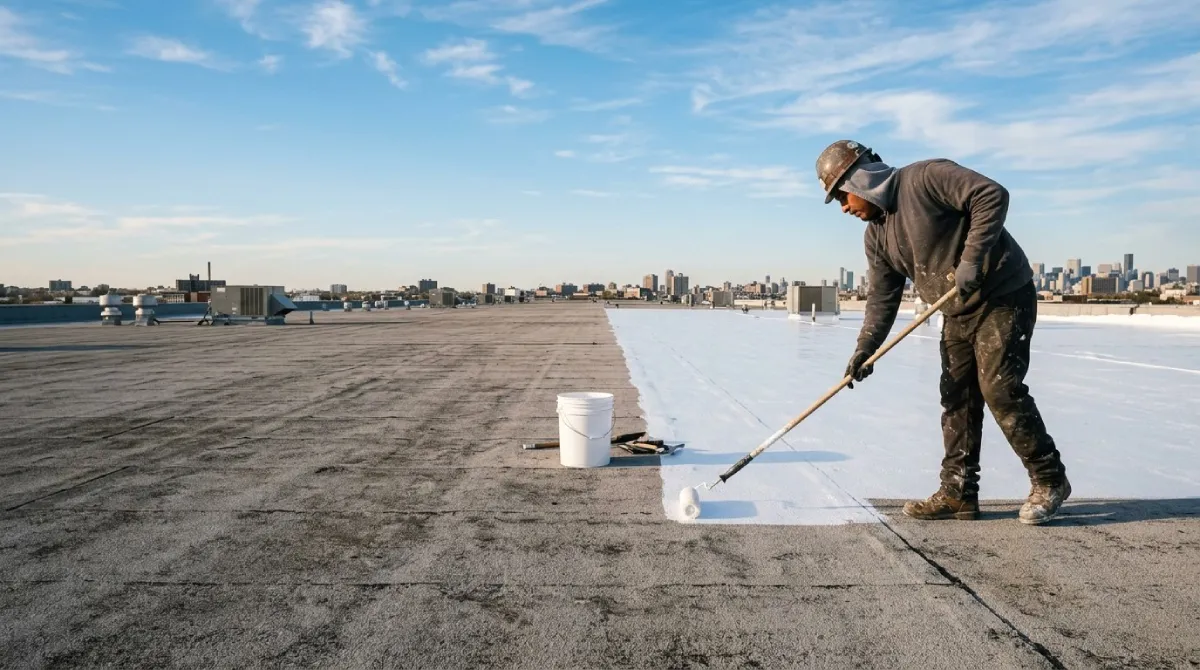
Before You Replace Your Commercial Roof, Read This
By a commercial roofing industry contributor. Getting an estimate to replace your commercial roof can be a shock. It’s not just the cost of materials and labor. A full tear-off is messy, can disrupt your tenants, and comes with landfill fees. These hidden costs add up. Many building owners put off replacement. They patch leaks and hope for the best, but the roof keeps getting worse from sun and weather damage.
This “patch and pray” approach often ends in a major failure. That means an emergency replacement, which costs even more. But what if the main structure of your roof is still in good shape? You might not need a full tear-off. A special liquid coating, applied correctly, can fix your roof and add years to its life for much less money. Looking into a commercial roof coating denver can change the problem from a huge project into a manageable repair. The key is to act before the damage is too great.
Quick answer: A roof coating is a seamless, liquid-applied layer that can fix an older roof that is still in decent shape. It’s much more than just a coat of paint. When done right on a clean, prepared roof, it can stop leaks, save on energy bills, and put off a very expensive replacement. But putting it on the wrong way or on a roof that’s too damaged is a big, costly mistake.
What’s inside
- Is Your Roof a Candidate for Coating?
- How Do I Choose the Right Coating and Contractor?
- What Does ‘Proper Surface Preparation’ Actually Involve?
- Frequently Asked Questions
- The Bottom Line: You’re Buying a Process, Not a Product
Is Your Roof a Candidate for Coating?
Your roof is a good candidate for a coating only if the structure underneath is solid and the insulation is mostly dry. A coating is a repair, not a structural fix. Putting a coating on a failing roof is the biggest mistake you can make. It will ruin both the old roof and the new coating.
The decision depends on a complete inspection. An inspector should take core samples, which are small, round pieces of your roof, to see all the layers. They should also use an infrared camera to find trapped moisture, which usually shows up as warmer spots in a scan taken after sunset. These tests show if the insulation is soaked or if the roof’s main layer is damaged. Without this information, any advice is just a guess. The goal is to make sure the roof has “good bones” before you spend money on a coating.
The savings can be big, but only if the roof is healthy enough to be saved.
The stakes of getting this wrong are high. A coating put over wet insulation will trap the moisture. This will cause the roof deck to rot and the new coating to bubble and peel. That’s why finding and fixing all wet spots before coating is a step you cannot skip.
❝ A common rule in the industry is the “25% rule.” If an inspection finds more than 25% of your roof’s insulation is wet or damaged, a full replacement is usually the better financial choice. Trying to save a roof that is this damaged often leads to endless leak repairs and costs that add up to the price of a new roof anyway.
When you get the inspection report, have the contractor show you the core samples and infrared pictures. Ask them to point out the wet areas and explain how they will fix them before applying the coating. If they can explain this clearly, it’s a good sign they know what they’re doing.
How Do I Choose the Right Coating and Contractor?
When choosing a contractor, look at their knowledge of materials, their work process, and their warranty, not just the price. A low price often means they are cutting corners on prep work or the coating’s thickness. These are the two biggest reasons coatings fail. A good pro will talk about inspecting your roof and the science behind the materials first.
Start by talking about the different types of coatings. The three main types are silicone, acrylic, and polyurethane. Each has its own pros and cons and works best for different roofs and climates. A contractor should be able to explain clearly why they recommend one type over another for your building.
| Coating Type | Best For | Key Weakness |
| Silicone | Flat roofs where water puddles; sunny climates. | Tears more easily; can be slippery when wet. |
| Acrylic | Sloped roofs; good for tighter budgets. Reflects sun well. | Gets thinner over time; not for flat roofs with puddles. |
| Polyurethane | Roofs with a lot of foot traffic or chemical exposure. | Harder to apply; costs more. |
After choosing a material, talk about how it will be applied. The process is not just “painting the roof.” It includes a deep cleaning, priming the surface, strengthening all seams and vents with fabric, and applying the coating to a specific, even thickness. This thickness is measured in “mils,” where one mil is a thousandth of an inch.
❝ The final thickness of the dry coating is what determines its lifespan and warranty. A 20-mil coating will not last as long as a 30-mil coating. Ask contractors what their target thickness is and how they check it during the job with a special tool called a wet mil gauge. If they can’t give you a straight answer, that’s a major red flag.
Finally, look closely at the warranty. You need to know the difference between the warranty on the material (from the manufacturer) and the warranty on the work (from the contractor). The best protection is often a No Dollar Limit (NDL) warranty. This means the manufacturer has approved the contractor and checked the work, so they cover both the material and the labor. This gives you one company to call if something goes wrong. Ask if an NDL warranty is an option and what inspections are needed to get it.
What Does ‘Proper Surface Preparation’ Actually Involve?
It’s a step-by-step process of cleaning, repairing, and priming the roof so the new coating will stick permanently. A simple power wash is not enough. Skipping these steps is the top reason new roof coatings fail. The coating simply peels off the roof.
The process starts with a deep cleaning, usually with a pressure washer set between 2,500 and 4,000 PSI. The goal is to remove all dirt and debris, plus any “chalking,” which is the powdery dust from the old, breaking-down roof. It also removes oil, grease, algae, or mold that would stop the coating from sticking. After cleaning, the roof must be allowed to dry completely. Any moisture left behind will get trapped and cause the coating to bubble.
Once the roof is clean and dry, the detailed repair work begins. This is the hardest part of the job, and it’s where contractors are most tempted to cut corners. Every seam, screw, and opening, like vents, drains, and AC units, must be specially treated. This usually means applying a thick sealant and pressing a special fabric into it. This creates a strong, seamless seal that can stretch as the building moves with temperature changes, so it won’t crack.
❝ Before starting the full job, a contractor should do an adhesion test. This means they apply a small test patch of the primer and coating on your roof. After it dries for a few days, they use a special tool to see how hard it is to pull off. This test proves that the coating will stick to your roof. Ask to see the results of this test before signing a contract.
Finally, a primer is applied. A primer isn’t just a first coat of paint. It’s a chemical that helps the new coating bond to the old roof. This is very important for asphalt roofs. It stops oils from the old roof from leaking through and staining or damaging the new topcoat. Different roof types, like rubber, TPO, or metal, need different primers that are chemically right for them. A contractor who suggests a “one-size-fits-all” primer doesn’t understand the science involved.
Frequently Asked Questions
What is the typical cost of a commercial roof coating? The cost isn’t a simple price per square foot. It depends on a few key things. The final price depends on the roof’s condition (which sets the amount of prep work), the type of coating used (silicone, acrylic, or polyurethane), the thickness needed for the warranty, and how easy it is to get to the roof. A roof with lots of vents and needed repairs will cost more than a simple, open roof that’s in good shape.
What are the main disadvantages of roof coatings? The biggest downside is that they only work if the installer is skilled. A coating isn’t just a product you buy; it’s a system that’s installed. Applying it the wrong way is the most common reason it fails. They also can’t fix a roof that is structurally damaged or has soaked insulation. Finally, even though they are tough, they don’t last forever. They may need a new coat after 10 to 20 years.
Do roof coatings actually work? Yes, they work very well when put on the right type of roof by a skilled installer. A coating works because it creates one solid, seamless layer over the whole roof. This single layer gets rid of the seams and screws that are the weak spots on most roofs. It provides a tough, waterproof, and often energy-saving barrier.
How long does a commercial roof coating last? The lifespan depends on the thickness of the coating and the quality of the material. Most professional coating systems are offered with 10, 15, or 20-year warranties from the manufacturer. A 10-year system might need a dry thickness of about 20 mils, while a 20-year system could need 30 mils or more. The expected life is set before the project begins.
Can you apply a coating over an existing metal or rubber roof? Yes. Coatings are often applied over metal, EPDM, TPO, and modified bitumen roofs. The key is using the right primer. Each roof type needs a primer that works with its material so the top coat bonds for good and does not peel.
The Bottom Line: You’re Buying a Process, Not a Product
A commercial roof coating is not something you just buy in a can. It is a system built right on your roof, and its success depends on the skill and care of the installer. Most costly failures do not come from bad materials. They come from shortcuts in the prep and application work you never see. A low bid is often a bet that you will not know what to look for until it is too late.
So compare contractors by their process, not by the price per gallon. The right partner will welcome detailed questions about moisture testing, adhesion tests, seam repairs, and how they check the final thickness. They should be able to explain which primer your roof needs and why. Picking the contractor is the biggest decision you will make. The coating is just the last step in a process that decides whether you get a roof that lasts 20 years or one that starts peeling in a year.
About the author
Denver Roof Coatings provides commercial roof restoration services in the Denver metro area. A division of the family-owned Integrity Pro Roofing, the company applies coating systems as a cost-effective alternative to full roof replacement. Their technicians work with silicone, acrylic, and polyurethane coatings to extend the life of existing commercial roofs. As a member of the Colorado Roofing Association, the firm gives a portion of its project proceeds to local charities.


Leave a Reply