

Best Marketing Automation Tools: 12 Platforms to Scale Your Business
Marketing is nothing like it was a decade ago. These days, in order to succeed, you need to act quickly and scale as much as you can. That’s where marketing automation comes in. By automating tasks you’d typically do manually, like sending emails, tracking analytics, and personalizing ad campaigns, you can work smarter and achieve much more significant results.
The best thing is, marketing automation solutions come in a variety of forms, so both small business owners and big corporate clients can find a platform that fits their business goals. With the right tools at hand, you’ll be able to grow your business without overloading the team, get more leads, and drive more conversions.
Let’s dive into the top 12 marketing automation tools worth checking out for anyone interested in sustainable business growth. Read on to learn what they do best and how to choose the perfect one for your needs.
Why Marketing Automation Matters
These days, switching to automation tools isn’t a fad but an important measure to keep business processes smooth and efficient. Just think about all of the tasks you or your team has to do daily: juggling emails, social posts, ad campaigns, landing pages, and whatnot. This pile of tasks could lead to burnout even in a seasoned marketing specialist.
Marketing automation platforms come to the rescue here. They handle repetitive tasks, giving you spare time to focus on strategy and creativity. Instead of spending hours setting up the next email or Facebook campaign, you’ve got yourself an extra hour or so to brainstorm ideas.
More importantly, automation makes it possible to send your message at the right time. Sure, you can try to guess when your audience is most likely to see your ad, but marketing automation tools know exactly when this happens. They also know who will see it and where they will go, meaning your ad will be displayed at the right time, every time.
For those who’re still on the fence, here’s a breakdown of what marketing automation tools can do for your business:
- You can segment your audience and tailor campaigns based on user behavior and preferences.
- You can automate the process of sending follow-up emails, reminders, and welcome messages, saving yourself a lot of time and headache.
- You’ll always have access to real-time data analytics, allowing you to analyze what’s working and what isn’t and make adjustments on the fly.
- You’ll save hours of time for yourself and your team, ensuring more time can be allocated for high-value tasks that grow revenue.
In short, automation is like a turbocharger that can significantly push your marketing efforts. You still control the process, but you move faster and with less effort.
How to Choose the Right Tool
Before we move on to reviewing the tools, let’s start by understanding what criteria you should be looking at when choosing one. This will help you narrow down the options and ensure you don’t waste money on a tool that’s either too complex for you or lacks the necessary functionality.
To begin with, ask yourself: “What’s the biggest pain point you want to solve?” Is it email campaigns that eat the most chunk of your time? Or maybe you spend too long tracking results? Nurturing leads can be just as pressing and time-taking as processing emails, so it makes sense to invest in automation to speed up this process.
Next up, consider integrations available. Make sure the platform you choose connects with your CRM, website, e-commerce store, or any other tool you rely on, so you can manage everything in one place. By adding Salesforce CTI integration, teams can connect telephony with CRM workflows to capture call context, improve lead routing, and feed voice signals into marketing automation for smarter, faster campaigns.
Depending on your business needs, you may need to have several channels. Some of the tools are only suitable for email automation, while others can also be used for automating SMS, push notifications, ads, and more.
You should also be mindful of your team’s needs and skill level. You don’t want to get a tool, only to find out it’d take you another month or two to learn it. The whole idea of automation is to give your business a push and speed up things. So, avoid overly complicated solutions, especially if you’re not tech gurus. There are many plug-and-play platforms that can be used right away.
It goes without saying that budget matters. Pricing varies widely, often based on contracts or features. Make sure to pick a tool that scales with your business without draining a hole in your pocket.
The Top 12 Marketing Automation Tools
Now that we’ve done the homework and broken down in detail the important criteria to be considered when making a choice, it’s time to get to the nitty-gritty. Let’s take a look at the top contenders among marketing automation tools
1. HubSpot Marketing Hub
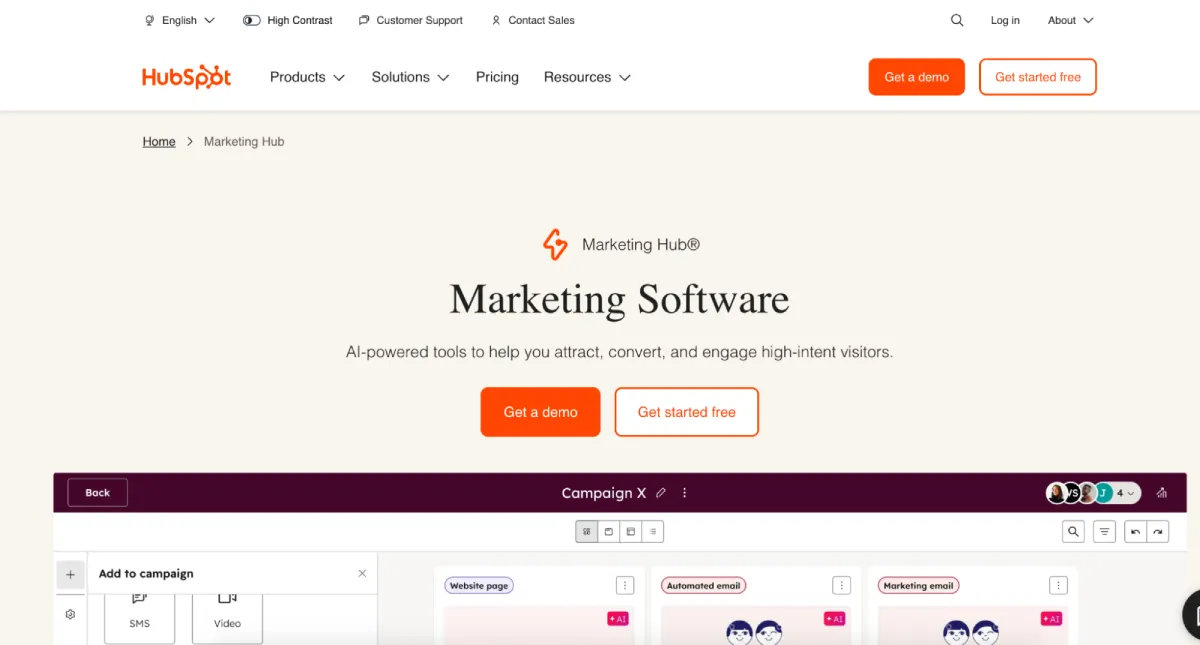
HubSpot is one of the best tools for businesses that want an all-in-one solution combining CRM, marketing, and service. It’s intuitive and user-friendly, and it integrates seamlessly with HubSpot CRM. Its multi-channel automation includes email, social, and web campaigns, giving you everything you need in one package.
Pros:
- User-friendly interface;
- Robust analytics and reporting;
- Multi-channel campaigns;
- Scalable solution.
Cons:
- Prices can get rather high as your business starts to scale;
- Advanced features come with a learning curve.
2. ActiveCampaign
Those who are focused on deep automation and personalization will find a lot to love about ActiveCampaign. This tool is known for its powerful automation capabilities. With it, you can create intricate workflows using conditions, triggers, and personalized content. In addition, it easily integrates with hundreds of third-party apps and supports email and SMS campaigns.
Pros:
- Advanced segmentation;
- Multi-channel automation;
- Affordable compared to enterprise tools.
Cons:
- CRM features are less robust than HubSpot;
- Some workflows can be complex for beginners.
3. Mailchimp
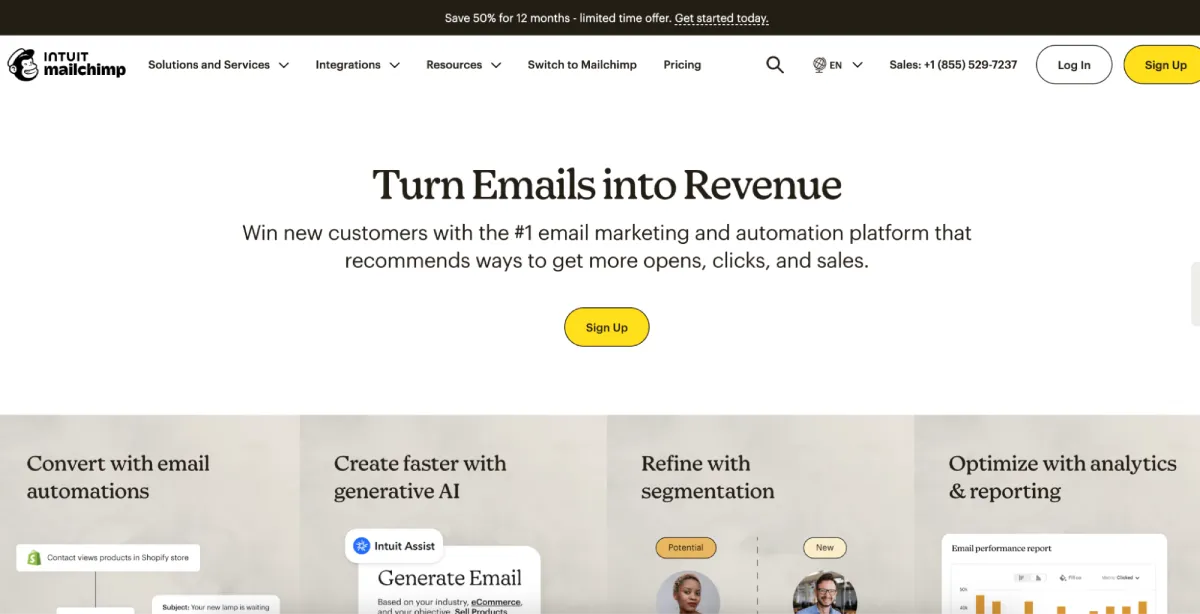
If you are a small business owner or new to marketing, Mailchimp might be the perfect solution for you. Its drag-and-drop automation makes it easy to set up email sequences, welcome messages, and customer journeys. And it also seamlessly fits in e-commerce platforms and analytics tools.
Pros:
- Easy to set up;
- Pre-built automation templates;
- Free tier available
Cons:
- Some advanced features are limited in the free plan;
- Costs increase quickly as your contact lists grow.
4. YouCam Online Editor API
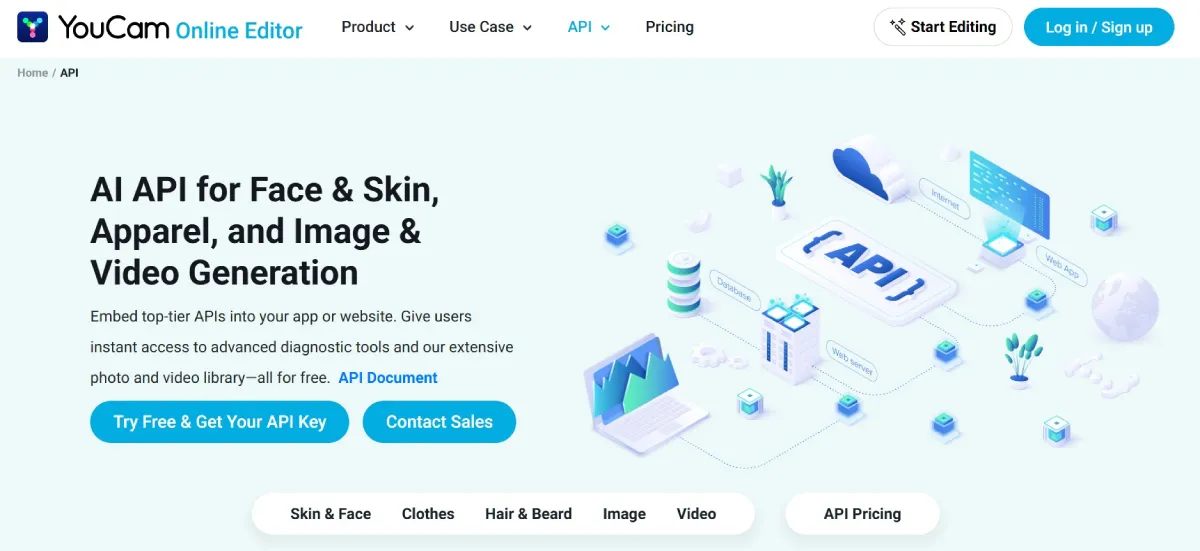
YouCam Online Editor’s AI API is one of the best marketing automation tools for teams looking to streamline visual content workflows. By leveraging its photo and video editing APIs, teams can automate tasks such as bulk photo or video upscaling, background removal, and other repetitive editing processes. This allows marketers to handle large volumes of visual content efficiently, freeing up time and resources while maintaining high-quality results. The API’s flexibility enables integration into existing platforms or campaigns, making it a powerful tool for marketing teams that want to scale content production with consistency and speed.
Pros:
- Scalable solution for processing large volumes of photos and videos
- Cost-efficient compared to manual editing or hiring additional staff
- Maintains consistent quality across all media assets
Cons:
- Requires developer resources to adjust API integration to fit specific workflows and team requirements
5. Sendinblue (Brevo)
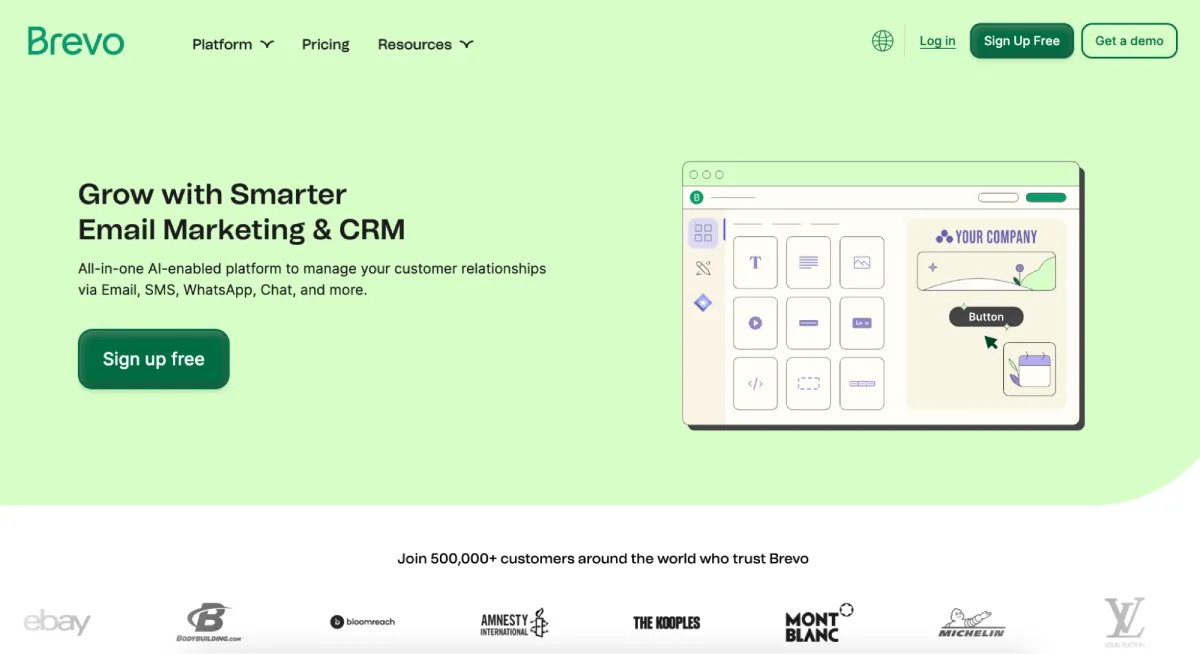
If you’re looking for a robust and budget-friendly tool for email and SMS automation, consider Sendinblue. This tool provides multi-channel automation, including email, SMS, and transactional messages, making it a great alternative for businesses that want functionality without enterprise costs.
Pros:
- Affordable pricing;
- SMS and email integration;
- Easy-to-use automation builder.
Cons:
- Limited advanced features;
- Some users note that the interface is somewhat convoluted.
6. Marketo Engage
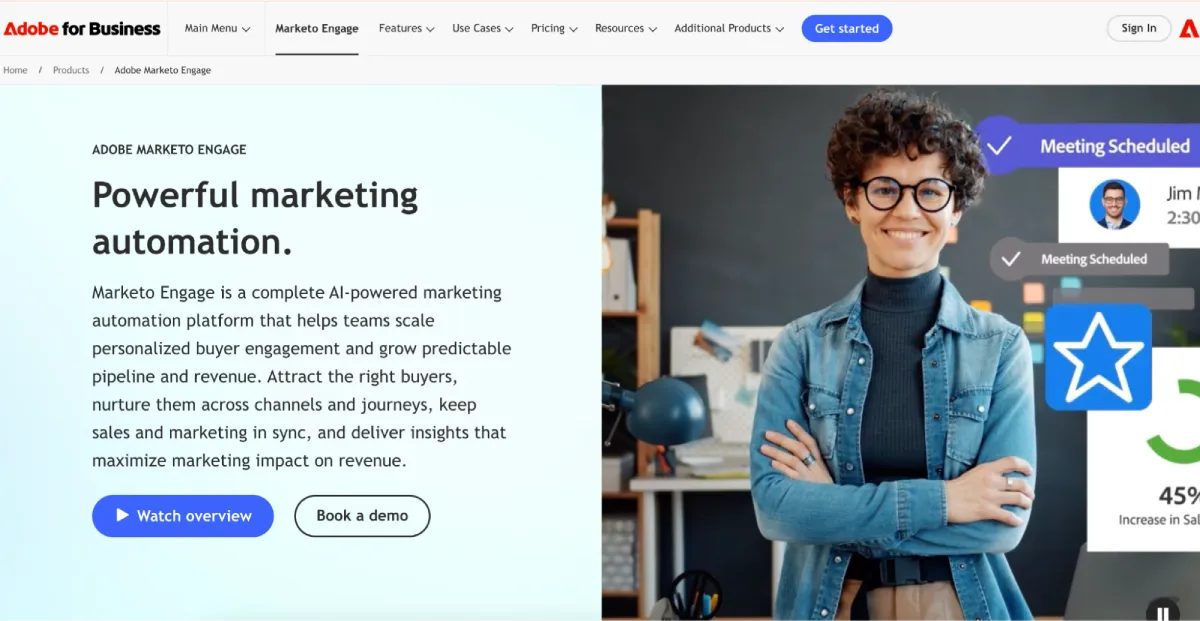
Mid-sized and large B2B companies often turn to Marketo Engage, and for good reason. This tool is one of the best solutions for heavyweight marketing automation. It offers automated lead nurturing, account-based marketing, and analytics, making it ideal for businesses with complex sales cycles.
Pros:
- Powerful B2B marketing features;
- Advanced analytics;
- Integration with Salesforce.
Cons:
- Expensive for small businesses;
- Complex setup.
7. Omnisend

If you’re an e-commerce business, Omnisend is definitely worth a look. Compared to its rivals, this tool significantly surpasses them in terms of automation capabilities for e-commerce workflows. It integrates with Shopify, WooCommerce, and BigCommerce, allowing you to automate abandoned cart emails, product recommendations, and post-purchase follow-ups.
Pros:
- Multi-channel for e-commerce;
- Pre-built automation workflows;
- Seamless integration with online stores.
Cons:
- Less useful for non-e-commerce businesses.
8. Bloomreach Engagement
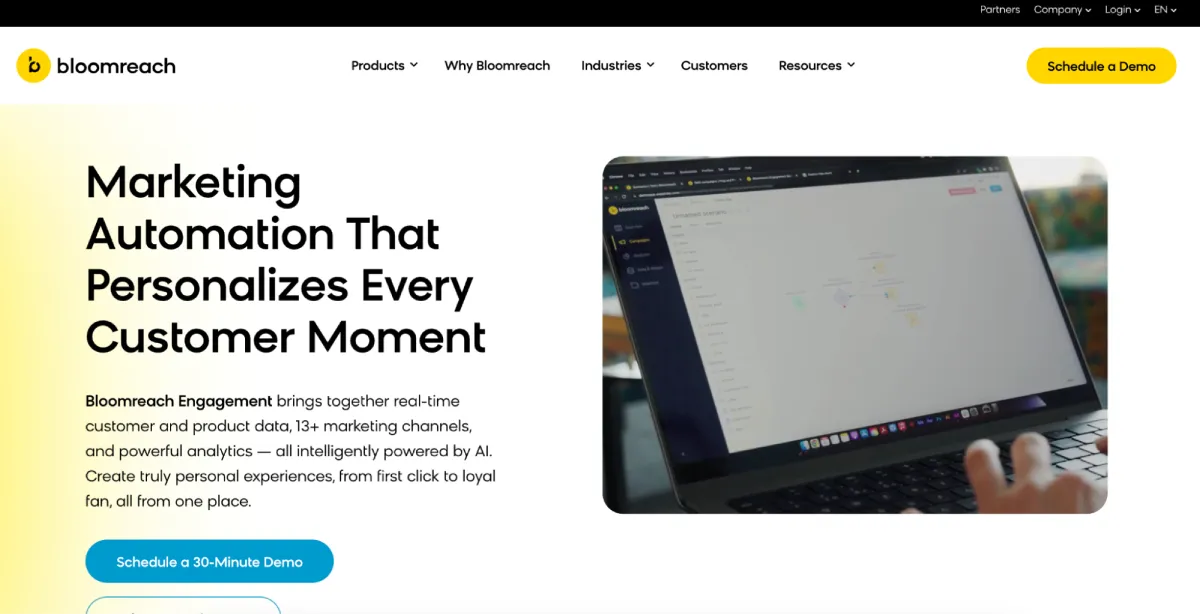
For brands combining commerce, content, and marketing, turning to Bloomreach is the best move. This tool allows businesses to personalize customer experiences using AI-driven recommendations. It also offers strong analytics, making it easy to track the progress of ad campaigns and adjust content based on real-time insights.
Pros:
- Personalized marketing automation;
- AI-driven insights;
- Strong analytics.
Cons:
- Can be overkill for smaller businesses.
9. Pardot (Salesforce)
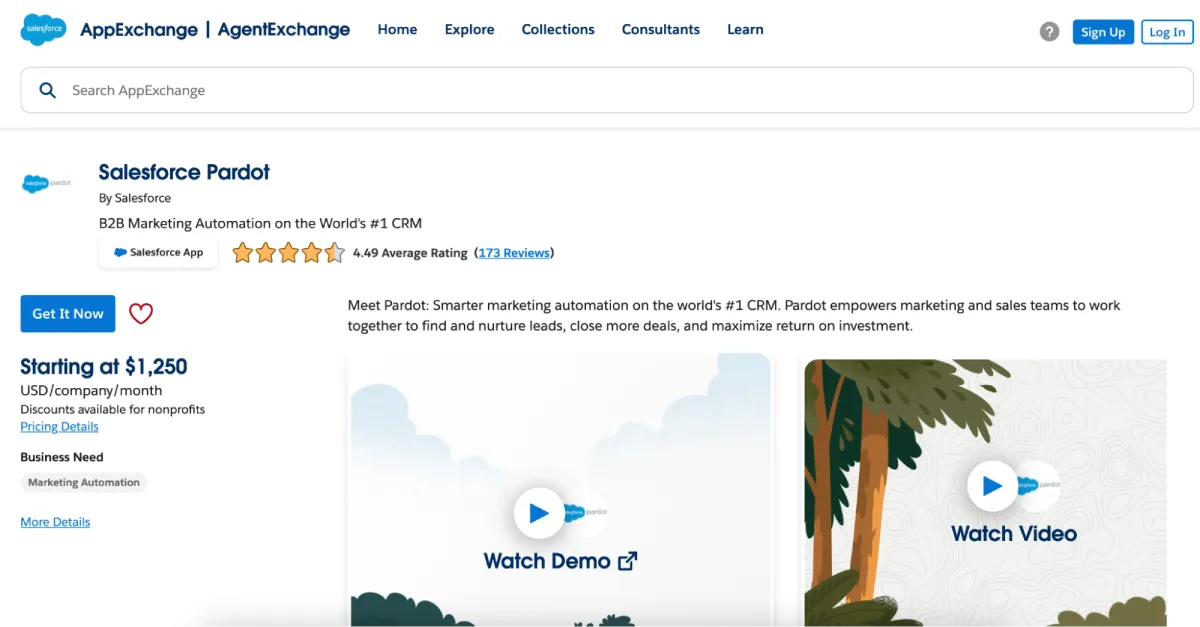
If your company’s already a user of the Salesforce ecosystem, Pardot is a natural choice. This platform provides advanced lead scoring, automation, and analytics, making it a go-to option for B2B companies that rely heavily on their sales pipeline. With Pardot, your marketing and sales teams can finally work in sync.
Pros:
- Deep Salesforce integration;
- Strong B2B lead management;
- Detailed reporting.
Cons:
- Expensive outside Salesforce;
- Can be complex to set up.
10. Act-On
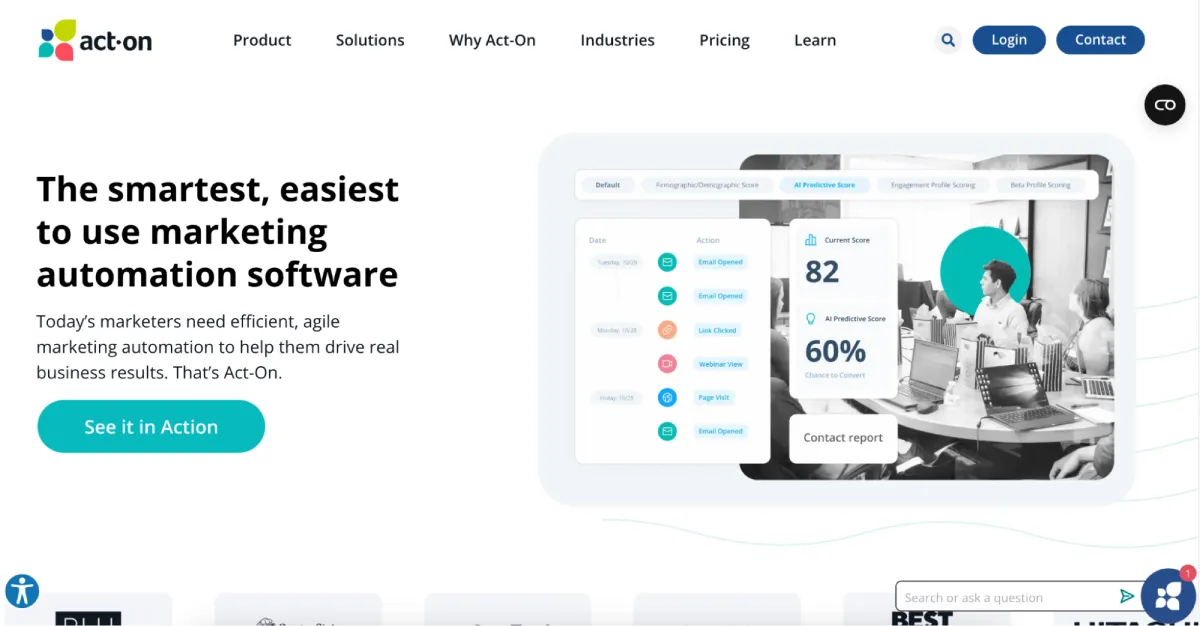
This list would be incomplete without Act-On, another great tool for small to mid-sized businesses. Act-On is big on features, providing you with everything you need for marketing campaigns. Email marketing, landing pages, social media prospecting, it can do it all. Plus, it can be easily integrated with CRMs, making it a go-to choice for growing companies.
Pros:
- Affordable for mid-sized companies;
- Multiple campaign types;
- Good reporting features.
Cons:
- Less advanced compared to enterprise tools;
- The interface may feel dated.
11. LeadSquared
For teams focused on lead management and sales alignment, this platform does the trick. From capturing leads to nurturing them and then eventually converting them to customers, it keeps every step of the marketing funnel well-organized. And its price tag is much more affordable than some other similar platforms.
Pros:
- Strong lead nurturing;
- Sales funnel integration;
- Affordable pricing.
Cons:
- Interface may feel less modern;
- Limited multi-channel features compared to competitors.
12. Clodura.ai
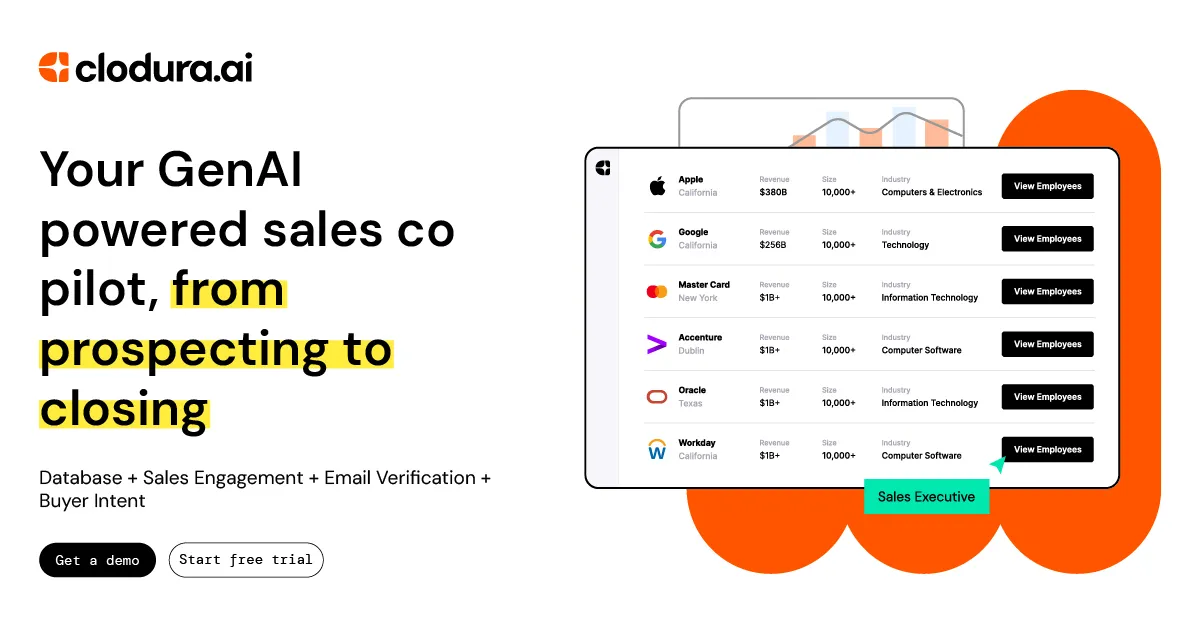
Clodura.AI is an all-in-one sales intelligence and lead generation platform designed to help businesses find, connect, and convert their ideal prospects effortlessly. With over 600 million verified contacts and 50 million company profiles, Clodura.AI combines data accuracy, AI automation, and intent-driven insights to supercharge your outbound and inbound sales efforts.
Pros:
- Combines lead data, intent insights, and automation in one unified platform.
- Cost-effective compared to traditional enterprise tools.
- No credit limitations, use the platform freely without worrying about extra charges.
- Easy-to-use interface with advanced filters for hyper-targeted prospecting.
- Real-time data updates for improved accuracy and reliability.
Cons:
-
Primarily focused on B2B use cases, not designed for B2C businesses.
13. Templated (Image Automation API)
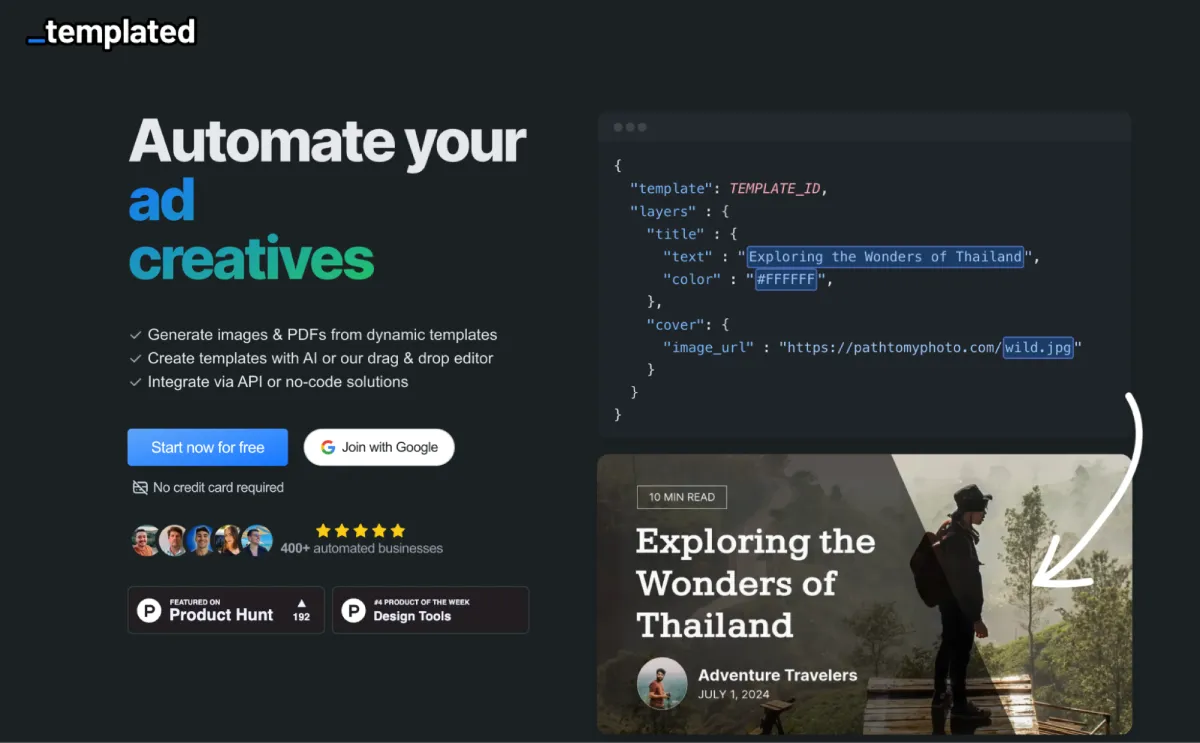
If your marketing team frequently needs to create the same type of image in bulk like social posts, banners, product cards, ads, or report graphics but with different text, photos, information every time, Templated is the tool built precisely for that. Instead of manually editing each asset, you design a template once and let Templated’s automation generate thousands of variations instantly. You can change anything dynamically, text, images, icons, URLs, CTAs while keeping the layout and branding consistent.
This makes Templated perfect for businesses that produce lots of recurring visuals: agencies, SaaS companies, marketplaces, e-commerce stores, and teams that need to scale content without spending hours inside a design tool. With both an Image Automation API and a fully functional graphic design editor like Canva that you can embed into your product, Templated brings automation, speed, and on-brand accuracy all in one place.
Pros:
- Automates bulk image generation using dynamic variables
- Change text, images, colours, and more through API or no-code tools
- White-label editor SDK allows in-app editing
- Make/Zapier integrations for quick automation workflows
- Ensures brand consistency across all creative assets
Cons:
- Requires initial template setup
14. Storydoc
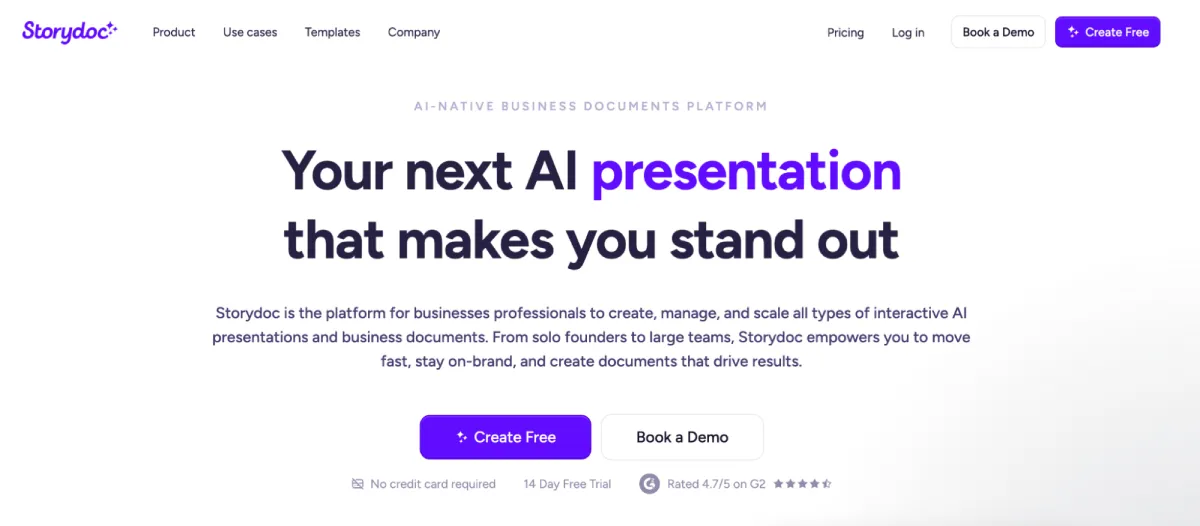
Storydoc stands out as a powerful tool for marketers who want to turn static content into interactive experiences that boost engagement and conversions.
Unlike traditional decks or static PDFs, Storydoc enables you to create stunning, dynamic business documents that feel more like a personalized web experience than a slide deck.
What makes Storydoc especially effective in marketing automation is its smart personalization capabilities and deep integrations.
It connects seamlessly with over 3,000 apps via Zapier or Storydoc’s own native integrations, allowing you to pull in live data, personalize decks at scale, and automate follow-ups based on viewer behavior. This means your content not only looks better, but it also works harder for you.
Pros:
- Transforms static decks into high-performing interactive experiences
- Easily integrates with 3,000+ apps via Zapier or native API
- Tracks engagement metrics like scroll depth, time on page, and CTA clicks
- Lets you collaborate with your team members in real time
Cons:
- More advanced analytics and integrations require the Pro plan
- If you’re used to static slides, the interactive format may take some adjustment
15. Walls.io
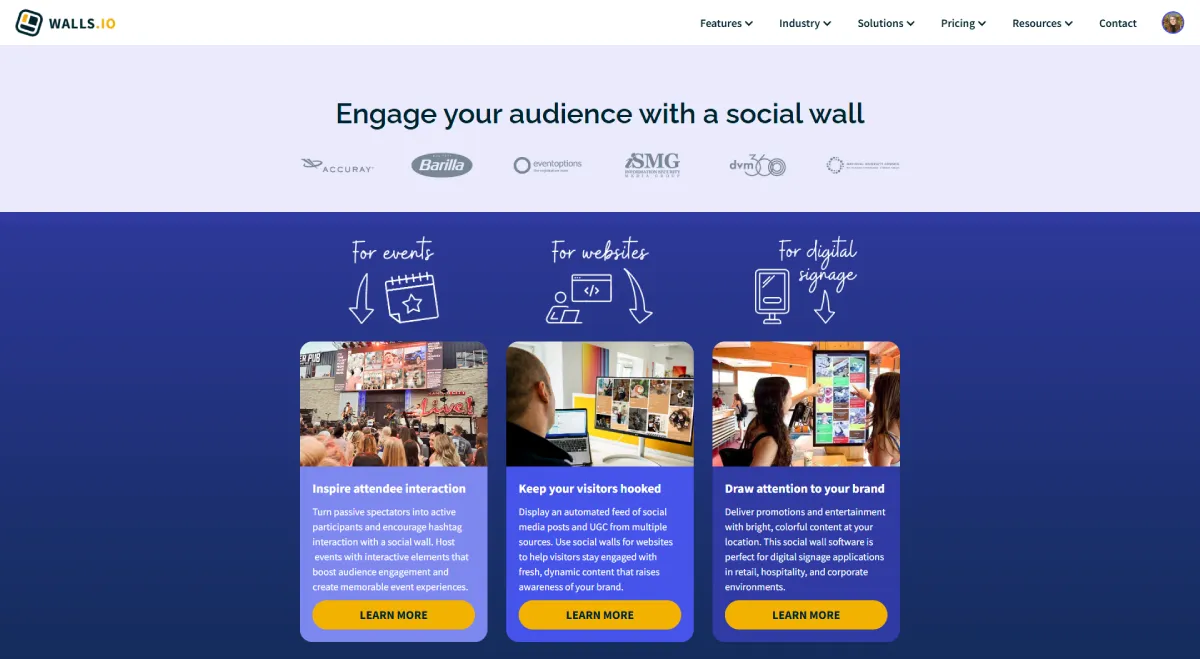
Walls.io automates the collection and display of social media and QR uploads, helping marketers turn UGC into always-on engagement. Brands use it to power event screens, landing pages, and marketing campaigns without manual content curation. With GDPR-friendly moderation, Direct Posts, and easy embeds, it’s a smart way to keep your marketing touchpoints fresh, interactive, and social-proof driven.
Pros:
- Automates UGC aggregation across platforms
- GDPR-safe moderation + Direct Posts
- Works for events, websites & internal engagement
Cons:
- Requires light setup to match brand design
Making Automation Work
Before we wrap it all up, it’s important to note that even the best platform won’t deliver results if you don’t use it wisely. If you want to really hit it, you need to steer the direction. Here’s what you should do:
- Start small. You don’t need to automate everything once. Start with one workflow. Once you’re ready to scale, proceed to the next one.
- Segment your audience. Divide your contacts based on their behavior, preferences, and purchase history. This will help ensure your message reaches the right people.
- Use triggers wisely. Behavioral triggers like email opens, clicks, or website visits allow you to engage leads at the right moment.
- Test and optimize. Run A/B tests on subject lines, send times, and messaging. With automation, you can do it in a fraction of the time.
- Keep lists clean. Regularly vet your contacts to ensure only those who engage with your campaigns stay on your list.
- Align marketing with sales. Automated workflows should feed qualified leads to sales teams, improving conversion rates.
Conclusion
To cut to the chase, marketing automation is no longer optional. It’s what businesses need to invest in to ensure they stay on track and see growth. And it’s certainly not about doing less. By letting automation tools do the heavy lifting for you, you can devote more time to what truly matters and drive your business towards success.
In this guide, we’ve covered some of the most popular marketing automation platforms for businesses of all sizes. Whether you’re a marketing specialist, a small business owner, or a big corporation, you’ll find the right tool for your needs. Start small, track the progress, and the results are sure to impress you!


Leave a Reply