

Essential Tools for Ecommerce That Ensure Business Success
Running a successful e-commerce business requires more than just a great product. It demands a strategic approach, supported by the right tools, to optimize operations, enhance customer experience, and drive growth. Choosing the best ecommerce tools and ecommerce platforms is essential for staying competitive and meeting evolving customer expectations. From managing inventory to streamlining marketing efforts, ecommerce tools play a crucial role in helping businesses thrive in a competitive environment.
This article explores key categories of tools that ensure ecommerce business success, highlighting their benefits and how they integrate into your online store’s ecosystem. A comprehensive solution, including analytics software and AI tools, can help boost conversions and optimize conversion rates by providing actionable insights and automating key processes.
Website Construction Tools: Building a Strong Online Presence
Website construction tools are fundamental for creating and maintaining a professional e-commerce website that attracts and retains customers. Content management systems are essential for managing website content, such as blog entries and product listings. These platforms offer user-friendly interfaces, customizable templates, and seamless integration with e-commerce functionalities such as product listings, payment gateways, and marketing tools.
Popular website builders like Shopify, Wix, and WooCommerce provide scalable solutions suitable for businesses of all sizes. Wix is suitable for beginners with simpler, budget-friendly, or small-scale needs. Shopify is considered the top user-friendly platform with an extensive app ecosystem for scaling. WooCommerce is best for WordPress users requiring high customization and is open-source. They enable ecommerce brands to launch quickly, optimize user experience, and manage content across multiple platforms efficiently.
Using website construction tools ensures your ecommerce site is visually appealing, mobile-friendly, and optimized for search engines, helping to boost traffic, improve customer engagement, and drive sales growth.
Project Management Tools: Keeping Your Team Aligned and Productive
Effective project management is foundational to the smooth operation of any e-commerce business. Project management tools like Lark, Asana, and Trello help ecommerce teams collaborate, organize marketing tasks, and track progress across multiple projects. Whether launching a new marketing campaign, managing product development, or coordinating shipping logistics, these tools ensure deadlines are met and resources are used efficiently.

Popular project management platforms offer features such as task assignments, calendar integrations, progress tracking, and real-time communication. These tools enable ecommerce teams to coordinate marketing tasks efficiently by centralizing workflows, reducing miscommunication, and increasing transparency, which improves overall team productivity and customer satisfaction.
Product Information Management (PIM) and Content Creation Tools: Enhancing Product Data and Marketing Content
Product Information Management (PIM) systems centralize and manage all product-related data, ensuring accuracy and consistency across multiple sales channels and e-commerce platforms. A robust PIM helps ecommerce businesses streamline product data updates, manage complex catalogs, and deliver rich, detailed product information that improves customer experience and supports better purchasing decisions.
Complementing PIM systems, content creation tools enable e-commerce teams to produce high-quality marketing visuals, product descriptions, and promotional materials efficiently. Canva Pro is best for designing marketing visuals, ad creatives, and product mockups, empowering marketers to create engaging graphics, social media posts, and ad creatives without extensive design expertise, helping to maintain brand consistency and attract customer attention. Additionally, some tools can automate the process of creating product descriptions, streamlining content production for ecommerce teams.
Together, PIM and content creation tools play a crucial role in optimizing product presentation, boosting conversions, and supporting effective e-commerce marketing strategies.
Inventory Management Systems: Maintaining Stock Accuracy and Availability
Inventory management systems provide real-time visibility into stock levels, helping e-commerce businesses avoid costly stockouts or overstock situations. These tools track product quantities across multiple channels, including various sales platforms and warehouses, automate approval for purchase and reorder alerts, and integrate with order fulfillment processes. Zoho Inventory is a robust, cloud-based tool for tracking stock levels and managing multi-channel selling.
Accurate inventory management supports a better customer experience by ensuring products are available when customers want to purchase them. It also aids in optimizing storage costs and streamlining supply chain operations.
Customer Relationship Management (CRM) Software: Building Strong Customer Connections
CRM software enables e-commerce brands to manage and analyze customer interactions and data throughout the customer journey. By capturing purchase history, preferences, and engagement patterns, CRM tools like Lark, Slack, and Salesforce help businesses analyze customer lifetime value and gain valuable customer insights, allowing them to personalize marketing messages, improve customer retention, and boost lifetime value.
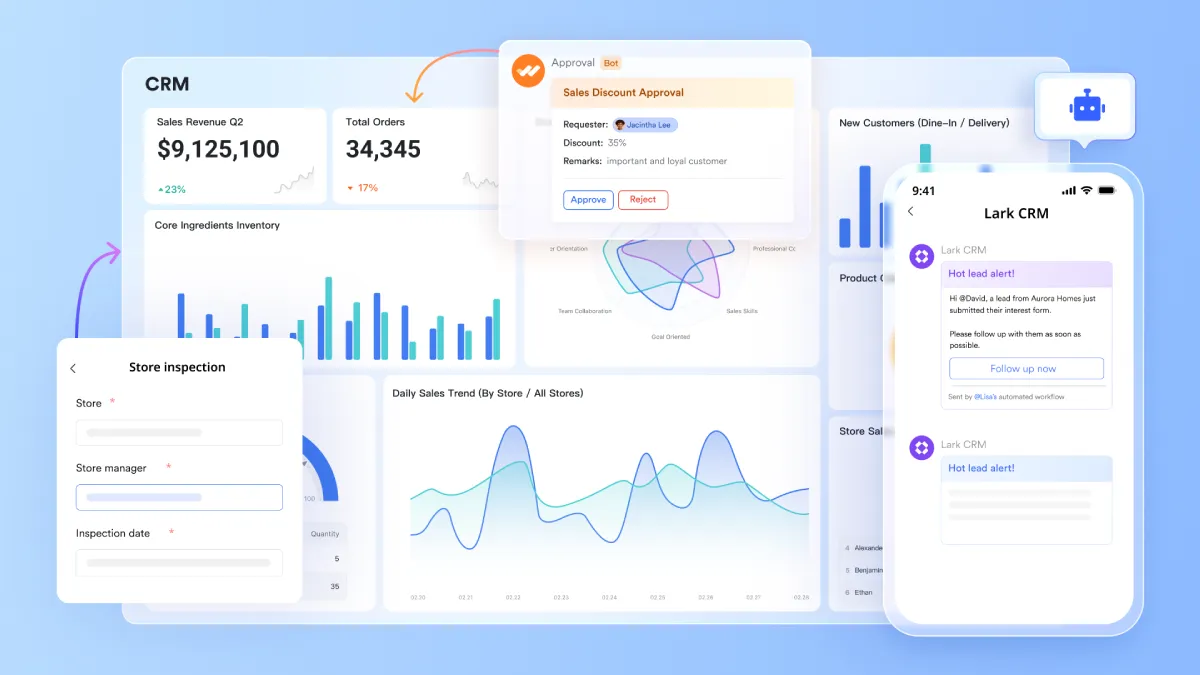
With CRM platforms, such as HubSpot—a robust CRM for managing customer relationships and inbound marketing—e-commerce teams can segment audiences, automate email campaigns, and deliver targeted promotions that resonate with individual customers, fostering loyalty and repeat business.
Marketing Automation Tools: Driving Efficient and Personalized Campaigns
Marketing automation tools simplify the execution of marketing strategies by automating repetitive tasks such as email marketing, social media posting, and customer segmentation. These tools are essential for ecommerce marketing, helping businesses efficiently manage and optimize their marketing campaigns. They use customer data and behavior insights to send personalized messages at the right time, increasing engagement and conversion rates.
Klaviyo specializes in tailored email and SMS marketing for ecommerce, allowing hyper-segmentation, while Omnisend is known for combining email and SMS with strong, easy-to-use automation workflows.
By integrating marketing automation into your e-commerce platform, you can optimize your marketing efforts, analyze data to measure campaign performance, and make informed decisions to maximize ROI.
Finance and Tax Compliance Tools: Managing Financial Accuracy and Regulatory Requirements
Finance and tax compliance tools are essential for e-commerce businesses to ensure accurate financial management and adherence to tax regulations. These tools automate invoicing, expense tracking, and tax calculations, reducing the risk of errors and saving valuable time.
By integrating with your e-commerce platform, finance tools provide real-time financial reporting and insights, helping businesses monitor cash flow, profitability, and tax obligations. Tax compliance software simplifies the complexities of sales tax collection, filing, and remittance across multiple jurisdictions, ensuring your business stays compliant with ever-changing regulations.
Utilizing finance and tax compliance tools helps ecommerce businesses maintain financial health, avoid costly penalties, and focus on growth with confidence.
Analytics Tools: Gaining Insights to Make Data-Driven Decisions
Understanding customer behavior and website performance is essential for continuous improvement. Analytics software is crucial for any ecommerce website or ecommerce store, as it provides comprehensive data insights on website traffic, conversion rates, average order value, customer lifetime value, and other key performance indicators. Online businesses rely on these tools to analyze customer behavior, segment data, and measure marketing effectiveness, enabling them to make informed decisions and drive growth.
Key analytics tools for ecommerce include Google Analytics 4, which is essential for tracking user behavior, traffic sources, and ROI; Shopify Analytics, a built-in ecommerce tool for all Shopify stores to monitor quantitative metrics; Mixpanel, a data analytics platform that collects data on every customer touchpoint; Woopra, an advanced customer journey and ecommerce analytics software that tracks every customer interaction; Kissmetrics, a premium analytics solution for online businesses with significant monthly sales; Hotjar, which provides heatmaps, session recordings, and funnel analysis to identify on-site friction; Contentsquare, an experience intelligence platform offering deep insights into user behavior and friction points; Surfer SEO, which analyzes top-ranking pages to deliver a data-driven optimization checklist for product pages; and Triple Whale, specialized for Shopify-first attribution and analytics for DTC teams.
Automated analytics tools help businesses track performance and adjust strategies in real-time. Advanced reporting features in analytics software offer deeper, customizable insights beyond basic metrics. Ecommerce analytics tools can track metrics like conversion rate, average order value, and customer lifetime value, helping businesses make data-driven decisions to optimize their ecommerce operations. The best AI tools can further enhance advanced analytics and reporting, providing actionable intelligence for ecommerce growth.
These insights help ecommerce businesses identify strengths and weaknesses in their operations, optimize product pages, and refine marketing strategies to meet customer expectations better.
Payment Processing Solutions: Ensuring Secure and Seamless Transactions
Secure and efficient payment gateways are vital for customer trust and smooth checkout experiences. Leading payment processing tools support multiple payment methods and currencies, and comply with security standards to protect sensitive data. Stripe provides payment processing APIs that handle everything from simple transactions to complex commerce workflows. ShipStation is the industry standard for managing orders, printing labels, and automating shipping across multiple carriers. Integrating payment and shipping solutions with third-party systems is essential for seamless operations and scalable infrastructure in ecommerce.
Integrating reliable payment solutions reduces cart abandonment and enhances the overall e-commerce presence.
AI-Powered Tools: Leveraging Artificial Intelligence for Smarter E-commerce
AI-powered tools are genuinely reshaping how e-commerce businesses connect with their customers, bringing thoughtful solutions that help you better understand shopping behaviors and create meaningful engagement. Through sophisticated machine learning algorithms, these reliable tools can thoughtfully examine comprehensive customer data—from purchase histories to browsing preferences—delivering personalized recommendations and targeted marketing messages that truly speak to each shopper’s needs.
Smart AI tools, including responsive chatbots, can efficiently address customer inquiries around the clock, enhancing satisfaction while allowing your valuable team members to concentrate on strategic, high-impact initiatives. Machine learning capabilities can also thoughtfully refine your marketing approach by identifying emerging trends, creating targeted audience segments, and streamlining campaign management—all contributing to improved conversion rates and enhanced order values. When you thoughtfully integrate AI-powered solutions into your e-commerce operations, you can effectively streamline your marketing efforts, develop valuable insights into customer preferences, and build a genuinely engaging shopping experience that naturally fosters customer loyalty and encourages repeat business.
Conversion Rate Optimization: Turning Visitors into Loyal Customers
Conversion rate optimization (CRO) represents a wonderful opportunity to transform your website visitors into devoted customers while unlocking the full revenue potential of your online store. When you take the time to thoughtfully analyze customer behavior using powerful analytics tools like Google Analytics, your e-commerce business can discover exactly where users might be hesitating in the sales funnel and reveal exciting possibilities to enhance their entire journey with you.
Smart CRO strategies can make a genuine difference – from crafting product pages that truly resonate with clarity and appeal, to creating seamless checkout experiences that feel effortless for your customers, and providing thoughtful personalized recommendations that feel genuinely helpful. Proven techniques like A/B testing and thoughtful user experience (UX) improvements work beautifully to ensure every element of your site confidently supports higher conversion rates. When you commit to continuously improving your online store with solid data-driven insights, you’ll find yourself naturally boosting customer satisfaction, building stronger customer loyalty, and creating the foundation for lasting, sustainable growth in your e-commerce business.
Staying Competitive: Strategies and Tools for Long-Term E-commerce Success
E-commerce success demands strategic thinking, yet practical execution remains key. Focus on customer satisfaction and loyalty, but balance this with operational efficiency. Smart businesses invest in solid CRM software and inventory systems, yet they ensure these tools integrate smoothly. Customer service solutions matter, but they must handle inquiries both promptly and professionally.
Analytics tools like Google Analytics provide valuable insights, yet meaningful action drives real results. E-commerce teams can understand customer behavior, but continuous optimization creates lasting impact. A customer-centric approach works well, yet leveraging quality tools amplifies success. Businesses enhance their customer experience and boost sales, but staying competitive requires ongoing effort. Keep informed about trends and technologies, yet remain adaptable and resilient in this changing market.
Conclusion
Success in e-commerce hinges on choosing and effectively using the right tools tailored to your business needs. From project management to payment processing, each category of tools contributes to operational efficiency, enhanced customer experience, and sustainable growth.
By investing in a well-rounded suite of ecommerce tools and ensuring seamless integration among them, businesses can stay competitive, respond to customer expectations, and build lasting relationships that drive long-term success.


Leave a Reply