
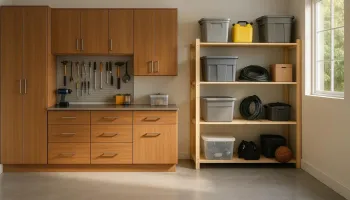
Garage cabinets that actually hold weight without warping or sagging
Garages are often treated as storage spaces rather than finished parts of the home. Tools, equipment, boxes, and seasonal items are stacked wherever there is room. Over time, this leads to clutter and damaged belongings. Many homeowners turn to garage cabinets for organization, only to find that some cabinets fail under real use.
Unlike kitchen or bathroom cabinets, garage cabinets must handle heavy loads and rough conditions. Power tools, hardware, paint cans, and sports gear put constant stress on cabinet structures. When cabinets are not built for this purpose, they warp, sag, or pull away from the wall. This problem is common and usually comes down to poor design and material choices.
Experienced builders such as Reza Custom Cabinet & Vanity often see garages where cabinets were added as an afterthought. Understanding what makes garage cabinets strong enough for real storage helps homeowners avoid wasted money and ongoing frustration.
Why garages place more stress on cabinets
Garages experience wider temperature changes than most indoor spaces. Heat in summer and cold in winter cause materials to expand and contract. This movement weakens weak cabinet structures over time.
Garages also store heavier items than other rooms. Tools, auto supplies, and bulk storage add constant weight. Cabinets not designed for load bearing struggle under this pressure.
Humidity and dust add another layer of stress. Together, these conditions demand stronger cabinet construction than standard indoor cabinetry.
Common reasons garage cabinets fail early
Many garage cabinets fail because they are built like kitchen cabinets. Thin panels, weak fasteners, and shallow shelves are not suited for heavy use. Over time, shelves bow and joints loosen.
Another issue is poor wall attachment. Cabinets that are not properly anchored begin to sag as weight increases. This creates safety risks and reduces usable storage.
Using materials not rated for garage conditions is another frequent mistake. These materials may look fine at first but degrade quickly.
Material thickness makes a major difference
The thickness of cabinet panels directly affects strength. Thin materials bend under load, especially over long shelf spans. Once bending starts, it usually gets worse.
Strong garage cabinets use thicker panels that resist flexing. This keeps shelves level and doors aligned even when fully loaded.
Material thickness also affects screw holding strength. Thicker panels hold fasteners more securely, improving long term stability.
Why shelf span and support matter
Long, unsupported shelves are a common cause of sagging. Even strong materials can bend if the span is too wide. Many prebuilt cabinets ignore this issue.
Properly designed garage cabinets limit shelf span or add supports. Center supports or reinforced edges help distribute weight evenly.
This design detail often determines whether cabinets last years or fail within months.
The importance of proper wall mounting
Garage cabinets must be securely mounted to wall framing. Attaching cabinets only to drywall is not enough. Over time, weight pulls fasteners loose.
Mounting systems should be designed to spread load across multiple studs. This reduces stress on individual fasteners and keeps cabinets level.
Strong wall attachment protects both the cabinets and the items stored inside them.
Drawer construction for heavy tools
Drawers in garage cabinets face unique demands. They often hold tools that are dense and heavy. Weak drawer boxes or slides fail quickly under this load.
Strong drawer construction uses reinforced joints and heavy duty slides. This allows drawers to open smoothly even when fully loaded.
Without proper construction, drawers stick, tilt, or collapse. This makes them unreliable and frustrating to use.
Door alignment under load stress
Heavy cabinets put pressure on door frames and hinges. If these components are weak, doors shift out of alignment. This causes rubbing and uneven gaps.
Good garage cabinets use sturdy hinges and reinforced frames. This keeps doors aligned even as weight changes over time.
Proper alignment is not just about appearance. It affects how easily cabinets open and close during daily use.
Why moisture resistance still matters in garages
Garages may not have plumbing, but moisture is still present. Humidity, rainwater, and snowmelt all introduce moisture into the space.
Materials that absorb moisture swell and weaken. This accelerates sagging and warping. Even small moisture exposure adds up over time.
Garage cabinets should use materials and finishes that resist moisture to maintain strength.
Custom sizing improves load distribution
Standard cabinet sizes often lead to inefficient storage. Heavy items may be concentrated in one area, increasing stress on shelves.
Custom garage cabinets allow sizing based on actual storage needs. Shelf heights and widths are planned for specific items.
This spreads weight more evenly and reduces stress on individual components.
Why off the shelf cabinets fall short
Many off the shelf garage cabinets are designed for light storage. They may hold cleaning supplies or small tools but struggle with heavier loads.
Marketing often focuses on appearance rather than strength. Homeowners assume cabinets can handle more than they actually can.
Understanding these limitations helps homeowners avoid cabinets that look solid but fail under use.
How custom construction supports real storage
Custom built garage cabinets are designed with purpose. Materials are chosen for strength, not just cost. Construction methods focus on durability.
Reinforced shelves, proper mounting, and strong joinery work together to prevent sagging. Cabinets remain stable even when fully loaded.
Companies like Reza Custom Cabinet & Vanity apply this approach to ensure garage cabinets perform reliably under daily use.
Planning garage storage around actual needs
Every garage is used differently. Some store tools, others store sports gear or bulk supplies. Designing cabinets without understanding these needs leads to problems.
Planning storage around real items helps determine shelf strength, spacing, and cabinet layout. This improves both organization and durability.
A well planned garage works better and stays organized longer.
Signs your garage cabinets are underbuilt
Sagging shelves are the most obvious sign. Doors that no longer close properly are another. Cracking sounds under load indicate joint stress.
These signs usually worsen over time. Ignoring them risks cabinet failure and damage to stored items.
Addressing design issues early prevents more serious problems later.
Long term value of strong garage cabinets
Strong garage cabinets reduce replacement costs. They protect stored items and improve safety. Over time, they save money and effort.
Well built cabinets also improve garage usability. Storage becomes easier to access and maintain.
This long term value makes proper cabinet construction worth the investment.
Making smart choices for garage storage
Homeowners should look beyond appearance when choosing garage cabinets. Asking about material thickness, shelf support, and mounting methods is important.
Working with experienced professionals helps ensure cabinets are designed for real use. Strength should be the priority, not just style.
Thoughtful choices lead to storage that works reliably for years.
Building a garage that works as hard as you do
A garage should support projects, hobbies, and storage needs without constant adjustment. Cabinets play a central role in this function.
Garage cabinets that resist warping and sagging create confidence. Homeowners can store heavy items without worry.
Choosing experienced builders like Reza Custom Cabinet & Vanity helps ensure garage cabinets are built to handle real weight, real conditions, and real daily use.
Garage cabinets that actually hold weight without warping or sagging
Garages are often treated as storage spaces rather than finished parts of the home. Tools, equipment, boxes, and seasonal items are stacked wherever there is room. Over time, this leads to clutter and damaged belongings. Many homeowners turn to garage cabinets for organization, only to find that some cabinets fail under real use.
Unlike kitchen or bathroom cabinets, garage cabinets must handle heavy loads and rough conditions. Power tools, hardware, paint cans, and sports gear put constant stress on cabinet structures. When cabinets are not built for this purpose, they warp, sag, or pull away from the wall. This problem is common and usually comes down to poor design and material choices.
Experienced builders such as Reza Custom Cabinet & Vanity often see garages where cabinets were added as an afterthought. Understanding what makes garage cabinets strong enough for real storage helps homeowners avoid wasted money and ongoing frustration.
Why garages place more stress on cabinets
Garages experience wider temperature changes than most indoor spaces. Heat in summer and cold in winter cause materials to expand and contract. This movement weakens weak cabinet structures over time.
Garages also store heavier items than other rooms. Tools, auto supplies, and bulk storage add constant weight. Cabinets not designed for load bearing struggle under this pressure.
Humidity and dust add another layer of stress. Together, these conditions demand stronger cabinet construction than standard indoor cabinetry.
Common reasons garage cabinets fail early
Many garage cabinets fail because they are built like kitchen cabinets. Thin panels, weak fasteners, and shallow shelves are not suited for heavy use. Over time, shelves bow and joints loosen.
Another issue is poor wall attachment. Cabinets that are not properly anchored begin to sag as weight increases. This creates safety risks and reduces usable storage.
Using materials not rated for garage conditions is another frequent mistake. These materials may look fine at first but degrade quickly.
Material thickness makes a major difference
The thickness of cabinet panels directly affects strength. Thin materials bend under load, especially over long shelf spans. Once bending starts, it usually gets worse.
Strong garage cabinets use thicker panels that resist flexing. This keeps shelves level and doors aligned even when fully loaded.
Material thickness also affects screw holding strength. Thicker panels hold fasteners more securely, improving long term stability.
Why shelf span and support matter
Long, unsupported shelves are a common cause of sagging. Even strong materials can bend if the span is too wide. Many prebuilt cabinets ignore this issue.
Properly designed garage cabinets limit shelf span or add supports. Center supports or reinforced edges help distribute weight evenly.
This design detail often determines whether cabinets last years or fail within months.
The importance of proper wall mounting
Garage cabinets must be securely mounted to wall framing. Attaching cabinets only to drywall is not enough. Over time, weight pulls fasteners loose.
Mounting systems should be designed to spread load across multiple studs. This reduces stress on individual fasteners and keeps cabinets level.
Strong wall attachment protects both the cabinets and the items stored inside them.
Drawer construction for heavy tools
Drawers in garage cabinets face unique demands. They often hold tools that are dense and heavy. Weak drawer boxes or slides fail quickly under this load.
Strong drawer construction uses reinforced joints and heavy duty slides. This allows drawers to open smoothly even when fully loaded.
Without proper construction, drawers stick, tilt, or collapse. This makes them unreliable and frustrating to use.
Door alignment under load stress
Heavy cabinets put pressure on door frames and hinges. If these components are weak, doors shift out of alignment. This causes rubbing and uneven gaps.
Good garage cabinets use sturdy hinges and reinforced frames. This keeps doors aligned even as weight changes over time.
Proper alignment is not just about appearance. It affects how easily cabinets open and close during daily use.
Why moisture resistance still matters in garages
Garages may not have plumbing, but moisture is still present. Humidity, rainwater, and snowmelt all introduce moisture into the space.
Materials that absorb moisture swell and weaken. This accelerates sagging and warping. Even small moisture exposure adds up over time.
Garage cabinets should use materials and finishes that resist moisture to maintain strength.
Custom sizing improves load distribution
Standard cabinet sizes often lead to inefficient storage. Heavy items may be concentrated in one area, increasing stress on shelves.
Custom garage cabinets allow sizing based on actual storage needs. Shelf heights and widths are planned for specific items.
This spreads weight more evenly and reduces stress on individual components.
Why off the shelf cabinets fall short
Many off the shelf garage cabinets are designed for light storage. They may hold cleaning supplies or small tools but struggle with heavier loads.
Marketing often focuses on appearance rather than strength. Homeowners assume cabinets can handle more than they actually can.
Understanding these limitations helps homeowners avoid cabinets that look solid but fail under use.
How custom construction supports real storage
Custom built garage cabinets are designed with purpose. Materials are chosen for strength, not just cost. Construction methods focus on durability.
Reinforced shelves, proper mounting, and strong joinery work together to prevent sagging. Cabinets remain stable even when fully loaded.
Companies like Reza Custom Cabinet & Vanity apply this approach to ensure garage cabinets perform reliably under daily use.
Planning garage storage around actual needs
Every garage is used differently. Some store tools, others store sports gear or bulk supplies. Designing cabinets without understanding these needs leads to problems.
Planning storage around real items helps determine shelf strength, spacing, and cabinet layout. This improves both organization and durability.
A well planned garage works better and stays organized longer.
Signs your garage cabinets are underbuilt
Sagging shelves are the most obvious sign. Doors that no longer close properly are another. Cracking sounds under load indicate joint stress.
These signs usually worsen over time. Ignoring them risks cabinet failure and damage to stored items.
Addressing design issues early prevents more serious problems later.
Long term value of strong garage cabinets
Strong garage cabinets reduce replacement costs. They protect stored items and improve safety. Over time, they save money and effort.
Well built cabinets also improve garage usability. Storage becomes easier to access and maintain.
This long term value makes proper cabinet construction worth the investment.
Making smart choices for garage storage
Homeowners should look beyond appearance when choosing garage cabinets. Asking about material thickness, shelf support, and mounting methods is important.
Working with experienced professionals helps ensure cabinets are designed for real use. Strength should be the priority, not just style.
Thoughtful choices lead to storage that works reliably for years.
Building a garage that works as hard as you do
A garage should support projects, hobbies, and storage needs without constant adjustment. Cabinets play a central role in this function.
Garage cabinets that resist warping and sagging create confidence. Homeowners can store heavy items without worry.
Choosing experienced builders like Reza Custom Cabinet & Vanity helps ensure garage cabinets are built to handle real weight, real conditions, and real daily use.


Leave a Reply