

How Does Freight Shipping Work Within Canada and Cross-Border?
There is something near filmic about viewing an eighteen wheeler cruising down the Trans Canada Highway or viewing a train winding its way through the Rocky Mountains. But behind each rolling trailer or box, there exists a highly optimized system that keeps factories supplied, store shelves filled, and homes delivered their online purchases in a timely manner. Knowing how it works is crucial to manufacturers, retailers, and businesses that wish to compete locally and globally. This guest blog dissects the ins and outs of freight shipping Canada, highlighting the processes that transport goods from Point A to Point B whether the journey terminates in Vancouver or continues on to Vermont.
The Two Main Channels of Freight Movement
Domestic Freight Shipping Canada
Freight shipping Canada offers a smooth and efficient process compared to international shipments. Carriers follow Transport Canada’s federal regulations while adapting to provincial guidelines such as weight limits, winter road considerations, and regional taxation. The benefit is a streamlined paperwork process with fewer handoffs, helping reduce delays and minimize the risk of damage.
Cross Border Freight to and from the United States
Canada and the United States share the world’s longest undefended border, and that friendly relationship is mirrored in the trade environment. Still, every load that leaves Canadian soil is subject to customs clearance, security inspections, and multiple layers of documentation. Carriers often partner with customs brokers to head off surprises at the border. When planned well, a truck can clear customs in under ten minutes. When documents are incomplete, the wait can stretch to hours.
Step by Step Breakdown of a Typical Shipment
-
Quoting and Booking
- Shippers tender freight details to several carriers weight, dimensions, commodity, origin, destination.
• Carriers return rate quotes factoring fuel, tolls, and any accessorial charges.
• The shipper compares transit time, cost, and service guarantees then books the load.
-
Pickup and Consolidation
- The driver arrives with an empty trailer or container.
• Freight is palletized and shrink-wrapped if needed.
• For less than truckload LTL shipments, the carrier may consolidate multiple customers’ pallets at its local terminal before line hauls.
-
Line Haul Transport
- Domestic loads may move directly from pickup city to delivery city.
• Cross border freight heads to a designated port of entry Windsor Detroit Blaine Peace Arch Emerson Pembina etc.
-
Border Clearance for International Loads
- Electronic manifests are submitted to both CBSA and CBP in advance.
• The driver presents a barcoded packet at the primary inspection booth.
• If selected for secondary inspection, the truck is X-rayed or physically searched.
-
Final Delivery
- The driver schedules an appointment if the consignee requires it.
• Freight is unloaded and signed for on a proof of delivery POD.
• Any exceptions to damage shortage overage are recorded.
Key Documents You Will Encounter
- Bill of Lading BOL contract between shipper and carrier.
- Commercial Invoice required for customs valuation.
- Customs Manifest ACI or ACE pre arrival filing.
- Certificate of Origin used to claim preferential tariffs under USMCA CUSMA.
- Packing List confirms inner contents for customs and warehouse teams.
What Determines the Cost of Freight Shipping Canada and Beyond
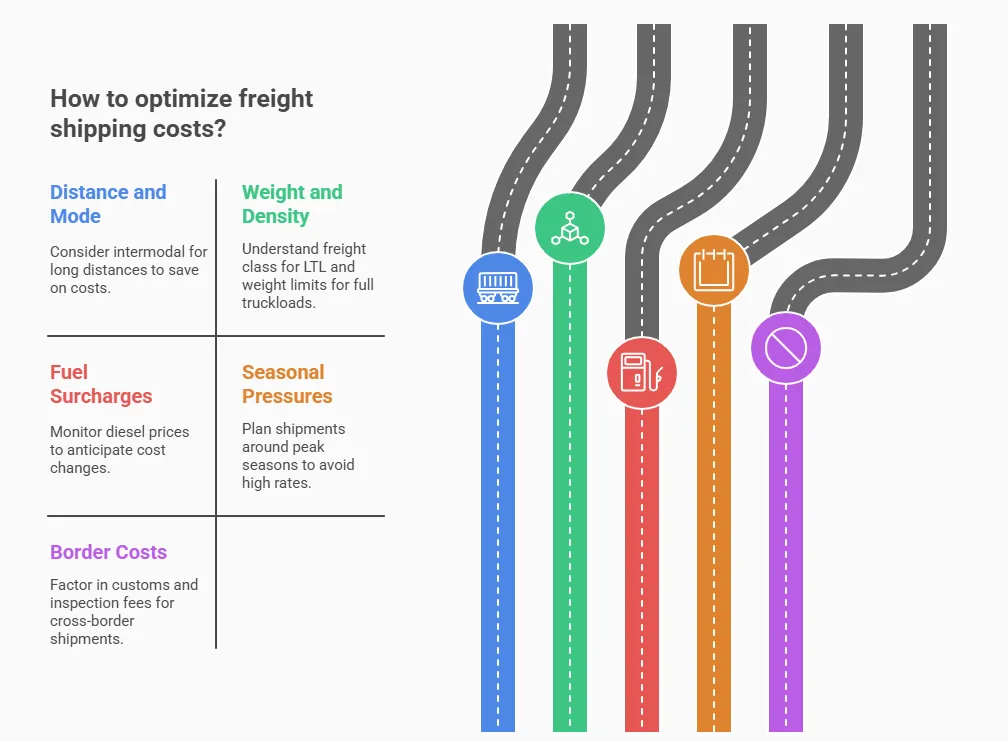
Distance and Mode
Trucking rates are typically quoted per mile while rail intermodal rates are per container slot. The farther the distance the more intermodal makes sense.
Weight and Density
Carriers price LTL by freight class which blends weight and cube. Full truckloads are quoted as a flat rate until the legal 80 000 pound gross weight cap.
Fuel Surcharges
Fluctuating diesel prices add a variable line item updated weekly.
Seasonal Pressures
The production season in British Columbia or Alberta’s energy equipment rush can tighten capacity sending spot rates skyward.
Border Costs
Customs brokerage fees, bonds and potential inspection fees apply only to cross border freight.
Domestic vs Cross Border Compliance Checklist
| Requirement | Domestic Canada | Canada to USA |
| Proof of delivery | Yes | Yes |
| Bill of lading | Yes | Yes |
| Commercial invoice | No | Yes |
| ACE eManifest | No | Yes |
| Driver FAST card recommended | Optional | Highly valued |
| Agriculture inspection fees | Rare | Possible |
Technology Tools That Smooth the Ride
- Transportation Management Systems TMS automates rate shopping and tendering.
- Electronic Logging Devices ELD keep drivers compliant with hours of service.
- Real time GPS visibility lets shippers track milestones en route.
- Electronic Data Interchange EDI or API connections streamline paperwork with customs and carriers.
Pointers for First Time Shippers
- Package your freight like it will travel twice the distance Cushioning and proper crating prevent damage when roads get bumpy or forklifts rush.
- Book early during peak seasons Capacity can vanish during back-to-school pushes or holiday retail surges.
- Leverage a customs broker Their small fee can save large headaches at the border.
- Insure high value cargo Carrier liability is limited by weight not invoice value.
- Build relationships Regular volume with a core carrier often unlocks better pricing and faster problem resolution.
Closing Thoughts
Freight shipping Canada is both an art and a science. Domestically it hinges on mastering provincial nuances and building strong carrier partnerships. Cross border demands rigorous attention to paperwork and ever changing customs regulations. Yet the payoff for getting it right is immense access to one of the world’s largest consumer markets and a dependable logistics framework that keeps trucks rolling even in a January snowstorm. By understanding each phase of the journey from quoting to final delivery and by tapping into modern technology shippers can navigate the highways, rail yards and border crossings with confidence. Whether you are sending a single pallet to Saskatoon or a full truckload to Seattle, freight shipping Canada offers a reliable bridge between opportunity and success.
Three Frequently Asked Questions
1 What is the fastest way to move freight shipping from Canada to the United States?
The fastest option is expedited truckload with team drivers who alternate driving shifts allowing the vehicle to stay in motion almost nonstop. Air freight is quicker in transit but door to door timelines often mirror expedited trucking due to extra hand-offs at airports.
2 How can I avoid delays at the border?
Submit complete and accurate customs documentation at least two hours before the truck arrives. Enroll in programs like FAST or CTPAT to receive priority processing. Work with carriers experienced in cross border freight lanes so drivers know each border crossing’s nuances.
3 Is rail intermodal a good fit for my domestic freight?
Intermodal is ideal for shipments traveling over 1500 kilometers that are not time sensitive and weigh under 42000 pounds. It can cut transportation costs by up to 25 percent and lower carbon emissions dramatically compared with over the road trucking.
Author Bio
Arishekar N. is the Director of Marketing & Business Development at AMZ Prep, where he has helped scale operations to 50M+ units annually for 7,200+ Amazon sellers. With 12+ years in the Amazon space, he’s driven 200% average revenue growth for clients, led 78+ Seller Fulfilled Prime setups, and launched the first prep center tech platform.
Previously, he led marketing at SellerApp and held roles at IBM, HCL, and NASSCOM startups. A speaker at events like Prosper Show, he shares practical Amazon growth strategies and writes for E-Commerce Times.
Specialties: Amazon FBA, SFP, Global Expansion, Supply Chain Tech, E-commerce Ops, Partnerships.


Leave a Reply