
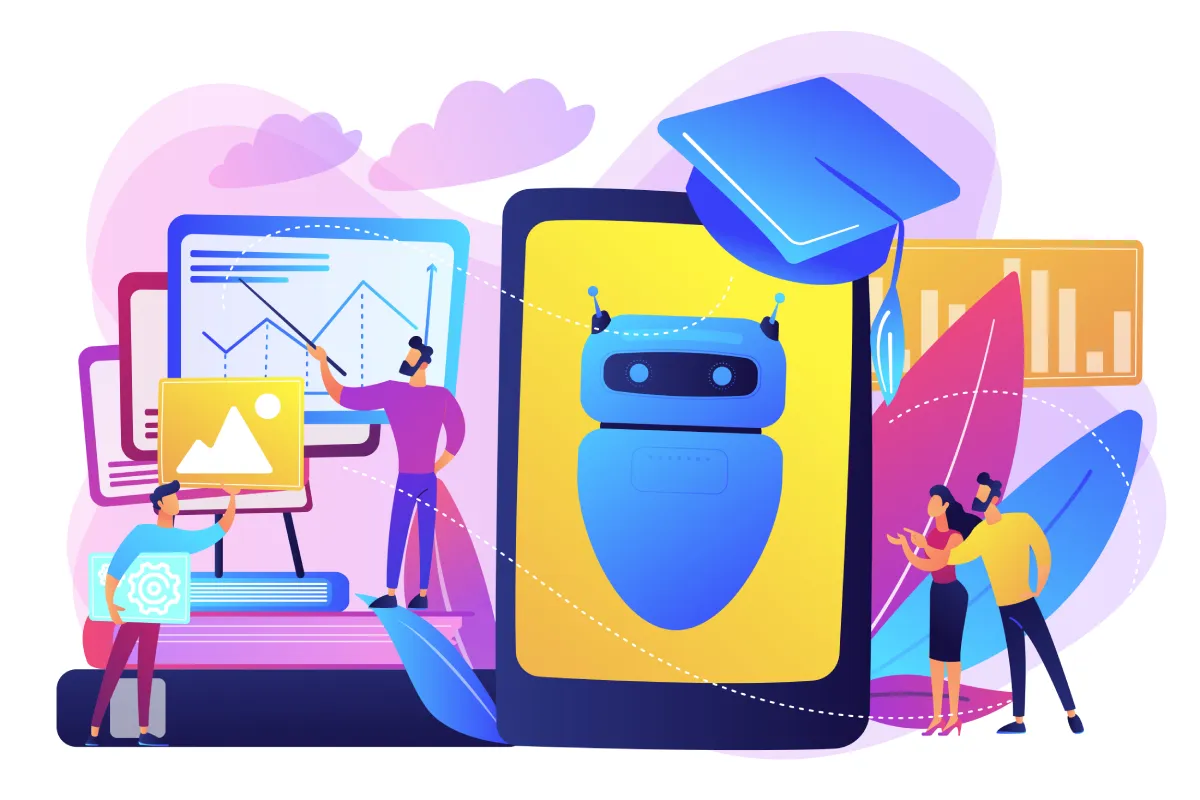
How Education Is Going Digital and Embracing AI at Scale
Education is evolving at an unprecedented rate. The traditional model of classrooms, textbooks, and fixed schedules is giving way to digital platforms that are flexible, interactive, and powered by artificial intelligence. This transformation is not just about moving learning online—it is about rethinking how knowledge is delivered, understood, and retained.
From schools and universities to corporate training and lifelong learning platforms, AI is helping educators reach learners in more engaging and effective ways.
The Digital Transformation of Modern Learning
Digital education is no longer an alternative option—it is becoming the standard. Institutions across the world are investing in online platforms, learning management systems, and AI-driven tools to modernize how education works.
Why digital learning models are expanding
- Learners can access content anytime, anywhere
- Institutions can scale education beyond physical classrooms
- Learning materials can be updated quickly and efficiently
This shift has also changed the role of educators. Instead of focusing only on delivery, teachers now curate, guide, and personalize learning experiences.
How AI Is Making Education More Adaptive
Artificial intelligence brings adaptability into education. Instead of treating all learners the same, AI-powered systems can respond to individual progress, preferences, and challenges.
AI-driven learning systems help by:
- Adjusting lesson difficulty based on performance
- Recommending personalized study paths
- Providing instant feedback and assessments
This approach supports self-paced learning while still maintaining structure and accountability. Educators also benefit by gaining insights into student engagement and performance trends.
The Growing Role of Explainer Videos in Education
Explainer videos are playing a major role in modern education because they simplify complex topics into short, easy-to-understand visual narratives. They are widely used across schools, universities, and professional training programs.
Explainer videos are commonly used for:
- Breaking down complex academic concepts
- Onboarding students or employees
- Explaining processes, systems, or workflows
- Supporting revision and self-study
AI-powered video tools allow educators to create the best explainer videos quickly without relying on animation teams or professional studios. This makes explainer-based learning scalable and cost-effective.
Video-Based Learning as a Core Digital Medium
Video has become one of the most powerful formats in digital education. Visual explanations, demonstrations, and real-world examples help learners understand complex ideas faster than text alone.
Educational institutions and trainers are increasingly relying on video to support teaching, especially in online and hybrid environments. With AI-powered tools, educators no longer need advanced production skills to create quality content.
Using a video creator app, teachers can turn lesson plans, presentations, or scripts into engaging videos that students can revisit anytime. This improves consistency in learning and supports different learning styles.
AI-Powered Classrooms and Virtual Learning Environments
AI is now embedded directly into learning environments, both online and offline. Smart classrooms and virtual platforms use AI to support real-time interaction and improve engagement.
These systems can track participation, analyze learning behavior, and provide instant support. In virtual classrooms, AI helps replicate many aspects of in-person learning while adding flexibility.
For educators, this means less time spent on manual tasks and more focus on mentoring, discussion, and creativity.
Digital Education Beyond Schools and Universities
The use of AI in education extends far beyond traditional academic institutions. Corporate training, skill development, and professional learning are increasingly digital-first.
Companies use AI-powered platforms to:
- Deliver consistent training across teams
- Create onboarding and compliance content
- Support continuous learning and upskilling
Video-based training, especially explainer-style content, is widely used to ensure clarity and retention in professional environments.
Improving Accessibility and Inclusion With AI
One of the most important benefits of AI in education is improved accessibility. Digital tools powered by AI help remove barriers that previously limited learning opportunities.
AI supports accessibility through:
- Automated subtitles and captions
- Language translation
- Text-to-speech and speech-to-text features
These capabilities make education more inclusive for learners with disabilities and for global audiences accessing content in different languages.
Challenges in AI-Driven Education
Despite its benefits, AI in education comes with challenges. Data privacy, ethical use of AI, and the need for educator training remain important considerations.
Institutions must ensure that AI tools are used responsibly and that human interaction remains a core part of education. Technology should support learning, not replace the role of educators.
What the Future of Education Looks Like
As education continues to go digital, AI will play a larger role in shaping learning experiences. Hybrid models combining in-person teaching with AI-powered digital tools will become more common.
Video-based learning, personalized pathways, and explainer-driven instruction are expected to grow further. The focus will remain on flexibility, accessibility, and learner engagement.
Conclusion
Education is clearly moving into a digital-first era, and artificial intelligence is a key driver of this transformation. From adaptive learning systems to explainer videos and AI-powered video creation tools, technology is reshaping how knowledge is shared and understood.
By thoughtfully embracing digital tools, educators and institutions can create learning experiences that are more engaging, inclusive, and effective. As AI continues to evolve, its role in education will not replace teachers—but empower them to teach better and reach further.


Leave a Reply