
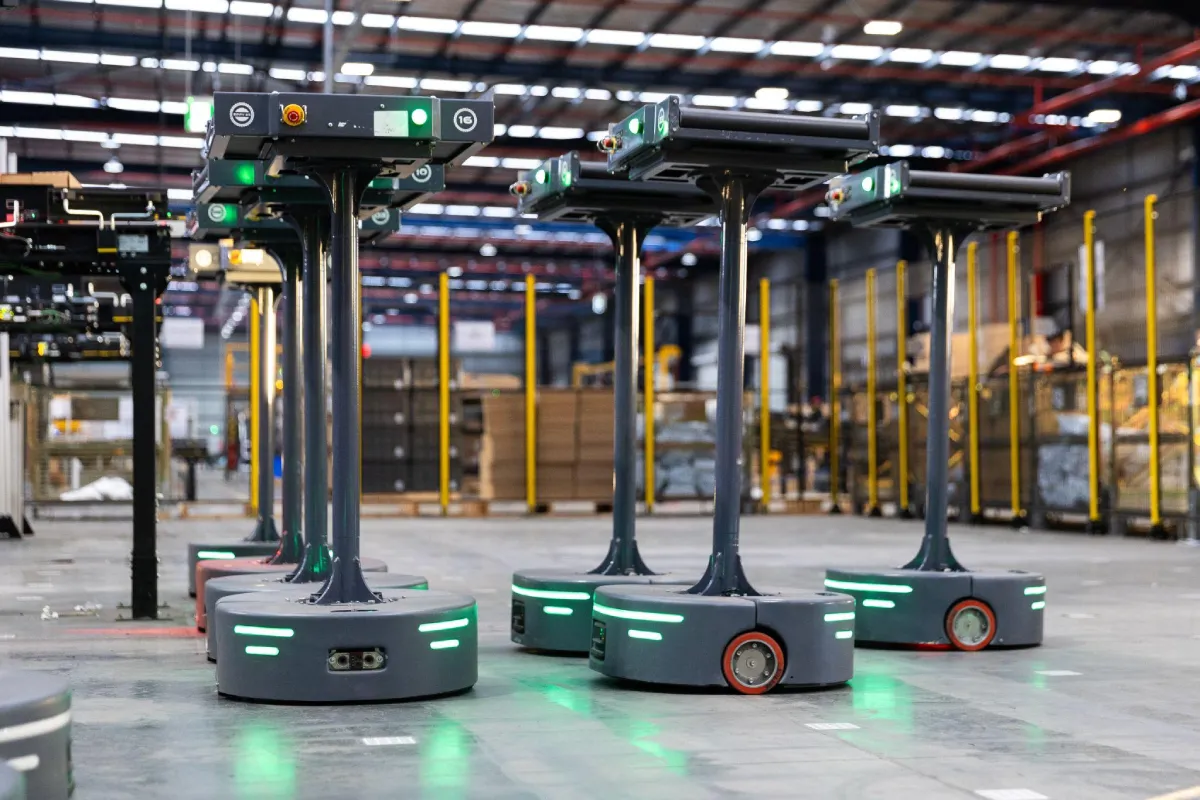
How to Choose the Right Mobile Robots for Your Warehouse Operations
Today’s warehouses are experiencing pressures due to the rising requirements of order fulfillment, the growth of SKUs, the problem of labor, congestion, and the diminishing times of deliveries. Manual handling of cases is still currently hampering the respective warehouse processes related to order picking, replenishments, and the receiving and putting away processes due to reduced accuracy. As more and more warehouses are constructed in the coming years, the problem is expected to worsen. Handling cases through traditional handling processes shall no longer be an ideal solution. A more agile solution exists in the form of mobile robots that can perform the automation of the processes related to the handling of cases through various parts of the warehouse.
With the rising use of automation, the process of choosing an effective robotics platform has now become a strategic move compared to the past. The majority of warehouses recognize that the need to automate exists, but they cannot identify the kind of robots to use for the automation process. The use of the wrong platform could be one of the factors that lead to the failure of the automation process, as it might be down, not generate a high return on investment, or be ineffective. The robots that the current warehouse managers use to run their warehouses are flexible, modular, and capable of executing diverse tasks, yet the aspect of ineffectiveness might be encountered if they cannot operate the warehouses. The following article explores how warehouses should choose the right mobile robots to use that are mobile.
Importance of Mobile Robots in a Warehouse Environment
Mobile robots are cutting down the travel time remarkably by taking away the manual load movements between the respective areas. They optimize the repetitive transport tasks, offer a steady throughput, and enhance the operational accuracy. With the internal movement being automated, warehouses are now able to increase their output without necessarily increasing the labor cost or floor redesign, thus making mobile robots a wise solution for the operations that are in demand.
What to Consider When Choosing Mobile Robots
Grasping Workflow Requirements
The initial phase of mobile robots’ selection is knowing the places of inefficiency. Warehouses need to spot the usual travel routes between picking, storage, replenishment, and dispatch that are frequently used. Movements with high frequency are the best ones to be automated. Looking into picking density, replenishment cycles, and material handoff points helps to decide if robots are to aid point-to-point transport, zone-based movement, or collaborative picking. Knowing the inventory flow clearly makes it easier to put robots in places of maximum impact.
Payload, Speed, and Navigation Needs
Different robots have different load and movement capabilities. A warehouse must consider its payloads, speed, and navigation environment. Comparing AMRs and AGVs is crucial, as the first group provides unlimited navigation while the second one is limited to predetermined paths. Various navigation technologies like SLAM, LiDAR, or QR-based systems not only determine the adaptability of the robot but also its accuracy and safety. Once the best navigation system is in place, the robot will be able to move around without interfering with the rest of the operations.
Facility Layout Compatibility
The physical layout is a decisive factor for the selection of robots. The performance of robots is determined by various factors such as aisle width, racking configuration, mezzanine levels, and floor conditions. It is necessary for the warehouses to evaluate if the robots can move around in the available space fluently and at the same time interact with the human workers safely. The charging infrastructure, docking points, and safety zones are also factors that should be taken into account to prevent operational interruptions and congestion.
Software Integration Needs
The software is what mobile robots depend on for their coordination, task allocation, and optimization. Assessment of the fleet management capabilities is a must because it will help smooth the orchestration of multiple robots. Interoperability of warehouse management systems or execution platforms enables task updates in real-time, inventory visibility, and performance monitoring. The strong integration of software ensures that robots function as a unified workflow instead of being treated as isolated machines.
Scalability and Expansion Potential
With the rise in warehouse volumes, automation needs to scale up in an easy manner without going through the major process of redesign. Modular robot systems are there to support the deployment of additional units quickly, either for the seasonal peaks or for the permanent expansions. Assessment of long-term cost advantages, maintenance requirements, and system flexibility supports the determination of future constraints by the warehouses. Scalable robots in warehouses not only secure but also make it easy for businesses to change their operations as they grow.
Role of Addverb in Designing End-to-End Mobile Robot Ecosystems
Addverb plays a key role in making the adoption of efficient mobile robotic systems possible by creating integrated warehouse automation systems. The company offers mobile robotic systems along with intelligent software solutions, Automated Storage and Retrieval Systems (ASRS), conveyors, and robotic picking solutions that provide smooth movement of materials from one point to another in an organized warehouse setting. Since Addverb is involved in developing hardware as well as software solutions, there is proper integration between their robotic solutions and warehouse systems.
Conclusion
Choosing the right mobile robots is important in driving throughput, lowering operating costs, and ensuring consistency in workflows as warehouses scale. Carefully considering workflow evaluations, facility layout, navigation technology, software integrations, and the ability to expand guarantees automation drives long-term value, not operational friction. When applied correctly, mobile robots alleviate bottlenecks, extend visibility, and facilitate predictable material movement. With integrated automation ecosystems, companies like Addverb can help warehouses deploy warehouse robots that deliver results for both strategic goals and future growth: strong operations that confidently meet rising fulfillment demand.


Leave a Reply