

How to Hone Your Personal Brand with Content Marketing
You can be great at what you do.
But if no one knows about it, opportunities will pass you by.
Your online presence, your stories, and your ideas influence how others see you. Especially when you’re clear and confident about what you believe in.
Let’s walk through how to turn your personal brand into a strategy that builds trust, opens career doors, and attracts the right attention. 👇
The Real Personal Branding Goal: Become a Reference Point
Your end goal when building a personal brand is to be the person other people reference when a topic comes up.
➜ You know you’ve reached this point when people quote your frameworks, tag you in conversations, or use your language to explain an idea. (Even better when they repost one of your content assets or social media posts.)
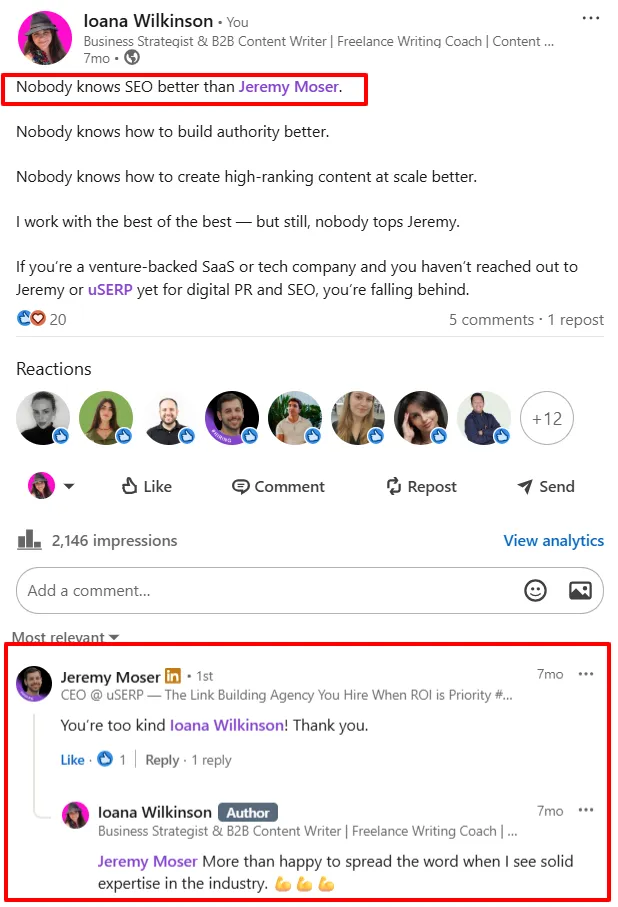
Tagging an SEO Expert
To get there, you need three things:
- A focused message.
- Repeatable ideas.
- Visible credibility.
Your message gives people context for who you are. Your ideas give them tools they can reuse. And your credibility gives them confidence that your insight holds weight.
Let’s take a closer look at how to do this below.
1. Audit Your Digital Footprint
Search your name and look closely at what appears.
Are your LinkedIn and Instagram bios aligned? Do your posts reflect your current role or your old one? Is your website still accurate?
Your digital footprint tells the story people believe before they ever speak to you.
If your presence feels fragmented, start cleaning it up. Use consistent photos, language, and tone across platforms. Update outdated headlines. And align your social bios with your professional focus.
For example, if you’re now focused on leadership coaching but your first-page results show marketing content lead, refresh those links. Create new, optimized posts that match your current direction. (More on this below.)
Your footprint should work like your business card … credible and easy to understand at a glance.
2. Define Your Position of Authority in One Sentence
Clarity is your greatest advantage when building your personal brand story. Stay away from flashy, ambiguous language like “highly skilled at project coordination and building investor profiles for brands seeking financing.”
Instead, write a single line that clearly defines your role, audience, and impact. If you’re unsure where to start, finish this sentence: I help [who] achieve [what] by [how]. Keep refining it until it feels natural and clear.
For example, if you’re a consultant, that might be:
“I help SaaS founders attract investors who believe in their vision.”
Use that statement as your personal brand compass. Every post, comment, and collaboration should support it going forward.
This single line also makes networking easier. When someone asks what you do, you won’t fumble for words. You’ll have a confident, repeatable answer that sticks in their mind.
3. Build a Content Thesis
Create your brand’s foundation by establishing a content thesis.
Consider three to five beliefs you’d stand behind no matter what.
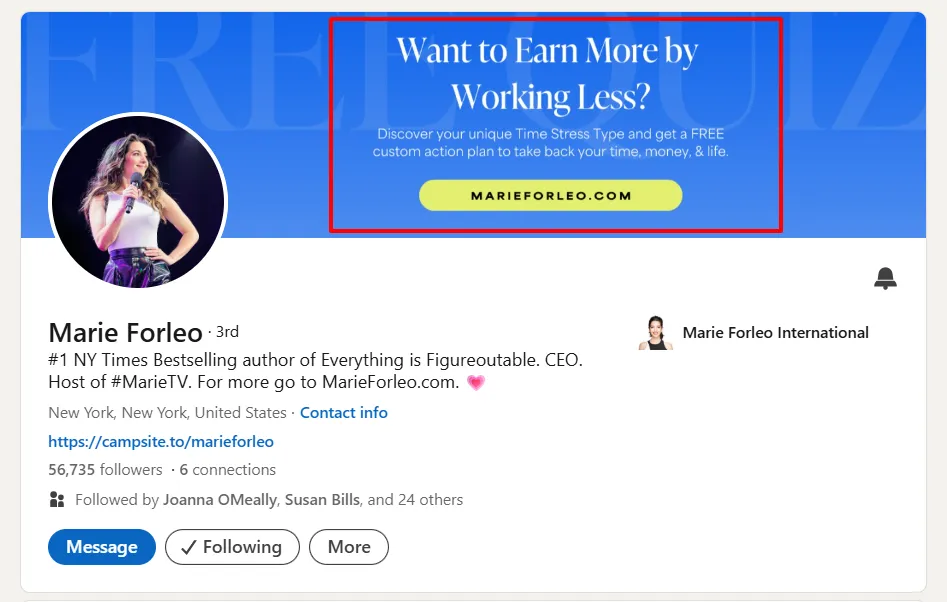
Marie Forleo LinkedIn Profile
For example, a career coach might believe:
- Your job title isn’t what’s important — having a career that aligns with your values is.
- Reflection is pivotal to getting the career clarity you need to find the right roles.
- You should always be upskilling to remain competitive.
These ideas become your content pillars. Use them as direction when planning your posts, newsletters, and videos.
Bonus Tip: Make yourself a quick brand style guide you can reference any time you create personal branding content.
If a topic doesn’t tie back to one of your pillars, skip it.
Staying on message during content creation makes your voice recognizable. (Over time, your audience will begin to associate specific themes with you. That’s when authority starts to form.)
4. Establish a Signature Content Format
People remember patterns. That’s why having a signature content format works so well for thought leaders. Pick one format that fits your natural communication style and build a series around it.
If you’re articulate on video, you might start a “Friday Tech News” series where you unpack one key story each week. If you prefer writing, you might have a weekly “Career Tips for Project Managers” series.
This builds rhythm. Audiences trust creators who show up consistently and know what to expect. (It also reduces overwhelm.)
To gain more traction, expand your content strategically. Turn highlights from your format into micro content across social networks to extend reach, without reinventing the wheel.
5. Turn Experiences Into Frameworks
Every expert has patterns in their work. They’ve seen what works, what doesn’t, and why. Capture those patterns in frameworks.
Let’s say you’ve helped startups improve brand messaging. You might create “The 3C Framework: Clarity, Context, Consistency.” Or if you lead creative teams, you could outline “The 5-Step Feedback Loop for High-Performance Collaborations.”
Here’s a trademarked automated sales method coined by Caitlin Bacher called the “Profitable Sales Engine.”
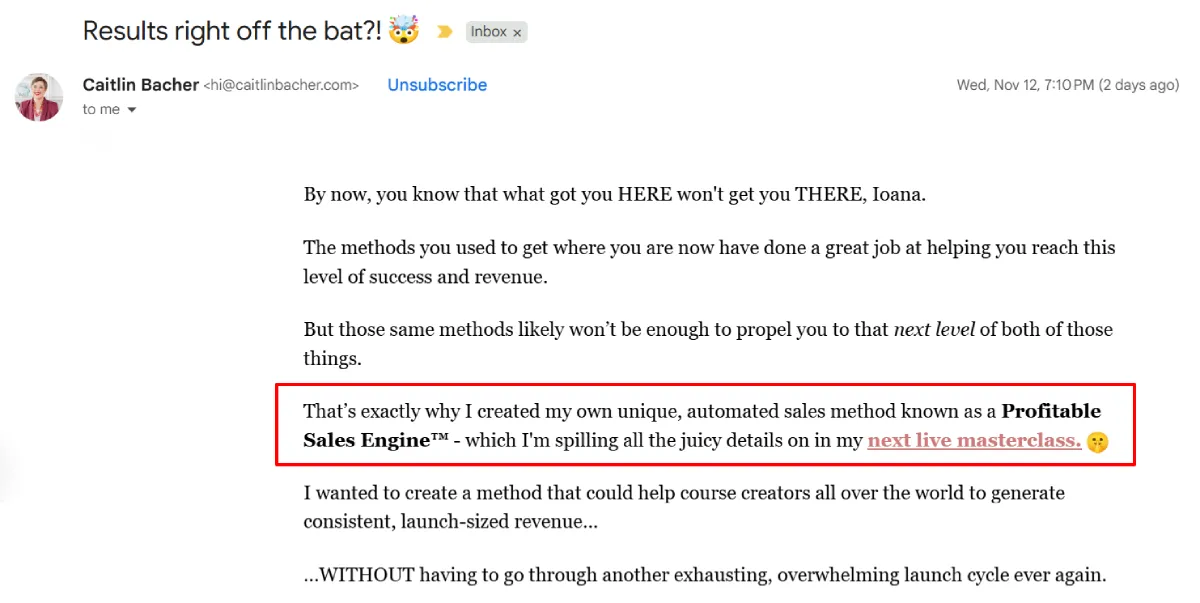
Method by Caitlin Bacher
Frameworks make your thinking visible. They give people something concrete to remember and apply. They also position you as someone with structured, proven methods instead of just opinions.
When you share your frameworks in posts, slides, or guides, you give your audience tools — and tools make you valuable.
6. Develop a Strategic Distribution Routine
Don’t feel discouraged if your strong ideas don’t spread automatically. To gain traction, you have to engineer your own visibility. In other words, spend half of your content time distributing, not creating. To do this efficiently, lean on some of the best content marketing tools for scheduling and analytics so you can maintain a consistent presence without being online 24/7.
Here’s a simple routine:
- Repurpose every major post into three new formats (e.g., video → carousel → quote graphic).
- Share client wins or learnings in community forums or at networking events.
- Comment on five to ten relevant posts per day with thoughtful insights.
This helps you multiply your reach without burning out. It also signals credibility because you’re part of active discussions.
7. Build Narrative Depth With Personal Proof
Use storytelling techniques to become more memorable and credible.
Pick three career-defining moments: One where you failed, one where you pivoted, and one where you succeeded. (Tell each story through a strategic lens. Focus on the lesson that connects back to your brand thesis.)
For example, if adaptability is one of your pillars, share how you navigated a company layoff and rebuilt your career path. If empathetic leadership is another, describe a tough team conflict and what it taught you about creating psychological safety.
These honest stories humanize your authority and can help you build deeper emotional connections.
8. Collect and Showcase Proof of Credibility
Earn more trust by showing results. Gather testimonials, screenshots, metrics, or client feedback and turn each into a mini story.
For example: “Helping a SaaS startup reach 10K users taught me how small shifts in onboarding copy can double engagement.”
This format shows the lesson AND the win. It proves your authority while providing value to your audience.
You can also highlight collaborative wins. Mention peers or teams involved and invite them to contribute to the conversation.
9. Build Evergreen Authority Assets
Quick posts create visibility, but cornerstone content assets build longevity.
Create one major piece each quarter, like a detailed guide, case study, podcast episode, or presentation. (Feel free to post cornerstone content more often, like weekly or monthly, if you have time.)
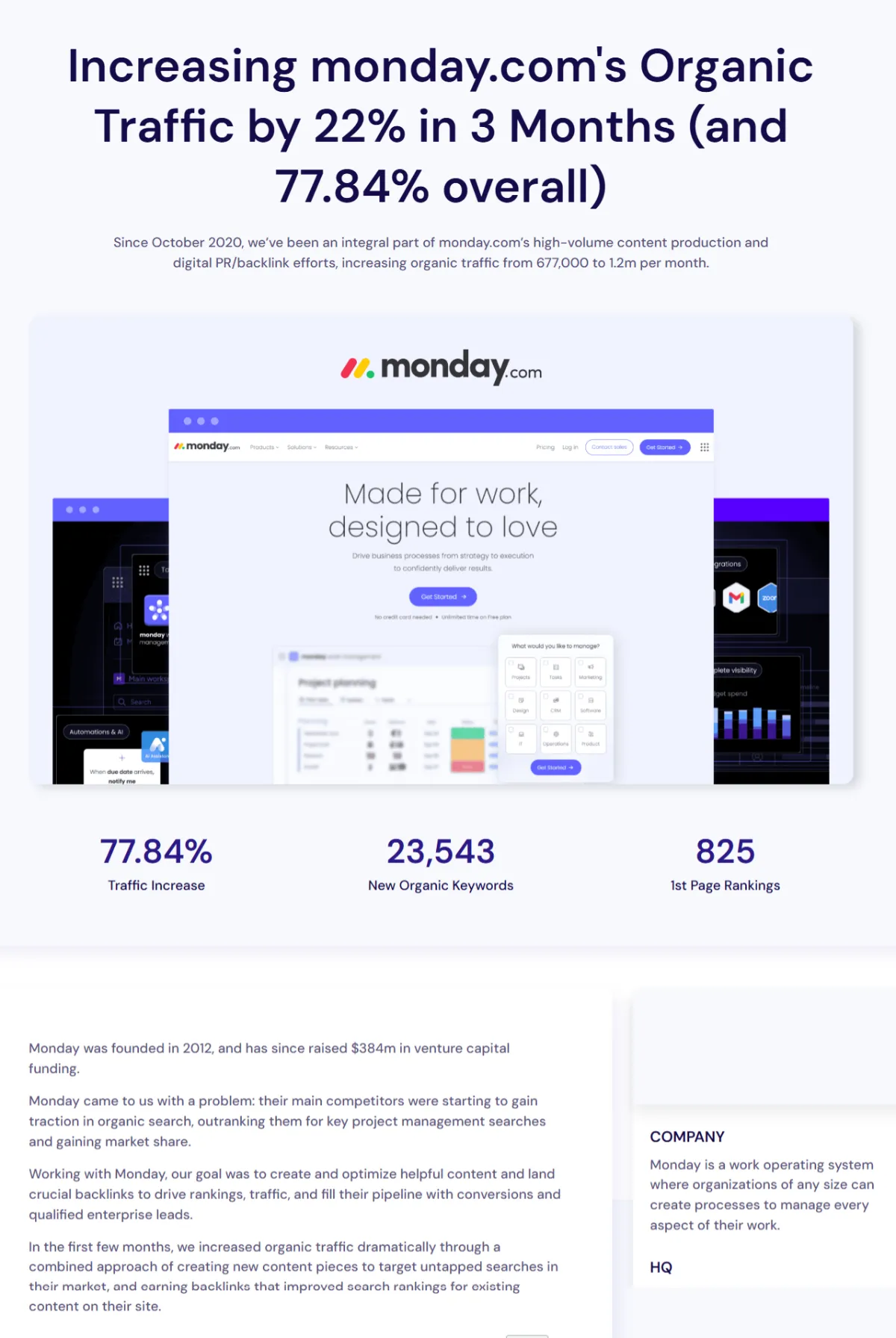
Case Study
These help show the depth in your thinking and remain discoverable long after trending posts fade.
For instance, your blog post on top copywriting techniques can help you attract backlinks, increase brand awareness, and attract future speaking opportunities. Or a case study showing your measurable project management results can double as social proof for new clients.
Think of these as your authority anchors — assets that keep growing your credibility while you sleep.
10. Analyze Your Brand Image And Performance
After consistently following these steps, audit your brand image again. Do you like what you see? Are your messages aligned across social media, your website, and other online platforms you use?
Track metrics that show engagement quality, too. Look at saves, shares, backlinks, replies, or direct messages.
These metrics reveal if people find lasting value in your work. (A saved post means impact. A shared post means alignment. A direct message means trust.)
Review your results monthly. Notice which topics trigger thoughtful comments or lead to real conversations. Double down on what sparks genuine engagement, not what inflates vanity metrics.
➜ This data-driven awareness helps you fine-tune your message, protect your energy, and strengthen your content strategy for the long term.
Bonus for Brand Builders: As your personal brand grows, managing your content, visuals, and brand assets becomes critical and a DAM platform like Brandy helps you organize, protect, and share everything from one central workspace.
Wrap Up
A strong personal brand doesn’t happen overnight. It’s something you’ll always work on.
Remember to:
- Define your position of authority.
- Build your content thesis.
- Create stories, frameworks, and assets that reinforce your message.
- Engage intentionally and measure what matters.
When you do this, you stop competing for visibility. You become the trusted reference point others rely on.
PS: Don’t have a website yet? Need to rebrand? Try Portotheme to design and build your site for free.
FAQs
What is a personal brand?
A personal brand is the consistent perception others form about you. It’s based on your expertise, values, and communication.
Why is having a personal brand important?
Having a personal brand is important because a strong reputation leads to more opportunities, like jobs and partnerships.
How do I build a personal brand?
To build a personal brand, clarify what you want to be known for. Then create a focused content strategy to influence public perception. (You need a strong personal brand story, a content thesis, assets, and a distribution plan.)
Make sure to also participate in networking events and social networks so you’re part of active discussions in your industry.
Can I build a personal brand without social media?
Yes, as long as you have an online presence, like an email list, podcast, or educational website.
You can also strengthen your reputation through public speaking, publishing, networking events, and referrals.
That said, LinkedIn is a fantastic platform for thought leaders.
What mistakes should I avoid when building my personal brand?
Avoid inconsistency, copying others, or chasing visibility over credibility. (Use the advice in this article to create ongoing thought leadership content instead of looking for quick wins.)
Author Bio:
 Ioana Wilkinson
 Ioana Wilkinson
Ioana is a business strategist and content writer for B2B tech and SaaS brands. She also helps aspiring entrepreneurs build remote businesses. Born in Transylvania and raised in Texas, Ioana has been living the digital nomad life since 2016. When she’s not writing, you can catch her snorkeling, exploring, or enjoying a café con leche in Barcelona!


Leave a Reply