
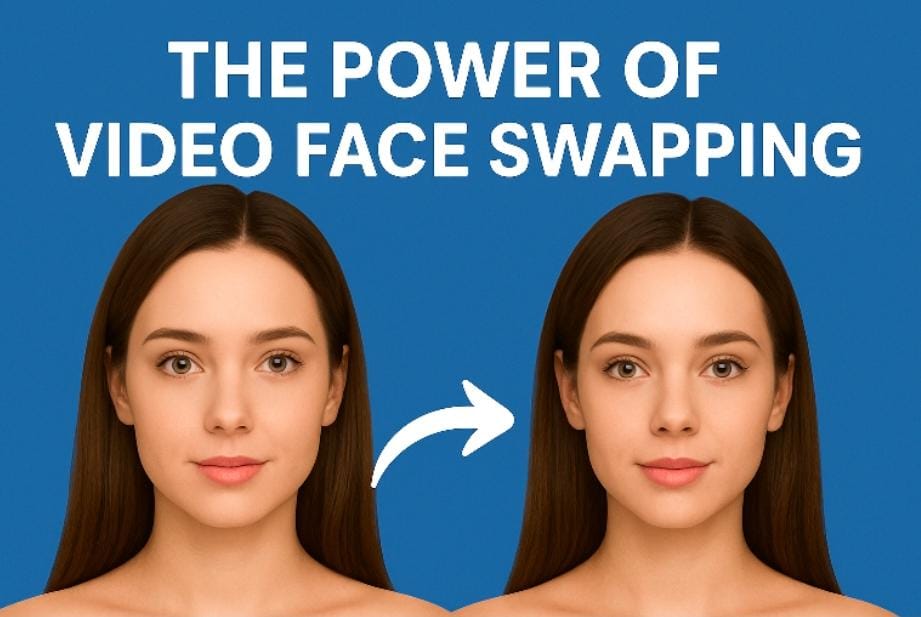
Master Stunning Video Face Swaps: Your Simple Creator’s Guide for Blogs & Social Media
In today’s digital landscape that’s more crowded than ever, it’s no longer a choice if you want to stand out – it’s a bare minimum. For content creators, grabbing people’s attention has become a frantic pixel-by-pixel , second-to-second firefight. Enter a game-changer: video face swapping. This tech used to be the reserve of Hollywood special effects, now it’s as easily accessible as typing on a keyboard, giving you a totally new way to grab people’s attention, entertain them & really get them involved. This guide will bring you up to speed with the whole process, turning you from a curious onlooker into a fully confident creator, able to knock out pro-quality video face swaps that will boost your blog and social media presence to the next level.
Understanding Video Face Swaps:
Before you can expect to become a master of the craft, the first thing you need to do is get a good handle on the technology that makes the whole thing possible. And as you’d expect, it’s not just as simple as copying and pasting a few words – it’s a very sophisticated thing that arises from a complex interplay between data, complicated algorithm,s and artificial intelligence, all of which combine to produce a seamless and very believable transformation.
What Exactly is Video Face Swapping?
So video face swapping is a digital technique that replaces a person’s face in a video with another persons face. Basic social media filters just overlay a 2D mask. Advanced face swap technology analyses the geometry and expressions of the original face and maps the new face onto it. The goal is to put one persons identity onto another persons performance, keeping the original expressions, lighting and movements for a natural look.
How Artificial Intelligence Transforms Faces
The magic ingredient is artificial intelligence, specifically deep learning. An AI Face Swap tool uses deep learning models, often neural networks, trained on huge datasets of human faces. This training teaches the algorithm to know the details of facial features, lighting, shadows and expressions.
Why AI Face Swaps are a Game-Changer for Content Creators
The difference between a filter and true AI face swap is huge. Filters are surface level. AI face swaps are deep structure. This opens up a whole new world of content creation. You’re no longer limited to who you can film; you can cast historical figures in modern scenarios, yourself in iconic movie scenes or create entirely new characters. This goes beyond novelty and becomes a powerful tool for storytelling, commentary and brand building.
Top AI Face Swap Tools for Every Creator
The market is swamped with face swap tools – all sorts of them, each trying to fill a particular need or skill level. Figuring out which one to use is the first hurdle to clear if you want to actually bring your creative idea to life. One common way to narrow it down is to think of two basic kinds of tools: easy-peasy apps that are perfect for just messing around and having fun with, like say FaceSwapAI, and then there are the more serious, heavy-duty platforms that are really geared towards pro projects.
Recreational Apps:
These mobile apps are designed for speed first and foremost – making it no hassle to churn out quick memes, funny vids to share with friends, or jump on the latest viral social media trends. They deliver instant gratification, but you have to be realistic about your expectations – lower-res pics, watermarks, limited control over the final product, and worries about how your data is being used are all part of the package. They’re great as a rough starting point, but at the end of the day, they’re just not built for crafting polished blog posts or brand content.
Professional Platforms:
For pros, web or desktop pro platforms are the way to go. They use more powerful AI models, resulting in higher resolution, more realistic swaps with fewer artifacts. More control, faster processing, and often clearer privacy policies. For influencers, marketers, and bloggers who need high-quality, unwatermarked content for their projects and campaigns.
Essential Features to Prioritize in Any Face Swap App or Platform
When you’re looking at a face swap tool, take a step back from the fancy marketing and really consider these key factors:
- Quality of Results: How well does the thing actually work? Do you get high-quality, super-realistic swaps that look and feel like they should, with none of that telltale stitching at the edges and expressions that actually look natural?
- Processing Speed: Time is money for a lot of us creatives. If a tool can crank out results fast, that means more time to tinker, more ideas to try out, and a whole lot less frustration.
- Ease of Use: A good tool should just work, without making you struggle through a user manual the size of a phonebook. Ideally, you should be able to get great results with a little fiddling around, not hours of fruitless experimentation.
- Privacy Policy: Let’s face it – with all this image and video uploading going on, your personal data is basically gold to a lot of these services. Know what you’re getting into by checking out the fine print. Reputable companies will be upfront and honest about how they handle your info.
- Watermarking: If you’re trying to do this for a living, the ability to download your work without some annoying watermark slapped all over it is basically non-negotiable.
Your Step-by-Step Guide to Creating Stunning Video Face Swaps
With the right tool selected, it’s time to dive into the creation process. While every platform has a slightly different interface, the core workflow remains consistent. Following these steps will help you create a professional-looking video face swap from start to finish.
Selecting Your Source Material
The quality of your final video is almost entirely dependent on the quality of your input files. The “garbage in, garbage out” principle applies perfectly here.
- Source Video (The “performance”): In order to get a good final product, use a source video thats high resolution and has the subject’s face lit up nice and clearly & facing the camera as much as you can get away with. Try to avoid videos with any fast motion, motion blur or – best of all – anything that gets in the way of the face (like hands or hair getting in the way).
- Target Image/Video (The “new face”): Now find a good, high-quality photo or video of the face you want to swap in – and ideally it should be looking straight at the camera with a fairly neutral expression on their face. Even good lighting is absolutely crucial for this.
The Face Swap Process:
Once you know the process, it’s super easy. You upload the source video—the video you want to modify—into your chosen face swap platform. Then you upload a clear, good quality photo of the face you want to swap it with; the sharper the image the better the final swap will be. Things don’t always work out as planned the first time – it’s not uncommon to encounter some issues when you’re trying to get a face swap to look right. These can be things like flickering, features not lining up properly, or just an eerily off look. Most of the time, these can be fixed by:
Troubleshooting Common Issues:
Things don’t always go as planned the first time – it’s not uncommon to run into some issues when trying to get a face swap to look right. These can be things like flickering, features not lining up properly or just an off look. Most of the time, these can be fixed by:
- Using Better Quality Source Material: The single most effective thing you can do is to use better quality source material. If you’ve got a clearer photo of the face you want to use or a more stable source video, that makes a huge difference.
- Getting the Angles to Match: Try to get a photo of the face you’re using where the angle of the head is similar to the angle in your source video. It makes a difference.
- Checking the Visibility of the Face: Make sure there’s nothing obscuring the face in either the source video or the target photo, or the AI will be confused.
Elevate Your Blogs & Social Media Content
Now for the fun part: applying your new skills. Video face swaps are more than a gimmick; they are a versatile tool for enhancing your content strategy across multiple platforms.
Engaging Your Blog Audience with Dynamic Visuals
Dynamic visuals can bring your content to life in a way static images can’t. Face-swapped media is a great way to do this. You can start your posts with an animated author avatar, turn your headshot or branded character into a video opener.
For more complex topics, dynamic explainer videos can make learning easier by putting your face – or even a historical figure’s face – onto an animated character that walks readers through the idea. Even your hero image can stand out; instead of a simple header image, a short looping face-swapped GIF can grab readers’ attention and pull them into the content. These visual upgrades make your blog feel alive, modern, and more memorable.
Ideas for Instagram Reels, TikTok, and YouTube Videos
On fast-paced platforms like Instagram Reels, TikTok, and YouTube Shorts, getting attention in the first second is everything—and face-swapped content delivers just that. You can tap into viral momentum by recreating trending memes or challenges, swapping your face or a celebrity’s into the original clip to give it a new spin. Another fun angle is to do “what if” scenarios, like dropping modern influencers into historical footage or iconic figures into today’s trends.
You can even build a series through character-based storytelling, using face swaps to portray a character your audience will start to recognize and look forward to. Because these are so new and unexpected, they will stand out in crowded feeds and get prioritized by the algorithm, and get more engagement and longer watch times.
Exploring Niche Uses for Advanced Creators
For those with a hankering to really push the boundaries, you could start experimenting with face swap technology to see just where you can take it. Think of using it to make your own low-budget short films a whole lot more achievable – or to knock up some quick character prototypes for animations. You could even use it to create some cool interactive educational content that lets students hang out with people from history in a pretty lifelike way.
Tips for Great Results
Creating a technically good face swap is one thing; creating a seamless one is another. Take your work to the next level with these pro tips.
Optimize Source Footage:
I know I’m repeating myself but this is important. Use 1080p or 4K video whenever possible. Make sure the lighting is even and no harsh shadows. A tripod shot will always yield better results than handheld.
Matching Expressions & Emotions:
While the AI does the technical mapping, the artistic success of the swap is up to the source performance. For the most natural result, the expression on your target face image should be relatively neutral so the expressions from the source video’s performance can dominate. A smiling face on a frowning performance looks jarring.
Post-Production Polish:
Don’t be too quick to settle with the downloaded clip as your final project – think of it as just the unpolished beginnings. When you splice it into a video editor, that’s when the real magic starts to happen – you can start transforming it into something that really shines. So start by giving it a bit of a makeover – tweak the tones, adjust the contrast, and get a feel for the mood. This is especially important when swapping a face in – you want it to blend in with the lighting in the scene.
Once you’ve got that looking good, bring in the audio elements that give your video some life. That could be a cool background track, some subtle sound effects to add atmosphere, or a clear-as-day voiceover to really hammer the message home. And finally, add in some titles, captions, and any other graphics to give your content a bit of shine and make it feel intentional. With a few edits, what was a basic clip a minute ago starts to come alive and becomes a fully formed piece of content.
Experimentation and Refining
Your first swap won’t be perfect. Don’t be discouraged. The best creators experiment all the time. Try different source videos, use various target faces, and play with different combinations until you get what you want. Each attempt will teach you more about what works and what doesn’t.
The Dark Side of Creative Power:
A lot of creative power comes with a lot of responsibility – think ‘big league’ here. Deepfakes tech, which can convincingly swap out one person’s face for another, raises a whole lot of deep questions about the ethics and the law. You do need to take this seriously – have a good think about it rather than just dismissing it out of hand.
Using This Tech Without Causing Trouble
While you can use Deepfakes for fun creative projects or harmless entertainment, the truth is its got a dark side too – it can be used for spreading false information, making people look bad, or just plain harassment. Here’s the thing: as a responsible creator, you’ve got a duty to use this tech in a way that’s fair and honest. Never make anything that’s gonna mislead people, or make them look bad on purpose.
Respecting Other People’s Privacy
Remember consent. Whether it’s a friend, family member or someone you know, you need to ask before using their face in your content – especially if you’re going to make it public or sell it. That goes for friends, family or anyone.
Playing with Fire: Celebrity Face Swaps
Using a celeb face is a bit of a grey area when it comes to the law. Now, swaps that are just for fun or to point out something can be fair game in some places, but using a celeb face to sell something or promote your product is a no-go. It’s called “right of publicity,” and you can get sued over it. So, for any brand or influencer work, it’s usually best just to use your own face, people who’ve given their okay, or just plain old royalty-free AI-made faces.
Turn AI Face Swaps into Your Creative Superpower
Video face-swap technology has taken a massive leap forward, freeing up the power to manipulate reality, spin new stories, and create visuals that’ll never be forgotten, previously exclusive to big-budget studios – and putting that power right in your hands. By digging into how the AI works, picking the right tools for the job, and getting a handle on the (admittedly simple) but incredibly powerful process, you can unlock a whole new level of creativity that’ll work wonders for your blog and social media presence.
The main takeaways are straightforward: use the good stuff, feel free to try lots of different things, and always keep your creator hat on when it comes to responsibility. The digital world bullies creativity, so by slapping some stunning video face swaps into your content, you’re not just jumping on a trend – you’re arming yourself with a seriously powerful tool to cut through the din, get your audience hooked, and grow a truly distinctive creative style. Your next viral sensation is probably just a few clicks away.


Leave a Reply