
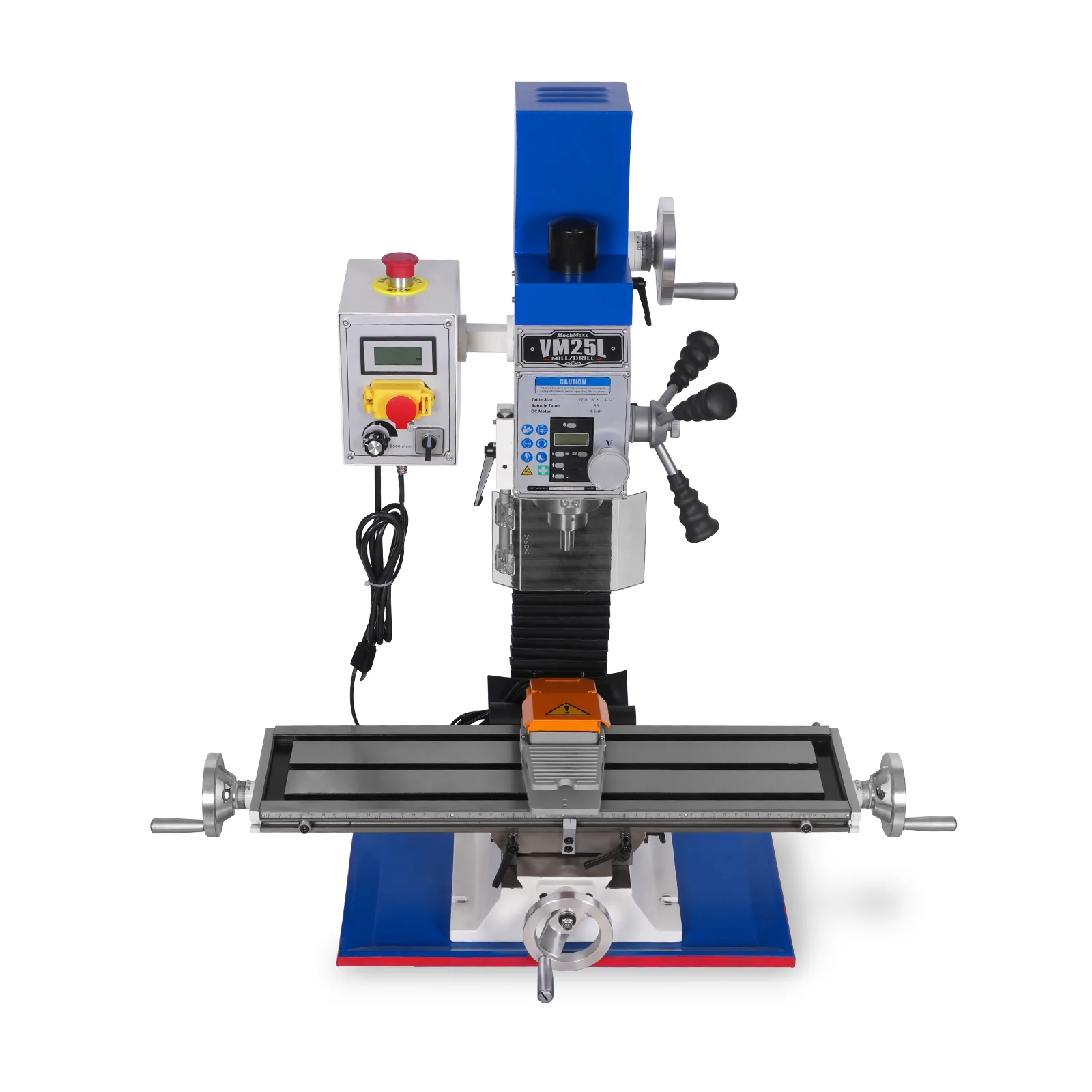
Mini Milling Machine Guide: How to Choose the Right One
A mini milling machine looks small, but picking the wrong one can create big problems. You might buy a machine that cannot hold parts well, shakes during cutting, or feels too weak for the material you want to work with. Then every project turns into a long fight.
This guide helps you choose the right mini milling machine for your needs. It explains what to check before you buy, what features matter most, and what setup makes sense for beginners and small shops.
By the end, you will know how to match size, power, and accuracy to the jobs you plan to do, so you can buy with confidence and get clean results.
What a mini milling machine is?
A mini milling machine is a small machine that cuts and shapes material using a spinning cutter. You clamp the workpiece on the table, move it slowly, and the cutter removes material bit by bit. Because of that, you can make flat surfaces, slots, small parts, and clean edges with good control.
People use mini mills for jobs like drilling accurate holes, cutting keyways, facing a surface flat, and shaping simple parts. They are popular in home garages and small workshops because they take less space than a full-size mill.
That said, a mini milling machine has limits. It is smaller and lighter, so it cannot handle heavy cuts like a big industrial machine. It usually works best on aluminum, plastics, and lighter steel work when you take smaller passes. If you push it too hard, the machine can chatter, which means it vibrates and leaves rough cuts.
Mini mill vs full-size milling machine (quick comparison)
A mini mill is a smart choice when you want a milling machine but you do not have a lot of space, power, or budget. It fits small shops, beginners, and hobby users. It can do many tasks well, especially when your parts are not huge and you take reasonable cuts.
A full-size milling machine is better when you need more rigidity, more power, and more travel. It handles larger parts, deeper cuts, and tougher materials with less vibration. Because it is heavier, it often produces smoother results with less effort.
So, how do you decide? If most of your projects are small parts, light metal work, and general workshop tasks, a mini milling machine can be a great fit. However, if you plan to mill large steel parts often, or you need high accuracy under heavy load, a bigger machine will usually be the better long-term choice.
The 7 things to check before you buy
1) Table size and travel (X, Y, Z)
Many people look at the machine size, but travel is what matters more. Travel means how far the table and head can move in each direction. If travel is too small, you cannot position the cutter where you need it, even if the machine “looks fine.”
So, think about your common projects. If you plan to mill longer slots, wider plates, or parts that need multiple holes, more travel makes the work easier. On the other hand, if you mostly make small brackets and simple parts, you can get by with less travel.
2) Spindle speed range
Spindle speed changes how clean the cut looks and how easy the machine feels to use.
Higher speeds are useful for smaller cutters and materials like aluminum and plastic. Lower speeds help when cutting steel or using larger cutters. If your speed range is too limited, you will struggle in one direction. Either the machine feels weak in steel, or it leaves a rough finish in softer materials.
So, pick a mini milling machine with a speed range that fits what you plan to cut most. This one choice can make your work feel smooth instead of frustrating.
3) Motor power and drive type
Motor power decides how hard the machine can cut without slowing down. If the motor is too weak, the cutter may stall, chatter, or leave rough marks. Because of that, you will end up taking very tiny cuts, which makes every job slow.
Drive type also matters:
A belt drive is usually quieter and smoother. It can also protect the machine during a sudden jam because the belt can slip instead of breaking something.
A gear drive often gives stronger low-speed cutting power. However, it can be louder, and it may need more care over time.
So, choose based on your work. If you want smoother running and less noise, belt drive is often nicer. If you will cut tougher material often and need more low-speed strength, gear drive can help.
4) Rigidity and weight
In milling, heavier usually means more stable. A heavier mini milling machine tends to shake less, so it cuts cleaner and feels easier to control.
A lighter machine can still work well, but you must cut gently. If you push too hard, you may get chatter. You will hear it, and you will see rough lines on the surface.
So, when you compare machines, do not only look at motor power. Also look at the machine build and weight. Stability is a big part of good results.
5) Accuracy, backlash, and adjustment
Accuracy is about how precisely the machine moves and holds position. One common issue is backlash. Backlash is the small “free play” in the handwheel movement, where the wheel turns a bit before the table actually moves.
Backlash is normal, but too much backlash makes it harder to hit exact measurements, especially when you change direction.
6) Power and voltage in your shop
Before you buy, check what power you can use in your workspace. Some mini milling machines are fine on 110V, while others work better on 220V.
110V is easier for many home shops. However, if your power supply is weak or the circuit is overloaded, the machine can feel underpowered. That can lead to slower cutting and more stalling.
220V can give more stable power for heavier work, but only if your shop wiring supports it. So, match the machine to what you can safely run. This prevents headaches later.
7) Tooling and accessories you will need
A mini milling machine is only one part of the setup. You also need basic tooling to hold work, measure correctly, and cut cleanly. If you skip this, even a good machine will feel hard to use.
At minimum, plan for a vise to hold parts, a set of cutters, and measuring tools. You may also need collets or a chuck depending on the machine. Clamps and a simple clamping kit are also useful for odd-shaped work.
Also, keep a small budget for tooling. Many beginners spend all money on the machine, then they cannot do much with it. So, plan for both from day one.
Best mini milling machine setup by user type
The “best” mini milling machine depends on what you will make. A beginner needs a setup that is easy and safe. A home shop user needs flexibility. A small business needs consistency and speed.
Beginner setup (simple and safe)
A beginner should focus on stability and ease of use. Choose a machine that feels solid, has smooth controls, and can hold a vise properly. Then start with simple tooling and small projects. This helps you learn without breaking cutters every day.
A good beginner setup usually includes a basic vise, a small set of end mills, and a simple measuring tool like calipers. With that, you can already do facing, slots, and simple parts.
Hobby or home shop setup (most common)
Home shop users usually want more travel and smoother results. So, table travel and rigidity matter a lot. Also, a wider speed range helps because home projects can be mixed, like aluminum one day and steel the next.
This setup often includes a better vise, a clamp kit, more cutters, and basic work-holding options. Once you can hold work properly, your results improve fast.
Small business setup (more accuracy, faster workflow)
For small business use, time and repeatability matter. So, pick a machine that stays stable under work and holds settings well. Also, plan for better work-holding and measuring tools so parts come out consistent.
In a business setting, a stronger setup is not just “nice.” It helps avoid scrap and rework, which saves money.
Common mistakes (and easy fixes)
A common mistake is buying a mini mill that is too small for the projects you plan to do. It may still work, but you will spend more time repositioning parts and fighting travel limits. The fix is simple: choose based on travel, not looks.
Another mistake is ignoring tooling costs. People buy the machine first, then they realize they still need a vise, cutters, and measuring tools. The fix is to plan a tooling budget from the start.
Many beginners also expect heavy steel cutting from a light machine. That usually leads to chatter and rough cuts. The fix is taking lighter passes, using the right speed, and choosing cutters that match the material.
Not leveling the machine is another issue. If the machine sits poorly, it can vibrate more and cut worse. The fix is to place it on a solid bench and level it properly.
Finally, skipping basic maintenance causes problems over time. Dirty ways, dry moving parts, and loose gibs reduce accuracy. The fix is simple cleaning, light oiling, and small checks on a schedule.
Basic workflow tips for clean results
Good milling is mostly about control. If you hold the work properly and take smart cuts, even a mini milling machine can give nice results.
First, clamp the work tight. A solid vise or a proper clamp setup matters more than people think. If the part moves even a little, the cut becomes rough, and the tool can break. So, take a minute to set it correctly.
Next, pick a reasonable speed and do not rush the cut. Softer materials like aluminum often like higher spindle speed, while steel usually needs slower speed and lighter cuts. If you are unsure, start slower and take a small pass. Then adjust. This simple habit saves a lot of broken cutters.
Also, take lighter cuts instead of trying to remove too much at once. A mini mill is smaller, so it prefers small steps. Because of that, you get less vibration and a cleaner finish.
Finally, measure often. Check your progress after key cuts, especially when learning. It keeps you on track and reduces mistakes that are hard to fix later.
Care and maintenance
A mini milling machine stays accurate longer when you keep it clean and lightly oiled. After each session, wipe away chips and dust. Chips left on the table and ways can scratch surfaces and make movement feel rough.
Oil the moving parts as recommended in the manual. This helps the table move smoothly and reduces wear. Also, check the gibs once in a while. If the table feels loose or has play, small adjustments can bring back a tighter feel.
If your machine uses a belt drive, check belt tension sometimes. If it is too loose, it can slip. If it is too tight, it can wear faster. If your machine uses gears, keep an ear on noise changes and check lubrication points as needed.
For storage, keep the machine dry and protect bare metal from rust. A light oil coat on exposed surfaces helps, especially in humid areas.
Where to shop milling machines on MechMaxx
If you want to compare different mini milling machine options in one place, use the MechMaxx milling machines collection. It lets you review models side by side, so you can match table travel, speed range, and overall build to your needs.
When you compare machines, stick to the same checks from this guide. Focus on travel, rigidity, speed range, and the tooling you plan to use. That way, you pick a machine that fits your projects today and still feels useful later.
FAQ
Can a mini milling machine cut steel?
Yes, it can. However, it usually works best with lighter cuts, the right cutter, and a suitable speed. If you try heavy cuts in steel, you may get vibration and rough results.
What size mini mill do I need?
Choose based on your common part size and the travel you need. Travel matters more than how big the machine looks. If you often work on longer parts or need more movement, choose more travel.
What is backlash and is it a big deal?
Backlash is the small free movement when you turn the handwheel before the table starts moving. A little backlash is normal. Too much backlash makes accuracy harder, especially when you change direction.
Which is better, belt drive or gear drive?
Belt drive is often smoother and quieter. Gear drive can feel stronger at low speed, but it may be louder. The better choice depends on what you cut and how often you use the machine.
What tools do I need to start?
At minimum, you need a way to hold work, basic cutters, and measuring tools. A vise, a small set of end mills, and calipers can take you far.
Final Verdict
A mini milling machine is a smart choice if you need clean, controlled cutting in a small space. However, the right machine is the one that matches your projects, not the one that only looks good in photos.
When you choose, focus on travel first, then stability, speed range, and accuracy. After that, check power requirements and plan for tooling. If you do this in order, you avoid the most common mistakes and you get better results from day one.
Finally, remember this simple rule: a mini mill works best when you take lighter cuts and hold the work tight. Do that, and the machine will feel smooth, accurate, and worth the money.


Leave a Reply