
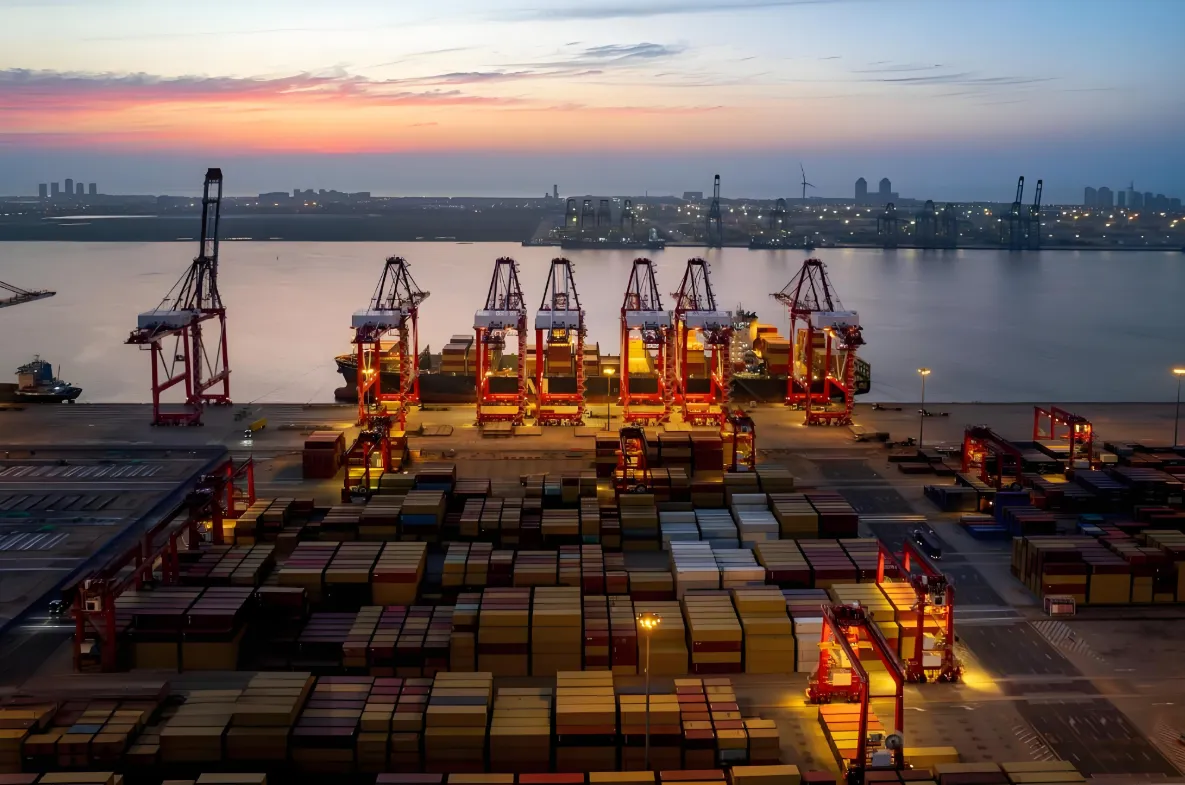
Smarter Ports, Safer Operations: AI-Powered Safety Control in Action
Port operations are highly intensive and involve numerous safety risks. Even with dedicated personnel monitoring critical operation zones, it is often difficult to provide timely and effective early warnings, leading to high supervision and safety management costs.
To address these challenges, the 5G Smart Port Safety Production Management Platform adopts a two-level cloud–edge collaborative architecture combining large and small AI models.
At the edge layer, video streams are accessed and decoded, and lightweight AI models perform real-time analysis. The results are reported to the cloud platform to trigger immediate alerts. At the cloud layer, large AI models further filter and validate the results generated by edge models. Through continuous training, iteration, and model updates, the overall recognition accuracy and reliability of the automated safety supervision system are continuously improved.
AI on Duty: Intelligent Safety for Port Operations
Tugboat Safety Operation Compliance AI Recognition
Tugboats are vessels used to maneuver barges and ships and are subject to strict safety operation regulations. For example, personnel must board and disembark via safety nets on the port or starboard side; workers operating at the bow or stern must correctly wear life jackets; drivers in the wheelhouse are prohibited from using mobile phones for extended periods; and engine rooms must be inspected at specified intervals.
Traditionally, safety supervision in such mobile and enclosed environments has been particularly challenging. By leveraging 5G networks and intelligent AI analysis devices, and building compliance monitoring systems based on large AI models, the platform can accurately identify unsafe behaviors during tugboat operations in complex scenarios, issuing on-site alerts and reporting violations in real time.
Safety Recognition for Restricted Zones Under Ship-to-Shore Cranes and Gantry Cranes
Ship to shore cranes (STS Cranes) and gantry cranes are the primary equipment used for cargo handling at container terminals. During lifting operations, different types of loads may pose risks such as falling objects or collisions with on-site personnel. Therefore, standing beneath operating cranes or within restricted zones is strictly prohibited.
The platform not only identifies the operating status of Ship-to-Shore Cranes and gantry cranes, but also detects in real time whether personnel enter restricted areas beneath the cranes, thereby minimizing accident risks and maximizing worker safety.
360° Surround-View Anti-Collision Safety Recognition for Container Gantry Cranes
During operations involving container gantry cranes, operators in elevated cabins often face visual blind spots around the crane boom, which can lead to overlooked hazards and collision accidents. These incidents may result in equipment damage or, in severe cases, serious injury or loss of life.
By installing 360-degree surround-view cameras on the crane boom and applying large AI models combined with computer vision technology, the system provides all-round monitoring of obstacles around the crane. When an object enters a hazardous zone, an audible alarm is immediately triggered, prompting the operator to stop operations and assess potential risks.
AI Recognition of Big-Bag Loading and Unloading Operations at Bulk Cargo Terminals
At bulk cargo terminals, vehicles frequently enter and exit to perform big-bag loading and unloading operations. Work teams must complete these tasks within specified timeframes; otherwise, vessel schedules and overall port efficiency may be affected. Traditionally, supervisors relied on manual video monitoring and timing, which was labor-intensive, prone to errors, and costly.
With AI algorithms, the system can accurately distinguish between loading and unloading operations and automatically record the duration of each operation for every work team on a daily basis, with second-level precision. This enables management to quickly identify inefficiencies and optimize operational performance.
AI Patrol: No Escape from Intelligent Compliance Monitoring
AI Recognition of Port Vehicle Traffic Violations
Port operations involve heavy workloads and extensive supervision requirements. Vehicle violations such as speeding, running red lights, or driving against traffic can lead to cargo damage, equipment loss, financial losses, and even casualties.
On main transportation routes within container yards, multiple cameras capture real-time footage of container trucks in operation. At high-traffic intersections, AI algorithms automatically detect, flag, and record violations, enabling on-site notifications and closed-loop backend management.
AI Recognition of Unsafe Driver Behaviors in Port Areas
An AI-based driver behavior monitoring system, built on deep learning and computer vision technologies, effectively detects unsafe behaviors such as smoking, making phone calls, using mobile phones, and fatigue driving. Since the system was deployed, the number of driver violations within port areas has dropped by nearly 90%.
Large AI model applications now span a wide range of port-related business scenarios, including container terminal operations, bulk cargo terminal operations, waterborne transportation, port asset management, cargo tally services, and port machinery manufacturing. The scope of AI-enabled applications continues to expand.
The application of artificial intelligence in smart ports not only represents a transformation in port safety management, but also a forward-looking exploration of future port production models. Moving forward, continuous efforts will be made to expand application scenarios, refine large-model capabilities, and deepen industry-specific optimization—enabling artificial intelligence to empower ports and industries at scale.


Leave a Reply