
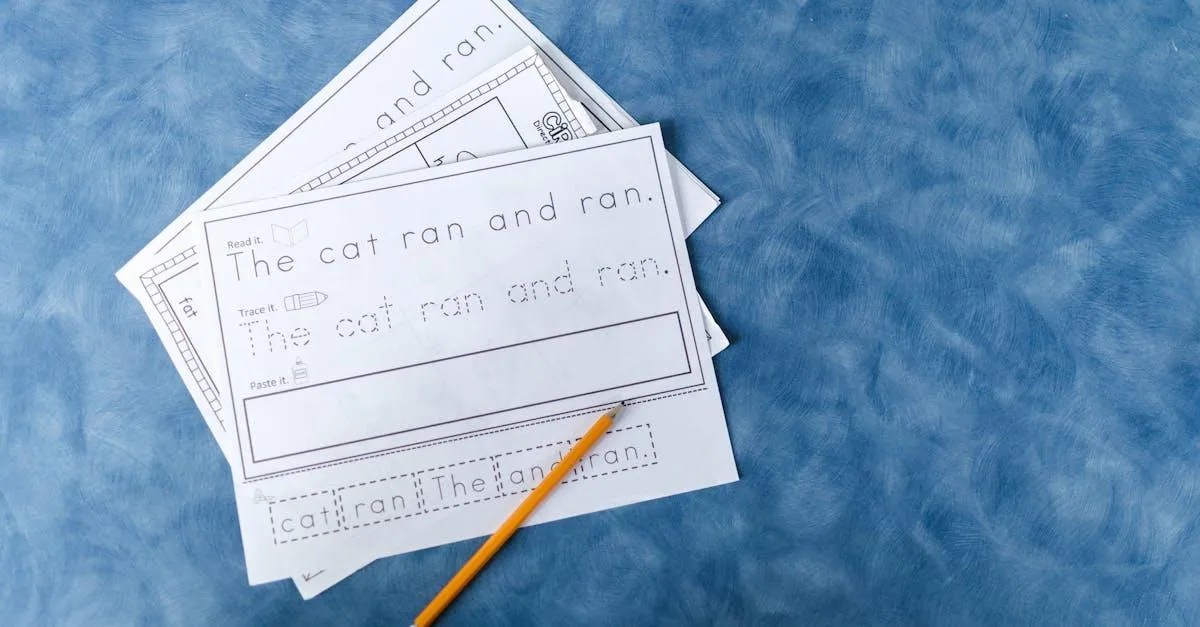
The Demand for Printable Grade Worksheets in Modern Homeschool Platforms
Homeschool is more digital than ever, yet families still ask us for something they can hold, circle, and stick on the fridge. That tension screens everywhere, paper still winning moments that matter sits at the heart of The Demand for Printable Grade Worksheets in Modern Homeschool Platforms.
As the homeschooling population expands, we’re watching printables remain a staple of daily learning, recordkeeping, and assessment. And it’s not just for the early years; well-designed resources like 6th grade worksheets help families bridge the gap between independent learning and accountability, giving students clear practice while giving parents something tangible to review, file, and track. Below, we unpack why printables still matter, who uses them, how they align to curriculum and rigor, what “quality” looks like, and how platforms can build sustainable strategies around them.
Why Printables Still Matter In A Digital-First Ecosystem
We love adaptive apps and interactive lessons, but printables own a different pedagogical space. Paper slows the pace just enough to deepen focus. When learners annotate by hand, they engage fine-motor planning and spatial organization, small factors that can boost retention, particularly for early readers and students who benefit from fewer on‑screen distractions.
There’s also the practical rhythm of a homeschool day. Not every kitchen table has perfect Wi‑Fi or another available device. Printable grade worksheets step in during device conflicts, travel, or offline co‑ops. They’re a low-friction way to keep learning moving without a tech setup.
Then there’s permanence. A printed page becomes evidence of progress: a dated sample to tuck into a portfolio, discuss in a parent–teacher review, or compare across weeks. For formative assessment, a quick one‑page exit ticket or fluency drill gives us a clean read on mastery without yet another login.
Finally, printables scale differentiation. We can mix on-screen instruction with targeted paper practice, e.g., a struggling reader gets extra phonics pages while a sibling tackles multi-step word problems. Done right, printable grade worksheets complement digital, anchoring routines families return to daily.
Personas And Use Cases Across Grade Bands
Early Elementary (K–2)
- The tactile learner: Cutting, pasting, tracing letters, and circling picture clues. Short phonics drills, decodable passages with high-contrast, and handwriting lines (with midlines) matter here.
- The busy caregiver: Needs “grab-and-go” morning tubs, 10–15 minute pages that build number sense, sight words, and fine-motor control. Picture-heavy instructions reduce adult scaffolding.
Upper Elementary (3–5)
- The skill-builder: Multiplication fluency grids, fractions on number lines, and paragraph-writing scaffolds. We see demand for multi-step problems with workspace and graphic organizers for planning.
- The independent worker: Checklists and “I can…” statements at the top of each worksheet help kids self-manage while a parent works with a sibling.
Middle School (6–8)
- The concept connector: Labs and simulations may be digital, but printable lab sheets, claim–evidence–reasoning frames, and problem sets with error analysis reinforce conceptual depth.
- The test-prepper: Standards-tagged practice mirrors state-style stems, with mixed DOK levels. Answer keys show worked solutions, not just final answers.
High School (9–12)
- The college-bound: Algebra proofs, stoichiometry tables, document-based questions (DBQs) with sourcing prompts, and rubric-aligned writing tasks. Printables double as portfolio artifacts for transcripts.
- The time-strapped teen: Efficient, one-page reviews and practice sets that fit between extracurriculars: clean formatting for quick scanning.
Across all bands, special education and neurodiverse learners drive consistent need for print-friendly accommodations, bigger fonts, additional spacing, visuals, and step-by-step scaffolds. And co‑ops want reproducibles they can legally print for small groups without licensing headaches.
Curriculum Alignment, Rigor, And Assessment Fit
Families don’t want “random worksheets.” They want printable grade worksheets that align to scope and sequence, state standards, and the depth of learning promised by the curriculum.
What alignment really means
- Clear standards tagging and cluster mapping (e.g., fractions: unit fractions → equivalence → operations), so parents can remediate precisely.
- Vertical coherence: a Grade 3 fraction page anticipates Grade 4 expectations, not just drills facts.
Rigor and cognitive demand
- Blend recall and application: a few fluency items, then a word problem with a model, then an open-response explaining strategy.
- DOK variety: labeling, classifying, reasoning, and creating, not just computation.
Assessment types that fit
- Formative checks: exit tickets, mini-quizzes with 5–8 items, quick constructed response.
- Benchmark practice: periodic sets mirroring format and timing constraints students will see later.
- Performance tasks: rubrics attached: exemplars or partial-credit guidance help parents score consistently.
Evidence and feedback
Every printable should make next steps obvious. That means answer keys with worked models, error-spotting tasks, and checkboxes like “Reteach,” “More Practice,” or “Ready to Extend.” The goal isn’t a stack of pages, it’s actionable data without a spreadsheet.
Design And Accessibility Essentials For High-Quality Worksheets
Great printables are designed, not just exported. A few deceptively small choices determine whether families actually use them.
Readability
- Font: a clean, readable serif or sans serif: consider a dyslexia-friendly option for early grades. Minimum 12–14pt body for K–5, larger for handwriting lines.
- Contrast and white space: generous margins, 1.2–1.4 line spacing, and clear separation of items reduce cognitive load.
- Print fidelity: test grayscale and draft mode: keep key visuals legible at low ink levels.
Accessibility and UDL
- Alt-text in the PDFstructure and clear, descriptive headings for screen readers.
- Multiple means of representation: visuals, number lines, sentence frames, manipulatives cutouts.
- WCAG-aware color choices and patterns for charts so color-blind learners aren’t blocked.
Usability features
- Editable fields (fillable PDFs) for digital annotation, plus a true print version.
- Numbered objectives, “I can” statements, and estimated time to complete.
- Space to work: provide graphing grids, lined response areas, and margins for notes.
Production quality
- 300 dpi assets to avoid fuzzy diagrams.
- Consistent iconography for hints, challenge problems, and accommodations.
- File sizes under common LMS upload limits and clear file naming: Grade_Subject_Standard_Skill.pdf.
High-quality design respects ink, time, and attention, a trifecta homeschoolers notice immediately.
Platform Integration And Business Strategy
Printable grade worksheets shouldn’t live in a chaotic download pile. Integrated well, they amplify learning and revenue.
Product and UX
- Search and filters: by grade, strand, standard, duration, and accommodation (large print, “no color,” handwriting).
- Playlists: pair a video lesson, interactive practice, and a printable exit ticket. Auto-suggest the next worksheet based on missed skills.
- Progress loop: when a parent marks a printable as “completed,” prompt for a quick score and surface recommendations.
Monetization models
- Freemium: a rotating library of free pages: premium grants full catalog, answer keys, and editable versions.
- Bundles: unit packs (teach + practice + assessment) and seasonal packs. Offer co‑op licenses for small-group reproduction.
- Print-on-demand: curated workbooks shipped quarterly, tied to the platform’s scope and sequence.
Operations and protection
- Watermarking and license language that’s friendly but clear (household vs. co‑op).
- Analytics events for search terms, downloads, completion rates, and reprints, gold for roadmap planning.
- A/B tests on layout and difficulty ranges to improve completion and satisfaction.
Partnerships and credibility
- Align to widely recognized standards where applicable (e.g., state standards or AP frameworks). Cite sources and include revision dates.
- Invite subject-matter experts to review flagship packs: publish short methodology notes so parents see the why behind the design.
When platforms treat printables as a first-class citizen, discoverable, assessable, and thoughtfully packaged, the result is higher stickiness, better outcomes, and a clearer path to sustainable growth.


Leave a Reply