
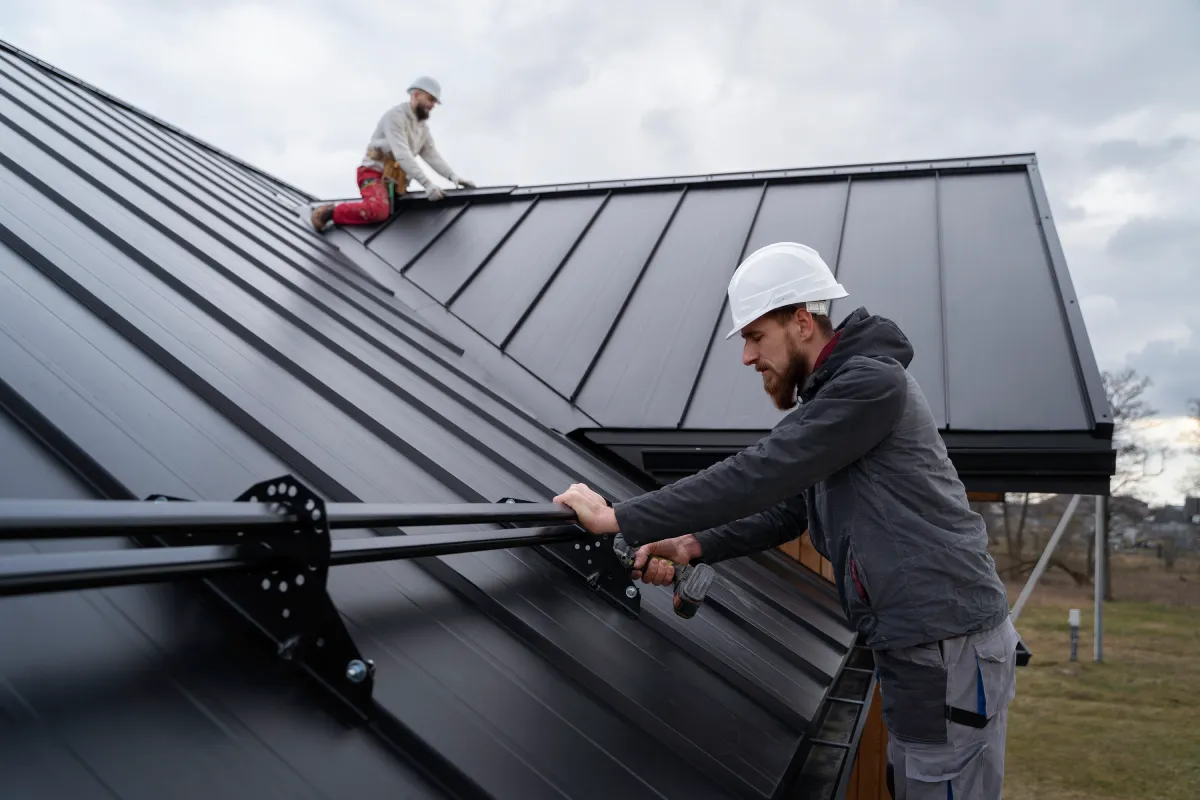
Understanding Load Transfer at the Roof Edge: Importance of Fascias
The housing landscape of Canada is set up in a way that it can withstand climatic extremes. Here you get to experience high winds, thaw cycles, freezing temperatures, and snow loads. Hence, when it comes to a roof’s structural performance, it’s not about shingles. The edge of the roof, where several elements meet, has an essential role to play in securely disrupting forces into the remaining part of the building. Here, the fascias have a more critical role to play than homeowners think.
In cold-weather and coastal regions, the roof edge systems should be engineered in a way that they can manage shifting loads easily. If you are searching for fascias and soffit Halifax solutions, it is essential to know about the functions of load transfers at the roof edge. Then you will know why there are failures, especially in places such as Halifax, where the moisture, wind, and snow loads occur all year round.
Understanding load transfer at the edge of the roof
Simply put, load transfer refers to the way external forces and weight are distributed throughout a structure. Towards the roof edge, the loads generated from wind uplift, gutter systems, and snow accumulation get shifted from the roof deck to the fascia. After that, it keeps moving to the wall framing, trusses, and rafters. If this transference is poorly installed or weak, stress occurs at the edge, leading to water intrusion, cracked boards, and sagging gutters.
- The role of a fascia
Fascia is much more than trim boards. It serves two primary purposes, including providing the mounting surface for the gutter and supporting the roof rafters. Loading from snow and ice will be distributed over the fascia and redirected back to the structural frame of a building. If a fascia is weak, this load is not going to be provided for as well. Long-term exposure of the rafter to the failures of a compromised fascia increases the likelihood of moving the rafters and deforming the roofline.
- Soffits assist the system
Typically associated with ventilation and aesthetic appeal, soffits indirectly affect the performance of loaded roof framing systems. Installed correctly, soffits help prevent moisture from entering the roof framing. It also helps to regulate the temperature and humidity levels of the attic space. Conserving moisture through proper venting of soffits prevents moisture from shrinking the wood members. It allows the fascia and roof edge to perform at full capacity when under load stress.
- Importance of a thorough inspection
Issues associated with load transfer are most often not observable from the ground and require specialized professional inspection. Expert contracting firms have been trained in understanding how different methods of finishing the fascia, spacing of fasteners, and material used impact the overall structural function of the structure. To learn more about this, you can check out Artisanroofing.ca and get your questions answered.
Summing it up
Therefore, when soffits and fascias are designed, deployed, and maintained correctly, things are good. They all form an ongoing route that secures the building. On the other hand, when you ignore the integrity of the roof-edge, it can take away more years from the roof system and result in expensive repairs. Having a clear understanding of the way load transfer works towards the roof edge, you can arrive at an informed decision that secures your home from the risky climate in Canada.


Leave a Reply