
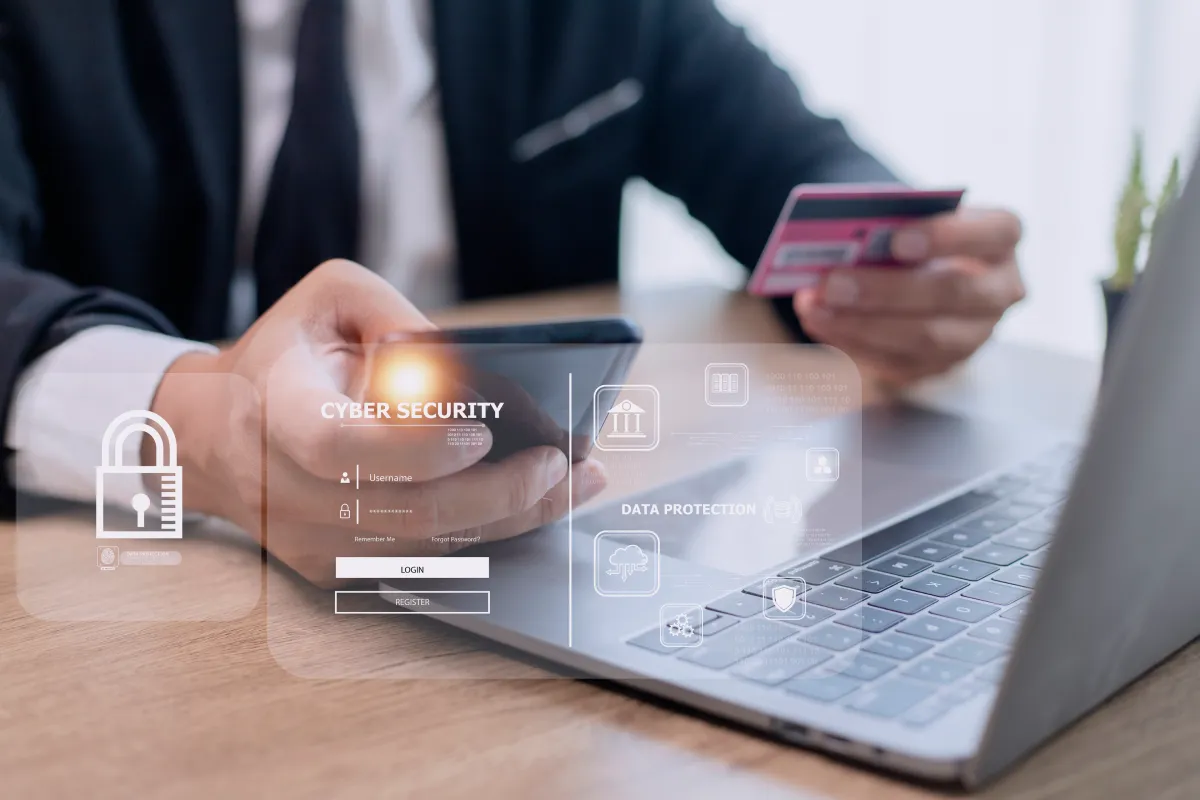
What is Payment Security? Tips to Securing Online Payments
Cybercriminals mostly target risk profiles in online payment systems due to the lucrative rewards that come with compromised systems. Statista estimates that losses due to payment fraud in eCommerce hit an upwards of USD 40 billion in 2022 only.
Cybercriminals seek weak points in security infrastructure to exploit vulnerabilities and wreak havoc on businesses. This is made worse by the anonymity of online transactions and the ever-evolving nature of payment technologies which introduce new vulnerabilities that criminals exploit.
This article focuses on tips to secure online payments.
How do you ensure Secure Online Payments?
Online payment security refers to strategies of safe credit card processing to not only protect customer data but also ensure that your online visitors feel secure when making purchases on your website. Here are eleven tips to ensure secure online payment processes;
- Ensure PCI-DSS Compliance
- Implement Data Encryption
- Use a Reputed Platform and Payment Gateway
- Implement Tokenization
- Install Fraud Detection and Prevention Systems
- Use Firewall and Network Security
- 3D Secure
- Verify Transaction Details
- Train Employees in Security Measures
- Implement Two-Factor Authentication
- Keep your Operating Systems Updated
1. Ensure PCI-DSS Compliance
The PCI Security Standards Council dictates rules for cardholder data. To comply with PCI-DSS, some of the key things you will be required to do in summary include;
- Maintaining a secure network
- Encrypting data during transmission
- Securing infrastructure, and
- Restricting information access
With PCI-DSS compliance, you ensure that your business adheres to globally recognized standards. It is a key step to reducing vulnerabilities that could lead to data breaches.
2. Implement Data Encryption
Data encryption involves encoding of confidential pieces of data to ensure that they can only be decrypted or rather accessed by users with the right privileges. The right privileges in this case include having the encryption key.
The encrypted data here appears unreadable or scrambled to persons or entities who attempt to access them without the right privileges. To implement data encryption, you will want to use advanced technologies like installing an SSL certificate to secure data in transit.
There are different versions of SSL certificates you can implement depending on your budget and the level of security you’re looking for. For example, there are affordable SSL certificate options that allow you to secure a main domain and several other subdomains. After implementing data encryption, you will want to regularly assess and update your encryption systems to address emerging threats.
3. Use a Reputed Platform and Payment Gateway
It is also important to ensure that security doesn’t take the backseat when you’re choosing a platform to run your online business and process payments. As a general rule, choose reputable providers.
A good platform should have transparent security measures. They should also implement technologies that ensure the security of online transactions like tokenization and encryption, among others. One increasingly popular method is to pay by link, where customers receive a secure, personalized link to complete their payments, adding an extra layer of convenience and security. You might also want to check out high risk merchant accounts, as they tend to be more secure. For businesses operating in sensitive sectors, high risk credit card processing solutions offer added security and fraud mitigation tailored to complex payment needs.
4. Implement Tokenization
Tokenization replaces sensitive payment data with unique tokens. This means that if for any reason you fall victim to a cyber attack, there is nothing that the cybercriminals will be able to do with the compromised information as tokenization renders them useless.
This significantly reduces the risk of unauthorized access and data breaches. What’s more, tokenization ensures that you also comply with payment industry standards and regulations.
5. Install Fraud Detection and Prevention Systems
The bad guys are ever refining their ways but you can at least make it harder to break in, thanks to fraud detection and prevention systems. For the best results, implement systems that use machine learning, behavior analysis, and risk scoring to identify and prevent fraudulent transactions. Continually monitor transaction patterns and customer behavior to enhance the effectiveness of your fraud prevention measures.
6. Use Firewall and Network Security
To protect your payment infrastructure, use firewalls, network segmentation, intrusion detection, and access controls. Here, firewalls act as security guards.
As you probably, already understand, they work to prevent unauthorized access and also, secure confidential customer data. With strong access controls and network segmentation in place, you can significantly limit the impact of potential security breaches on your business.
7. 3D Secure
While it may sound foreign, 3D Secure isn’t a very new term when it comes to online payment security best practices. It is a protocol for adding an extra layer of security for online credit and debit card transactions.
And just as it sounds, 3D secure refers to the “three domains” involved in the protocol which include;
- The merchant/acquirer domain
- The issuer domain and
- The interoperability domain.
Implemented correctly, this technology cannot only help you reduce the risks of online payment fraud. It can also enhance the protection of customer data and boost their confidence in your brand.
8. Verify Transaction Details
You can also reduce the risk of unauthorized payments by verifying user details. The details you will want to verify here include the CVV, billing address, phone number, and email ID.
This extra scrutiny adds an extra layer of security to online financial transactions. It ensures that payments made are legitimate and authorized by the cardholder.
9. Train Employees in Security Measures
One of the key steps to ensuring secure online payment processes is training employees on security measures. This can help with risk mitigation, enhanced data protection, compliance adherence and crisis preparedness among several other benefits.
To get started, educate your team on online payment security through seminars and training sessions. Through these programs, see to it that employees can recognize potential threats and understand data protection guidelines.
10. Implement Two-Factor Authentication
The goal of Two-Factor Authentication (2FA) is to enhance security by making it more challenging to gain access to unauthorized individuals even if they already have the right login credentials. The two factors typically fall into three categories:
- Something You Know:
- Password or PIN: This is the traditional knowledge-based factor, requiring the user to enter a secret code.
- Something You Have:
- One-Time Passcode (OTP): This is A temporary code sent to the user’s registered device.
- Smart Card: A physical card with an embedded chip or magnetic stripe.
- USB Token: A hardware device that generates or stores authentication credentials.
- Something You Are:
- Biometric Data: Physical characteristics unique to an individual like fingerprints, retina scans, or facial recognition.
Two-factor authentication works in this way; the user initiates login by entering their username and password, and the system verifies the first factor which is typically the password or PIN. If the password is correct, proceed to the next step.
The user is then prompted to provide the second factor which could be a one-time passcode obtained via a biometric scan, sent to their mobile or generated by a hardware token. Both factors are validated by the system and if both are correct, the user is granted access to the system/account.
11. Keep your Operating Systems Updated
To ensure that your system is fitted with the most recent security measures, see to it that your Operating Systems are updated. This will help you reduce the threat of data breaches by fraudsters and hackers.
You may want to check with your provider if they allow for automatic updates to avoid the risks of forgetting to implement updates as soon as they’re made available.
Final Word
Online payment security isn’t a one-time thing. To stay a step ahead of the bad guys, you may have to sometimes try and think like them and put in place the right strategies to prevent attacks. Let us know below which strategy you implement first.


Leave a Reply