

17 Email Subject Line Mistakes to Avoid (and What to Do Instead)
Your subject line is often the first thing recipients notice, so it needs to give them a clear reason to open the email. Generic wording, excessive punctuation, misleading urgency, and formatting mistakes can make even a valuable message easy to ignore.
This guide covers 17 common email subject line mistakes and explains what to use instead. You’ll learn how to write clearer, more relevant subject lines for email marketing campaigns, cold outreach, and personalized messages.
1. Using Generic Subject Lines
One of the most common email subject line mistakes that marketers make is using generic subject lines. When your email’s subject is generic, there’s probably not much motivation for your audience to open your emails.
Instead, you should make your subject lines specific and compelling. When done effectively, just a few words will let your recipients know what they can expect from your email and why they should open it.
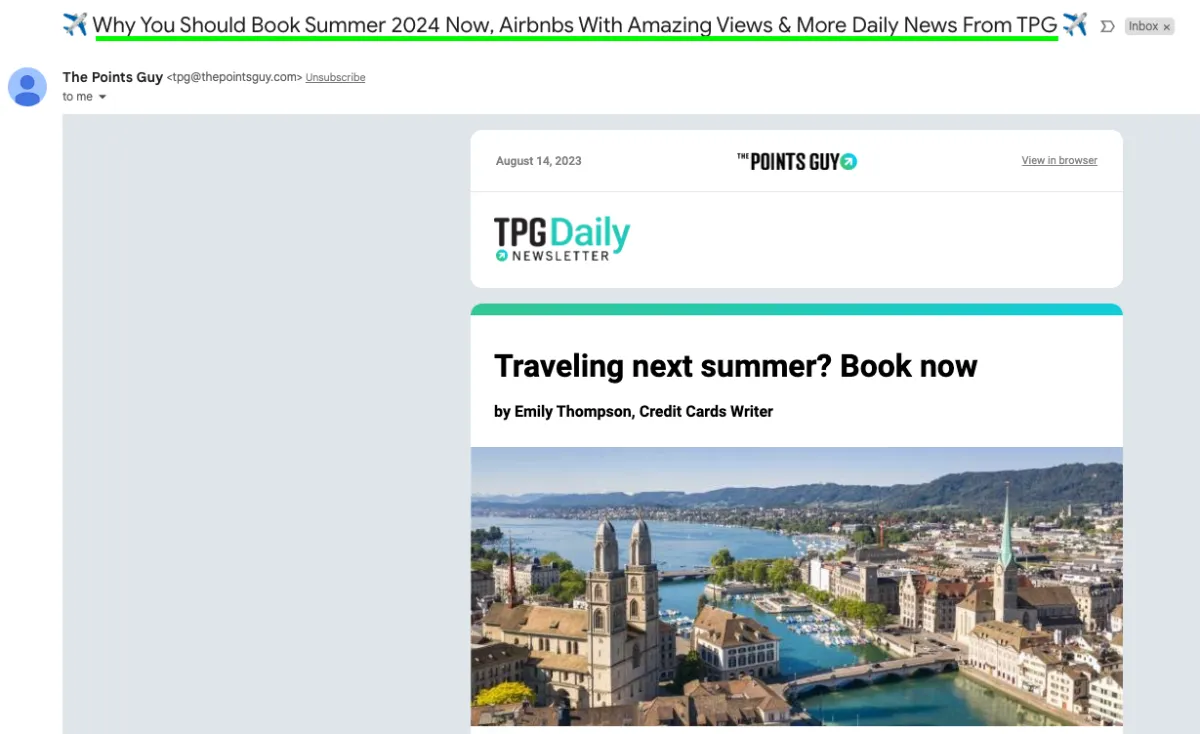
Here’s a great example from The Points Guy that tells the recipient exactly what to expect in the body of the email:
2. Using All Caps
Avoid using an entire subject line in capital letters. This could be perceived as shouting and could discourage recipients from opening the email.
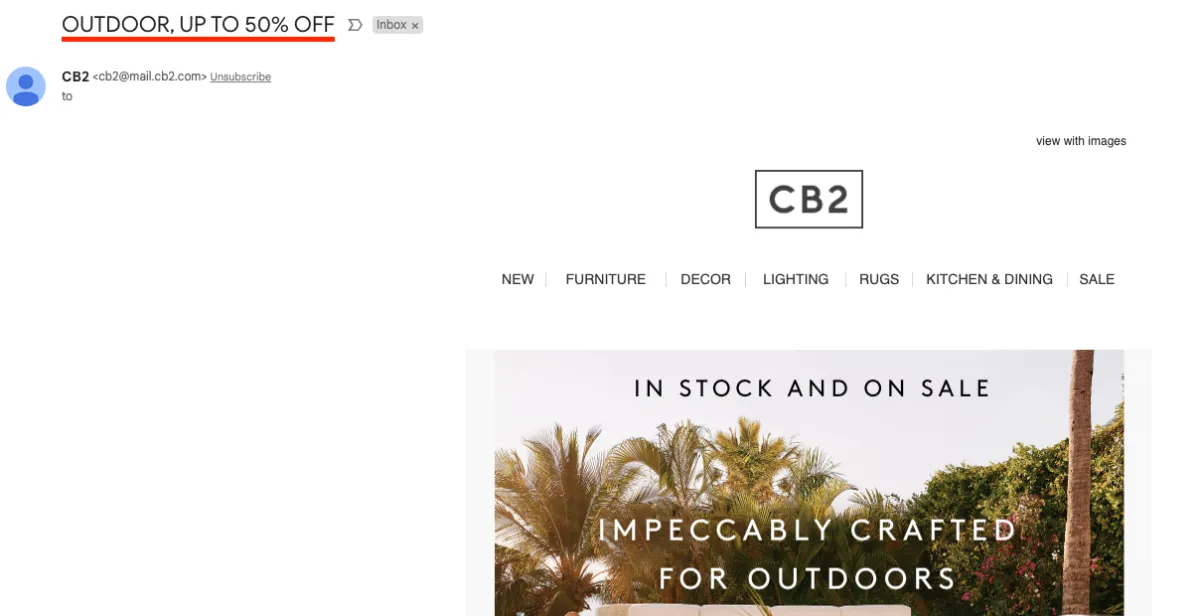
Instead, try using title case or sentence case, which are much more reader-friendly. For example, “ACCESS NEW TECH FOR PAYMENT INTEGRATION” appears more aggressive than “Access New Tech for Payment Integration.”
Although you should avoid capitalizing the entire subject line, standard title case may capitalize important words naturally. Avoid using isolated capitalized words solely to create a sense of urgency.

3. Adding Excessive Punctuation
Another mistake many marketers make is using unnecessary punctuation in their subject lines. This could include repeated exclamation marks, multiple question marks, unnecessary ellipses, or strings of symbols.
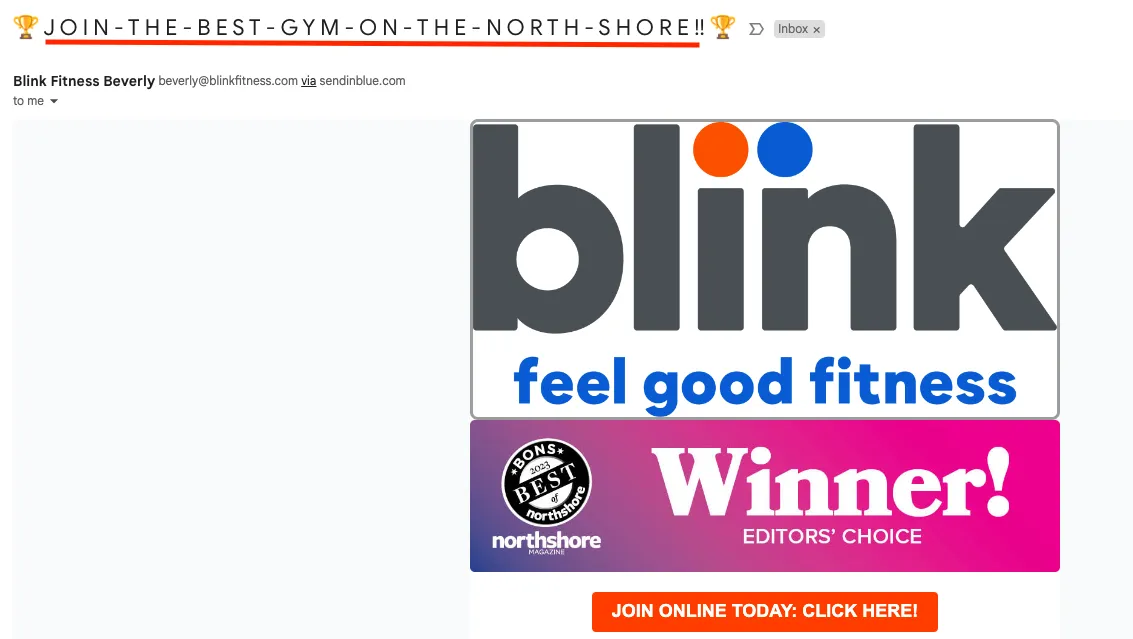
Since a subject line is more of an informal phrase than a proper sentence, there isn’t any required punctuation. It’s okay to use an occasional comma, single exclamation point, or colon if it fits the context.
For example, it makes sense to use a comma if you’re addressing the recipient in the subject. If the subject is particularly exciting, you can cap it off with an exclamation point. Use your best judgment, and don’t overdo it.
4. Making it Impersonal
Instead of using impersonal phrases in your email subject lines, consider incorporating intriguing questions or personalized touches. A personalized subject line can encourage readers to open your message, while a generic one may be easier to ignore.
Many email marketing tools offer personalization options that let you add tokens to address recipients individually in a mass email blast. These tools enable you to refer to the recipient by name, mention their brand, or tailor the message to their interests. For larger campaigns, follow a structured process for sending personalized emails to large audiences.
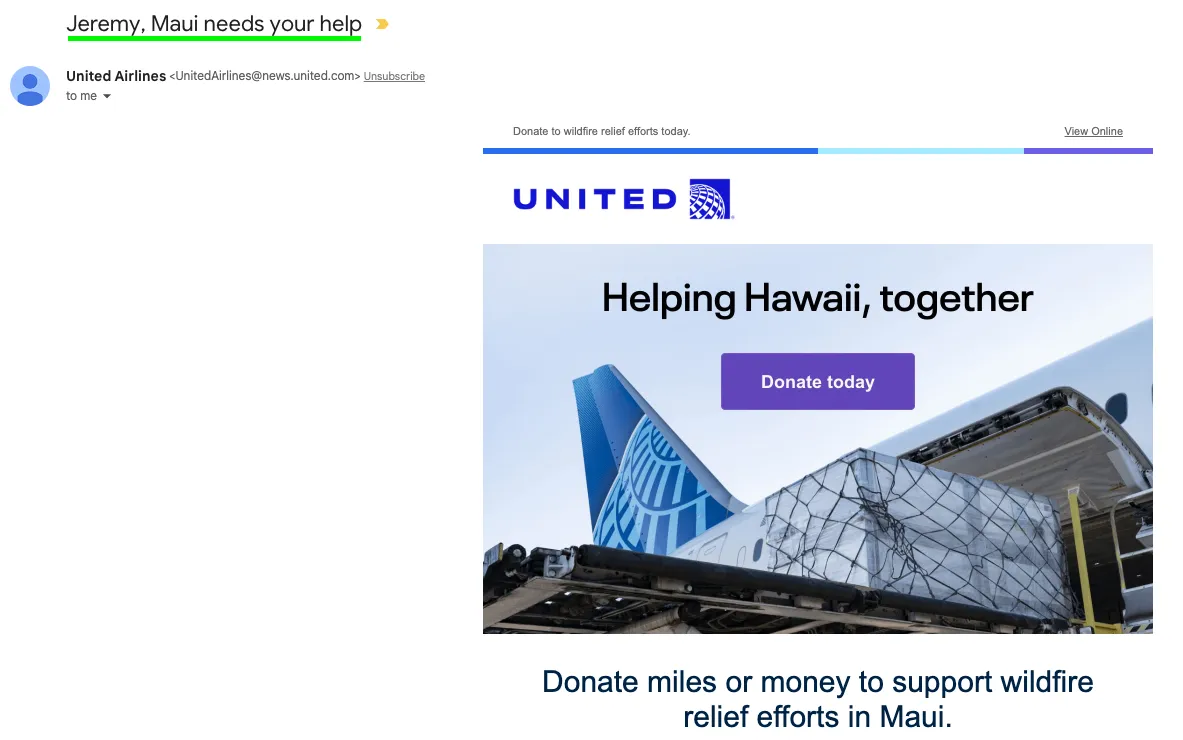
Personalization must remain accurate and relevant to the message. A recipient’s name alone will not improve the subject line if the offer or email body feels generic.
5. Failing to Optimize for Mobile
Because many recipients read email on smartphones, both the subject line and message body must display clearly on smaller screens. If your email subject gets cut off, it could lead to low open rates on mobile devices.
When optimizing your email subject line for mobile, keep in mind you’ll likely have less space, so keep it short and sweet.
For example, replace “Important information about the upcoming changes to your account” with “Your account changes at a glance.” Put the main point early so it remains visible if the inbox truncates the subject line.
6. Using Spammy Language
Clickbait or spam-like subject lines can raise immediate red flags and increase the likelihood that recipients ignore or delete the email.
Spammy buzzwords can be misleading and cause your email to end up in the recipient’s junk or spam folder. Email providers consider numerous signals when filtering messages, including sender reputation, authentication, engagement history, formatting, and content.
Promotional or misleading phrases may contribute to filtering, but one word alone does not always determine inbox placement.
Some spam words that you should try to avoid are:
- Buy direct
- Be your own boss
- XXX
- Earn $
- Make money
- $$$
- Big bucks
These are examples of phrases that may appear overly promotional or suspicious when combined with other deliverability problems. Take advantage of spam email testing tools that’ll check your email copy (subject and body) to determine if it’s likely to be registered as spam. This can help you successfully deliver emails to more inboxes.
7. Using Special Characters
Another popular email subject line mistake is using special characters, such as $, @, #, and %. Excessive or unusual use of these characters can make a subject line appear promotional or untrustworthy. Use them only when they communicate necessary information, such as a genuine discount percentage.
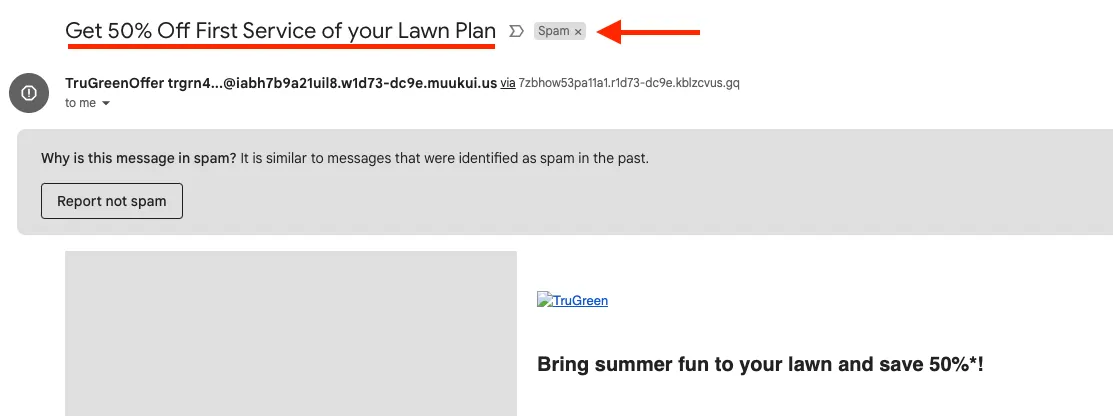
Instead, write out the words for these special characters wherever possible. It may add some length to your subject line, but it can make the message appear clearer and less promotional.
8. Overusing Emojis
Some email marketers are huge proponents of emojis in subject lines because they stand out in the inbox and create a more playful tone. However, using too many emojis in the subject line or email body can make the message appear unprofessional or inconsistent with the brand.
You can avoid this mistake by being more intentional with your emoji use and by using them sparingly.

Choose emojis that fit your established brand voice and the context of the message. They should support the subject line rather than distract from it.
9. Failing to Create a Sense of Urgency
We mentioned before that creating clickbait or using misleading language aren’t the best approaches to writing subject lines. However, there are many situations where creating a sense of urgency is appropriate.

For example, if you are running a flash sale that only lasts a short time, using more urgent language makes sense. If this is a direction you’re going to take, determine the amount of urgency that makes sense for your brand’s voice.
For example, replace vague pressure such as “Act now before it’s too late” with specific, verifiable timing such as “Sale ends Friday at midnight.”
10. Using Run-On Sentences
Run-on sentences are difficult to scan and can obscure the main point. Because subject lines have limited space to earn attention, remove unnecessary clauses and focus on one clear message. The subject line does not need to be a complete sentence, but it should be easy to understand at a glance.
For example, replace “Our latest features are now available, and you can try them today before the offer ends” with “Try our latest features today.”
11. Oversharing in the Subject Line
Some context and details fit better in the body of the email than in the subject. With that said, it’s important to be intentional about how much of your message belongs in the subject line.
Your subject line should simply be a hook or teaser for what is to come in the body. You do not need to reveal every detail in the subject line. It should only include high-level information to get your audience interested.

12. Using One-Word Subject Lines
Your subject line should be neither unnecessarily long nor too brief to provide context. We talked a little bit before about the issue of keeping your subject lines generic or broad, but it’s also worth noting that a one-word subject line doesn’t make much sense.
One-word subject lines often lack enough context to earn attention, particularly when the recipient does not already recognize the sender. Such a short subject line may also appear careless when the recipient needs more context.
For example, replace “Update” with “Your June account update” or “Project timeline update.” A few additional words can provide context without making the subject line unnecessarily long.
There is no universal subject-line length or format that performs best for every audience. Test one variable at a time, such as length, personalization, urgency, or emoji use, and compare results across a sufficiently large audience segment. Keep the email body and send time consistent so that the change in the subject line remains the primary variable.
13. Not Checking for Typos
Once each variation meets those basic criteria, complete a final accuracy check before sending. Spelling and grammar errors may be off-putting to recipients, so much so that they delete your email before even opening it.
Leaving typos is unprofessional because it gives the impression that you have not carefully reviewed and revised the message. These slip-ups are particularly detrimental if you want the recipient to hire you for services requiring attention to detail.
In addition to not looking professional, many see spelling errors as a sign of a spam email. Even if the spam filter doesn’t register as such, small errors can cause recipients to report the email as spam, add it to junk, or unsubscribe from your list.
Instead, review the subject line separately from the email body and confirm all names, dates, capitalization, and punctuation before sending.
14. Using “Re:” or “Fwd:” Inappropriately
A recent trend in email marketing is to include a “Re:” prefix instead of a subject line, which can lead recipients to mistakenly think it’s a reply to a previous email. Sometimes, people use “Fwd:” to give a similar effect.
Use ‘Re:’ only when the email is genuinely part of an existing conversation. Adding it to a new message may create a temporary sense of familiarity, but it can also make the sender appear deceptive once the recipient opens the email.

The same rule applies to ‘Fwd:’. Reserve both prefixes for genuine replies and forwarded messages so the subject line accurately represents the conversation.
15. Requesting Action from Strangers
When reaching out to strangers with a cold email campaign, your subject line is one of the first impressions. Regardless of the platform, the immediate goal is to earn attention without sacrificing trust.
To build this trust, you should avoid asking recipients to take action in the subject line. It can start a relationship off on the wrong foot when you immediately ask a stranger to do something that serves you, especially if there is no real benefit to them.
Instead, use the email to propose a mutually beneficial relationship and let the subject line focus on the part of the relationship that benefits the recipient.
For example, if you sell bookkeeping software, use the subject to let the recipient know that you can help them streamline their accounting. Then, in the body, ask them to get on a call with you for a demo of the software. Their win is the ability to streamline an essential business practice, and your win is getting a prospect on a call.
16. Leaving the Subject Line Blank
Although subject lines can be hard to write, leaving them blank to avoid writing isn’t the way to go. This won’t incentivize strangers to open the email, and it may appear as a red flag even to those who do know you.
Even if you’ve read the tips we’ve shared here and you’re still drawing a blank, please remember that something is better than nothing. Some context will be more powerful than none.
If you are stuck, use the email’s main benefit, update, or request as a starting point. An AI writing tool can generate alternatives, but review each option for accuracy, relevance, and fit with the message before sending it.
As a simple starting point, identify the email’s purpose and the recipient’s benefit. A blank subject line could become “Updated project timeline for review,” “Your order is ready,” or “A faster way to manage invoices.”
17. Leaving Out Referral Information
If you’re sending an email to make a connection with someone who’s been referred to you, it’s important to mention who referred you or who originally made the introduction. Using a mutual friend’s or colleague’s name will help capture the recipient’s attention and build trust right off the bat.
For example, instead of writing “Copywriter for Hire,” consider using something like “Referred by John Smith – Copywriter for Hire” or “Copywriter for Hire – John Smith’s Colleague.”
If you’re including who referred you, make sure this connection is legitimate. Only name someone who genuinely made the referral and has permitted you to mention them. Don’t use someone’s name without their permission.
Final Thoughts
An effective subject line gives recipients enough information to understand the email without revealing the entire message. Keep it concise, specific, accurate, and consistent with what readers will find when they open it.
Before sending your next campaign, check how the subject line appears on mobile, verify that any urgency or personalization is genuine, and test meaningful variations with your audience.
For more practical guidance on email marketing, eCommerce, WordPress, and digital growth, subscribe to the PortoTheme newsletter and get the latest resources delivered to your inbox.
About the Author
Emily Krings is an SEO content writer and strategist with a knack for storytelling. She specializes in helping B2B businesses create blog content that connects with their audiences.


Leave a Reply