
9 Top Restaurant Loyalty Program Software Platforms (Ranked & Reviewed)
Running a restaurant brand today means competing for guests who have more choices and more distractions than ever. Third-party delivery apps sit between brands and their customers, blanket discounts quietly erode margins, and most loyalty programs struggle to prove they actually drive incremental revenue.
When loyalty, ordering, and guest data live in separate systems, it becomes harder to grow frequency and keep the relationship with your guests in your own hands.
The right restaurant loyalty program software changes that. Instead of handing out points and hoping for repeat visits, modern platforms capture first-party guest data, personalize rewards, automate marketing, and tie every campaign back to measurable business outcomes. The best systems help brands increase visit frequency, protect margins, and own the guest relationship across web, app, and in-store, whether you run one location or hundreds.
Here are nine of the top restaurant loyalty program software platforms to consider in 2026.
1. Thanx
Best For: Enterprise and emerging-enterprise restaurant brands that want loyalty to drive measurable, profitable revenue, with modern first-party digital ordering and fast implementation built in.

Thanx is a top restaurant loyalty program platform for fast-growing restaurant groups that want loyalty, first-party data, and modern digital ordering working together in one platform.
Key Features
- Outcome-Based Loyalty Engine. Thanx treats loyalty as a measurable business outcome rather than a points giveaway, isolating incremental revenue lift directly in the dashboard so brands can actually prove what is working.
- High-Enrollment, High-Data-Capture Design. Frictionless enrollment is built to drive 300+ sign-ups per location, per month, and a 30%+ data-capture rate within six months, yielding 57% more purchase data than standard programs.
- Margin-Friendly Rewards. Beyond standard discounts, Thanx offers personalized rewards like secret menus, bonus points, and modifier rewards (think a free guacamole upgrade), helping brands cut their average effective discount rate to roughly 2.4%.
- Modern First-Party Digital Ordering. Fast, passwordless web and mobile ordering with reported app conversion rates of 80–95% and an average 35% lift in repeat visits, keeping guests in profitable first-party channels.
- No-Code CMS. Marketing teams can make unlimited updates to their app and content with no developers and no extra fees, so they can test and adapt in real time.
- Marketing Automation & Segmentation. A full email service provider with one-time and automated campaigns, pre-built segments, and built-in A/B testing and control groups, saving teams 20+ hours a week. SMS is available through an integration with a provider like Attentive or Klaviyo.
- Flexible Loyalty Methods. Support for card-linked, check-in, scan, app-based, and app-less (web-based) participation, so brands can design the exact experience they want and reach guests who won’t download an app.
- Open Platform & Fast Implementation. Open APIs, 60+ pre-built integrations across POS, online ordering, feedback, CDP, and kiosk systems, plus Thanx Connex for warehouse data sync, with implementations averaging about 90 days versus the 9–12 months common elsewhere and no hardware to install.
Pros
- Loyalty tied to provable, incremental business outcomes, not vanity metrics.
- Industry-leading enrollment and first-party data capture.
- Reduces discount dependency to protect margins.
- Fast, low-lift implementation and migration (passwordless, with the existing app rolled over and no hardware).
- No-code CMS gives marketers control without relying on developers.
- Rapid, ongoing innovation, with 125 customer-facing features shipped in 2024.
- Strong retention (around 90%).
Cons
- Purpose-built for restaurant brands, so it is not aimed at non-restaurant verticals.
- Designed for brands ready to treat loyalty as a growth investment, so very small single-unit operators may not need its full depth.
Verdict
Thanx stands out for turning loyalty into a measurable growth engine: strong data capture, modern digital ordering, and rewards that build frequency without leaning on discounts.
For brands that want loyalty to drive profit rather than sit as a cost center, Thanx is the strongest choice on this list, especially for enterprise and fast-growing restaurant groups focused on first-party revenue and provable ROI.
2. Paytronix
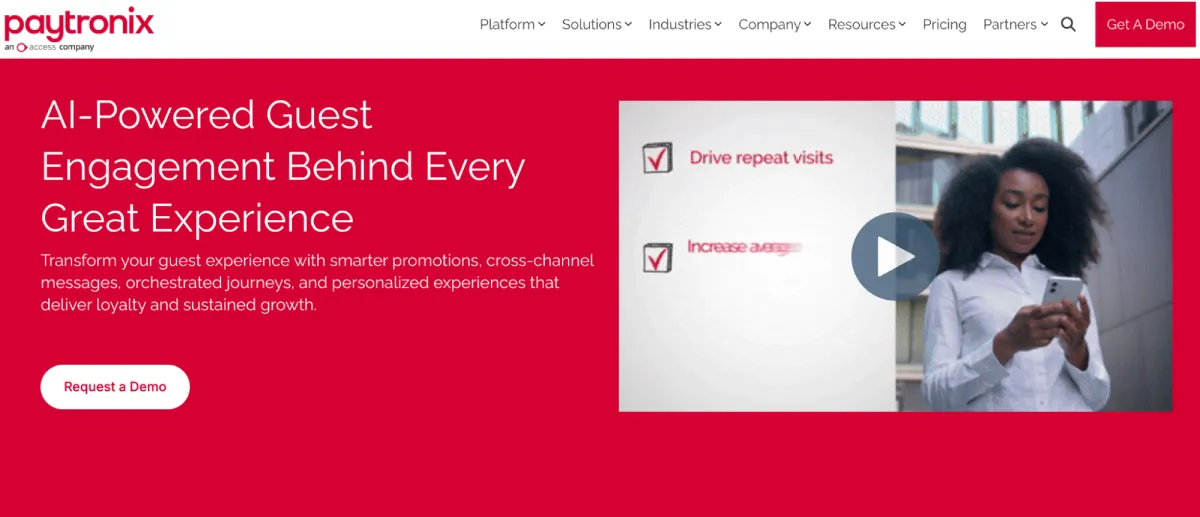
Best For: Established multi-unit restaurants and convenience stores that want a broad, all-in-one guest engagement suite backed by a long track record.
Key Features
- All-in-One Guest Engagement Suite. Loyalty, online ordering, CRM, gift cards, subscriptions, and payments are combined in a single platform.
- Personalized Campaigns & Segmentation. Hundreds of pre-built audience segments and AI-driven insights power 1:1 messaging at scale.
- Subscription Programs. Built-in tools to launch recurring membership and subscription offers that drive frequency.
- Broad Integration Library. More than 450 integrations, including 30-plus POS systems.
Pros
- Mature, broad platform with more than 20 years in the market.
- Strong personalization, segmentation, and AI insights.
- An all-in-one suite reduces the need for separate vendors.
Cons
- Premium pricing that can be steep for smaller operators.
- Breadth can mean a heavier, more complex implementation.
- Can be more platforms than low-volume or single-unit shops need.
- Reporting depth carries a learning curve for smaller teams.
Verdict
Paytronix is a capable, enterprise-class suite for established restaurant and c-store brands that value breadth and a long track record, though its depth and price point are best justified by larger, multi-unit operations.
3. Punchh
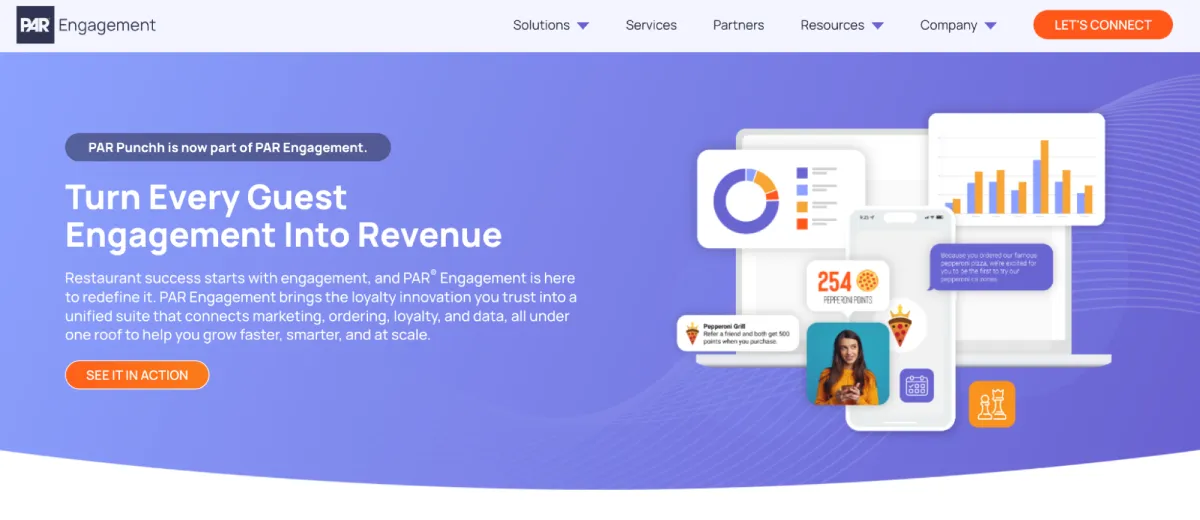
Best For: Large enterprise restaurant chains that need loyalty, offers, and personalization to run at massive scale, now as part of the broader PAR Engagement suite.
Key Features
- Enterprise Loyalty at Scale. Flexible programs built on points, tiers, referrals, and memberships are used by more than 40% of the top 100 US restaurant brands.
- AI-Driven Personalization. Behavioral segmentation and AI tools (now including PAR’s “Accelerate” suite) deliver targeted offers in real time.
- Punchh Wallet. Combines loyalty and payments into a single tap.
- Unified PAR Engagement Ecosystem. Connects loyalty with PAR ordering, marketing and offers, and guest data.
Pros
- Proven at enterprise scale with blue-chip brands like Yum!, Denny’s, and Casey’s.
- Best-in-class segmentation and personalization.
- Strong support, strategists, and 100%+ net dollar retention.
Cons
- Enterprise-only pricing that is overkill for small or independent operators.
- Long implementation timelines.
- Typically requires a dedicated marketing team to use fully.
- Now one piece of a larger PAR suite, which can add complexity for brands that want a focused loyalty tool.
Verdict
Punchh is a gold-standard enterprise loyalty platform for large chains with the volume and digital maturity to use it, but a heavier, pricier commitment than emerging brands or small teams usually need.
4. Como Sense
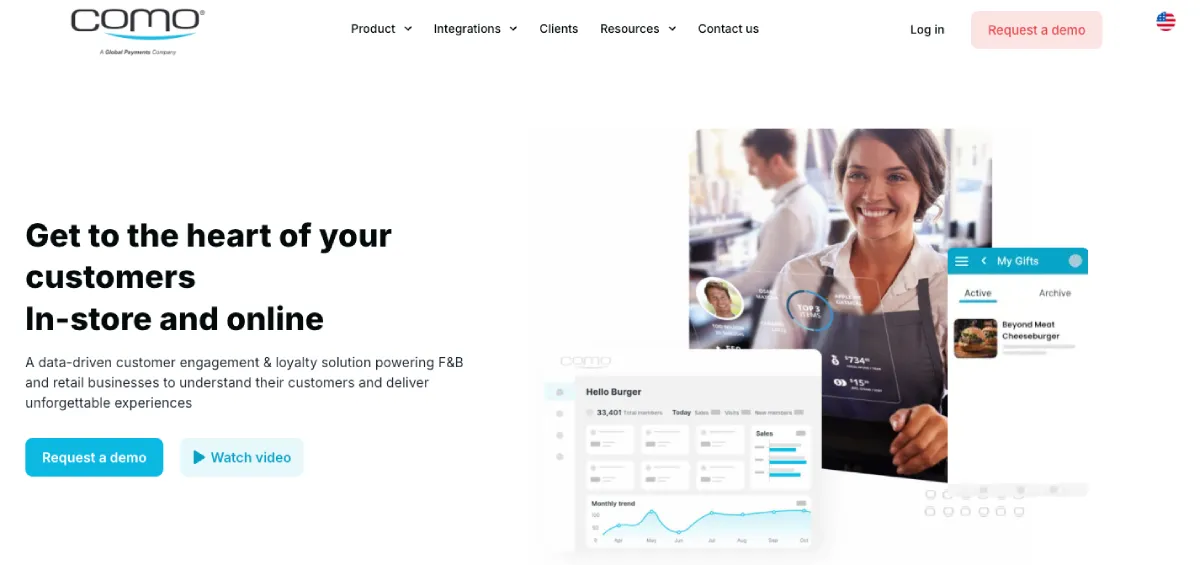
Best For: Mid-market and multi-unit food-and-beverage (and retail) brands that want a flexible, data-driven loyalty and CRM platform with strong support.
Key Features
- Personalized Loyalty & CRM. Points, punch cards, tiers, and VIP rewards combined with customer data and segmentation.
- Branded Mobile App. A custom app for rewards access, personalized offers, and engagement.
- Gamification. Badges, tiers, and challenges that make participation more engaging.
- Automated Omnichannel Marketing. SMS, push, email, and pop-up messaging with geo-targeting and surveys.
Pros
- Strong personalization and gamification options.
- User-friendly dashboard with helpful templates.
- Highly rated, hands-on customer support.
Cons
- Better suited to brands with steady foot traffic than very small or low-traffic venues.
- Enrollment can depend on guests completing a sign-up form.
- Some users cite a learning curve to use the full feature set.
- A smaller integration ecosystem than enterprise platforms.
Verdict
Como Sense is a versatile, well-supported option for mid-market F&B and retail brands that want data-driven loyalty without enterprise overhead, though larger chains may need deeper integrations and analytics.
5. Incentivio
Best For: Growing restaurant groups (typically 5+ locations) that want loyalty bundled with branded online ordering and white-label apps in a single platform.
Key Features
- Unified Ordering + Loyalty. Loyalty is built directly into the branded web and mobile ordering.
- White-Label Mobile Apps. Custom iOS and Android apps under the brand’s own identity.
- CRM & CDP. A built-in customer data platform with segmentation and guest-journey tracking.
- AI-Driven Churn Management. Tools that flag at-risk guests and trigger win-back campaigns.
Pros
- True all-in-one platform spanning ordering, app, loyalty, marketing, and data.
- Intuitive interface and responsive support.
- Solid POS integration coverage, including Toast, PAR Brink, and Square.
Cons
- Onboarding can run longer than the promised 4–6 weeks for some brands.
- Some users report limited customization and reporting flexibility.
- Promotion and discount setup can feel restrictive.
- Guest-data migration (for example, from Toast) can be challenging.
Verdict
Incentivio is a strong choice for mid-market brands that want loyalty and digital ordering under one roof, though setup timelines and customization limits are worth weighing.
6. Hang
Best For: Brands that want a modern, gamified, experience-led loyalty program and have the marketing capacity to run it.
Key Features
- Gamified, Experiential Rewards. Mystery-gift-style rewards and personalized perks instead of generic points.
- Personalization Engine. Learns member preferences over time to tailor rewards and reduce wasted offers.
- Omnichannel Earning. Rewards across online orders, in-store visits, delivery, and even social engagement.
- Passwordless Enrollment. Phone-number signup with Apple Wallet passes.
Pros
- Distinctive, engaging experience that can drive frequency and word of mouth.
- Personalized rewards that aim to lower reward costs while raising perceived value.
- Modern, low-friction signup.
Cons
- Newer platform with less ecosystem depth than established players.
- Gamified, social features require a thoughtful strategy to pay off.
- Best suited to mid-sized or larger groups with marketing resources.
- Custom-only pricing with limited public transparency.
Verdict
Hang is an inventive, next-generation option for brands that want loyalty to feel fun and experiential, but less proven and more hands-on than legacy platforms.
7. Sparkfly
Best For: Enterprise brands that need powerful offer management and real-time POS attribution to connect their digital and marketing stack.
Key Features
- Dynamic Offer Management. Create, distribute, and measure promotions across digital and physical channels.
- Real-Time POS Attribution. Patented middleware that ties offers and transactions together in real time.
- Single-Scan Technology. Streamlined in-store redemption through one scan at the POS.
- Mobile Rewards Wallets. Digital wallet capabilities for offers and rewards.
Pros
- Best-in-class offer management and promotion attribution.
- Proven with major enterprise brands, including Chipotle, Texas Roadhouse, and Bojangles.
- Strong real-time POS connectivity and data capture.
Cons
- Primarily an offer and attribution layer rather than a full all-in-one loyalty suite.
- Loyalty is a newer, secondary capability for the platform.
- Enterprise-focused, with premium positioning.
- Often deployed alongside other tools rather than as the sole system.
Verdict
Sparkfly is a powerful choice for enterprise brands that live and die by promotions and need precise offer attribution, but narrower than full-suite alternatives for brands wanting a single, loyalty-first platform.
8. Spendgo

Best For: Growing restaurant and retail chains that want an affordable, flexible loyalty and marketing platform that works across many POS systems, now part of Olo.
Key Features
- Flexible Loyalty Programs. Visits, points, pay-with-points, points banking, surprise-and-delight, BOGO, and contests.
- Passwordless Sign-In. Phone-number enrollment across every touchpoint.
- Omnichannel Reach. In-store, online, mobile, kiosks, customer displays, and mobile wallets.
- Marketing Dashboard. Email and SMS campaigns from one easy-to-use interface.
Pros
- Affordable and flexible, with low-friction enrollment.
- Works across many POS systems and multi-brand portfolios.
- Hands-on, responsive support.
Cons
- Real-time and franchisee-level reporting can be limited.
- No native online ordering app, so it relies on integrations.
- Some advanced features have been added more recently.
- Measuring loyalty’s true impact on the business can be thin.
Verdict
Spendgo is a practical, budget-friendly option for growing chains that want flexible loyalty across many systems, though brands focused on deep ROI measurement may want more analytics.
9. Toast Loyalty
Best For: Restaurants already on Toast POS that want a simple, integrated rewards program without adding a separate vendor.
Key Features
- Native Toast Integration. Loyalty is built directly into the Toast POS ecosystem.
- Card-Linked Earning. Points are tracked automatically via the payment card used at checkout.
- Multiple Enrollment Paths. Sign up at the terminal, through Toast TakeOut, or on Toast Websites.
- Points-Based Rewards. Straightforward points-for-spend rewards with cross-channel redemption.
Pros
- Seamless for existing Toast customers: one vendor, one system.
- Simple to set up and run.
- Low monthly cost relative to dedicated platforms.
Cons
- Requires Toast POS, so it is not an option for non-Toast brands.
- More basic than dedicated loyalty platforms.
- Limited advanced segmentation and marketing automation.
- Less flexibility for sophisticated, multi-channel programs.
Verdict
Toast Loyalty is a convenient, low-cost rewards option for restaurants already invested in Toast, but brands that want advanced personalization and provable ROI will likely outgrow it.
How to Choose the Best Restaurant Loyalty Program Software for Your Business
The best restaurant loyalty program software does more than hand out points. It captures first-party guest data, personalizes rewards, automates marketing, and ties every campaign back to revenue. As you compare platforms, weigh how well each one fits your size, your tech stack, and your growth goals.
Start with the outcome you care about most. If you need loyalty to prove measurable, incremental revenue and reduce discount dependency, prioritize platforms with strong data capture, control-group testing, and margin-friendly rewards. If you are already committed to a POS like Toast, an integrated option may be the simplest path. Larger enterprises with dedicated marketing teams can take advantage of the depth in platforms like Punchh and Paytronix, while fast-growing brands often want that power without the overhead. It also pays to look closely at implementation time, integration breadth, and how easily your team can run the program day to day.
Each platform here brings real strengths for different needs. Choosing the one that matches your workflow, your guests, and your growth plans will help your brand build frequency, protect margins, and turn loyalty into a lasting competitive advantage in 2026.


Leave a Reply