
What Is a Travel Management System?
When employees are constantly on the move, coordinating their trips quickly becomes a complex puzzle. One colleague may be flying to Mumbai to oversee a long-term project, another heading to Boise for a conference, while others need multi-city itineraries to visit several customers in a single week.
The person in charge of company travel must help everyone reach client meetings, internal trainings, and sales presentations around the globe. They arrange flights, choose hotels, and step in when delays or cancellations derail plans. At the same time, recent research shows that managing business travel has grown more intricate for organizations of every size.
To keep all of this under control, many organizations now rely on technology instead of manual processes. A modern travel management system gives them a structured, automated way to make sure every trip is compliant, cost-effective, and easy to manage. Corporate travel management builds on that same need by helping companies centralize hotel stays, approvals, reporting, and employee trip logistics in one place.
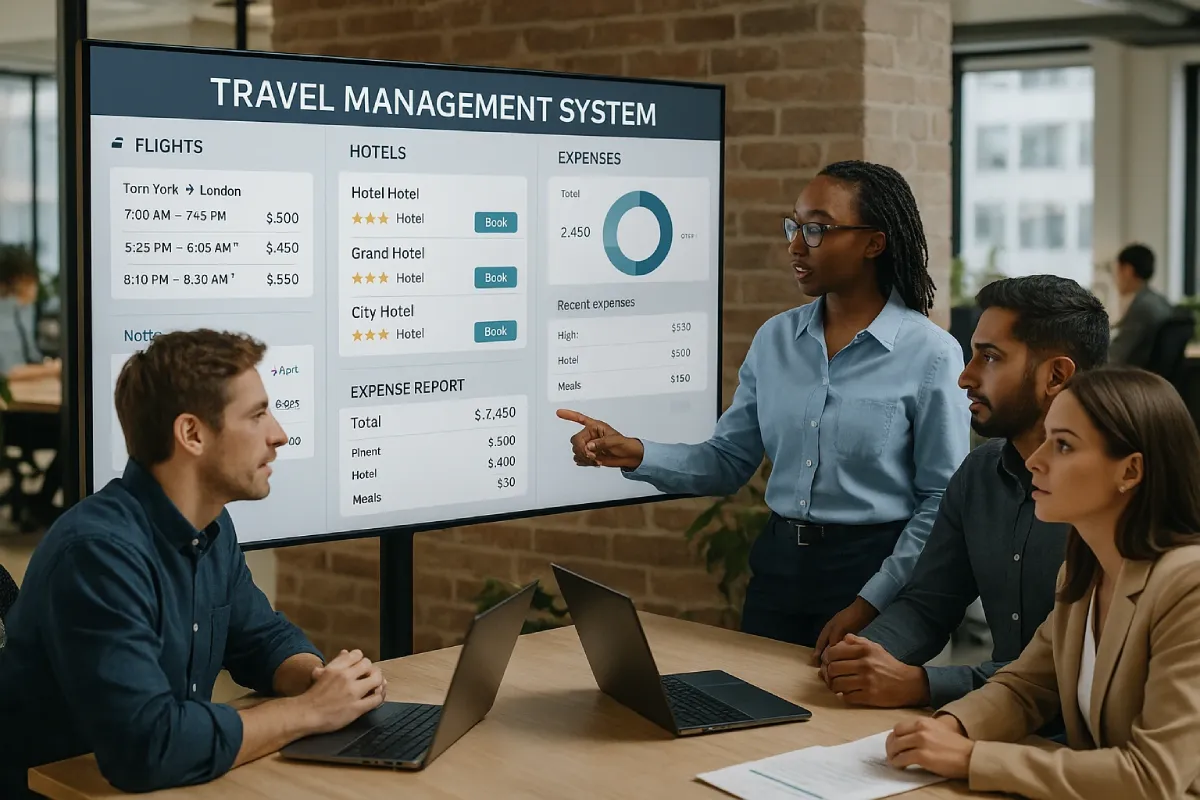
A travel management system is a centralized platform that supports booking, monitoring, and handling end-to-end business travel in a single interface, tying together policy, approvals, and spending insights.
Understanding Travel Management Systems
Travel management systems (TMS) are integrated software solutions where all aspects of an organization’s travel program can be coordinated. Within one environment, you can manage budgets, define travel rules, and run reports, ensuring that trips align with overall business objectives.
Effective business travel is about more than simply finding available flights and hotel rooms. It’s about making sure each trip reflects your company’s financial targets, duty-of-care obligations, and culture. That often means setting different budgets and guidelines by role or department so that senior executives, field technicians, and sales reps each book within appropriate parameters.
As travel volumes and destinations grow, keeping everything aligned becomes increasingly time-consuming. It’s frustrating when a traveler spends time planning the perfect hotel stay only to discover the rate is outside policy, or when a preferred flight disappears because the employee hesitated over whether it meets company rules.
A well-designed travel management system surfaces relevant options and guardrails at the moment of booking. It provides the data and filters needed so both travelers and approvers can make faster, more informed decisions with less back-and-forth.
Key Features of an Efficient Travel Management System
The most effective TMS solutions can be tailored to reflect each organization’s structure and travel patterns. Administrators can configure policies by location, cost center, or job function so that travelers see options that match their entitlements and responsibilities, reducing out-of-policy reservations and manual corrections.
Customization also extends to preferred modes of transportation and partners. Some organizations rely heavily on rail instead of air, or prioritize specific hotel chains and car providers because of negotiated discounts. The system should allow you to emphasize these options, making them easy to find and book.
Another core requirement is broad inventory coverage. When a platform connects to a wide range of suppliers and fares, travelers are more likely to find suitable schedules and competitive prices for flights, hotels, ground transport, and ancillary services. This is especially helpful when employees need to make last-minute international travel arrangements or get an onward ticket to comply with visa regulations or entry requirements. This variety not only improves traveler satisfaction, it helps stretch the travel budget further.
Limited inventory, on the other hand, can force travelers into higher fares or inconvenient routes, leading to unnecessary costs and frustration. With broader choice and clear policy indicators, the TMS supports smarter decisions at the point of purchase.
Above all, travel booking must be simple and intuitive. The whole purpose of implementing a system is to save time and reduce effort. Without an easy workflow, staff may spend too long hunting for compliant options or resort to consumer sites that don’t sync with company policy. That undermines both efficiency and oversight.
The right solution makes it straightforward for employees to search, compare, and reserve their trips while staying within guidelines. This frees them to focus on their core responsibilities instead of wrestling with logistics, and it gives managers confidence that trips are being arranged correctly.
To understand whether your current workflow supports these goals, it’s helpful to periodically review how long bookings take, where policy violations occur, and how frequently travelers bypass approved tools.
Integration with Your Financial Systems
When proposing any new business software, it’s essential to demonstrate how it improves visibility and reduces costs. A strong travel management system connects seamlessly with your financial environment so leaders can see the full picture of spend.
By consolidating travel-related expenses into one reporting hub, finance and procurement teams can track trends by department, project, or region. This insight makes it easier to negotiate with suppliers, refine policies, and support more accurate budgeting and forecasting.
Without tight integration, gathering expense data can be tedious. Employees often wait until after a trip to submit receipts, and manual entry can introduce errors—such as mis-typed amounts, missing items, or incorrect categories. These mistakes slow reimbursement and distort your reporting.
When bookings and charges are automatically captured and coded as part of the travel workflow, much of that friction disappears. The system can match reservations with card transactions, enforce spending limits, and route exceptions for review, cutting down on administrative work for both travelers and finance teams.
Finding the Best Solution for Your Company
Assigning skilled people to oversee business travel is important, but ensuring they have effective digital tools is just as critical. Selecting the right platform can feel daunting, so a practical first step is to map your organization’s specific needs: typical trip patterns, approval flows, compliance challenges, and reporting requirements.
Many organizations also collaborate with external experts to optimize their programs. Travel management companies can help refine policies, secure better rates, and identify software that aligns with your objectives. The right partner will understand how to support everything from simple point-to-point journeys to complex itineraries.
When assessing options, consider how well each solution supports your broader ecosystem. Some organizations seek corporate travel platforms that combine booking, expense, and analytics. Others prioritize a travel manager software interface focused on policy control and duty of care.
In addition, evaluate how the platform handles approvals, traveler communications, and disruption management. For instance, tools that support real-time notifications and flexible rebooking help keep travelers safer and more productive when plans change unexpectedly.
Another key question is how the system supports sustainability and compliance initiatives. Detailed reporting can help you track emissions, encourage lower-impact choices, and ensure adherence to internal rules as well as external regulations.
To fully realize the benefits, many organizations pair expert advisory services with technology. For example, a business travel management system that integrates booking, expense, and policy controls can offer a unified experience before, during, and after each trip.
As you evaluate providers, look for a solution that makes it easy to configure approval flows and leverage existing tools, such as HR and accounting systems. Platforms that connect seamlessly allow data to move smoothly from initial corporate booking through reconciliation and analysis.
Some organizations opt for end-to-end corporate travel tools that centralize policy, traveler profiles, and supplier contracts. Others focus first on automating a single area, such as approvals or reporting, then expand over time as their program matures.
Regardless of the approach, integrating the right corporate travel system into your operations can transform how you manage trips. With the proper mix of automation, policy control, and insight, travel becomes easier for employees, more transparent for finance, and more strategic for the business as a whole.
Organizations that invest in a modern travel management system gain greater control over spend, better support traveler wellbeing, and position themselves to adapt quickly as market conditions and travel patterns evolve.


Leave a Reply