
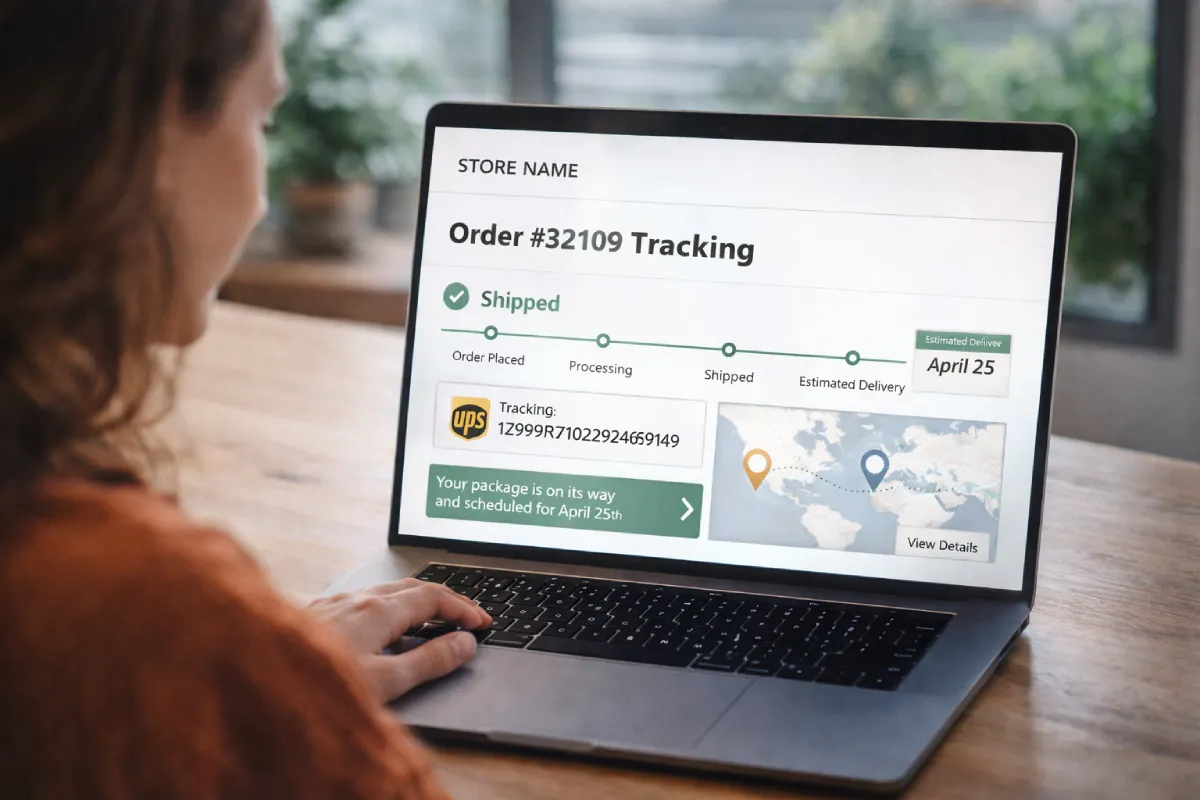
Why Order Tracking Experience Impacts Ecommerce Conversion and Retention
Most ecommerce optimization conversations stop at checkout.
Page speed. Product pages. Payment flow. Cart abandonment.
But for customers, the experience does not end when the order is placed. In many cases, that is when judgment begins.
What happens after checkout quietly shapes whether a store earns trust, repeat purchases, or silent churn. And one of the most underestimated parts of that phase is the order tracking experience.
Order Tracking Is Part of User Experience
Order tracking is often treated as a utility. A functional page that shows a status update and a carrier link.
From the customer’s perspective, it is part of the product experience.
After checkout, tracking becomes the primary interface between the customer and the store. It answers simple but emotionally loaded questions: Has my order shipped? Is it moving? Should I be worried?
When tracking feels unclear or fragmented, customers do not blame logistics. They associate the confusion with the store itself.
That association has real consequences.
The Post-Checkout Moment Where Conversions Are Won or Lost
Conversion does not only mean the first purchase.
For ecommerce businesses, the real conversion test happens after delivery. That is when customers decide whether they will return, recommend the store, or forget about it entirely.
A smooth checkout can secure a sale.
A clear post-checkout experience secures a relationship.
When customers feel informed while waiting, anxiety drops. Support tickets decrease. Trust builds quietly.
When they feel left in the dark, the opposite happens.
How Poor Tracking Experience Hurts Retention
Most retention loss does not come from dramatic failures. It comes from friction.
Customers refreshing tracking pages that do not update.
Carrier links that change format mid-delivery.
Status messages that feel generic or delayed.
These moments introduce doubt. Not about the package, but about the store’s reliability.
Over time, that doubt turns into behavior. Customers hesitate before ordering again. They choose competitors who feel easier to deal with, even if pricing is similar.
Retention is often lost in silence.
Why Ecommerce Stores Struggle With Tracking Clarity
As stores scale, delivery complexity increases.
Multiple carriers. Different regions. Marketplace orders mixed with direct sales.
Tracking information becomes fragmented across systems. Support teams rely on external carrier pages. Customers are sent off-site to interfaces that do not match the store experience.
Some ecommerce teams address this by using consolidated tracking views, such as Universal parcel tracking, to present delivery progress in a more consistent and understandable way across carriers.
The goal is not control. It is continuity. Consolidated parcel lookup can solve the basic visibility problem, but growing ecommerce brands usually need branded tracking pages that show order status, delivery progress, notifications, return flows, and delivery-timed review requests into the store’s own post-purchase experience.
When tracking feels like part of the store, customers stay anchored to the brand instead of drifting into uncertainty.
Tracking Experience Reduces Support Load
Support tickets about delivery are rarely about speed. They are about clarity.
“Is this delayed?”
“Why hasn’t this updated?”
“Is this normal?”
When tracking answers those questions proactively, support teams spend less time explaining and more time helping.
That operational relief feeds back into customer experience. Responses become faster. Tone becomes calmer. Friction decreases.
Better tracking experience improves retention indirectly, by stabilizing everything around it.
Retention Is Built on Confidence, Not Speed
Customers do not expect perfection.
They expect honesty.
Clear tracking sets expectations early. It gives customers a mental timeline and reduces the need to worry. Even when delays happen, transparency keeps frustration from escalating.
Stores that invest in post-checkout clarity often see stronger repeat behavior, not because delivery is faster, but because the experience feels controlled.
Confidence is sticky.
Why This Matters for WooCommerce and Theme-Driven Stores
For WooCommerce stores using flexible themes and custom layouts, post-checkout experience is often overlooked.
Themes focus heavily on storefront visuals, while tracking pages are treated as an afterthought.
But the tracking experience is one of the few places customers return to multiple times after purchase. It deserves the same UX consideration as product pages.
When tracking feels integrated rather than bolted on, the store feels more mature.
That maturity influences trust.
The Quiet Revenue Impact of Better Tracking Experience
Order tracking does not show up clearly in analytics dashboards.
Its impact appears later. In repeat purchases. In reduced refunds. In calmer support conversations.
E-commerce teams that treat tracking as part of user experience, rather than a logistics necessity, tend to retain customers longer.
Not because they promise more.
But because they explain better.
And explanation builds confidence.


Leave a Reply