
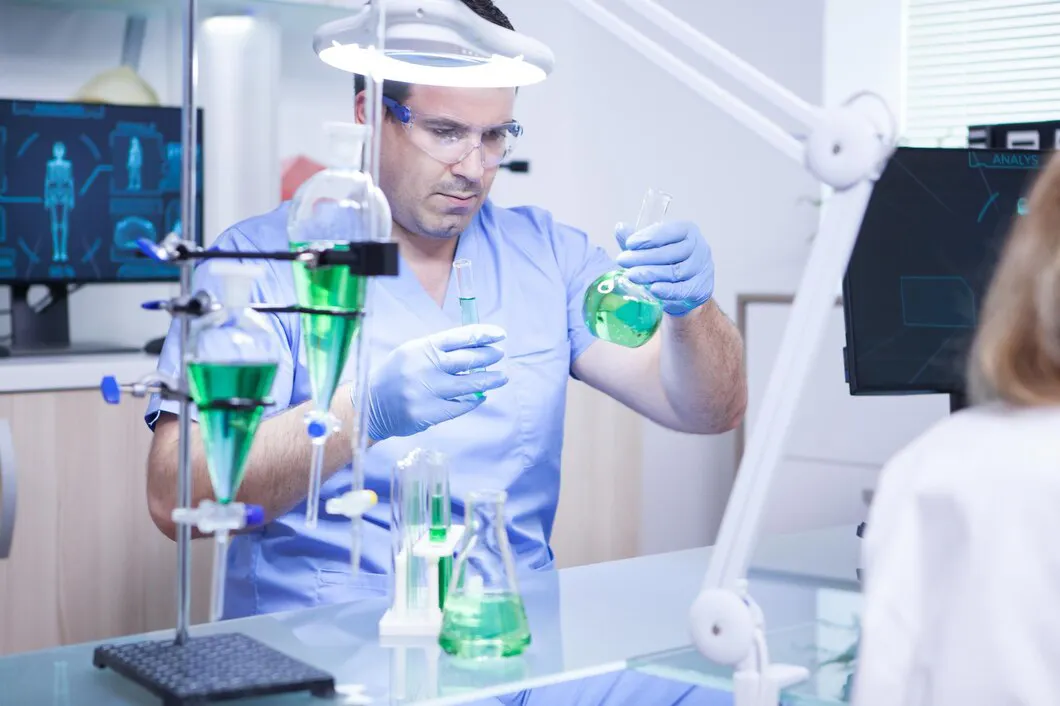
The Role of Reliable Scientific Equipment in Modern Laboratory Work
Laboratory work sits at the foundation of nearly every industry that shapes modern life. Healthcare, agriculture, pharmaceuticals, environmental monitoring, food safety, materials science… The list is long and keeps growing.
But behind every credible result, every validated test, and every meaningful discovery is something most people outside the lab rarely consider: the equipment.
Not the researchers. Not the methodology. The physical instruments that make precise, repeatable measurement possible in the first place.
This is something worth examining more closely. In laboratory science, equipment quality is not a secondary concern. It is the baseline on which everything else depends.
Why Precision Is Non-Negotiable in the Lab
A laboratory is fundamentally a controlled environment built around measurement. Whether the task involves analysing water samples, running stability tests on a pharmaceutical compound, or processing tissue specimens, the core requirement is the same: accuracy that can be trusted and reproduced.
The margin for error in most laboratory applications is extremely small. An unreliable incubator that drifts outside its target temperature range can compromise cell cultures or delay diagnoses. A poorly calibrated instrument may fail to detect harmful contaminant levels until the problem has escalated.
These are not hypothetical scenarios. They are the kinds of failures that occur when laboratories operate with instruments that lack the precision their work demands.
This is precisely why the selection of scientific equipment deserves far more attention than it typically receives.
The Equipment Categories That Drive Laboratory Operations
Modern laboratories rely on a broad range of instrumentation. Each serves a distinct function within the research or testing workflow. Understanding these categories helps illustrate how much laboratory output depends on the tools being used.
Temperature-controlled instruments form the backbone of many lab environments. Ovens, furnaces, incubators, and freezers each serve critical roles in sample drying, sterilisation, cell culture, and cold storage. The common requirement across all of them is thermal stability.
Sterilisation equipment such as autoclaves and dry sterilisers ensures that instruments, media, and waste are free from microbial contamination. In clinical and microbiological settings, sterilisation is a regulatory and safety requirement, not an option.
Refrigeration and cold storage units are essential wherever biological samples, reagents, vaccines, or temperature-sensitive chemicals are stored. Consistent temperature maintenance, alarm systems, and compliance with cold-chain protocols are standard expectations.
Environmental and humidity chambers allow researchers to replicate specific atmospheric conditions for stability testing, seed germination, pharmaceutical quality assurance, and materials testing. Their value lies in maintaining precise conditions over extended periods.
Sample preparation instruments including centrifuges, laboratory baths, hot plates, and mixers handle the upstream work that prepares materials for analysis. Inconsistencies at this stage propagate through the entire workflow.
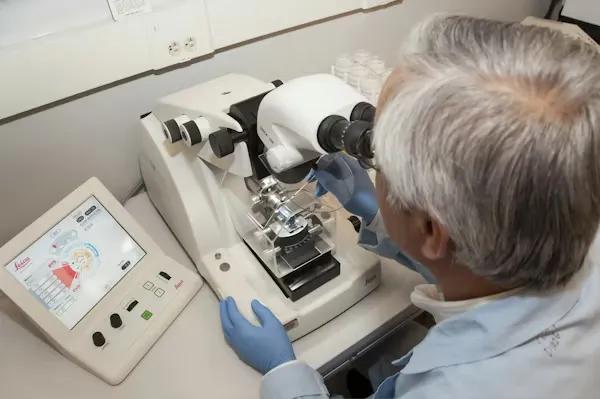
Histology equipment such as microtomes, paraffin dispensers, and tissue processors supports the specialised work of preparing biological tissue for microscopic examination. Section thickness is measured in micrometres, and even minor equipment faults can render a specimen unusable.
Each of these categories represents a link in the chain. A single weak link compromises the integrity of the whole.
What Separates Adequate Equipment From Reliable Equipment
Not all laboratory instruments are built to the same standard. The differences between entry-level and professional-grade equipment often come down to three factors.
Build quality determines how an instrument performs under sustained use. Laboratories do not operate in gentle conditions. Equipment runs continuously, sometimes around the clock. Instruments built with inferior materials degrade faster, requiring more frequent servicing and replacement.
Calibration accuracy refers to how closely an instrument’s outputs match true values. A furnace set to 1000 degrees Celsius needs to hold that temperature within a defined tolerance. A balance needs to return the same reading for the same mass every time. Instruments designed with calibration stability in mind reduce ongoing maintenance costs.
Long-term consistency is perhaps the most important factor. An instrument that performs well initially but drifts within a year is ultimately more expensive than one that costs more upfront but delivers stable performance across its full service life.
Laboratories that prioritise these factors produce better, more reproducible results with fewer interruptions.
The Role of Local Manufacturing and Support
There is a practical dimension to equipment selection that goes beyond specifications and price: the question of where the equipment comes from and who supports it after installation.
Laboratories that source equipment from local manufacturers gain several tangible advantages. Lead times are shorter. Technical support is more accessible. Servicing does not depend on international shipping or time zone differences.
This is one area where Australian manufacturers like Labec have built a strong reputation. Operating since 1945, Labec designs and manufactures laboratory equipment domestically. Their product range spans ovens, autoclaves, incubators, freezers, environmental chambers, furnaces, and histology instruments.
Their equipment is built to comply with Australian standards and is supported by local technical teams. For laboratories where downtime has direct consequences, the ability to resolve issues quickly is an operational necessity.
How Equipment Decisions Affect Downstream Results
It is easy to treat equipment procurement as a purely administrative task. Compare specifications, get quotes, choose the lowest price that meets minimum requirements.
But this approach overlooks the downstream costs of unreliable instrumentation.
A laboratory oven that fails to maintain uniform temperature may require samples to be reprocessed. An autoclave that does not hold sterilisation parameters may force an entire batch of media to be discarded. A freezer with temperature excursions may compromise samples that took months to collect.
Each scenario costs time, materials, and labour. In regulated environments, it may also trigger compliance issues or audit findings.
When viewed through this lens, reliable equipment is not an expense. It is a safeguard against far greater costs when things go wrong.
The Growing Complexity of Laboratory Work
Laboratory science is not becoming simpler. The precision of measurements, the range of analyses, and the regulatory requirements surrounding lab operations have all increased significantly.
Stability testing protocols are more demanding. Diagnostic workflows have grown more complex. Environmental monitoring now covers more parameters with tighter acceptable limits.
This places greater demands on equipment. Instruments need to be more accurate, more programmable, and more capable of data logging. They need to perform reliably in environments that are busier than ever.
Laboratories that invest in equipment built for current and future requirements position themselves for long-term success. Those that compromise on quality often end up managing avoidable failures.
Conclusion
The quality of laboratory work is inseparable from the quality of the instruments used to carry it out. Every reliable result, every valid experiment, and every accurate diagnosis begins with equipment that performs consistently and precisely.
Choosing the right scientific equipment is not simply a purchasing decision. It shapes the accuracy, efficiency, and credibility of every outcome the laboratory produces.
For laboratories seeking instrumentation built for sustained precision, manufactured to Australian standards, and backed by local expertise, suppliers like Labec offer a proven track record spanning over eight decades.
The work inside laboratories matters enormously. Making sure it rests on a solid foundation of reliable equipment is one of the most important investments any laboratory can make.


Leave a Reply