
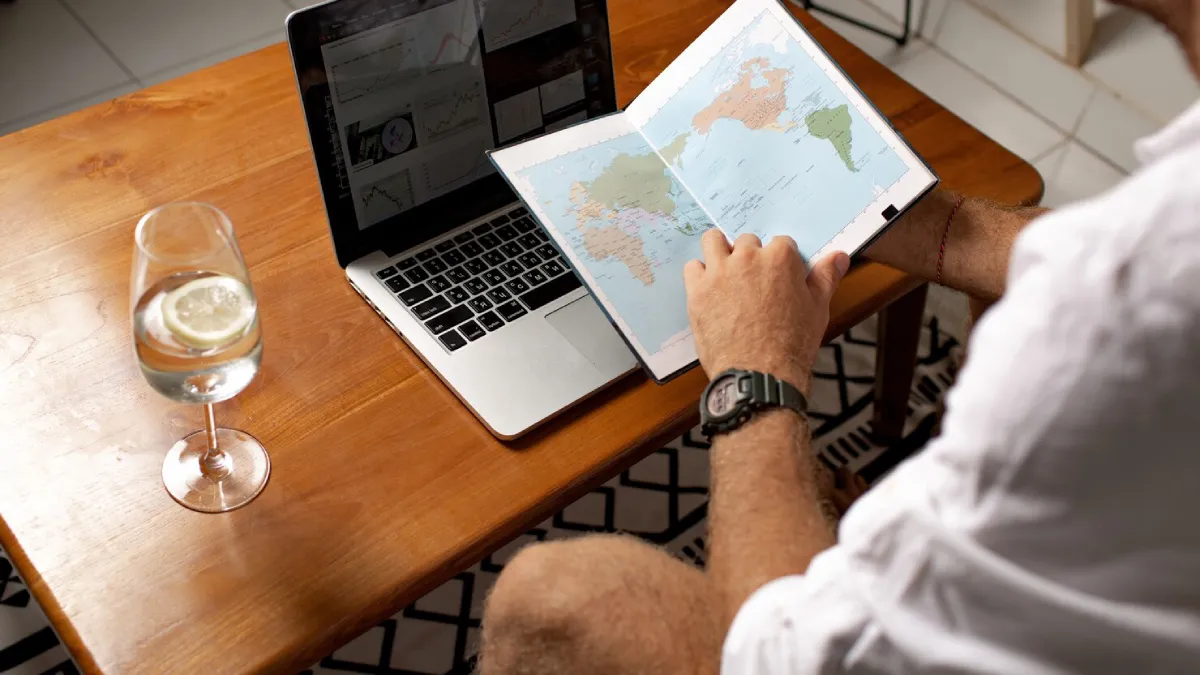
Best European Country for Digital Nomads: 2026 Guide
Europe is in a golden age for digital nomads. Almost every major country is racing to attract remote workers with dedicated visas, tax incentives, and lifestyle perks. Among them, Portugal usually ranks as the overall winner, but Bulgaria is rapidly emerging as the smart choice for cost‑conscious professionals, especially in tech and fintech.
This article explores the leading European options for digital nomads in 2026, explains why Portugal often tops global rankings, and shows in which areas Bulgaria actually outperforms Portugal, Spain, Croatia, and Estonia.
The European Digital Nomad Landscape in 2026
Over the last few years, Europe has moved from tourist visas and short stays to a mature ecosystem of dedicated digital nomad and remote work visas. These schemes typically require:
- Proof of stable foreign income.
- Health insurance with minimum medical coverage.
- A clean criminal record and proof of accommodation.
- A commitment not to work for local employers.
Portugal, Spain, Croatia, Estonia, and now Bulgaria all follow this general model, but they differ significantly in income thresholds, tax treatment, cost of living, and visa duration.
Broadly speaking:
- Portugal is the balanced “all‑rounder” with strong lifestyle, robust communities and a clear longer‑term path.
- Spain and Croatia compete on climate and community with slightly lower entry thresholds in some cases.
- Estonia is the tech pioneer with a highly digital state and modern infrastructure.
- Bulgaria is the late entrant that quietly combines EU membership, a brand‑new digital nomad visa, and some of the lowest taxes and living costs in the bloc.
Key Comparison: Portugal, Spain, Croatia, Estonia, Bulgaria
Digital nomads usually compare destinations on a few key axes: minimum income requirements, taxation, living costs, visa length, and general quality of life. The table below summarizes the typical situation in early 2026 (rounded figures and ranges).
| Country | Min. Monthly Income (Approx.) | Personal Tax for Nomads (Typical) | Estimated Living Cost (Single, Monthly) | Typical Visa Length | Notes |
|---|---|---|---|---|---|
| Portugal | ~€3,680 | Favourable special regime on some foreign income, often lower effective rates in early years | ~€900–1,200 (Lisbon/Porto) | 1–5 years, with renewals | Strong lifestyle, citizenship path, big nomad hubs |
| Spain | ~€2,140–2,500 | Special regime, often roughly mid‑teens to mid‑twenties percent | ~€670–1,000 (outside Barcelona/Madrid) | 1 year, renewable | Great climate, large expat communities |
| Croatia | ~€2,540 | Remote work income often not taxed locally under nomad rules | ~€800–1,000 (coastal cities) | Up to 1 year, some renewals | Attractive coast, smaller but growing nomad scene |
| Estonia | ~€3,500 | 20% flat income tax; modern corporate system | ~€800–1,200 (Tallinn) | Up to 1 year | Highly digital, excellent for tech founders |
| Bulgaria | ~€2,300 (around 50× minimum wage) | 10% flat income tax; favourable freelancer rules | ~€500–800 (Sofia/Plovdiv) | 1–2 years, with possible extensions | Lowest costs; new visa; strong value proposition |
Why Portugal Is Still the Overall “Best”
If you scan global rankings and listicles, Portugal appears again and again as the top European country for digital nomads. This is not marketing hype; it reflects a genuinely strong package.
Portugal tends to lead overall because:
- The D8 (and related) visas offer multi‑year stays, typically with a clear pathway to prolong residence and, in the long term, even citizenship.
- Special tax regimes for certain categories of foreign income, although evolving, have historically been very attractive to international professionals.
- Lisbon, Porto and several coastal towns host large, established nomad communities, with co‑working spaces, events, meetups, and networking opportunities almost every day of the week.
- Quality‑of‑life indicators are consistently high: mild climate, ocean access, relatively safe cities, good healthcare and strong cultural life.
For many nomads whose priorities are lifestyle, climate, community and long‑term residency potential rather than pure cost optimisation, Portugal remains a very strong first choice.
Where Bulgaria Outperforms the “Big Four”
Bulgaria’s digital nomad visa is newer, but its fundamentals give it some unique strengths. Compared with Portugal, Spain, Croatia and Estonia, Bulgaria stands out in several concrete dimensions.
1. Cost of Living
Bulgaria is one of the most affordable EU states for foreigners, and this is immediately visible in rent, food and day‑to‑day expenses.
A realistic monthly budget for a single nomad in major Bulgarian cities might look like this:
- Rent in Sofia or Plovdiv: roughly €300–500 for a decent one‑bedroom apartment in a good area.
- Utilities and high‑speed internet: often below €100 combined.
- Groceries and eating out: around €200–300 depending on how often you cook or dine out.
- Local transport and everyday expenses: generally much lower than in Western Europe.
This leads to total monthly costs in the €500–800 range for a comfortable, not minimalist lifestyle. In comparison, living in Lisbon, Barcelona or Tallinn at a similar standard will usually land you close to or beyond €900–1,200 per month. For nomads who want to build savings or reinvest in their business, that 30–50% difference is significant.
2. Flat 10% Tax and Simple Structure
Bulgaria operates one of the lowest headline personal income tax rates in the European Union, with a flat 10% rate. For digital nomads who become tax residents (for example, by spending more than 183 days in the country and meeting other criteria), this flat rate generally applies to their worldwide income, subject to tax treaties.
Additional points that make Bulgaria’s tax system appealing to remote workers:
- Many freelance categories benefit from standardised “deemed expenses” before tax, lowering the effective tax rate below the headline 10%.
- Social security contributions are capped, so even high earners do not face endlessly rising contributions as income grows.
- Corporate tax is also 10%, making Bulgaria especially attractive if you plan to set up a local company, use a Bulgarian entity as your EU base, or structure your operations in a tax‑efficient way.
By contrast, Spain and Estonia use higher flat or progressive rates, and Portugal’s special regimes have become more complex and somewhat narrower in scope as reforms were introduced. If you prefer predictability, simplicity and low rates over sophisticated but changing special regimes, Bulgaria is hard to ignore.
3. A New Digital Nomad Visa with EU Benefits
Bulgaria’s digital nomad or remote‑work visa, introduced in 2025–2026, is designed to be broadly aligned with other European schemes while leveraging Bulgaria’s cost and tax advantages.
In general terms, the visa:
- Targets non‑EU nationals who work remotely for foreign employers or operate businesses registered abroad.
- Requires proof of stable foreign income above a threshold typically linked to a multiple of the national minimum wage (roughly translating into a bit over two thousand euros per month).
- Demands health insurance with minimum coverage, a clean criminal record, and proof of accommodation.
- Can often be extended to immediate family members, making it suitable not only for solo nomads but also for couples and parents.
On top of that, Bulgaria is an EU member, and it has joined the Schengen area for air and sea borders, with gradual integration at land borders. For long‑term residents, this considerably simplifies travel around much of Europe.
4. Niche Strength: Tech, IT and Fintech
While Lisbon and Barcelona dominate in terms of sheer size and international visibility, Bulgaria is quietly strong in certain niches: IT outsourcing, fintech, blockchain and Web3, and specialised legal and compliance services around these industries.
Digital nomads with a more professional or entrepreneurial profile will find:
- A dense network of software and BPO companies.
- A growing community of crypto and fintech ventures.
- Local legal and consulting firms familiar with company formation, electronic money and payment licensing, CASP registration, and EU financial regulation.
For remote founders who might later want to turn their solo business into a regulated fintech or tech company inside the EU, basing operations in Bulgaria—at least on the legal and tax side—can be a very strategic move.
So, Which Country Is “Best” in 2026?
If you must choose a single overall “winner” on a global ranking, Portugal still deserves the title. It balances visa options, lifestyle, climate, community, and longer‑term possibilities in a way that is hard to match.
However, “best” is heavily context‑dependent:
- If your priorities are beaches, big international communities, and a well‑known brand among nomads, Portugal will likely feel like the right choice.
- If you prefer a lively Mediterranean climate and culture with slightly lower income requirements than Portugal, Spain and Croatia become strong contenders.
- If you value digital government, e‑residency and a mature tech environment above all, Estonia remains a top pick.
- If your main goals are to minimise cost and tax, stay within the European Union, and perhaps build or formalise a serious online business or fintech project, Bulgaria stands out as one of the most rational decisions you can make in 2026.
In other words: Portugal is often the “magazine cover” champion, but Bulgaria is the efficient insider choice for digital nomads who think like entrepreneurs rather than tourists.
FAQ: Digital Nomads in Europe and Bulgaria (2026)
1. Is Bulgaria now better than Portugal for digital nomads?
It depends on what “better” means to you. Portugal still leads on lifestyle, climate, international visibility and large nomad communities. Bulgaria is objectively more attractive on cost of living and headline tax rates, while still offering an EU base and a dedicated digital nomad visa. For someone optimising finances and business structure, Bulgaria can easily come out ahead.
2. How strict is the income requirement for Bulgaria’s digital nomad visa?
The income requirement is typically pegged to a multiple of the Bulgarian minimum wage, which effectively produces a threshold in the low‑to‑mid two‑thousand‑euro range per month. Authorities want to see consistent remote income from foreign sources, documented through contracts, payslips or bank statements. Exact numbers are subject to change, so applicants should always check the latest official figures.
3. Can I work for Bulgarian clients on the digital nomad visa?
The digital nomad framework is designed primarily for people who work remotely for foreign employers or clients. Working for local Bulgarian clients or taking local employment can fall outside the intention of the visa and may require a different type of residence or work permit. If you plan to serve Bulgarian clients, getting local legal advice and selecting the correct status from the outset is essential.
4. How does Bulgaria’s tax system compare with Spain and Portugal?
Bulgaria’s personal income tax is a flat 10%, with potential reductions via standardised expense deductions for certain freelance activities and capped social contributions. Spain and Estonia generally have higher flat or progressive rates, and Portugal relies on more complex special regimes that are gradually being tightened. For digital nomads who like clarity and a low, predictable rate, Bulgaria’s system is noticeably simpler.
5. What are the main downsides of choosing Bulgaria?
Bulgaria’s main drawbacks relate to perception and scale rather than fundamentals. The international digital nomad community is still smaller than in Lisbon or Barcelona; networking is good, but less intense. Bureaucratic processes can feel less polished, and English is widely spoken in tech and business but not everywhere. Smaller towns may have more variable infrastructure than major cities.
6. Is Bulgaria safe and suitable for families?
Major cities such as Sofia and Plovdiv have safety levels comparable to many other European capitals. Normal urban precautions apply, but the country is generally safe for everyday life. The digital nomad visa and related residence options can often be extended to family members, making Bulgaria a realistic choice for couples and families who want affordability combined with EU schooling and healthcare.
7. Do I need a lawyer or consultant to apply for Bulgaria’s digital nomad visa?
You can, in principle, if you speak Bulgarian language to handle the process yourself, if you are comfortable with documentation and communicating with authorities. That said, most applicants use local Bulgarian lawyers because requirements can change, and combining the visa with company formation or tax planning adds complexity. Professional assistance often pays off in time saved and mistakes avoided.
8. Will living in Bulgaria automatically make me a tax resident?
Simply holding a visa does not automatically make you a tax resident, but spending more than 183 days in Bulgaria within a year is a common threshold for tax residency. Other factors such as your main home, family location, and economic centre of interests can also matter. If you have ties to multiple countries, proper tax planning and advice are crucial before you relocate.
In summary, Europe now offers several excellent homes for digital nomads, but they serve slightly different profiles. Portugal remains the best general‑purpose choice for lifestyle and long‑term appeal. Bulgaria, however, is emerging as one of the most powerful strategic bases in the EU for digital nomads who want to combine low costs, low taxes, and serious business ambitions.


Leave a Reply