
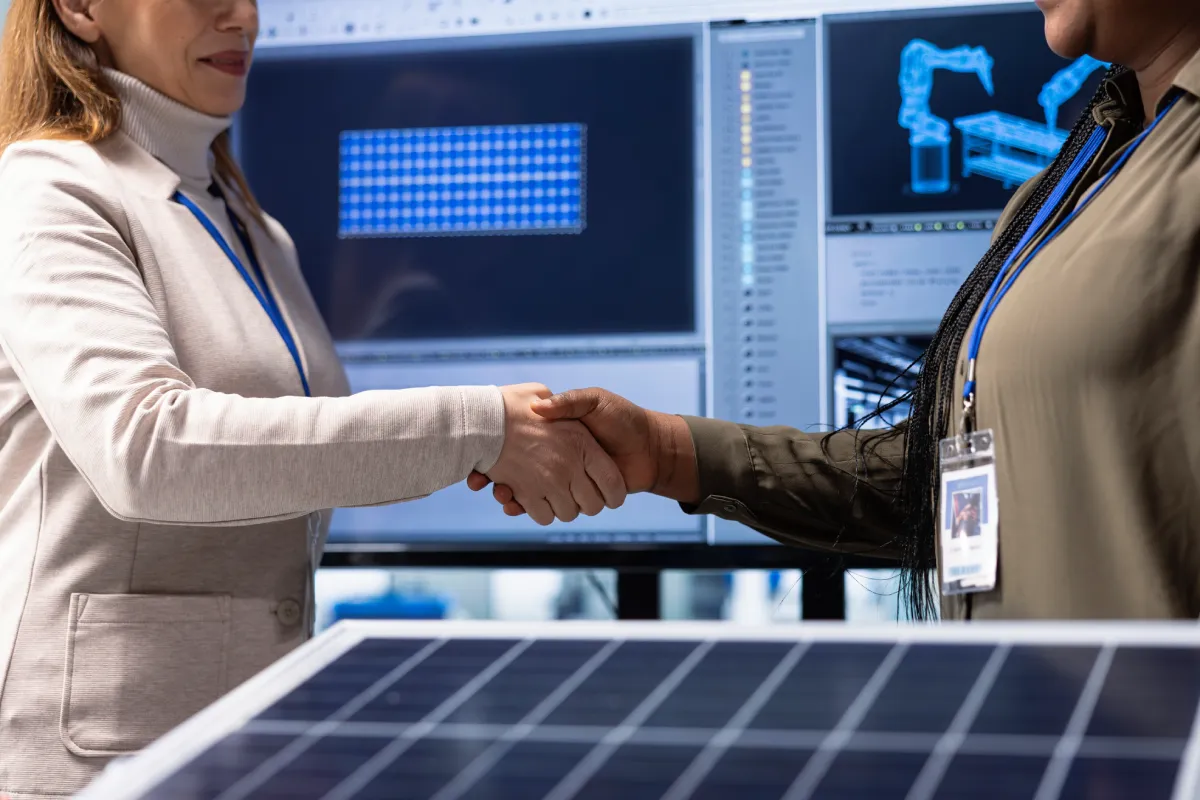
Digital Twin Technology: Transforming Solar Plant Performance
Solar plants are under pressure to do more than generate clean energy. They are expected to operate with precision, maintain strong uptime, and deliver predictable returns across increasingly complex environments. As portfolios grow and asset owners manage more distributed sites, traditional monitoring alone is no longer enough. Operators need systems that can interpret performance in context, identify hidden issues early, and support better operational decisions across the full lifecycle of the plant.
Digital twin technology is becoming one of the most effective ways to meet that need. By building a live virtual model of a physical solar plant, digital twins help teams move beyond surface-level monitoring and into continuous optimization. They make it easier to understand how a plant should perform under real conditions, where inefficiencies are emerging, and what actions can improve output, reliability, and long term asset value.
A More Intelligent Way to Monitor Solar Assets
One of the biggest advantages of digital twins is that they turn monitoring into something more useful than a dashboard full of disconnected numbers. With AI solar monitoring software, operators can combine real-time field data, historical records, weather inputs, and equipment level behavior into a single intelligent system that does more than report events. It helps explain them.
That kind of capability is especially valuable for solar owners and operators who want faster diagnostics, sharper visibility, and more confidence in day-to-day decision making. Instead of waiting for a performance drop to trigger manual investigation, digital twin systems can continuously compare expected and actual behavior, detect subtle deviations, and surface actionable insights much earlier. This creates a more responsive and more scalable operating model, especially for teams managing large or geographically distributed assets.
Why Traditional Monitoring Leaves Gaps
Most conventional solar monitoring tools are useful for showing current production, inverter status, alarm conditions, and basic performance trends. But when performance starts to drift, those tools often reveal symptoms rather than causes. A dip in generation might be linked to shading, soiling, degradation, inverter inefficiency, weather anomalies, or communication problems. Finding the real source can require manual analysis across multiple data streams.
That gap matters. Every delay in identifying the cause of underperformance can lead to lost energy, avoidable downtime, and slower operational response. For solar businesses focused on maximizing yield and protecting margins, that kind of lag creates unnecessary friction.
Digital twin systems close this gap by adding a predictive and diagnostic layer on top of plant data. They show not only what is happening, but what should be happening under current conditions. That difference is where real operational intelligence lives. And that is where advanced solar performance platforms create the most value for asset managers and operators.
How Digital Twins Improve Day-to-Day Operations
A digital twin is built by ingesting data from across the plant, including modules, strings, inverters, transformers, sensors, weather stations, and maintenance records. It uses that data to create a virtual model that evolves continuously as site conditions change. When the plant behaves differently from what the model predicts, the system can highlight the deviation and help isolate likely causes.
This matters because operational teams do not need more raw data. They need better interpretation. A well-designed digital twin platform can help them identify whether a problem is isolated or systemic, temporary or escalating, minor or financially meaningful. In many industries, digital tools are also improving how teams process and present visual data, whether it’s analyzing system diagrams or using tools that can quickly remove background elements from images to make technical documentation clearer. That saves time, reduces unnecessary troubleshooting, and helps teams focus on the issues that actually affect plant performance.
For service providers offering advanced solar asset management capabilities, this is a major differentiator. The value is not just in collecting data from the field. It is in transforming that data into guidance that helps customers run plants more efficiently and proactively.
Real Time Visibility Creates Faster Interventions
In large solar plants, even small inefficiencies can quietly erode output. A few underperforming strings, repeated inverter instability, or gradual degradation in a specific section of the site may not seem dramatic at first, but over time, the impact can become significant. Traditional systems may show that output is below target, but they often do not make it easy to pinpoint where intervention is needed most.
Digital twin technology improves that visibility. It allows operators to locate inefficiencies at a much more granular level and understand how local issues affect site-wide performance. This means maintenance teams can act faster, asset managers can prioritize better, and plant owners can reduce the time between detection and correction.
That kind of visibility is especially valuable when delivered through a platform built for operational decision support rather than simple reporting. Customers benefit not just from knowing that something is wrong, but from understanding what action is likely to improve performance the fastest.
Predictive Maintenance Reduces Downtime
One of the strongest business cases for digital twin technology is predictive maintenance. Instead of relying only on fixed maintenance schedules or waiting for faults to occur, operators can use model-based analysis to identify early warning signs before failures become costly.
These signals may include abnormal thermal behavior, voltage irregularities, efficiency drift, mismatch patterns, or recurring anomalies in specific components. By catching these patterns early, teams can schedule maintenance more intelligently, reduce unplanned outages, and use field resources more efficiently.
For customers, this means lower operational risk and more stable plant performance. For providers of advanced solar intelligence services, it means delivering measurable value through reduced downtime, extended asset life, and better maintenance planning. That is a much stronger proposition than monitoring alone. It shifts the relationship from passive observation to active performance improvement.
The solar sector is becoming more competitive, more data-intensive, and less tolerant of inefficiency. In that environment, the most valuable service providers are not the ones that simply surface information. They are the ones who help customers turn information into action.
Digital twin technology supports exactly that shift. It enables a service model built around optimization, predictive insight, and smarter decision support. Customers benefit from better visibility, earlier fault detection, stronger maintenance outcomes, and more accurate forecasting. They also gain a clearer view of how their assets are performing, not just today, but over time and under changing conditions.
That is a powerful positioning advantage for any company serving the solar industry through intelligent monitoring and asset performance solutions. It aligns with what customers increasingly want: fewer blind spots, faster diagnosis, and more confidence that their plants are operating as efficiently as possible.


Leave a Reply