
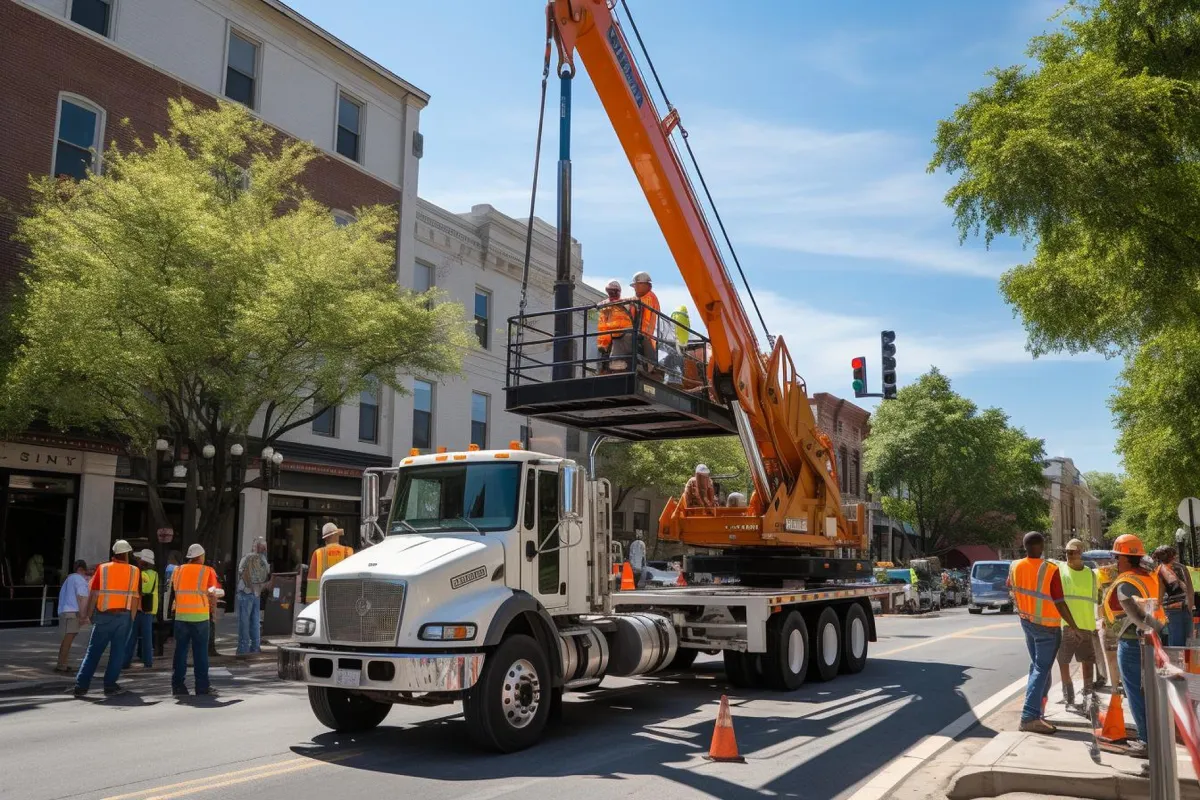
Lessons Learned from a Crane Mishap in Downtown Miami
Crane operations are some of the most complex and high-risk activities in the construction industry, especially in dense urban environments like downtown Miami. According to the Occupational Safety and Health Administration (OSHA), crane-related incidents account for a significant portion of construction fatalities each year, often tied to preventable factors such as improper rigging, inadequate communication, and environmental miscalculations. While these statistics are real, the following discussion centers on a hypothetical crane incident designed to illustrate common risks and safety lessons.
How a Crane Operation Can Go Wrong
Imagine a tower crane lifting prefabricated steel beams on a high-rise construction project in downtown Miami. Mid-lift, gusts of wind shift unexpectedly, and a brief miscommunication between the crane operator and the signal personnel destabilizes the suspended load. One of the beams swings, striking scaffolding and partially completed structural components. Two workers nearby sustain injuries, while the beam itself remains suspended above street level, preventing a more catastrophic collapse. Though entirely hypothetical, this scenario mirrors the types of operational challenges that frequently appear in real crane-related safety reports.
Rather than arising from a single dramatic failure, this hypothetical mishap highlights how a series of smaller oversights can combine to create dangerous conditions. Environmental monitoring gaps, slight communication breakdowns, and decisions to proceed despite uncertainty all contribute to risk accumulation.
Analyzing Safety Failures
In this scenario, three main factors converge. First, environmental conditions—fluctuating winds—weren’t monitored in real time. While gusts might not have exceeded formal operational limits, the lack of continuous measurement created a blind spot. Second, communication protocols relied on a combination of hand signals and radio messages. A minor interference in the radio channel introduced a momentary lapse in coordination, enough to destabilize the lift. Third, rigging configuration was minimally compliant but not optimized for lateral stability under variable wind conditions.
Each of these issues is commonly cited in OSHA reports and industry case studies as contributing to crane accidents. When combined, they illustrate the principle that multiple “small” failures often precede a larger safety incident.
Human and Operational Impact
Even hypothetical, the scenario underscores real consequences. The injured workers would face medical treatment, recovery time, and lost wages. In a real case, these circumstances often lead to discussions around liability and personal injury claims, especially if procedural failures contributed to the harm. Here, one might consider what a Miami construction injury lawyer would evaluate in terms of shared responsibility among operators, contractors, and site managers.
Operationally, such an incident—even if minor—would trigger immediate safety reviews, halt work temporarily, and necessitate corrective measures. These disruptions emphasize how closely human safety, equipment reliability, and workflow efficiency are interconnected on a construction site.
Lessons in Risk Management
One of the most important takeaways is the difference between acceptable and ideal practices. Minimum compliance with safety regulations does not always equate to maximum safety. In the hypothetical scenario, the rigging met formal standards but wasn’t optimized for the specific beam configuration or changing wind conditions. Similarly, communication methods met requirements but left room for error under stress.
Implementing redundancy—continuous environmental monitoring, secondary signaling methods, and pre-lift safety checks—can dramatically reduce the likelihood of incidents. Equally important is the cultural aspect of safety: crews need encouragement and authority to pause operations whenever uncertainty arises, even if timelines are tight. This mindset shift is often the most effective way to prevent accidents before they occur.
Broader Reflections on Liability and Comparisons
While crane incidents are unique, they share patterns with other high-risk activities. The principle that minor lapses can quickly escalate is mirrored in traffic incidents, where small mistakes sometimes result in severe consequences. For example, a complex collision involving multiple vehicles in Phoenix might involve factors a Phoenix car accident lawyer evaluates, such as split-second misjudgments and environmental conditions. While not identical, the comparison highlights the broader truth: risk is present whenever human decision-making intersects with mechanical systems in dynamic environments.
Liability considerations in construction are rarely straightforward. Responsibility may be shared among multiple parties, including general contractors, subcontractors, equipment manufacturers, and operators. Even in a hypothetical incident, this illustrates the layered nature of accountability in high-risk industries.
Implementing Preventive Measures
Following a hypothetical event like this, several preventive measures would be prioritized. Real-time wind monitoring, redundant communication channels, and routine rigging audits are all standard risk mitigation practices. Beyond equipment, ongoing training sessions that simulate real-world scenarios help crews internalize procedures and recognize hazards proactively.
Equally critical is documenting near-misses and minor incidents. Data-driven safety programs can identify trends before they culminate in injuries or structural damage. Over time, these programs not only reduce accident rates but also foster a culture in which safety decisions are integrated into every operational choice.
Proactive Strategies for Reducing Construction Hazards
Although the crane incident described is hypothetical, it provides a realistic illustration of the challenges construction teams face daily in urban environments like Miami. Risk arises not from dramatic, single-point failures but from the accumulation of small oversights, environmental unpredictability, and human decision-making under pressure.
The scenario emphasizes that improving safety requires more than compliance with regulations; it demands consistent vigilance, communication, and a proactive approach to both equipment and human factors. By understanding these dynamics—through case studies, hypothetical incidents, and historical examples—construction professionals can reduce the likelihood of harm while maintaining efficient operations.
Even outside construction, the lessons hold: whether managing cranes in downtown Miami or navigating complex traffic situations in Phoenix, attentiveness to detail, communication, and preventive protocols are essential to managing risk effectively.


Leave a Reply