

Modern Tech Innovations Reshape Design and Finance Worlds
This year, modern tech in design and finance isn’t buzz-talk. It’s the job. If you build digital products, you now touch money flows, risk checks, and user experience in the very same sprint. You see it at checkout. You feel it in onboarding and customer service. Keep the flow simple and the data tight, or the whole thing gets messy fast.
In this article, we look at what’s changing and how you can adapt. We’ll look at the tools shaping financial services today and tech advancements that affect you, your team, and your clients.
AI and advanced analytics
Artificial intelligence and machine learning are no longer novel. Brands use them every day to automate and create better customer experiences.
They route tickets through customer service automation, flag risks for fraud detection systems, and draft compliant financial advice for human review. Under the hood, advanced analytics and big data analytics read live transaction records to lift approvals and cut false positives. That means fewer delays and a smoother user experience.
Design has to keep up. The personalization revolution pushes UX design principles toward context, not just personas. So, use plain language. Show how you fix mistakes. Explain the “why” behind decisions in short, clear lines that users can trust. It’s simple, but it’s also where trust is won.
If you want an edge over traditional-minded brands, especially if you service worldwide customers, use AI translation tools to localize your website and app content automatically. It’s so much easier than taking screenshots of the app on their phone and using Google Translate.
The way teams work is changing, too. Design teams now partner with data owners to set input rules and add data quality monitoring from day one. Cognitive technologies, like retrieval-augmented assistants, shrink task time across core finance functions. Everyone moves faster, with fewer handoffs.
Markets feel this shift as well, and most companies are adapting fast. For example, some trading tools now provide real-time, data-driven signals that help investors identify entry and exit points more clearly. They fit into investment management workflows and support sharper decisions without guesswork. As financial technology matures, blending tools like these with human review can boost confidence and performance.
Payments UX
The checkout customer experience is now part of the conversion strategy.
Mobile wallets and mobile payments win because they feel fast, and they work on every phone. Users expect to get things done with just one tap, fingerprint, or face scan. In 2024, digital wallets made up 53% of e-commerce and 32% of point-of-sale spending worldwide, per Worldpay’s Global Payments Report 2025. For designers and fintech professionals, that means your “buy” button is no longer a form. It’s your growth lever.
The trend is happening in point-of-sale transactions as well.
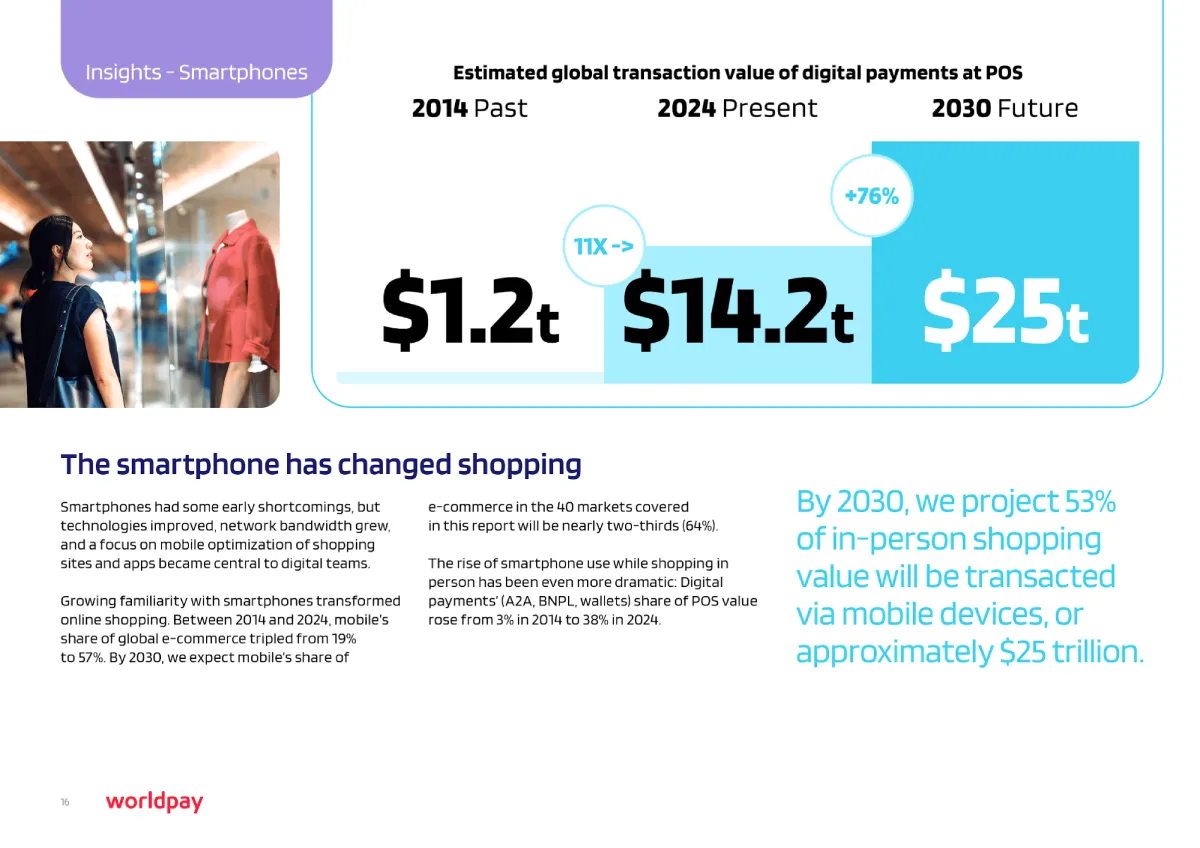
Open banking is the other significant shift. Account-to-account payments cut fees and speed up settlement, which helps small businesses and marketplaces. Buy now, pay later options can reduce friction at checkout and lift conversion by giving users another way to pay.
New tech like passkeys, network tokenization, and “Tap to Pay” on phones cuts down failures and boosts trust. It is also easier to log in with a passkey or Google account than to rely on a password manager for multiple credentials.
Clear transaction notifications lower disputes and chargebacks. In retail and digital banking, look to cloud-based platforms such as Starling Bank’s Engine or ENBD X for patterns. One-tap actions, status clarity, and human handoff for edge cases or advanced support.
What should you ship next?
Put wallet buttons first. Keep the user interface clean and plain. Explain fees up front in simple, layman’s language.
Offer smart choices such as wallets, buy now, pay later options, and international cards. Then design the whole SRP loop (success, receipt, post-payment) like a product, with confirmations, next steps, and support paths.
Minor upgrades here can compound into higher conversion and fewer support tickets. That can lead to better retention, lower churn rates, and lower support costs.
Cloud finance and ERP modernization meet finance automation
Back-office tasks pile up, which can slow teams down.
Cloud computing and cloud-based finance solutions centralize data, but they also introduce complexity as systems scale. As cloud environments grow, complexity increases, especially when multiple services and teams are involved. Cloud security posture management (CSPM) tools address this by identifying misconfigurations and risky settings before they escalate. They give teams a clear view across environments without requiring manual checks. This is especially useful in fast-moving systems where configurations change frequently. It adds control without slowing development.
Once visibility is in place, modern ERP systems connect payments, invoices, tax, and revenue so that finance and product teams work from the same data. That shift powers real finance process transformations. Fewer reconciliations, faster closes, and cleaner data for data analytics.
It also changes the user interface. Good product design turns approvals, exceptions, and audits into short, straightforward steps. No mystery screens. No jargon. Just the next best action.
Automation is the second leg, especially for teams managing both creative and financial workflows. As design agencies scale, financial operations often become a bottleneck. To maintain growth, many teams adopt automated software for expense management to handle project-based billing and reimbursements. Automating these processes reduces time spent on administrative work and allows creative leads to focus on higher-value tasks. This connects operational stability with ongoing creative output.
With these systems in place, every financial action becomes an event you can track. A payment clears? Automatically log transaction records in your financial management system, send the invoice, and update dashboards. Is there a refund request? Reverse the entry, alert support, and notify the customer without a manual step.
On WordPress, you can do this with tools you already know. Fluent Forms can capture Stripe or PayPal payments and fire webhooks. FluentCRM can tag the customer, start follow-ups, or post to Slack. Fluent Support can open a ticket when a chargeback lands.
Add DevOps tools to the mix: version control for automations, a staging site to test changes, and quick rollbacks if something breaks. The result is cloud finance you can trust. Live views of cash, fees, and chargebacks, plus a clean audit trail you can defend.
For product disciplines and founders, the design job is simple: make the complex feel simple. Use plain copy and UX design principles like progressive disclosure and inline help. Show policy, not guesswork, when a request is blocked. Let users track support, transactions, and custom request status, like a shipment delivery.

Digital assets, blockchain, and smart contracts
Blockchain technology has moved from hype to jobs that matter.
Smart contracts now power milestone payouts, revenue sharing, and usage-based pricing inside digital products. Tokenization turns invoices, royalties, or fund shares into digital assets. This makes transfers faster and transaction records easier to track.
Stablecoins and other decentralized digital currencies speed cross-border payouts. It also allows for legal and safe peer-to-peer lending options for your customers, particularly for high-ticket services.
What does this mean for founders and operators?
- Plug programmable money into checkout and disbursements.
- Add simple on-ramp/off-ramp flows.
- Offer crypto trading tools only where your audience demands them.
- Use on-chain cap tables or fund admin to cut reconciliations in investment management and accounting.
Design matters here. Use plain language to explain on-chain steps. Show chain, fees, and estimated transaction time up front. Support QR codes and deep links to wallets. Keep the user interface clean and the user experience predictable, with progress states that match real network timing.
Security by design and RegTech
Nowadays, security is part of the user experience.
Ship with security protocols baked in. That’s passkeys instead of passwords, device binding, rate limits, and encryption by default.
Use regulatory technology to automate KYC/AML checks, sanctions screening, and case review, so teams move faster with fewer manual steps.
Open-source code security tools make this easier in the real world. They enable resilient, trustworthy development across both design and finance teams. These tools ensure that underlying systems—from fintech platforms to design-driven budgeting tools—remain secure and reliable, reinforcing stakeholders’ confidence without compromising creative agility.
Designing financial experiences that people actually finish
Great financial experiences respect time and attention. Keep the user interface clean. Use plain words and short steps. Show totals as people type. Give helpful hints, not jargon.
Modern patterns, like guided flows, inline previews, and lightweight AI helpers, turn complex money tasks into simple choices. So aim for clarity first, then speed. When you do, user expectations rise in the right way, and trust follows.
Bring tools to moments that matter. Real-time calculators, payoff simulators, and spending insights reduce guesswork and cut customer service load. As finance tools become more embedded in daily life, users expect simple ways to understand where their money goes.
A spending app helps by breaking down transactions and surfacing patterns that are easy to miss. It can connect with cards or accounts and present a clear picture without extra effort. This shifts budgeting from a manual task to something users can adjust in real time. Over time, it supports better decisions without adding friction. This is where personalization helps, as long as insights remain clear and easy to interpret.
A good example: student loan calculators. They let emerging designers model payments, see the impact of interest, and stress-test different paths before they commit.
The result is a better user experience, stronger financial literacy, and more confident decisions. For founders and product teams, these simple design wins turn into fewer abandons, clearer support tickets, and higher lifetime value.
Conclusion
Tools may change, but the work hasn’t.
Keep the path short. Keep the math honest. Put security in the system, not on top.
The teams that master modern tech in design and finance will earn trust in a crowded market and compound small wins into big ones. The rest will feel slow even when they ship fast. Build for clarity, measure what pays back, and move.
Do you have any questions about modern tech innovations? Let us know below!
Author bio

Stefano Iavarone
Stefano is a content writer at uSERP, specializing in content and SEO, whose work has been featured in publications such as Medical News Today, Healthline, and Everyday Health. He also provides email list copywriting services for personal brands.


Leave a Reply