
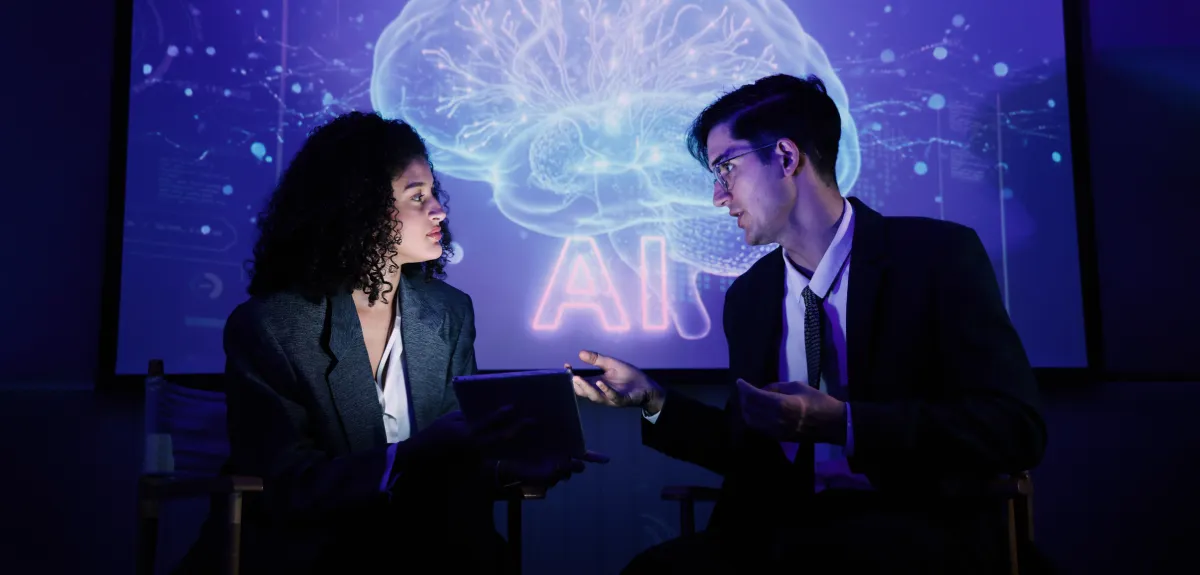
From Idea to Screen in Seconds: Why AI Is the Creative Partner You Never Knew You Needed
There’s a moment every creator knows well — the gap between having a brilliant idea and actually bringing it to life. That gap used to be filled with budget constraints, technical skill requirements, and endless hours of editing. Not anymore.
We are living through a quiet revolution. Not the loud, dystopian kind that science fiction promised us — but a practical, democratizing one. Artificial intelligence is slipping into creative workflows not as a replacement for human imagination, but as the most capable collaborator most of us have ever had.
The Blank Canvas Problem Is Officially Dead
Ask any writer, filmmaker, or content creator and they’ll tell you: starting is the hardest part. Staring at a blank timeline in a video editor or an empty canvas in a design tool is creatively paralyzing.
AI has essentially killed the blank canvas problem.
Today’s tools don’t wait for you to figure everything out. Feed them a mood, a message, a product — and they respond with structure, visuals, pacing, and style. The creative block that once stopped projects before they began is now just a prompt away from being solved.
This shift is most visible in video. The modern AI video generator doesn’t just automate editing — it understands narrative. It knows that a product launch video should build anticipation. It knows that a documentary-style clip needs breathing room. It translates intent into output in a way that feels less like software and more like collaboration.
Why Video Became the Battleground for AI Innovation
Of all the creative mediums AI has disrupted, video is the most complex — and therefore the most impressive to crack. A single minute of polished video involves synchronized audio, color-graded visuals, paced cuts, on-screen text, motion graphics, and emotional tone. Getting all of that right manually takes professionals with years of experience.
Yet here we are, in an era where AI handles that entire stack.
The reason video became AI’s most contested frontier is simple: demand. The world’s appetite for video content is essentially bottomless. Businesses need product videos. Educators need explainers. Influencers need daily content. News outlets need clips. Nonprofits need fundraising stories. And virtually none of them have the resources to produce at the volume the digital world requires.
AI stepped into that void — and it hasn’t looked back.
The Short-Form Gold Rush
If long-form video is AI’s proving ground, short-form content is its greatest success story.
Reels, Shorts, TikToks — these bite-sized videos have become the primary language of social media. They are how brands build identity, how creators build audiences, and how ideas spread faster than any headline ever could. But producing them consistently, at quality, is genuinely difficult.
The AI reels maker arrived at exactly the right moment. It understood that short-form content isn’t just “shorter video” — it’s a completely different format with its own grammar. Fast hooks. Punchy cuts. Captions burned in for muted scrollers. Trend-aware transitions. Ratio-perfect dimensions for every platform.
What used to require a dedicated social media editor — someone who lives and breathes platform culture — can now be handled intelligently by AI. The result isn’t cookie-cutter content either. Modern AI reels makers adapt to brand voice, learn from performance data, and generate variations so creators can test what resonates.
The Humans Behind the Machine
Here’s what the breathless headlines about AI often miss: none of this works without a human at the wheel.
The best AI-assisted content isn’t the kind where someone typed a prompt and walked away. It’s the kind where a creator used AI to handle the mechanical 80% — the cutting, the syncing, the formatting — so they could pour their energy into the 20% that only a human can provide: the perspective, the wit, the emotional truth.
That’s the real story of AI in creative work. It’s not automation replacing artistry. It’s automation freeing artistry from the grind.
Filmmakers are using AI to prototype sequences before a single frame is shot. Marketers are using AI to localize campaigns across languages and cultures in hours instead of months. Independent creators with zero budget are producing content that competes visually with agencies charging ten times their annual income.
The Uncomfortable Questions Worth Asking
Progress always drags difficult questions in its wake.
When AI generates a video, who owns it? When an AI video generator produces content that mimics a filmmaker’s distinctive style, where does inspiration end and appropriation begin? When synthetic media becomes indistinguishable from reality, how do audiences know what to trust?
These aren’t hypothetical concerns. They’re active debates playing out in courtrooms, policy chambers, and comment sections right now. The technology has outpaced the frameworks we use to govern it — and that gap needs closing.
Creators and platforms alike have a responsibility here. Transparency labels, ethical training data practices, and consent-based style learning are not obstacles to innovation — they are the foundation that makes sustainable innovation possible.
A Tool Is Only As Good As Its Purpose
Ultimately, the question of whether AI is good or bad for creative industries is the wrong question. A hammer isn’t good or bad. A camera isn’t good or bad. The AI reels maker sitting in your browser right now is not good or bad.
What matters is what you build with it.
The creators thriving in this new landscape aren’t the ones who surrendered their voice to automation. They’re the ones who recognized AI for what it actually is — the most powerful creative tool ever put in ordinary hands — and decided to pick it up.


Leave a Reply