
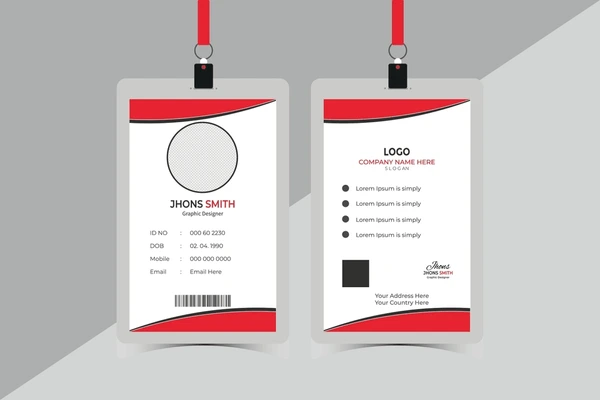
ID Card Template Themes: Balancing Creativity, Clarity, and Usability
Choosing the right ID card template is about much more than appearance. Whether creating employee badges, student IDs, visitor passes, membership cards, or contractor credentials, the template establishes how effectively the card communicates essential information. A well-designed template enhances security, strengthens branding, and improves the user experience. At the same time, poor design decisions can create confusion, reduce readability, and make identification more difficult.
Organizations today have access to hundreds of customizable template options, allowing them to create a professional-looking id badge that reflects their brand while maintaining practical functionality. The challenge is finding the right balance between artistic ambition and usability.
Why Template Themes Matter
An ID card template theme provides the visual framework for the card. It determines the placement of photos, names, job titles, logos, colors, barcodes, and other elements. Different organizations often require different themes depending on their goals and environments. Corporate offices may prefer clean and professional layouts, while schools may choose more colorful and approachable designs. Healthcare organizations often prioritize quick visual identification, while event organizers may focus on branding and visitor management.
Templates help standardize the appearance of cards across an organization while reducing design time and ensuring consistency. Modern online ID card platforms offer extensive template libraries covering employee, visitor, corporate, educational, medical, and security applications. (quickidcard.com)
Clarity Should Always Come First
The primary purpose of an ID card is identification. Regardless of how attractive a design may be, clarity must remain the top priority. Users should be able to quickly locate key information such as the cardholder’s photograph, name, department, role, or identification number.
A common mistake is allowing decorative elements to compete with important information. Background graphics, patterns, or excessive branding can distract viewers and reduce the effectiveness of the card. In high-traffic environments such as offices, schools, hospitals, and manufacturing facilities, personnel often need to identify individuals at a glance. A clear layout supports this requirement.
Good templates establish a visual hierarchy that guides the viewer’s attention naturally from the photo to the name and then to secondary information.
Avoiding Information Overload
One of the biggest risks in ID card design is information overload. Organizations sometimes attempt to include too much content on a limited card surface. Multiple phone numbers, lengthy titles, addresses, emergency contacts, QR codes, barcodes, access credentials, and branding elements can quickly overwhelm the design.
When a card contains excessive information, users struggle to identify the details that matter most. The result is a cluttered appearance that undermines both professionalism and functionality.
A better approach is to identify the essential information required for daily use and prioritize those elements. Additional data can often be stored digitally and accessed through a barcode or QR code rather than displayed prominently on the card itself.
Readability Is Essential
Readability plays a crucial role in ID card effectiveness. Even the most visually appealing template fails if users cannot easily read the information.
Several factors contribute to readability:
- Font selection
- Font size
- Text spacing
- Alignment
- Contrast between text and background
Sans-serif fonts are commonly used because they remain legible at small sizes. Templates should also provide sufficient spacing between text elements to prevent crowding.
Designers should consider viewing distance as well. Security personnel, receptionists, teachers, and supervisors often need to read information from several feet away. Larger text for names and roles improves usability without sacrificing aesthetics.
The Importance of High Contrast
High contrast is one of the most overlooked aspects of ID card design. Contrast refers to the visual difference between text and its background.
Dark text on a light background or light text on a dark background typically produces the best results. High-contrast designs remain readable in various lighting conditions and support quick identification.
Low-contrast combinations such as light gray text on a white background or dark blue text on a black background may appear sophisticated on a computer screen but can become difficult to read when printed.
Many professional templates intentionally use high-contrast layouts to improve visibility and support security procedures of the ID badge usage. This is especially important in environments where rapid identification is critical.
Artistic Ambition vs. Usability
Modern design tools allow organizations to create highly customized ID cards featuring gradients, abstract graphics, textured backgrounds, and advanced branding elements. While creativity can enhance visual appeal, it should never interfere with usability.
The most successful ID card designs strike a balance between artistic ambition and practical functionality. Branding should complement identification rather than dominate it. A visually impressive card that slows down identification ultimately fails its primary purpose.
Organizations should evaluate templates not only for appearance but also for how efficiently users can locate and interpret information. The best designs often appear deceptively simple because every element serves a clear purpose.
Selecting the Right Template
When choosing a template, organizations should evaluate their specific requirements, audience, and operating environment. Consider factors such as security needs, branding goals, printing methods, and the amount of information that must be displayed.
A large selection of customizable ID card templates can help organizations find layouts that balance professionalism, readability, and visual appeal. Starting with a professionally designed template reduces design errors and ensures that important principles such as clarity, contrast, and information hierarchy are already incorporated into the design.
Conclusion
The best ID card template is not necessarily the most elaborate one. Effective templates prioritize clarity, avoid information overload, maximize readability, and use high contrast to ensure quick recognition. While creative design can strengthen branding and enhance appearance, usability should always remain the primary objective. By carefully balancing aesthetics with functionality, organizations can create ID cards that are professional, attractive, and highly effective in real-world use.


Leave a Reply