
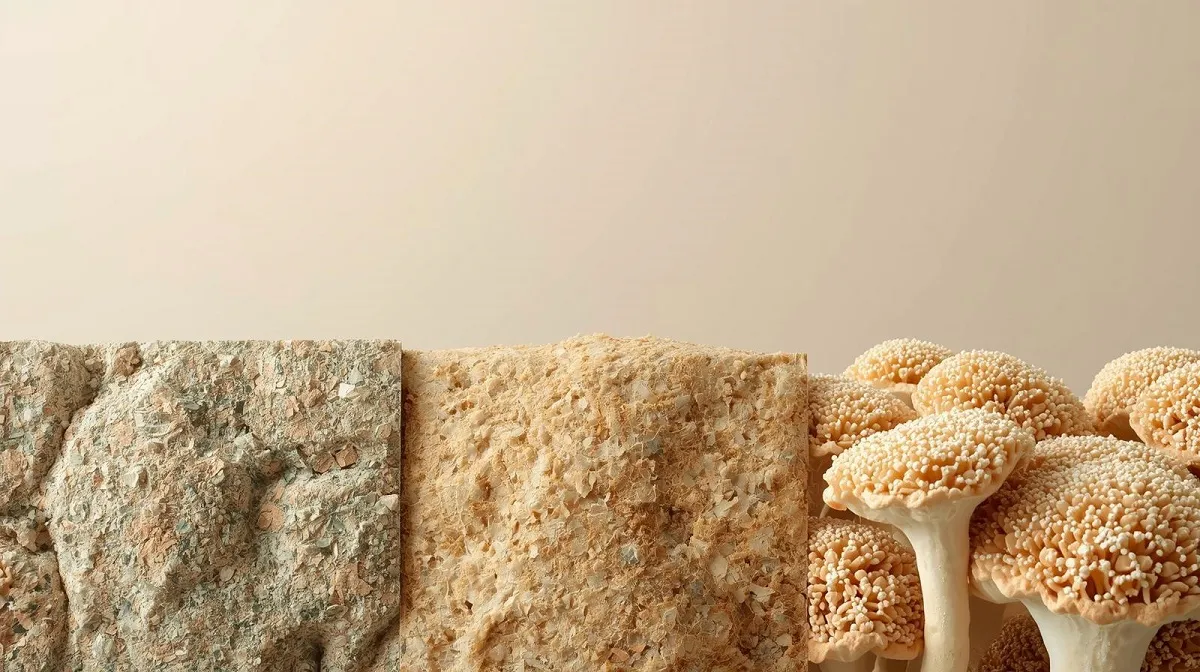
Hempcrete vs. Traditional Insulation vs. Mycelium: Performance, Cost, and Use Cases
Key Takeaways:
- Hempcrete has real-world thermal validation.The Pennsylvania case study showing R-17 in an actual retrofit — not a lab — is significant. It proves hempcrete’s performance holds up under real conditions, which is the data point the industry has needed.
- Mycelium is a legitimate insulator, not just a novelty.Matching XPS foam across U-value, comfort hours, and energy reduction in a peer-reviewed simulation puts mycelium in serious contention, especially as its supply chain matures.
- Cost is still the biggest barrier to bio-based adoption.Hempcrete at $30–$60/sq ft vs. fiberglass at $1–$3/sq ft is a hard sell for most homeowners — the ROI only works if you factor in energy savings, carbon value, or resale premiums over time.
- Traditional insulation isn’t the villain — bad material selection is.Mineral wool and water-blown spray foam can get you most of the sustainability benefit without the sourcing headaches. Thoughtful conventional choices still beat careless “green” ones.
- Code approval is the real unlock for hempcrete.The 2023 IRC inclusion is what separates hempcrete from mycelium right now — one has a clear legal pathway in 49 states, the other is still navigating jurisdiction by jurisdiction.
If you’ve been anywhere near the sustainable building world lately, you’ve probably heard the buzz around alternative insulation materials. Hemp. Mushrooms. Lime mixes that sequester carbon while they cure. It sounds experimental — but the data is starting to catch up with the hype, and in some cases, it’s downright impressive.
This article breaks down three of the most talked-about insulation options: hempcrete, conventional insulation (think fiberglass batts and rigid foam), and mycelium composites. We’ll look at what the research actually says, where each material shines, and where the trade-offs bite you.
What We’re Actually Comparing (And Why It Matters)
Before diving into numbers, it’s worth clarifying what “insulation” means across these materials, because they don’t all work the same way.
Traditional insulation — fiberglass, mineral wool, XPS foam — works primarily by trapping air to slow heat transfer. It’s passive, it’s static, and it’s been the industry standard for decades for one main reason: it’s cheap and easy to install at scale.
Hempcrete and mycelium composites take a more dynamic approach. Both are hygroscopic, meaning they actively interact with moisture in the air. Both are carbon-storing rather than carbon-emitting. And both are still working their way through building codes, supply chains, and contractor familiarity curves.
For a broader look at where these materials fit into the 2026 renovation landscape, this guide to the best sustainable materials for home renovation is a solid starting point — it covers the full spectrum of eco-friendly choices and helps you figure out where insulation fits within a larger sustainable build strategy.
Hempcrete: The Numbers Behind the Hype
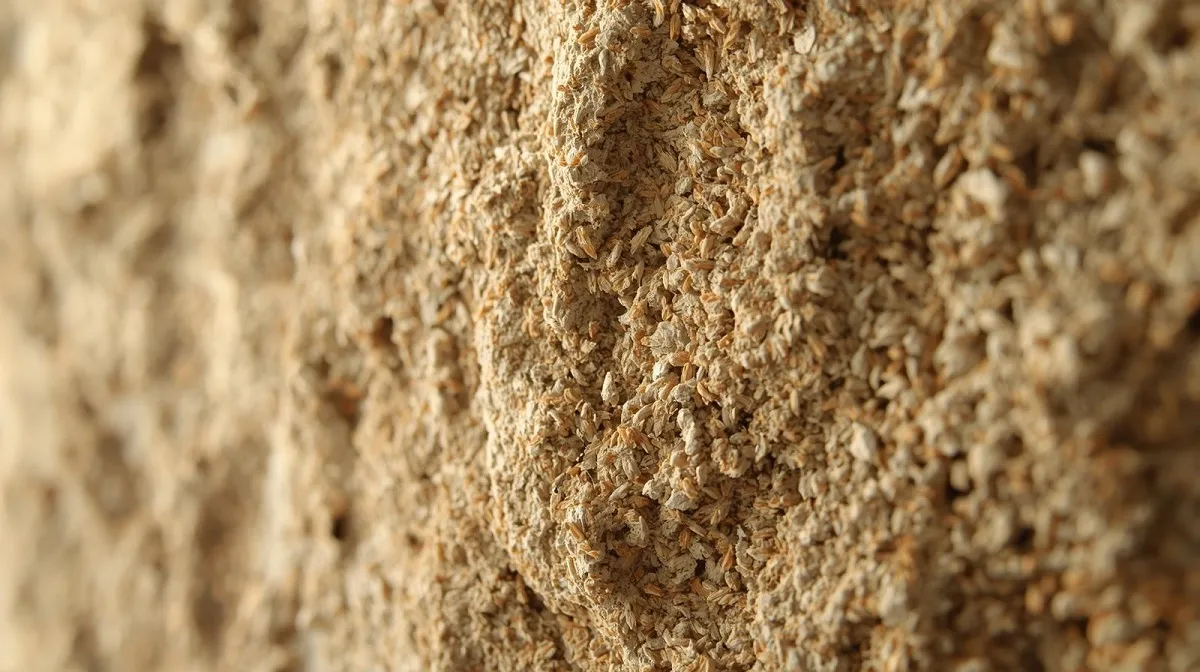
Hempcrete is a mixture of hemp hurd (the woody core of the hemp stalk), lime binder, and water. It’s been used in Europe for decades and only recently gained traction in the US after the 2018 Farm Bill legalized industrial hemp cultivation. In late 2023, it was formally added to the International Residential Code (IRC), which opened the door for widespread adoption across 49 US states.
A peer-reviewed case study published in Frontiers in Sustainability (January 2025) measured the in-situ thermal resistance of hempcrete walls in a retrofitted home in New Castle, Pennsylvania. Using the Heat Flow Meter method — a standardized protocol for real-world wall assemblies — researchers found that the hempcrete walls delivered a thermal resistance of approximately R-17, performing more than ten times better than a conventional concrete wall of equivalent thickness.
That’s a striking number. For context, standard 2×4 stud walls filled with fiberglass batts typically land around R-13 to R-15. Hempcrete, in a real house under real conditions, outperformed or matched those numbers while also storing carbon, managing humidity passively, and achieving air change rates within code limits.
What makes this data especially useful is the in-situ methodology. Lab results for insulation materials often don’t translate cleanly to field performance. Thermal bridging through studs, air gaps, moisture cycling — these all degrade real-world performance relative to idealized tests. The fact that hempcrete held up at R-17 in an actual retrofit is meaningful.
The catch, of course, is cost and installation complexity. Hempcrete isn’t something you pick up at a big-box store and staple between studs on a Saturday. It requires either wet-cast application (messy, labor-intensive, slow to cure) or prefabricated hempcrete blocks (easier, but limited availability and higher material cost). Installed costs typically run $30–$60 per square foot depending on wall thickness and region — significantly more than fiberglass at $1–$3 per square foot installed.
So the ROI math depends heavily on whether you’re factoring in energy savings over time, carbon credits, or the premium that certified sustainable homes command in certain markets.
Traditional Insulation: The Baseline That’s Hard to Beat on Cost
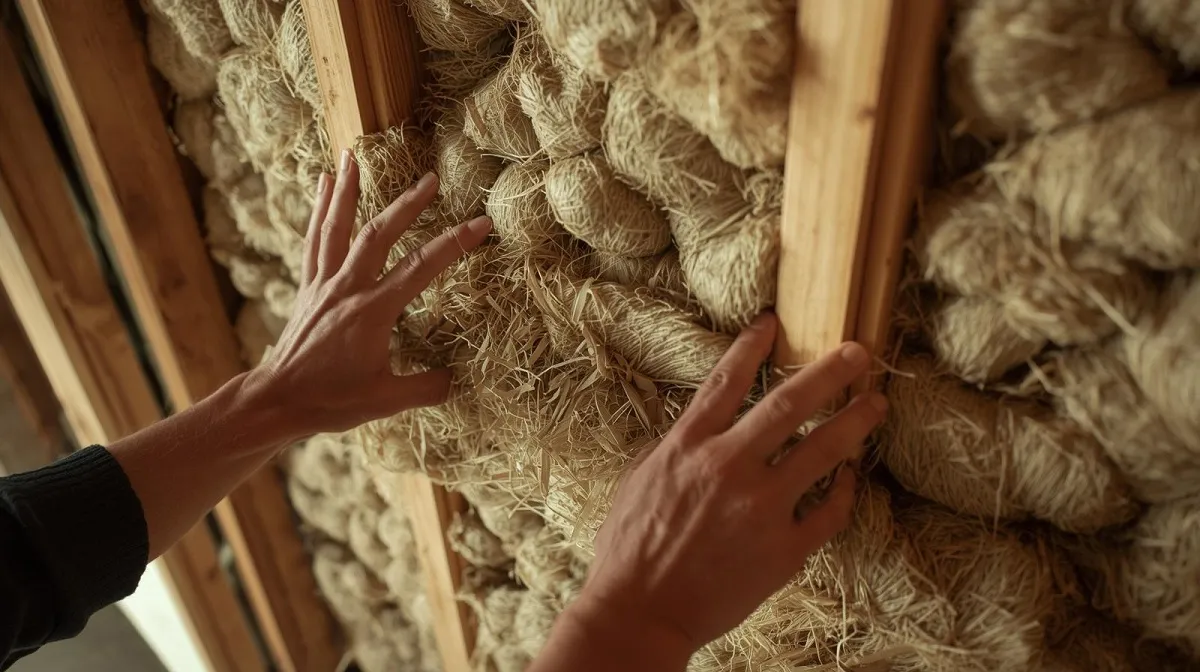
Let’s be fair to the incumbent. Fiberglass batts, mineral wool, spray foam, and rigid XPS foam aren’t going anywhere soon — and for good reason. They’re abundant, code-compliant everywhere, familiar to every contractor, and deliver predictable performance at a price point that alternative materials simply can’t match right now.
Gordian’s RSMeans construction cost database — one of the most widely referenced pricing benchmarks in the industry — tracks real-world installed material costs across North America on a rolling basis. As of October 2025, fiberglass insulation was running $0.72 per square foot, though year-over-year prices had climbed roughly 19% by early 2026 — a meaningful jump, but still a fraction of what bio-based alternatives cost.
That pricing context is worth sitting with for a moment. Even at elevated post-inflation rates, fiberglass remains dramatically cheaper than hempcrete ($30–$60/sq ft installed) or mycelium composites. The gap isn’t closing fast enough to flip the economics for most renovation budgets in the near term. What the data also reveals, though, is that “cheap” is becoming relative: insulation costs overall are nearly 25% higher than they were in mid-2022, driven partly by rising mineral wool input prices, which puts pressure on the conventional insulation market in ways that didn’t exist just a few years ago.
That cost pressure is quietly one of the more interesting tailwinds for bio-based alternatives. As the price floor for conventional materials rises, the premium for something like hempcrete shrinks — not because hempcrete got cheaper, but because the gap narrowed.
For budget-constrained renovations, or projects where a contractor crew needs to move fast, conventional insulation remains the practical choice. Spray closed-cell foam can hit R-6 to R-7 per inch, making it one of the highest-performing options per unit of thickness. Mineral wool brings genuine fire resistance and better moisture tolerance than fiberglass, at roughly 20% more cost. XPS rigid foam boards remain the go-to for below-grade applications — basements, slabs, foundation walls — where moisture exposure makes fiber-based products a liability.
The environmental downsides are real and shouldn’t be glossed over. Some spray foam formulations rely on blowing agents with significant warming potential. Fiberglass manufacturing is energy-intensive. And unlike hempcrete or mycelium, none of these materials have a meaningful end-of-life story — they go to landfill.
But for homeowners who want strong thermal performance without the sourcing headaches, thoughtful material selection within the conventional category can still get you most of the sustainability benefit at a fraction of the cost. Mineral wool over fiberglass. Water-blown spray foam over HFC-blown. It’s not glamorous, but it’s realistic — and in renovation work, realistic usually wins.
Mycelium Composites: The Wildcard With Real Potential
Mycelium insulation — made by growing fungal root networks through agricultural waste substrates like corn husks or cottonseed shells — has been the most intriguing entrant in the sustainable materials conversation. Companies like Ecovative have been pushing the commercial side, but academic research is now filling in the performance picture.
A peer-reviewed simulation study published in F1000Research (January 2026) evaluated mycelium insulation against XPS foam and rock wool in a residential building in New Cairo, Egypt, using energy modeling software integrated with EnergyPlus. The results showed that mycelium achieved a U-value of 0.323, brought discomfort hours down to 16.9%, and reduced overall energy consumption by 15.8% compared to an uninsulated base case — performance that was broadly comparable to XPS across all measured metrics.
A U-value of 0.323 W/m²K isn’t going to win awards in a Passive House project, but it’s a meaningful number for a material that’s essentially grown from fungus and agricultural byproducts, requires minimal energy to produce, and is fully biodegradable at end of life. The fact that it performed on par with XPS in comfort and energy terms suggests mycelium isn’t just a novelty — it’s a legitimate insulation option where its other properties (renewability, biodegradability, non-toxicity) tip the decision in its favor.
The challenge for mycelium right now is scale and consistency. It’s not a commodity product. Growing conditions affect density and performance, supply is limited, and there’s no standardized code pathway in most jurisdictions. Cost is high — comparable to or exceeding hempcrete on a per-square-foot basis. And its moisture performance in high-humidity climates is still an active area of research.
Where mycelium is most compelling is in niche applications: packaging-grade applications transitioning into architecture, interior wall panels in commercial spaces prioritizing sustainability credentials, or innovation-forward residential projects where a homeowner specifically wants to support emerging bio-based supply chains.
Side-by-Side: How Do These Three Actually Stack Up?
| Hempcrete | Traditional (Fiberglass/Foam) | Mycelium | |
| Thermal Performance | R-17 in real-world tests | R-13–R-21+ depending on type | Comparable to XPS in simulation |
| Installed Cost | $30–$60/sq ft | $1–$10/sq ft | High; limited supply |
| Carbon Impact | Carbon-storing | Carbon-emitting in production | Low-carbon; biodegradable |
| Code Status | IRC-approved (Appendix BL) | Fully code-compliant | Limited; jurisdiction-dependent |
| Moisture Management | Excellent hygroscopic buffering | Variable | Active research ongoing |
| Best Use Case | Retrofit walls, new construction | Any project; budget-sensitive | Interior panels, niche builds |
Which One Is Right for Your Project?
The honest answer is: it depends on what you’re optimizing for.
If you’re doing a retrofit and want real-world thermal performance with long-term energy savings, humidity control, and carbon negativity — and you have the budget and patience to work with specialty contractors — hempcrete is the most well-validated bio-based option available right now. The Frontiers study data from an actual house makes a compelling case that lab numbers hold up in the field.
If you’re working within a tighter budget or a faster timeline, traditional insulation done thoughtfully (mineral wool, water-blown spray foam) gives you most of the thermal performance with none of the sourcing headaches.
If you’re building something that’s meant to push the envelope — a demonstration project, a net-zero commercial space, or a home where embodied carbon matters as much as operational energy — mycelium deserves a serious look, especially as supply chains mature over the next few years.
The sustainable renovation space is evolving fast. What was experimental in 2020 is code-compliant in 2026. The materials getting traction now are the ones backed by peer-reviewed field data — and both hempcrete and mycelium are starting to build that evidence base in ways that matter.


Leave a Reply