
How Smart Thermostats Actually Save Energy: What the 2026 Data Tells Us
Key Takeaways:
- Human behavior, not hardware failure, drives most HVAC waste— smart thermostats eliminate the habitual oversights (forgotten setbacks, unnecessary all-day conditioning) that programmable thermostats depend on the homeowner to avoid.
- 2026 field data confirms 10–15% annual HVAC savingsfor the average household using a smart thermostat consistently, with the upfront device cost typically recovered within 12 to 18 months.
- Smart thermostats outperform programmable models by 2–3x— saving 12.5–16.1% on gas heating versus just 5% for programmable units in the same homes, according to ACEEE/Cadmus utility research.
- Geofencing and occupancy detection are the highest-impact features— they respond to real movement patterns rather than fixed schedules, capturing energy savings on irregular days that a timer would miss entirely.
- Utility rebates of $50–$100 can cut the payback period to under a year, making smart thermostats a fast-return investment rather than a long-horizon upgrade.
If you’ve ever wondered whether a smart thermostat is truly worth the investment — or whether the energy-saving claims are more marketing than reality — you’re not alone. Homeowners across the country are asking the same question, especially as utility costs continue to climb and the promise of “intelligent” home technology grows louder every year.
The short answer is yes, smart thermostats do save real energy. But how they do it is more nuanced than most people realize. In this article, we break down the actual mechanisms behind the savings, ground it in the latest 2026 data from two independent sources, and explain why the numbers vary so widely from household to household.
The Core Mechanism: Precision Over Habit

Most HVAC energy waste doesn’t come from a broken system — it comes from human behavior. We forget to turn down the heat before leaving for work. We blast the air conditioning before we even step through the front door. We set a comfortable temperature and leave it there all day, whether anyone is home or not.
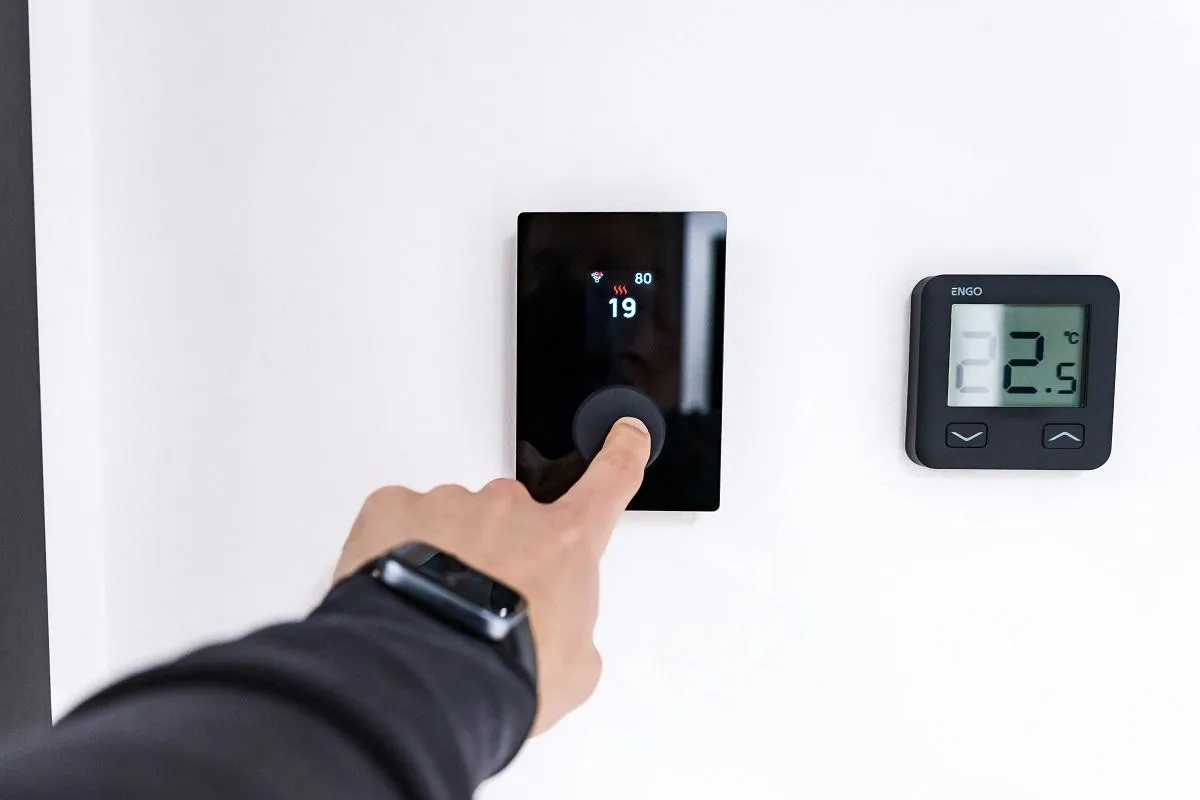
Smart thermostats are engineered to solve exactly these problems. They use a combination of scheduling algorithms, occupancy detection, and geofencing — location-based triggers tied to your smartphone — to ensure your HVAC system is only working hard when it genuinely needs to.
The difference between a traditional programmable thermostat and a smart one isn’t just convenience. It’s reliability. Studies have shown that the majority of programmable thermostat users regularly override their pre-set schedules, effectively turning their programmable device into a manual one. Smart thermostats eliminate that failure point by adapting automatically, without requiring the homeowner to remember a thing.
What the 2026 Data Actually Shows
Industry Field Studies Put Annual Savings Between 10% and 15%
According to a 2026 industry analysis published by Climate Experts, current field research indicates that the typical household can reduce its annual heating and cooling expenditure by somewhere between 10 and 15 percent when using a smart thermostat consistently. Given that HVAC systems account for close to half of a home’s total energy consumption, that percentage translates into a meaningful dollar figure on a monthly utility bill.
The same analysis notes that the financial payback window has shortened considerably. A quality smart thermostat in 2026 typically costs between $150 and $250. Based on current national average utility rates, most homeowners recover that upfront cost within 12 to 18 months of installation. When utility rebates are factored in — many energy providers now offer $50 to $100 back on ENERGY STAR-certified devices — that payback period can compress to under a year.
This is an important data point because it reframes the smart thermostat not as a luxury upgrade, but as a relatively fast-payback energy investment. The question is no longer whether the device will pay for itself, but how quickly.
Smart Thermostats Outperform Programmable Devices by a Factor of 2 to 3
A separate field study reviewed in April 2026 by CLIQ for Home, drawing on ACEEE/Cadmus utility research conducted across Indiana residential customers, found a striking performance gap between traditional programmable thermostats and smart ones. In a controlled comparison, programmable thermostats saved approximately 5% on gas heating costs. Smart thermostats, running the same homes, delivered savings in the range of 12.5% to 16.1% — more than double, and in some cases triple, the programmable baseline.
Cooling results followed the same trajectory. The study also highlighted a broader context that makes these numbers more urgent: U.S. residential energy costs have climbed roughly 41% over the past five years. In high-cost electricity markets like New England, where rates are running above 29 cents per kilowatt-hour as of early 2026 — roughly double the national average — the percentage savings stay consistent, but the dollar impact grows substantially.
The implication is clear: the more expensive your energy market, the faster your smart thermostat pays dividends.
Why the Savings Range Is So Wide
You’ve likely noticed that the figures above span a fairly broad range — from roughly 8% at the conservative end (the EPA’s verified baseline for ENERGY STAR-certified devices) up to 23% for high-functioning models with geofencing and room sensors fully enabled. Understanding why that range exists is essential for setting realistic expectations.
Home insulation and building envelope quality play a major role. A well-insulated home holds temperature longer, meaning the HVAC system doesn’t have to work as hard to recover after a setback period. Smart thermostats in well-sealed homes show stronger savings because the setback is more effective.
Climate zone matters. Cold-climate households in the Upper Midwest, New England, and the Rocky Mountain region typically dedicate 55% to 70% of their total energy budget to HVAC. The thermostat controls a proportionally larger share of the bill, so the same percentage savings yields more dollars saved.
User behavior still influences outcomes. The 2026 Climate Experts analysis flagged a persistent trend found in residential energy audits: homeowners who frequently override their smart thermostat’s programmed settings — manually pushing the temperature to extremes during peak hours — tend to negate a significant portion of the efficiency gains the device would otherwise deliver. The technology only performs as well as the homeowner allows it to.
Feature utilization is a major variable. A smart thermostat running only basic scheduling functions will save less than one with geofencing active, room sensors deployed in occupied spaces, and demand-response integrations enabled through the utility provider.
The Role of Occupancy Detection and Geofencing
Of all the features that contribute to smart thermostat savings, occupancy intelligence — the ability to know when the home is empty and respond accordingly — is consistently cited as the most impactful.
Geofencing works by linking the thermostat to residents’ smartphones. When the last household member leaves a defined perimeter around the home, the thermostat shifts automatically into an away mode, relaxing temperature targets to a more energy-efficient range. When someone begins the commute home, the system anticipates their arrival and begins conditioning the space ahead of time, so comfort is restored by the time they walk through the door.
The result is continuous, passive optimization that requires zero ongoing effort from the occupant. And because it responds to actual movement patterns rather than a fixed schedule, it catches the irregular days — unexpected errands, work-from-home schedule changes, school holidays — that a programmed timer would miss entirely.
Room-level occupancy sensors, available on models like the ecobee, take this further by directing conditioning only to the spaces currently in use. Rather than maintaining a uniform temperature throughout an entire floor plan, the system focuses its energy where people actually are.
Choosing the Right Thermostat for Your HVAC System
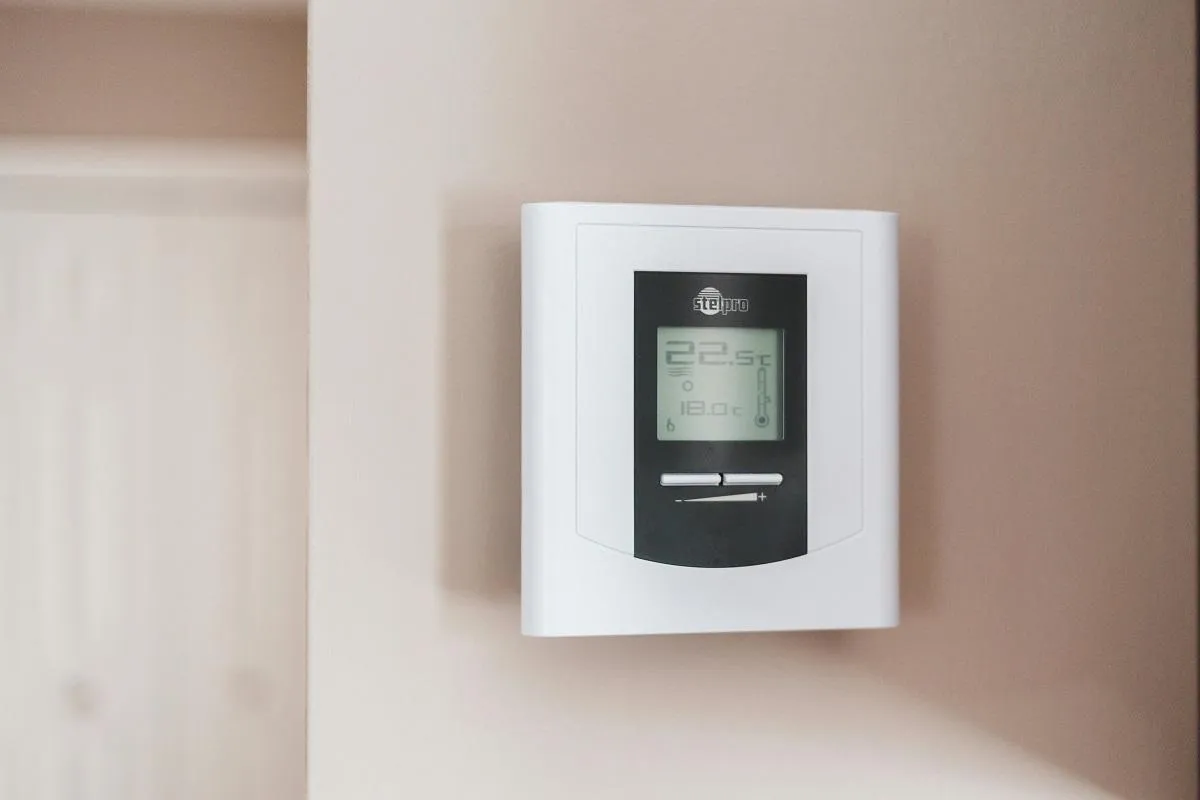
The data makes a compelling case for smart thermostats in general, but not all devices deliver the same results for every type of HVAC equipment. Compatibility matters. A thermostat optimized for a single-stage gas furnace won’t necessarily communicate effectively with a variable-speed heat pump or a multi-zone mini-split system.
If you’re evaluating which device best matches your specific setup, system age, and home layout, the technical differences between leading models — and how those differences interact with your existing HVAC infrastructure — deserve a closer look. Our comprehensive guide to choosing the best thermostat for your HVAC system in 2026 walks through compatibility considerations, top-performing models across equipment categories, and the features most likely to drive meaningful savings based on your home’s profile.
Utility Rebates: A Factor That Changes the Math
One of the most underappreciated elements of the smart thermostat ROI calculation in 2026 is the availability of utility rebates. Energy providers increasingly view smart thermostats as load-management assets — during extreme weather events, these devices can be enrolled in demand-response programs that shift energy consumption away from peak grid stress periods in exchange for bill credits.
Because of this, many utilities are now proactively subsidizing the hardware. Instant rebates of $50 to $100 on ENERGY STAR-certified smart thermostats are widely available across U.S. utility territories, with some programs offering even more. Several manufacturers now actively assist customers with the rebate claim process post-installation, removing friction from what was once a cumbersome paperwork exercise.
When the effective out-of-pocket cost of a $200 thermostat drops to $100 or less after rebate, the payback period shrinks accordingly — and the long-term return on investment strengthens considerably.
The Bottom Line
The evidence from 2026 is consistent: smart thermostats deliver real, measurable energy savings for the vast majority of households. The mechanism isn’t magic — it’s the elimination of habitual waste through automation, occupancy intelligence, and continuous adaptation to how a household actually lives.
The Climate Experts field data pointing to 10% to 15% annual HVAC savings, combined with the ACEEE/Cadmus research showing smart devices outperforming programmable thermostats by a factor of two or more, paints a picture of a technology that has moved well past the “promising gadget” phase into proven, ROI-positive home infrastructure.
The variables that determine where your household lands within that savings range — insulation quality, climate zone, feature utilization, and utility rates — are knowable. And the smarter you are about matching the right device to your system, the closer you’ll land to the high end of that range.


Leave a Reply