

Top SAST Tools for Enterprise Businesses
Enterprise codebases don’t get simpler over time; they grow, they sprawl, and every new microservice or third-party integration adds another potential entry point. SAST tools sit at the start of that chain, catching vulnerabilities before they ever reach a running environment. Here are the platforms doing it best in 2026.
What Is SAST and Why Do Enterprises Need It?
SAST analyzes source code, bytecode, or binaries without executing the application, finding security flaws at the code level before deployment. For enterprise teams, the stakes are higher: larger codebases, more contributors, stricter compliance requirements, and far more damage if something slips through.
Through SAST, enterprises can:
- Detect security vulnerabilities early, when fixes are faster and less expensive
- Secure large and complex codebases across multiple teams and projects
- Support compliance with standards such as SOC 2, ISO 27001, PCI DSS, and HIPAA
- Integrate security checks into CI/CD pipelines for continuous testing
- Reduce the risk of breaches, downtime, and costly post-release remediation
1. Aikido Security
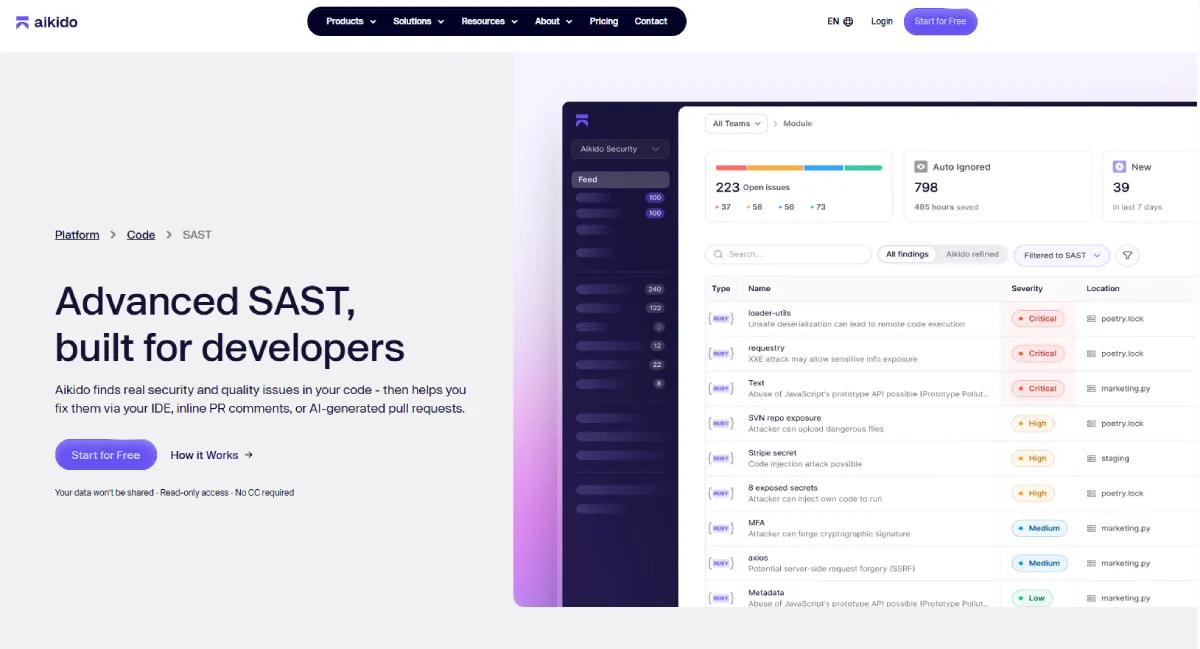
Aikido Security is a developer-first security platform that goes well beyond traditional SAST. While most tools stop at scanning code, Aikido connects static findings to real-world exploitability, filtering out the noise so enterprise teams focus only on what actually matters in their environment.
Key Features:
- SAST engine: scans proprietary source code for injection flaws, insecure configurations, hardcoded logic errors, and dozens of other vulnerability classes across multiple languages and frameworks
- Reachability analysis: cross-references static findings against actual runtime context, automatically deprioritizing vulnerabilities in code paths that can’t be reached in production
- AI-powered pentesting (Aikido Attack): deploys hundreds of specialized agents against your live application to validate whether static findings are genuinely exploitable, eliminating false positives at the source
- SCA integration: SAST findings are presented alongside open-source dependency vulnerabilities in a unified view, so teams don’t context-switch between tools
- IaC scanning: extends static analysis to Terraform, Kubernetes manifests, and CloudFormation, catching misconfigurations before infrastructure is provisioned
- Secret detection: identifies hardcoded API keys, tokens, and credentials in source code and git history
- AutoFix PRs: AI-generated, merge-ready pull requests that fix confirmed vulnerabilities directly in the codebase, reducing remediation time significantly
Additional Benefits:
- Unified platform covering SAST, SCA, secrets, containers, IaC, CSPM, and live AI pentesting
- Lower false positive rate than traditional SAST tools
- Built for developer adoption; findings surface in GitHub, GitLab, and Bitbucket PRs without requiring developers to leave their workflow
- Compliance-ready reports generated automatically, structured for SOC 2, ISO 27001, and vendor security questionnaires
- No dedicated security team required for effective operations; it’s designed to be actionable for developers directly
Best for: Enterprise development teams that want comprehensive SAST coverage embedded in their existing pipeline, with the added layer of AI-driven validation to cut through false positives and accelerate remediation.
2. Checkmarx
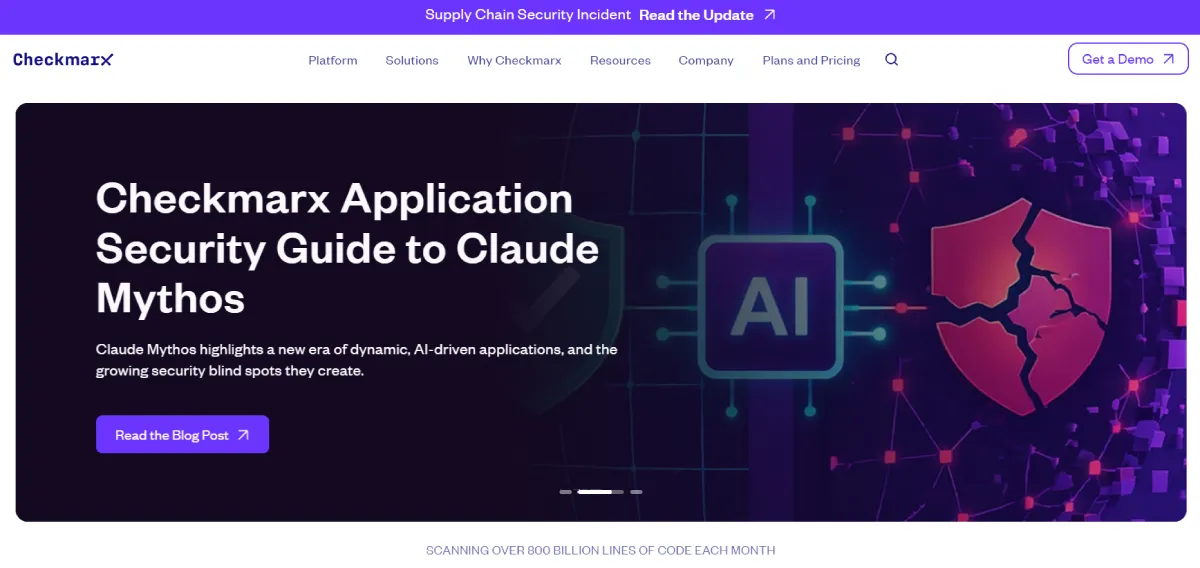
Checkmarx is particularly well-entrenched in large organizations and government environments that have complex compliance requirements and often strict data residency needs.
Key Features:
- SAST engine: deep static analysis covering a broad range of languages, including Java, .NET, C/C++, Python, JavaScript, and more, with support for proprietary and legacy frameworks
- SCA: tracks open-source component vulnerabilities and license risks across the dependency tree
- API security testing: maps and scans API endpoints for common misconfigurations and exposure risks
- IaC scanning: analyzes infrastructure templates for security misconfigurations before deployment
- DAST: dynamic testing of running applications complements static findings for broader coverage
- On-premise deployment: full self-hosted option for air-gapped or heavily regulated environments where cloud SaaS is not permitted
Additional Benefits:
- Audit trail and reporting features suited to enterprise governance and compliance workflows
- Native integrations with Jira, ServiceNow, and major enterprise ticketing systems
3. Veracode
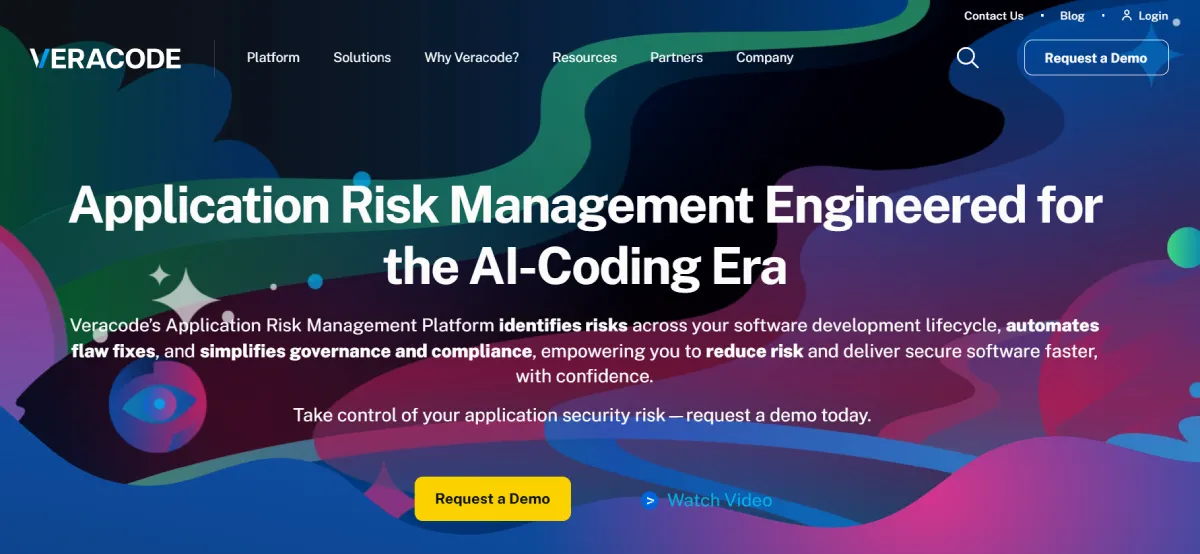
Veracode bridges automated scanning with on-demand human pentesting services.
Key Features:
- SAST (source and binary analysis): analyzes both source code and compiled binaries, providing flexibility for teams dealing with proprietary or third-party components
- DAST: simulates external attacks against running applications to surface runtime vulnerabilities that static analysis won’t catch
- SCA: identifies known CVEs and license risks across open-source dependencies
- Manual penetration testing: human-led engagements layered on top of automated scanning for deeper, logic-level coverage
- API security testing: scans REST and SOAP APIs for exposure and common vulnerability patterns
- Pipeline gating: policy-based enforcement that can block deployments when findings exceed defined thresholds
Additional Benefits:
- Detailed remediation guidance is included with every finding, with code-level fix suggestions
- Compliance reporting out of the box for SOC 2, PCI DSS, and HIPAA
4. Semgrep
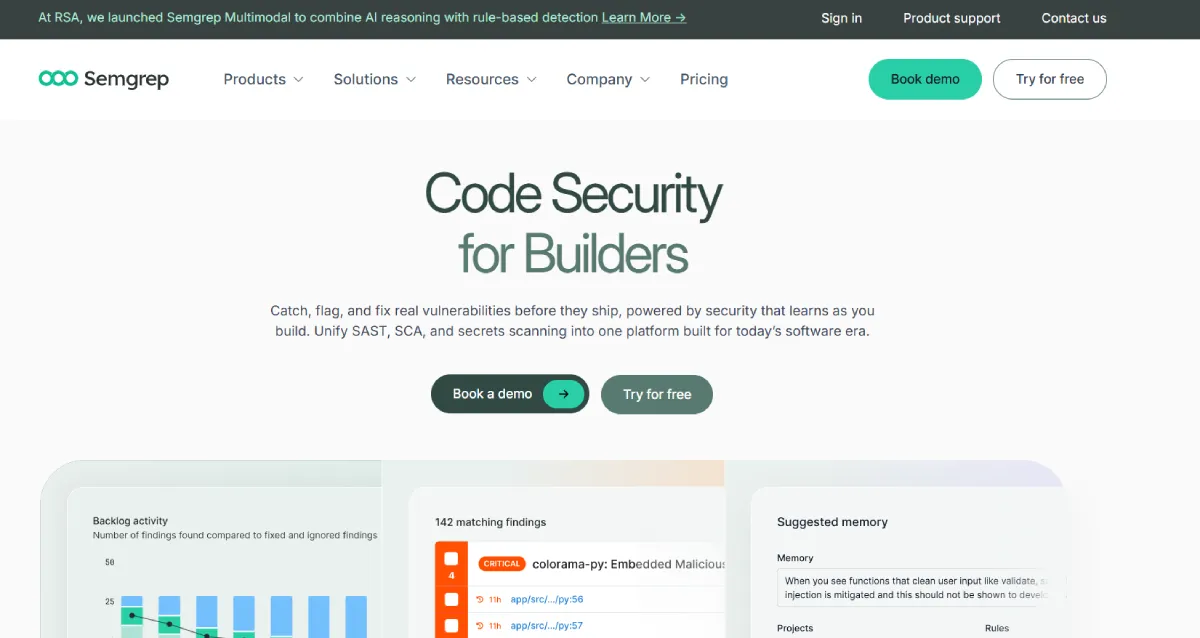
Semgrep takes a different approach to SAST. Rather than a closed black-box engine, it’s built around a pattern-matching rule system that lets security teams define exactly what gets flagged.
Key Features:
- SAST across 30+ languages: pattern-based static analysis covering common vulnerability classes, with support for custom rule authoring to enforce organization-specific secure coding standards
- Semgrep Supply Chain: SCA with reachability analysis, filtering out dependency vulnerabilities that aren’t actually reachable in the application’s code paths
- Secrets detection: scans for hardcoded credentials, tokens, and API keys across codebases and git history
- Custom rule registry: a large library of community-contributed and Semgrep-maintained rules covering major frameworks and vulnerability types out of the box
- CI/CD integration: runs fast enough to execute on every PR without meaningful pipeline overhead
Additional Benefits:
- Open-source core means teams can self-host the engine with no vendor lock-in
- Fast scan performance even on large monorepos
- Reachability filtering in the supply chain significantly reduces dependency alert fatigue
5. Snyk
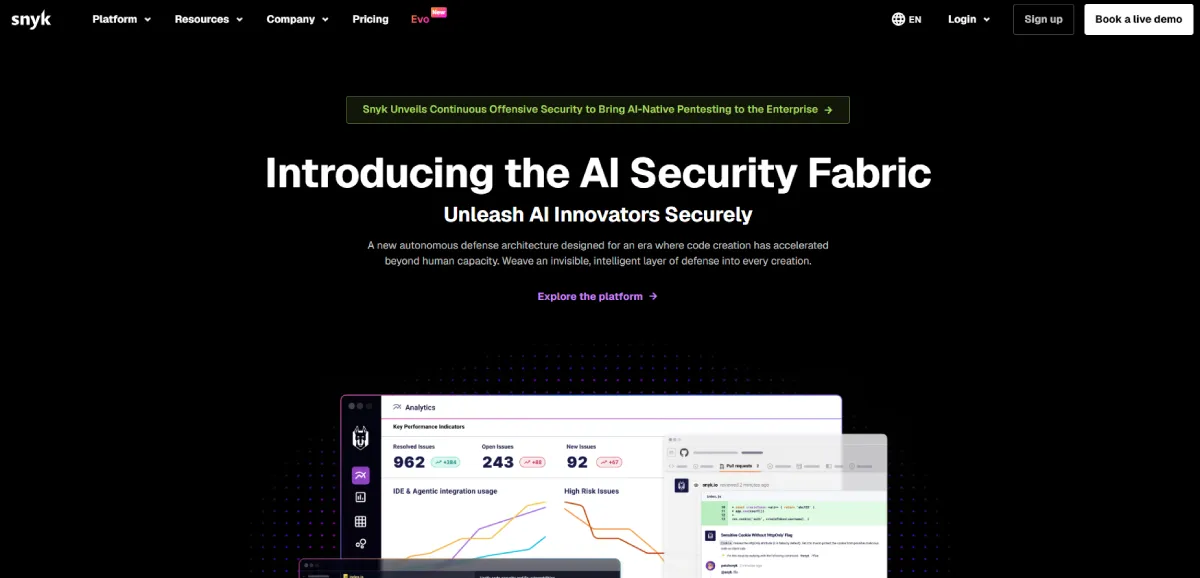
Snyk’s SAST capability is IDE-integrated and designed to give developers immediate feedback.
Key Features:
- Snyk Code (SAST): real-time static analysis that runs in the IDE as developers write code, surfacing issues before a commit is ever made, powered by a semantic analysis engine rather than pure pattern matching
- SCA: deep open-source vulnerability detection across direct and transitive dependencies, backed by the Snyk Intel vulnerability database
- Container scanning: analyzes base images and OS packages for known CVEs before deployment
- IaC scanning: flags misconfigurations in Terraform, Kubernetes, and CloudFormation templates
- Fix recommendations: contextual remediation advice, including suggested dependency upgrades and code-level fix examples, surfaced alongside each finding
Additional Benefits:
- Free tier available, making it accessible for smaller teams or individual developers before scaling up
- Ecosystem of integrations across GitHub, GitLab, Bitbucket, Azure DevOps, Jenkins, and more
Conclusion
Enterprise SAST isn’t a checkbox; it’s an ongoing process that needs to fit naturally into how your engineering teams work. The right platform reduces friction, not just risk.
Regardless of which platform you choose, the shift toward continuous, developer-integrated SAST is non-negotiable in 2026. Aikido makes that shift easier than most, and harder to ignore.


Leave a Reply