

Top Tools for Measuring LinkedIn Revenue Attribution in 2026
There’s a promise every attribution tool makes: plug us in, and you’ll finally see the whole picture of what’s driving pipeline. Most teams buy on that promise alone. But attribution data is only as useful as the campaigns underneath it — a tool that shows, in perfect multi-touch detail, that a LinkedIn campaign is burning budget on the wrong accounts hasn’t actually solved anything. It’s just documented the problem more precisely. The real question for 2026 isn’t which tool has the prettiest attribution model. It’s which one connects that data back to something a marketer can actually act on.
That distinction is why the tools below split into two camps: attribution-only platforms that report on what happened, and platforms where a linkedin revenue attribution tool is one layer of a system that also touches targeting and spend. Both have a place, but they solve different problems, and the pricing gap between them is bigger than most buyers expect going in.
Tool Summary
| Tool | Attribution model | Includes website visitor data | Starting price
|
| DemandSense | Multi-touch, ads-to-CRM | Yes — visitors feed the buyer journey | $99/mo |
| Dreamdata | Multi-touch, B2B revenue attribution | Free tier is analytics-only | Free tier; full attribution is custom-priced |
| HockeyStack | Multi-touch, full-funnel | Not disclosed publicly | ~$599/mo, usage-based (per third-party listings) |
| Factors.ai | Multi-touch, marketing attribution | Visitor ID at entry tier only | $199/mo (visitor ID); attribution from $6K/yr |
| Fibbler | Account-level engagement attribution, 4 CRMs | No | $89–$159/mo, published |
1. DemandSense
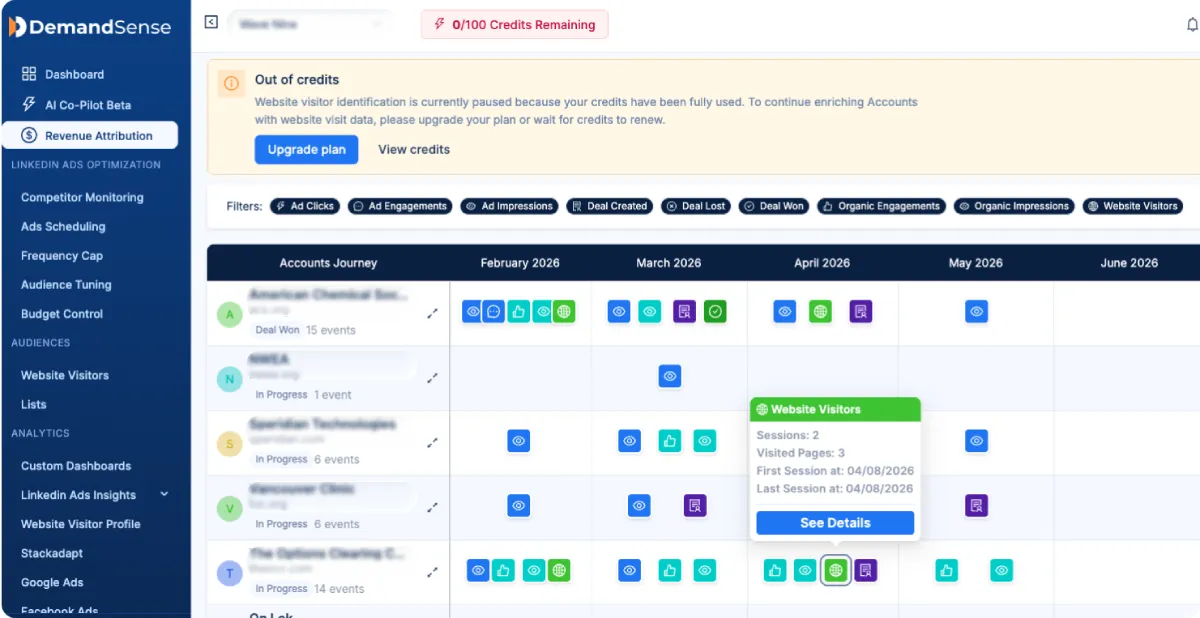
| DemandSense — Influenced Revenue Overview. Source: demandsense.com/linkedin-revenue-attribution |
DemandSense’s attribution model starts from a different place than most of this list: it doesn’t just connect ad clicks to CRM deals, it folds anonymous website visitor identification directly into the buyer journey. That means a company that saw a LinkedIn ad, later visited the pricing page anonymously, and then showed up as a deal in Salesforce shows up as one connected journey — not three disconnected data points a marketer has to manually stitch together.
Reported ROAS improvement for teams using the full attribution loop averages 5.8x, and the platform syncs both directions with Salesforce and HubSpot, so attribution data flows back into the CRM instead of living in a separate dashboard nobody checks after month one.
The other piece that matters for 2026 buyers specifically: the attribution layer sits on top of the same platform that controls ad scheduling and budget pacing, so a team can see a campaign underperforming in the attribution view and adjust it in the same tool, same day.
Pricing: $99/mo (Basic), $149/mo (Plus).
2. Dreamdata
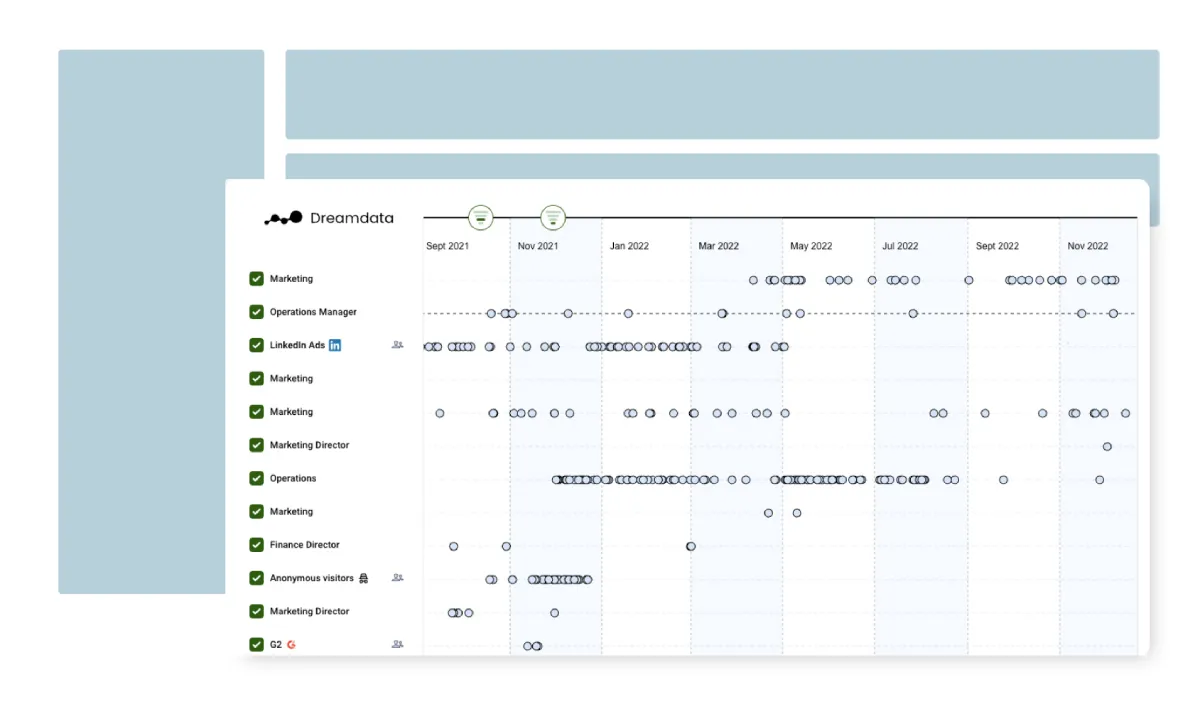
| Dreamdata — customer journey timeline dashboard. Source: dreamdata.io/customer-journeys |
Dreamdata has a genuine free tier for basic B2B web analytics and company identification, which makes it easy to start with. The actual multi-touch attribution and AI activation features — the part most buyers are shopping for — sit behind a custom-priced “Activation & Attribution” tier that isn’t listed publicly and comes with a full onboarding process.
Best for: Enterprise revenue teams with long sales cycles and budget for a dedicated attribution implementation.
3. HockeyStack
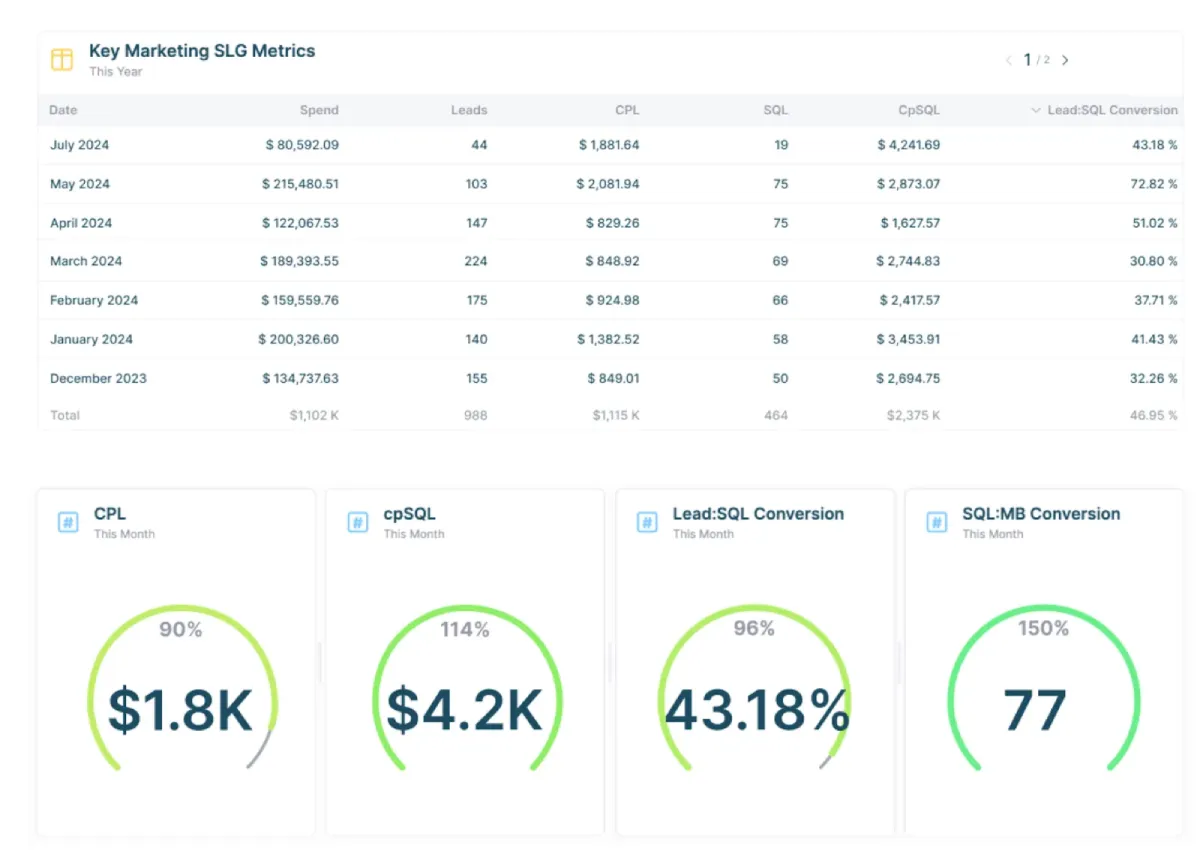
| HockeyStack’s example of an attribution model. Source: hockeystack.com |
HockeyStack covers full-funnel attribution well beyond just LinkedIn, which is useful for teams that need one attribution source across every channel. HockeyStack doesn’t publish pricing on its own site, but third-party listings put the starting plan around $599/mo, usage-based — worth confirming directly since usage-based pricing moves with data volume.
Best for: Marketing teams standardizing attribution across many channels who are prepared for a sales-led buying process.
4. Factors.ai
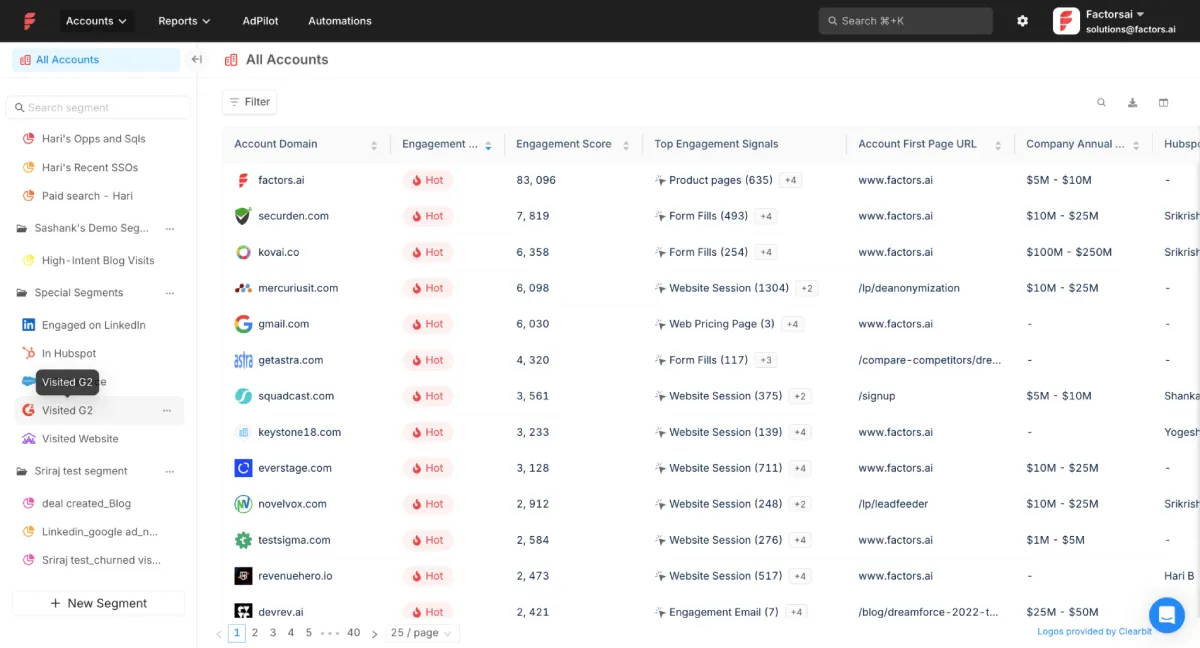
| Factors.ai — LinkedIn AdPilot spend-control interface. Source: factors.ai/product/linkedin-adpilot |
Factors.ai’s entry tier is $199/mo, but that only covers website visitor identification — the multi-touch attribution and LinkedIn Adpilot features most buyers actually want start at $6K/year and scale to $30K+/year at the enterprise tier. It’s a real platform with real depth, but “accessible” isn’t the right word for the attribution-capable tiers.
Best for: Teams with an enterprise-level budget who want attribution bundled with a broader account intelligence platform.
5. Fib
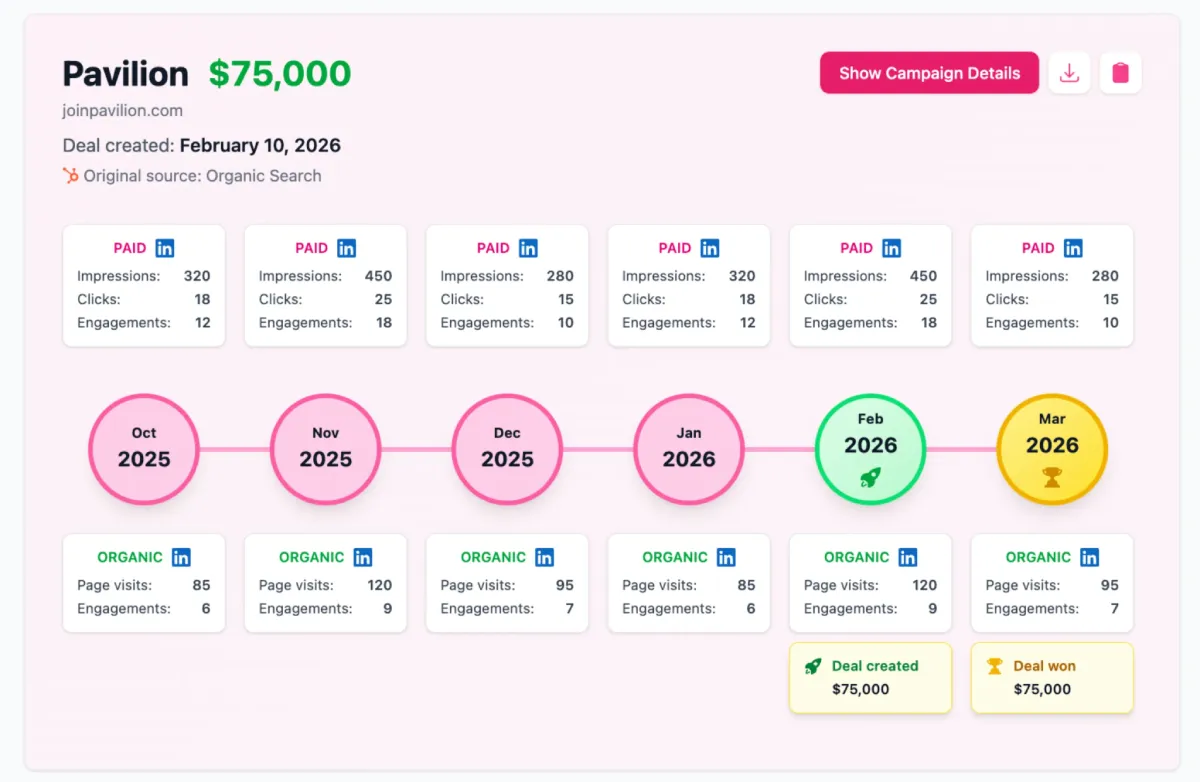
| Fibbler — Customer Journey dashboard, tracking company interactions with LinkedIn ads and organic content. Source: fibbler.co |
Fibbler’s core strength is account-level engagement attribution across four CRMs — HubSpot, Salesforce, Attio, and Pipedrive — which is broader native CRM coverage than most of this list. It’s also added lighter LinkedIn scheduling tools recently, though attribution is still clearly the product’s center of gravity rather than a full optimization layer, and it doesn’t fold website visitor identification into the journey the way a combined platform does.
Best for: Teams on Attio or Pipedrive specifically, since native support for those CRMs is rare in this category.
Why Website Visitor Data Changes the Attribution Picture
One shift worth flagging for 2026 buyers specifically: a growing number of B2B deals now involve an anonymous website visit somewhere in the middle of the journey: someone clicks a LinkedIn ad, doesn’t convert, comes back to the pricing page two weeks later with no form fill, then eventually becomes a deal.
Attribution tools that only track known contacts miss that middle step entirely, which understates how much a campaign actually contributed. Platforms that fold visitor identification into the attribution model close that gap; ones that don’t will systematically undercount ad-influenced pipeline, sometimes by a wide margin, without ever throwing an error to say so.
What Matters When Picking Measuring Attribution Tools
Attribution data is only valuable if it changes a decision. Before comparing feature lists, it’s worth asking two things: does the model account for the anonymous middle of the funnel, and does the platform sit close enough to campaign controls that a marketer can act on a finding the same day, rather than filing it away for next quarter’s planning doc? DemandSense was built around both of those specifically, which is also the main reason it’s priced closer to a monthly SaaS tool than an enterprise attribution contract


Leave a Reply