
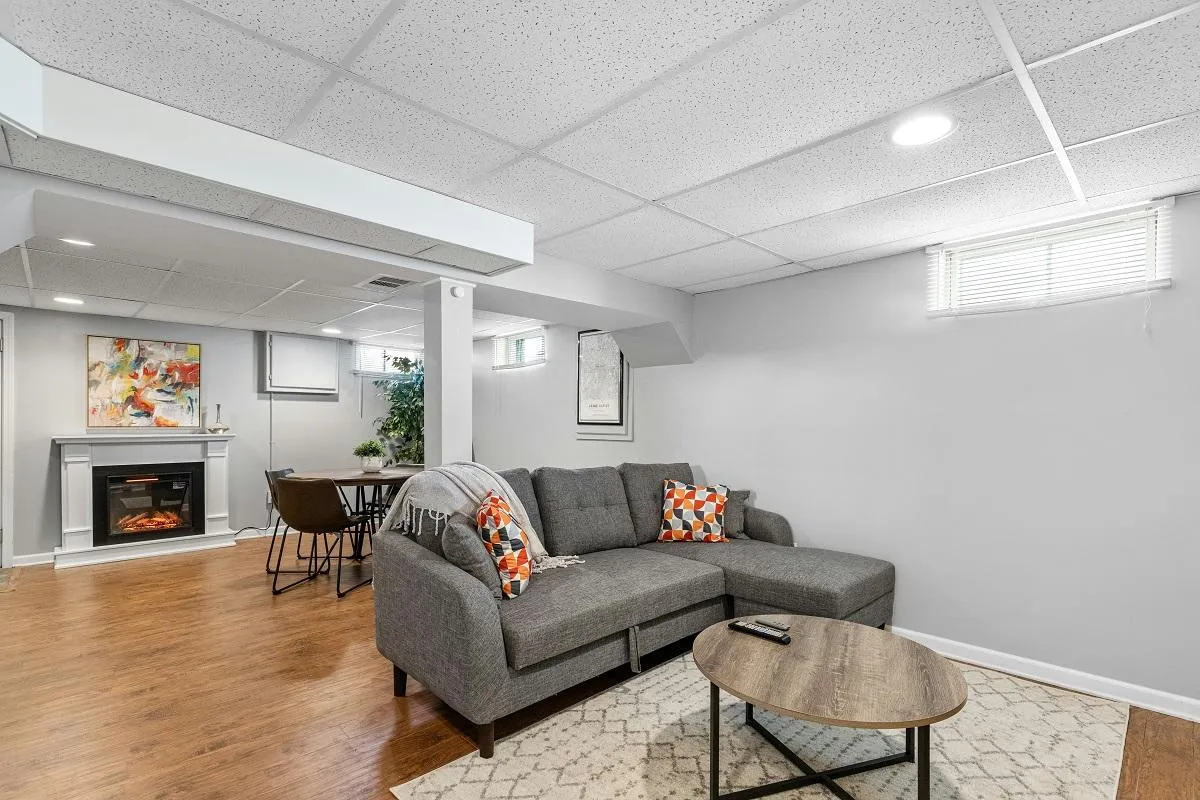
Basement Remodel Cost by Project Type: Family Room, Office, Guest Suite, or Rental Space?
Key Takeaways:
- Project type is the #1 cost driver in a basement remodel — a family room and a rental suite can occupy the same square footage but differ by $50,000 or more in total spend.
- Family rooms and home offices are the most budget-friendly options ($15,000–$35,000), while guest suites and rental units require significantly more investment due to plumbing, egress, and code requirements.
- Adding a bathroom is the single biggest cost spike in any basement project — especially in below-grade spaces where a sewage ejector pump may be needed.
- A legal basement rental unit ($60,000–$150,000+) is best treated as a financial investment: in many metro markets, rental income can recoup the full cost within five years.
- Permits are non-negotiable and chronically underbudgeted — always factor in $500–$2,000+ and build a 10–15% contingency buffer into any basement remodel budget.
Your basement is one of the most underutilized assets in your home — and in 2026, more homeowners than ever are doing something about it. Whether you’re envisioning a cozy family hangout spot, a dedicated home office, a guest suite that actually impresses visitors, or a rental unit that generates real income, the decision to remodel your basement is a smart one. But here’s the thing: what you build down there matters a lot more than most people realize — not just for your lifestyle, but for your budget.
The project type drives cost more than almost any other variable. A basic family room and a legal rental suite might both occupy 800 square feet, but they can differ by $50,000 or more in total spend. Understanding those differences upfront is the difference between a smooth renovation and a budget disaster halfway through demo.
Let’s break it all down by project type, anchored to the latest 2026 data.
The 2026 Cost Baseline: What You’re Working With
Before diving into project-specific numbers, it helps to know what the national averages look like right now.
According to Angi’s 2026 basement remodel cost data, the typical basement remodel runs between $30 and $75 per square foot, with high-end builds featuring luxury finishes surpassing $120 per square foot. In total dollar terms, most homeowners land somewhere between $3,250 on the low end and $57,000 on the high end, with an average project coming in around $22,884.
Separately, HomeGuide’s 2026 pricing data puts the per-square-foot range at $25 to $65, with a total project average of $12,500 to $37,500 — a slightly more conservative estimate that reflects projects without major plumbing additions or premium material upgrades.
Taken together, these two datasets paint a clear picture: a typical basement remodel lands somewhere in the $20,000–$40,000 range for standard work, with significant upside once you start adding bathrooms, kitchenettes, or separate entrances.
For a deeper dive into what drives those numbers across all project categories — including per-square-foot breakdowns, regional cost variations, and permit costs — the complete guide to basement remodel costs in 2026 is worth bookmarking before you get contractor quotes.
Now, let’s get specific.
Family Room: The Most Popular Starting Point
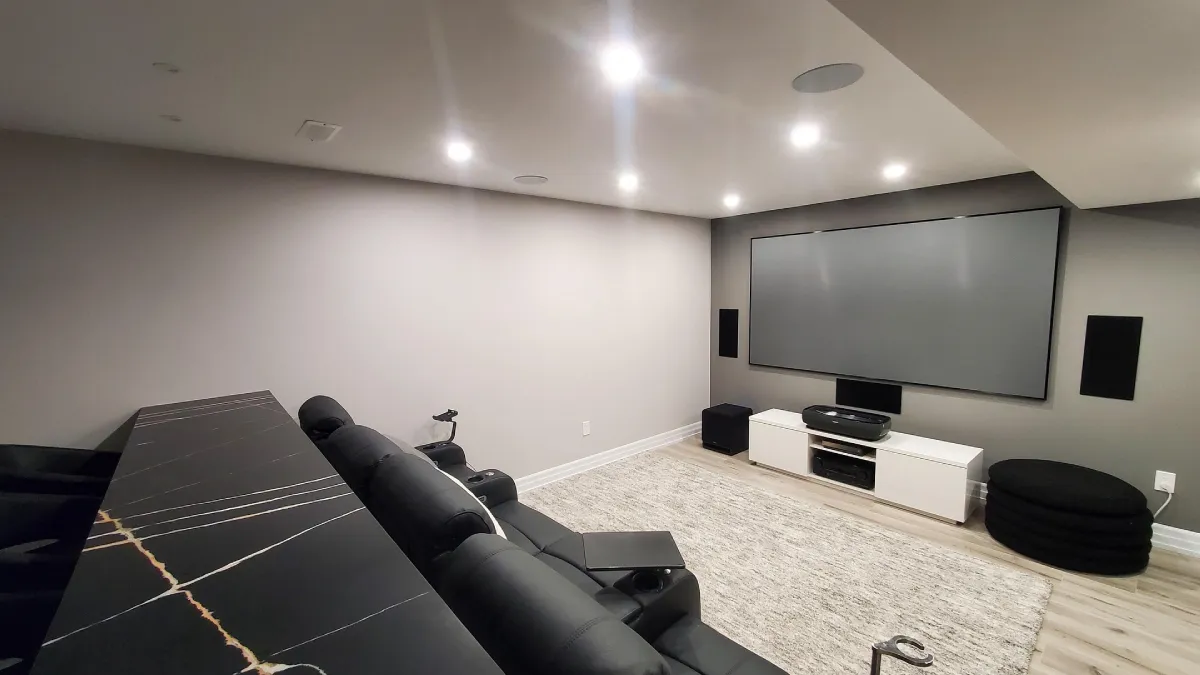
The family room or recreation room is consistently the most common basement remodel in America — and for good reason. It’s the most forgiving project type, with the fewest structural or code complications. You’re generally talking about framing, drywall, flooring, lighting, and maybe a wet bar or entertainment nook.
For a standard family room build, you’re typically looking at $10,000 to $27,000 for a 500–900 square foot space, depending on finish level. Keep the bar dry and the layout open, and you’ll stay on the lower end. Add a half bath or a built-in bar with plumbing, and you’ll push toward the higher range quickly.
What keeps costs manageable here is the lack of complex plumbing runs and the absence of egress window requirements (since it’s not a sleeping space). That said, don’t skip the HVAC — a poorly ventilated basement family room is a mold liability waiting to happen, and proper ductwork or mini-split installation will add $2,000–$5,000 to the project.
Biggest cost driver: Flooring choice. LVP (luxury vinyl plank) is the smart move for basements — it handles moisture far better than hardwood and runs $3–$7 per square foot installed. Carpet is cheap upfront but carries long-term risk in below-grade spaces.
Rough budget range: $15,000–$35,000 for a mid-range finish.
Home Office: High Value, Lower Drama
The home office basement conversion has surged in popularity post-pandemic, and it remains one of the most budget-friendly project types in 2026. Why? Because a functional home office doesn’t require plumbing, typically uses a simpler layout, and prioritizes electrical and lighting over luxury finishes.
A well-built basement office should include dedicated circuits for electronics, adequate recessed lighting (basement light levels are notoriously poor), sound insulation in the ceiling if the space is below a busy living area, and ideally a hardwired ethernet connection.
Mid-range home office remodels generally run $15,000 to $35,000, depending on whether you’re adding a closet, a bathroom, or soundproofing. The soundproofing element is underrated — if you’re taking client calls or recording content, investing $2,000–$4,000 in acoustic insulation pays for itself in professional quality.
One thing to budget carefully: egress. If your office doubles as a place where a guest might sleep over, building codes in many municipalities will require an egress window — which runs $2,500 to $5,000 installed. Check your local requirements before finalizing the design.
Biggest cost driver: Electrical upgrades. Most unfinished basements have minimal circuits, and a proper home office needs dedicated 20-amp circuits for computers, monitors, and peripherals.
Rough budget range: $15,000–$30,000 for a clean, functional build.
Guest Suite: The Complexity Spike
Here’s where things get meaningfully more expensive. A guest suite — essentially a bedroom with an attached bathroom — triggers several cost categories that a family room or office doesn’t touch.
First, you’ll need an egress window or door. No bedroom can legally be a bedroom without proper emergency egress, full stop. Second, the bathroom requires plumbing rough-in, which is significantly more expensive in a basement than on an upper floor because you’re often working below the main drain line — meaning a sewage ejector pump ($600–$2,000) may be required.
Add a full bathroom to your basement build and you’re looking at an additional $6,000 to $15,000 just for that room, depending on tile selection, fixture quality, and whether the plumbing is a straightforward connection or requires significant rerouting.
A complete guest suite — bedroom, closet, full bathroom, small sitting area — typically runs $35,000 to $75,000 at a mid-to-high finish level. The wide range reflects bathroom size, fixture quality, and structural complexity.
The return on this investment is solid. Guest suites consistently rank among the highest-ROI basement projects at resale, particularly in markets where multi-generational living is common or where the suite could plausibly function as a short-term rental.
Biggest cost driver: Bathroom plumbing. If your basement floor sits below the sewer line, the ejector pump situation alone can add $3,000–$5,000 to an already expensive room.
Rough budget range: $35,000–$75,000+, depending on bathroom scope and finishes.
Rental Unit or ADU: The Biggest Investment — and the Biggest Upside
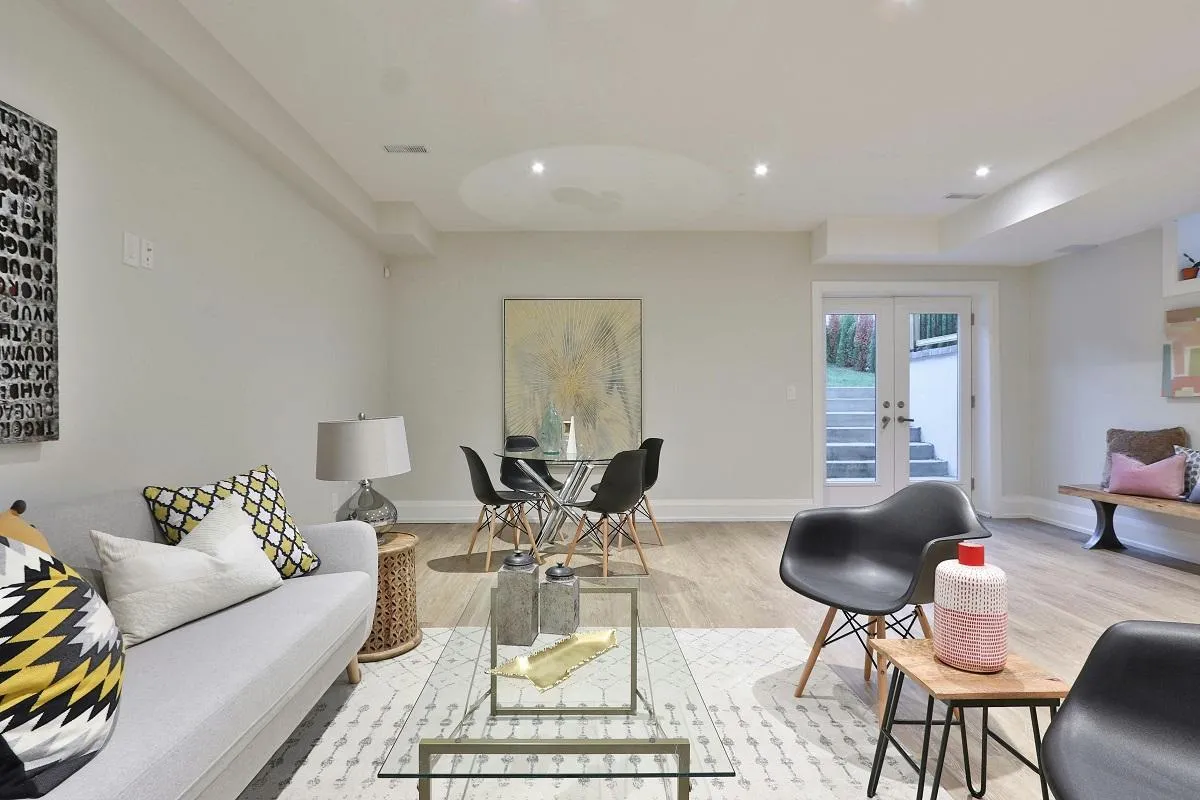
Converting a basement into a legal, rentable unit — sometimes called an Accessory Dwelling Unit (ADU) or in-law suite — is the most complex and expensive basement project type. It’s also the one with the clearest long-term financial return.
To rent a basement legally in most jurisdictions, you need: a separate or dedicated entrance, a full kitchen or kitchenette, a full bathroom, proper egress windows, smoke and CO detectors on every level, a certificate of occupancy, and compliance with all local zoning and rental ordinances. That’s a lot of boxes — and each one has a price tag.
Expect to spend $60,000 to $150,000+ for a fully legal, code-compliant basement rental unit. The lower end is realistic for a smaller space (400–600 sq ft) in a market with simpler permit requirements. The higher end applies to larger units, markets with stricter codes, or homes that require significant structural or mechanical work to make the conversion viable.
That said, the math can be compelling. In many metro markets, a finished basement apartment generates $1,200–$2,500 per month in rental income. At $1,500/month, a $90,000 investment pays for itself in five years — and continues generating income after that. Angi’s 2026 survey data notes that roughly 26% of homeowners planning basement work want to add a bathroom, and about 19% want to add a bedroom — both of which align strongly with the rental conversion goal.
Biggest cost driver: Separate entrance and kitchen. A dedicated exterior entrance can add $5,000–$20,000 depending on the foundation work required. A full kitchenette — cabinets, counters, appliances, plumbing — adds another $8,000–$20,000.
Rough budget range: $60,000–$150,000+ for a fully legal rental unit.
The Variable Nobody Talks About Enough: Permits
Across all four project types, permits are a non-negotiable line item that homeowners consistently underestimate. Most basement remodel permits run $500 to $2,000 depending on your municipality — and skipping them is a costly mistake that will surface at resale, refinancing, or in the event of an insurance claim.
For rental conversions specifically, the permit process can be significantly more involved, sometimes requiring separate inspections for electrical, plumbing, structural, and final occupancy. Budget $1,500–$3,000 for permits on complex projects and factor in 4–8 weeks for approval timelines in busy markets.
How to Decide Which Project Is Right for You
The honest answer is that the right basement project depends on three things working in alignment: what you actually need, what your space can support structurally, and what you can realistically afford.
A family room is low-risk and broadly livable. A home office delivers day-to-day value with a manageable budget. A guest suite is a meaningful upgrade that serves multiple purposes. A rental unit is a financial investment that requires treating it like one — with the due diligence, permitting, and professional execution that serious ROI demands.
Whatever direction you’re leaning, understanding the full cost picture before you commit is essential. Contractor quotes are just the starting point — the real number includes permits, finishes, contingency buffers (always add 10–15%), and any structural or moisture remediation your specific basement requires. The 2026 basement remodel cost breakdown by project type and square footage covers all of this in detail and is an excellent reference to bring to your first contractor conversation.
Do the homework upfront, build in your buffers, and that basement might just be the best investment you make in your home this decade.


Leave a Reply