
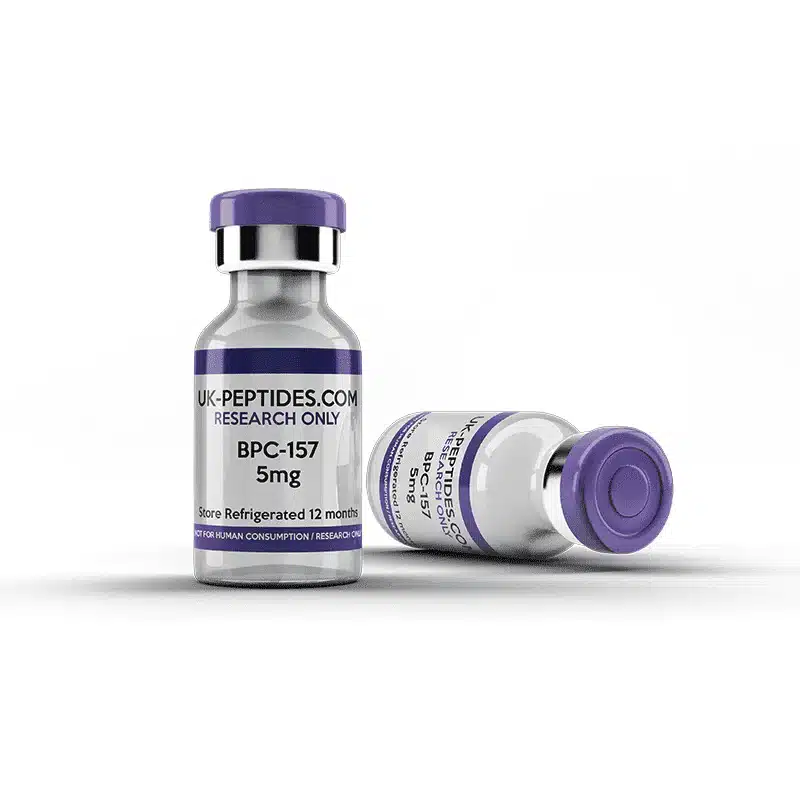
BPC 157 UK Peptides – Safe and Authentic Peptides for Research
BPC 157 has become a focal point in regenerative medicine and preclinical research due to its potential effects on tissue repair, wound healing, and cellular recovery. For laboratories and scientific investigators, access to authentic, research-grade peptides is critical to ensure reproducibility, validity, and meaningful statistical outcomes. bpc 157 uk peptides has emerged as a trusted source, providing BPC 157 with verified purity, consistent quality, and safety assurance for research applications.
Why Is BPC 157 a Key Peptide in Regenerative Research?
BPC 157, or Body Protection Compound 157, is derived from a naturally occurring gastric protein. Research studies in preclinical models demonstrate its potential to accelerate wound healing, support tendon and ligament recovery, and protect gastrointestinal tissues. Quantitative analyses consistently show improvements in tissue regeneration metrics, such as collagen deposition, tensile strength, and vascular growth, compared to untreated controls.
Statistical evaluation across multiple studies highlights significant effects in treated groups, emphasizing the peptide’s reproducible biological activity. These findings position BPC 157 as a central compound for research into tissue repair and recovery mechanisms.
How Does Safe, Research-Grade Quality Influence Experimental Outcomes?
High-quality BPC 157 is essential for generating reliable data. Contaminated or inconsistent peptides can introduce variability, compromise reproducibility, and distort results. UK Peptides provides formulations exceeding 95% purity, ensuring that observed outcomes are attributable to the peptide’s intrinsic properties.
Consistency in formulation allows researchers to minimize experimental noise. Statistical analyses such as ANOVA, t-tests, and regression models rely on consistent reagents to produce accurate effect size measurements and confidence intervals. Reliable peptides reduce uncontrolled variables, enhancing both reproducibility and statistical significance.
What Are the Main Applications of BPC 157 in Research?
Preclinical studies focus on a variety of tissue recovery applications, including:
Wound Healing: Quantitative wound closure measurements and histological analysis consistently show faster recovery in treated groups.
Musculoskeletal Repair: Collagen deposition, tensile strength, and structural organization improve in tendons and ligaments exposed to BPC 157.
Gastrointestinal Protection: Lesion reduction and enhanced mucosal regeneration are observed in treated specimens.
Angiogenesis: Increased capillary density and vascular growth support tissue repair processes.
These measurable effects allow researchers to generate statistically meaningful results, validating BPC 157’s utility in experimental settings.
Why Is Accurate Dosing Critical in Preclinical Studies?
Precise dosing is fundamental to reliable research outcomes. UK Peptides provides controlled BPC 157 formulations, enabling dose-response studies and longitudinal experimentation. Proper dosing reduces variability in experimental data and ensures consistent trends across multiple trials.
Dose standardization allows researchers to analyze biological responses quantitatively, including wound closure percentages, tensile strength improvements, and angiogenesis rates. Reliable dosing is essential for replicable findings and meaningful statistical interpretation.
How Does Storage and Handling Impact Peptide Integrity?
Even high-purity peptides degrade if improperly handled. Exposure to moisture, temperature fluctuations, or repeated freeze-thaw cycles can reduce bioactivity and introduce experimental variability. UK Peptides offers detailed storage instructions, typically recommending lyophilized storage at controlled temperatures to preserve potency.
Maintaining integrity ensures that experimental effects reflect BPC 157 activity rather than degradation products. Proper handling supports accurate dose-response relationships and reliable data collection over time.
What Role Do Biochemical and Histological Metrics Play in Evaluating BPC 157?
Quantitative assessments commonly include:
- Collagen density and synthesis rates
- Tensile strength measurements for musculoskeletal tissue
- Histological scoring of wound sites
- Inflammatory biomarker analysis
In treated groups, these metrics consistently outperform controls, providing statistically significant improvements in tissue repair. Standardized, authentic peptides are critical to ensure these differences are biologically meaningful rather than artifacts of material inconsistencies.
Why Is Purity Verification Important for Research Integrity?
Premium BPC 157 undergoes rigorous validation using high-performance liquid chromatography (HPLC) and mass spectrometry. This confirms sequence accuracy, high purity, and stability.
Purity verification is essential for reproducibility. When multiple laboratories use verified peptide sources, results are comparable and suitable for meta-analyses. Uniformity in reagents strengthens statistical reliability, enabling more robust conclusions regarding the peptide’s efficacy.
How Does BPC 157 Support Musculoskeletal Healing Studies?
Tendon and ligament research often evaluates collagen density, tensile strength, and histological organization. BPC 157-treated groups demonstrate measurable improvements, with statistically significant differences from controls.
Longitudinal assessments reveal accelerated recovery and improved tissue quality. Reproducible findings across multiple studies confirm the peptide’s role in musculoskeletal repair and support predictive modeling of tissue regeneration outcomes.
What Insights Do Angiogenesis Studies Provide?
BPC 157 enhances vascular growth, supporting tissue repair and regeneration. Experimental measures include capillary density, endothelial cell proliferation, and blood flow enhancement. Statistical analyses consistently show increased angiogenesis in treated groups, confirming the peptide’s potential as a facilitator of vascularization.
Reliable, research-grade BPC 157 ensures that observed effects are biological rather than artifacts of degraded or contaminated material.
Why Is Supplier Transparency Essential in Research?
Transparency in manufacturing allows researchers to understand peptide sequence, purity, and recommended handling procedures. UK Peptides provides detailed documentation, enabling experimental design with confidence.
Using verified sources ensures reproducibility across laboratories. Statistical models and comparative studies benefit from consistent materials, reducing variability and supporting robust conclusions.
How Does Statistical Reliability Improve With High-Quality Peptides?
Minimizing variability in reagents reduces experimental noise and strengthens statistical outcomes. Measured metrics such as wound closure rates, collagen deposition, or angiogenesis are more precise and interpretable.
Consistency in peptide quality enables reliable analysis through regression models, ANOVA, and repeated measures studies. This ensures high-confidence, reproducible findings suitable for peer-reviewed publication.
What Future Research Directions Are Enabled by Authentic BPC 157?
Ongoing research explores applications in:
- Neurological tissue recovery
- Gastrointestinal healing
- Chronic inflammation mitigation
- Multi-organ regenerative medicine
Authentic, research-grade BPC 157 supports longitudinal studies, multi-lab validation, and controlled experiments, ensuring statistically valid outcomes.
How Can Researchers Maximize Accuracy With BPC 157?
Accuracy is optimized by:
- Adhering to storage and handling recommendations
- Maintaining precise dosing protocols
- Standardizing experimental timing and methods
- Employing rigorous statistical evaluation
Reliable peptide quality reduces confounding variables, allowing clear attribution of observed effects to BPC 157.
What Makes UK Peptides a Preferred Source for Research Applications?
- Verified purity exceeding 95%
- Consistent, research-grade formulation
- Detailed documentation for experimental confidence
- Guidelines for proper storage and handling
- Flexibility for a range of research protocols
These features enhance reproducibility and strengthen confidence in experimental results.
How Does Reliable Supply Facilitate Scientific Progress?
Consistent access to authentic BPC 157 accelerates experimentation, reduces variability, and allows researchers to focus on biological outcomes. Multi-laboratory trials, dose-response studies, and longitudinal research are facilitated by high-quality materials, enabling statistically robust conclusions.
Why Is BPC 157 Considered a High-Impact Peptide?
BPC 157 has measurable effects on tissue repair, angiogenesis, and inflammation. Preclinical studies consistently demonstrate statistically significant improvements across multiple experimental endpoints, establishing its relevance in regenerative research.
Conclusion: How Does UK Peptides Support Safe and Reliable Research?
UK Peptides provides BPC 157 with verified purity, consistent quality, and clear handling guidance, ensuring that preclinical studies are reliable, reproducible, and statistically sound.
By minimizing variability, supporting accurate dosing, and enabling longitudinal and multi-laboratory studies, UK Peptides allows researchers to generate robust, data-driven insights into tissue regeneration, musculoskeletal recovery, gastrointestinal healing, and angiogenesis.
In research environments where reproducibility, precision, and statistical validity are essential, BPC 157 from UK Peptides offers a safe and authentic tool, empowering investigators to advance scientific knowledge in regenerative medicine and tissue repair.


Leave a Reply