
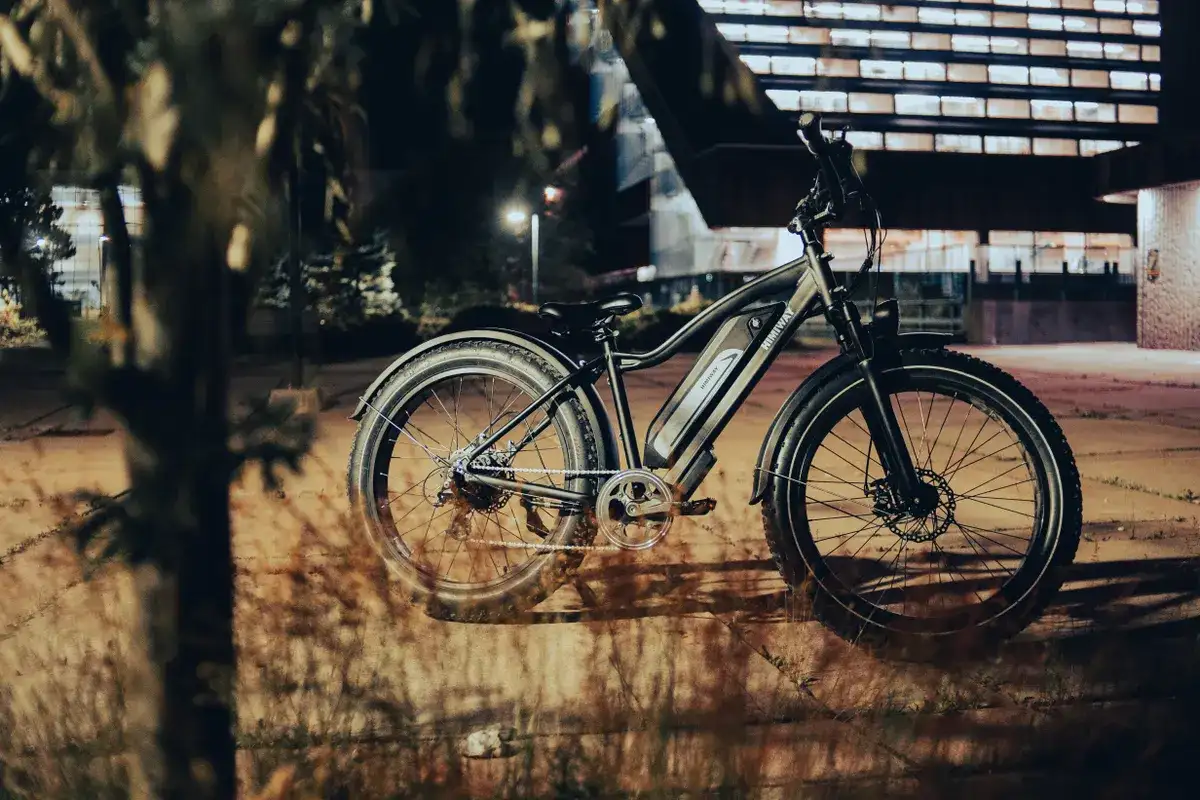
E-Bike New Technology in the Future 2026 and Beyond
E-bike technology in 2026 is becoming less about simply adding a bigger motor and battery and more about making the entire bicycle smarter, safer, more efficient, and easier to ride.
Some futuristic ideas—especially solid-state batteries and highly automated riding systems—still need years before they become affordable mainstream features. But other technologies, including torque sensors, automatic shifting, integrated motor-gearbox systems, connected displays, advanced battery management, and better electrical safety standards, are already available.
For riders, these developments matter because the best future e-bike may not necessarily have the biggest motor. It may be the bike that gives you more usable range, smoother assistance, less maintenance, better safety, and better information about the bike itself.
Here are the e-bike technologies I think are worth watching in 2026 and over the next several years.
1. Higher-Energy Batteries Without Simply Making Them Bigger
Battery development remains one of the most important areas of e-bike technology.
A typical modern e-bike might use a battery somewhere around 500–1,000 Wh. Increasing capacity is straightforward, but adding more cells also adds weight, cost, and physical size.
The long-term goal is therefore not just a bigger battery. It is more energy per kilogram and per liter of battery pack.
That could eventually mean:
- longer range from a battery of the same size;
- smaller batteries capable of today’s range;
- lighter long-range e-bikes;
- improved cycle life;
- faster charging; and
- improved thermal management.
For example, imagine two future battery packs:
| Battery | Capacity | Weight | Energy Density at Pack Level |
| Current Pack | 720 Wh | 4.0 kg | 180 Wh/kg |
| Future Pack | 900 Wh | 4.0 kg | 225 Wh/kg |
The second bike would carry 25% more energy without increasing battery weight.
That type of improvement is much more useful to me as a rider than simply attaching an enormous battery to the frame.
2. Solid-State Batteries: Promising, but Don’t Expect Them Everywhere Yet
Solid-state batteries receive a lot of attention because they could potentially provide higher energy density and improved safety compared with conventional liquid-electrolyte lithium-ion batteries.
However, I would be careful with claims that solid-state batteries have already transformed mainstream e-bikes in 2026.
They haven’t.
Commercialization is progressing in the broader battery industry, but cost, manufacturing scale, durability, and production yield remain important challenges. I would therefore view solid-state technology as a future e-bike development rather than something the average rider should specifically wait for today.
If the technology becomes economical at e-bike scale, the biggest benefits could be:
Higher energy density: A 700–800 Wh battery might eventually become substantially smaller and lighter.
Better safety characteristics: Solid electrolytes have the potential to reduce some of the risks associated with flammable liquid electrolytes, although “solid-state” should not automatically be interpreted as “impossible to catch fire.”
Faster charging: Certain future chemistries may tolerate higher charging rates.
For now, I would choose a proven, well-engineered lithium-ion battery over buying an e-bike purely because of speculative battery technology.
3. Smarter Battery Management Systems
One of the most useful battery improvements may actually be something riders rarely see: the Battery Management System (BMS).
Future BMS technology can become better at monitoring individual cell groups and analyzing:
- voltage;
- temperature;
- charging current;
- discharge current;
- battery cycles;
- state of charge;
- state of health; and
- abnormal cell behavior.
Instead of discovering that my battery has deteriorated because my normal 50-mile ride suddenly becomes a 30-mile ride, the bike could eventually tell me something like:
Battery health: 86% — estimated usable capacity: 674 Wh.
Predictive diagnostics could also identify an abnormal cell group or unusual temperature rise before the problem becomes serious.
For riders, that is far more useful than a display that only shows five battery bars.
4. Electrical Safety Will Become a Bigger Selling Point
As e-bikes become more powerful and batteries become larger, electrical-system safety becomes increasingly important.
In the United States, riders are already seeing much more attention given to standards such as UL 2849 for e-bike electrical systems and UL 2271 for light-electric-vehicle batteries. UL Solutions describes UL 2849 as covering e-bike electrical systems, while UL 2271 applies to batteries used in light electric vehicle applications.
This is an important distinction.
A large battery is not automatically a good battery.
When comparing future e-bikes, I would increasingly look for:
- recognized third-party safety certification;
- quality cells;
- properly matched chargers;
- temperature monitoring;
- robust BMS protection;
- water-resistant battery enclosures; and
- good connector design.
UL also specifically notes that charger compatibility is an important part of e-bike battery safety.
In other words, battery safety technology may ultimately matter more than another 100 Wh of capacity.
5. Torque Sensors Will Become More Common
One of the biggest differences between a basic e-bike and a refined e-bike is how naturally the motor responds to pedaling.
Older or inexpensive systems often depend primarily on cadence sensing. The system detects that the crank is rotating and turns on motor assistance.
A torque sensor goes further by measuring how hard I am actually pushing on the pedals.
Push lightly and the motor assists lightly.
Push harder while climbing and it delivers more assistance.
That creates a much more natural feeling.
This is already practical rather than futuristic technology. For example, Himiway uses torque-sensing technology on newer models such as the D5 2.0 series. The significance isn’t simply having another sensor—it is making a relatively powerful fat-tire e-bike easier to control smoothly.
I expect torque sensing to move progressively down-market until it becomes normal even on moderately priced commuter e-bikes.
6. Multiple Sensors Will Replace Simple PAS Logic
Torque sensing is only the beginning.
A future e-bike can potentially combine information from several sensors:
Torque + cadence + speed + gradient + motor temperature + battery condition
The controller can then determine how much assistance makes sense at that moment.
Imagine riding toward a hill.
A conventional system waits for me to press harder or manually change the PAS setting.
A more advanced system could detect increasing load and falling cadence and smoothly increase assistance while keeping the motor in an efficient operating range.
This is where “AI e-bike” terminology may eventually become relevant, although I would be skeptical of marketing claims that call every automatic algorithm artificial intelligence.
The useful part isn’t the AI label.
It’s whether the bike responds naturally without requiring constant button pressing.
7. Automatic Electronic Shifting Is Already Becoming Real
Automatic shifting sounds futuristic, but parts of this technology already exist.
Pinion’s Motor.Gearbox.Unit (MGU), for example, combines an e-bike motor and electronically controlled gearbox into a single compact drive unit. Depending on the version, the system provides 9 or 12 gears.
Its Smart. Shift technology can perform electronic shifting and supports semi-automatic and fully automatic functions. Pinion’s Auto. Shift can automatically select gears according to cadence.
That could fundamentally change everyday e-bike riding.
Instead of:
PAS setting → gear selection → pedal cadence → motor assistance
I could simply pedal.
The bicycle manages much of the drivetrain automatically.
For commuters, seniors, and riders who don’t want to think about gears, this could be a major improvement.
8. Motor + Gearbox Integration Could Reduce Maintenance
Today’s typical e-bike drivetrain contains several separate systems:
Motor → chain → cassette → derailleur → rear wheel
The exposed drivetrain works well, but powerful e-bike motors put substantial loads on chains, cassettes, and derailleur components.
Integrated motor-and-gearbox designs offer another approach.
The Pinion MGU, for example, combines the motor and gearbox and uses an enclosed transmission. Pinion states that its MGU gearbox service interval is an oil change after 10,000 km (about 6,200 miles).
Pair technology like this with a belt drive and a future commuter could potentially eliminate much of the traditional maintenance associated with:
- derailleur adjustment;
- frequent chain lubrication;
- dirty chains;
- cassette replacement; and
- exposed shifting components.
I don’t expect derailleurs to disappear. They are lightweight, inexpensive, efficient, and easy to repair.
But enclosed drivetrains make a lot of sense for premium commuter, touring, and all-weather e-bikes.
9. E-Bikes Will Get Better at Estimating Real Range
The classic e-bike range indicator is often frustrating.
It may tell me I have “40 miles remaining,” but then I encounter a strong headwind and several steep hills and suddenly have 22 miles.
Future range estimation should become much more dynamic.
A smarter system could calculate:
Estimated Range = Remaining Battery Energy / Predicted Energy Consumption per Mile
Suppose my battery has 500 Wh remaining.
On flat terrain, I am consuming:
500 Wh / 12 Wh per mile = 41.7 miles
But on a hilly route my consumption increases to 20 Wh/mile:
500 Wh / 20 Wh per mile = 25 miles
That’s a huge difference.
By combining elevation maps, riding history, rider input, temperature, wind conditions, and assistance level, future e-bikes should provide much more realistic range estimates.
For long-distance riders, I consider this one of the most useful smart-bike developments.
10. Radar and Rear-Approach Detection Will Improve Safety
Cars have spent years adding blind-spot monitoring and collision-warning technology.
Some of that technology is now becoming small and efficient enough for bicycles.
Rear-facing radar can identify vehicles approaching from behind and provide visual or audible warnings. Future systems could integrate this directly into the e-bike display.
I can imagine a display showing:
Vehicle approaching — 45 m
followed by:
Vehicle approaching rapidly — 20 m
The bike could simultaneously increase the brightness or flashing pattern of its rear light.
This is particularly useful on Class 3 commuter e-bikes, where riders spend significant time sharing roads with cars.
11. Better Anti-Theft Technology Will Be Built Into the Bike
A 2,000–5,000 e-bike is an attractive theft target, so I expect anti-theft technology to become much more deeply integrated.
Future premium bikes will increasingly combine:
- GPS or network-based tracking;
- smartphone unlocking;
- motor immobilization;
- movement alarms;
- geofencing;
- removable-battery authentication; and
- owner-linked electronic components.
The key improvement will be integration.
An external tracker can tell me where my stolen bike went. A deeply integrated security system could potentially make the motor system unusable to the thief at the same time.
Physical locks will still matter. Electronics should be treated as an additional layer of security, not a replacement for a quality lock.
12. Displays Will Become E-Bike Control Centers
The small monochrome display is gradually evolving into a complete vehicle interface.
A modern color display can already show considerably more than speed and battery percentage.
Himiway’s D5 2.0 20″, for example, illustrates this direction with a 3.5-inch color display and Bluetooth connectivity alongside its torque-sensing system.
Over the next few years, I expect more displays to combine:
Navigation + range prediction + battery health + ride data + error diagnostics + phone connectivity + security
That last feature—diagnostics—is particularly interesting.
Instead of seeing an unexplained error code, I would like the bike to say:
Rear wheel speed sensor signal lost. Check sensor alignment and connector.
That would make e-bikes considerably easier for owners to maintain.
13. Software Updates Will Become More Important
The mechanical bicycle traditionally doesn’t change after you buy it.
A connected e-bike can.
Firmware updates can potentially improve:
- motor response;
- battery estimation;
- shifting behavior;
- display functions;
- connectivity;
- diagnostics; and
- security.
We can already see this software-driven approach in modern drivetrain systems. Pinion, for example, has introduced automatic shifting functionality through its Smart.Shift software ecosystem.
This also introduces a new buying question:
How long will the manufacturer support the software?
In the future, I would consider software support, replacement parts, and app longevity alongside traditional specifications such as motor torque and battery capacity.
14. Regenerative Braking Will Improve—but It Has Limits
Regenerative braking is often presented as a way to dramatically increase e-bike range.
In reality, its usefulness depends heavily on motor architecture and riding conditions.
Hub motors capable of regeneration can recover some energy when slowing down or descending. But bicycles are lightweight compared with electric cars, and most rides simply don’t contain enough recoverable kinetic and gravitational energy to recharge a large portion of the battery.
So I wouldn’t expect:
40-mile ride → regenerative braking → 15 free extra miles
under normal riding conditions.
Regeneration is more interesting for reducing brake wear, controlling long descents, and recovering a modest amount of otherwise wasted energy.
It may become more common, particularly on heavy cargo bikes and certain direct-drive systems, but it won’t eliminate charging.
15. Future E-Bikes Will Focus More on Efficiency Than Raw Power
For several years, the easiest way to market an e-bike has been with large numbers:
750W. 1,000W. 1,500W.
But bigger numbers do not automatically produce a better bicycle.
A more efficient future e-bike could achieve better real-world performance by combining:
- an efficient motor;
- torque sensing;
- optimized gearing;
- better tires;
- lower drivetrain losses;
- smarter power delivery; and
- improved battery cells.
For example:
720 Wh / 20 Wh per mile = 36 miles
Improve system efficiency to 14 Wh/mile:
720 Wh / 14 Wh per mile = 51.4 miles
That’s approximately 15 additional miles from the same battery capacity.
This is why efficiency improvements can sometimes matter more than installing a larger battery.
What E-Bike Technology Should I Actually Pay For in 2026?
If I were buying an e-bike today, I wouldn’t postpone the purchase waiting for solid-state batteries, AI-controlled suspension, or some revolutionary motor that might arrive several years from now.
I’d focus on technology that provides a measurable benefit right now.
| Technology | Useful in 2026? | My View |
| Torque sensor | Yes | Major improvement in ride quality |
| 700–1,000 Wh battery | Yes | Excellent for longer-distance riding |
| Quality BMS | Yes | Important for reliability and safety |
| Recognized electrical safety certification | Yes | Worth prioritizing |
| Color/Bluetooth display | Yes | Useful, but not essential |
| GPS/connected anti-theft | Yes | Valuable on expensive bikes |
| Automatic shifting | Yes, but premium | Great convenience, still relatively expensive |
| Motor + gearbox unit | Yes, but premium | Very interesting for low-maintenance bikes |
| Radar detection | Useful for road riders | More valuable for frequent commuters |
| Regenerative braking | Situation-dependent | Don’t buy a bike solely for extra range |
| Solid-state battery | Not mainstream yet | Promising future technology |
| “AI-powered” marketing | Depends | Look at what the system actually does |
What This Means for Brands Such as Himiway
For brands such as Himiway, the next technological step doesn’t necessarily need to be a dramatically more powerful motor.
Products such as the Himiway D5 2.0 series already show the direction of practical development: large batteries, torque sensing, connected color displays, fat tires, suspension, and an emphasis on usable long-distance capability.
The next logical improvements for this type of e-bike would be even more accurate range prediction, deeper battery-health information, stronger integrated anti-theft features, better diagnostic software, lighter battery packs, and more sophisticated sensor-based motor control.
Those improvements could be especially meaningful on long-range fat-tire bikes because reducing energy consumption by even 10–15% can translate into noticeable additional riding distance.


Leave a Reply