
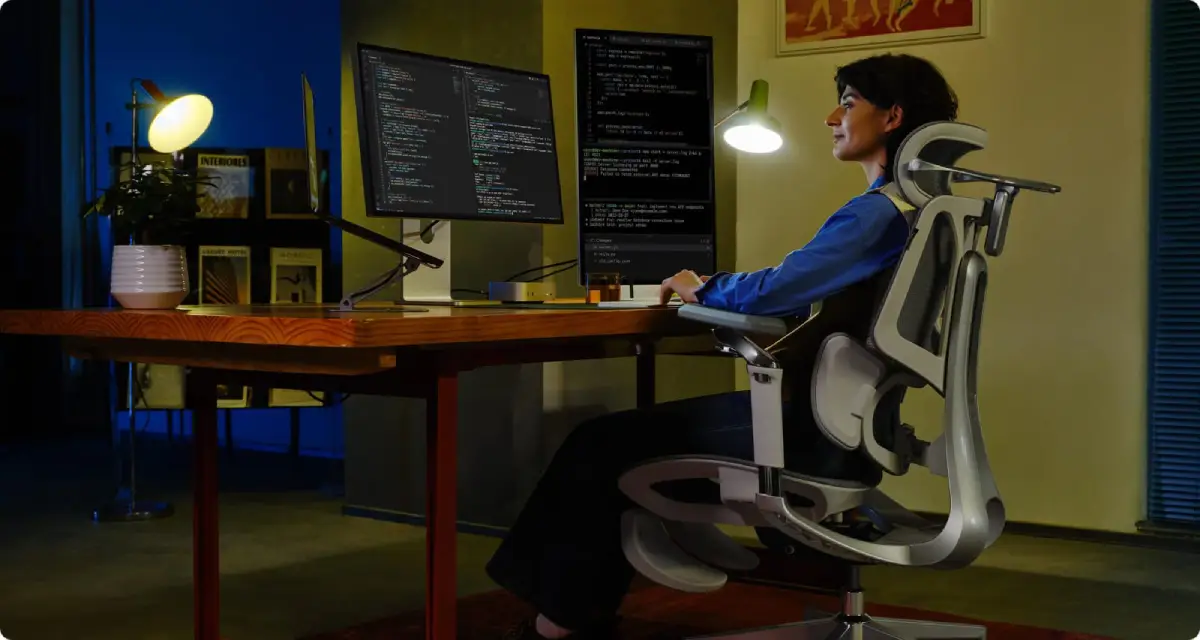
HBADA E3 Pro 2026: Best Ergonomic Chair Under $500
If your chair feels great the first hour only to become an issue by lunch time, you are not alone. Those who are remote workers, developers, designers, gamers, finance professionals and content creators spend so long sitting that they notice every weak point of a basic office chair. Lack of neck support, a dull backrest, fixed armrests or an unsupportive mesh can stealthily change your productive day into a lethargic one. This is also why the HBADA E3 Pro 2026 Edition is catching buzz as a good budget ergonomic chair under $500. Designed for those who require professional-grade support without crossing into the territory of brands like Herman Miller, Steelcase, etc. The E3 Pro 2026 has a patented three-zone lumbar system, sophisticated headrest, extensive armrest movement, breathable CloudMesh and deep adjustability but is designed to be more affordable than premium comfort.
Why the HBADA E3 Pro 2026 Stands Out
With so many office chairs on the market, and most making claims of “ergonomic comfort,” So the real issue here is this: does the chair you sit on adapt to your body or does your body have to adapt to the chair?
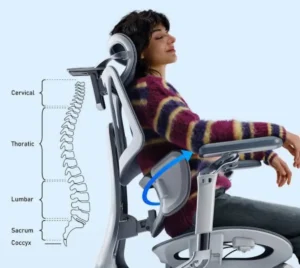
So the HBADA E3 Pro 2026 seat is centered around active adjustment. While many brands may give you a rigid lumbar pad and call it support, theHBADA E3 Pro 2026 uses an elastic three-zone lumbar system that spans from L1 to L5 of your lower back. This matters to someone who transitions between typing, leaning forward, video calls, gaming and laid-back reading. You are not stuck in one position all day, so neither should your chair be.
Positioning the E3 Pro 2026 as a mid to high-end ergonomic chair,HBADA’s motto is : “Affordable professional-grade ergonomics”. This makes it appealing for folks who want premium ergonomic seats but do not desire to pay effectively over $1,000.
Three-Zone Elastic Lumbar Support
It is the three-zone elastic lumbar support. HBADA claims it has created the world’s first and patented 3-zone elastic lumbar system, designed to accommodate L1-L5 movement naturally.
That means in real life the chair is not only forceing contact at one point in your lower-back. In other words, it attempts to evenly support the lower back while tracking minute posture changes. System with 5° dynamic tracking complete, 28mm lifting, 15mm depth plus and finally gliding sacral support of at around 17mm. These are somewhat technical, but the upside is very clear: better contact and a better fit and fewer instances of feeling like you need to keep adjusting yourself during extended periods of work.
4D Dual-Axis Headrest for Head and Neck Positioning
An ergonomic chair should not stop at the lower back. People who use laptops, multiple monitors, editing timelines, or gaming setups often need better head and neck positioning during the day.
The HBADA E3 Pro 2026 includes a 4D dual-axis adjustable headrest. According to the product specifications, the headrest offers 70° frame rotation, 70° axis rotation, 1.57″/4cm up-and-down adjustment, and 2.76″/7cm forward-and-backward adjustment.
This gives users more control over headrest placement while working upright, reading, or reclining during short breaks. Compared with a basic fixed headrest, the adjustable design helps the chair better match different sitting positions throughout the day.
720° Omni-Mechanical Armrests
Armrests are one of those things no one cares about until it starts annoying them. Fixed armrests are just that: fixed, and they can be too low, high, wide or far from the desk. The HBADA E3 Pro 2026 has an overall pan and tilt system, to solve this with its 720° Omni-Mechanical Arm design, with a dual-axis rotation at each of its two axes (360° + 360°).
This is helpful for contemporary desk builds. Type at a keyboard, point with a mouse or draw on a tablet, hold the controller in your hand but then sit back over it all with a laptop. The armrests can be adjusted based on the position instead of forcing your shoulders and wrists to one angle.
CloudMesh Technology for Long Sitting Hours
Even a chair that gets all the adjustments right can feel uncomfortably hot when the seat material starts heating up or loses some of its tension, say FHA. Elasticity, pressure redistribution and long-term support: CloudMesh Technology by Hbada. It even claims to give the CloudMesh 83% added elasticity, 21.5% improved pressure distribution and a 56% lower dimensional attenuation rate over other brands.
This translates to the mesh being inherently supportive without becoming rigid. It also is meant to keep its shape longer than flimsy mesh materials. Breathable mesh gives home-office and gaming users a big edge on foam seats which trap heat in warm rooms.
Recline, Chassis, and Fit Adjustments
140° wide angle recline w/ a 4-position lock. This means straight up for focus work, leaning back more upright for reading, and leaning back deeper through when taking a little reset away from it.
The Gravity-Sensing Chassis responds with adjustable resistance based on the weight of the user, making reclining more even. The HBADA includes 60mm backrest height adjustment and 60mm seat depth to adapt to different body types.
HBADA E3 Pro 2026 vs HBADA X7
Introduced in the HBADA lineup is their tech-forward hero product — the X7 Smart Ergonomic Chair. It revolves around AI smart lumbar tracking and active comfort features, which will offer a more advanced smart-chair experience. Should you desire a more futuristic-feeling chair and have the budget to go along with it, the HBADA X7 is the premium alternative.
However, the HBADA E3 Pro 2026 is a much stronger value play for many buyers looking for the best ergonomic chair under $500. It zeroes in on the fundamental stuff that people actually experience every day: lumbar support, neck comfort, arm support, breathable mesh all over your body, recline control, and adjustability.
A High-Value Alternative to Herman Miller and Steelcase
Herman Miller and Steelcase have good names for themselves, but their signature models are often priced much higher. While other offerings, such as the HBADA E3 Pro 2026, focus on emphasising great ergonomic function at a lower price.
This is where things get interesting for research-driven buyers of the E3 Pro. You are not purchasing a cheap mesh back office chair. You’re receiving a chair with Multi-Zone Lumbar Mechanics, 4D Dual-Axis Headrest, 720° Armrests, Adjustable Seat Depth, Adjustable Back Height and CloudMesh Support.
Who Should Buy the HBADA E3 Pro 2026?
For someone aged 25–40 who sits at a desk much of the day, the HBADA E3 Pro 2026 is an intelligent move. It can be beneficial to remote employees, programmers, designers, video editors, streamers, finance workers and productivity enthusiasts home office users.
Add These Adjustable Stands to Your Cart if You’re Into Aesthetics Fans of serious desk setups will undoubtedly want something to neaten up their desks, too; here are some multipliers. The chair presents a modern appearance, which works well in clean home offices, gaming stations and minimalist work spaces.
Final Verdict
One of the stronger ergonomic office chairs under $500, the HBADA E3 Pro 2026 Edition focuses on the features that matter most for daily sitting comfort. The chair is not just a one trick pony as the three-zone elastic lumbar support is the main attraction. The bi-axial headrest, 720° armrests, CloudMesh seat,140°Reclining Angle, gravity-sensing chassis and fit adjustment will bring you a more complete sitting experience.
HBADA has created a chair that seems totally relevant for 2026, giving buyers professional-grade ergonomics at buyer-friendly pricing. The X7 is still the smart flagship, but perhaps for day-to-day buyers who will be glad to have premium support without premium-brand pricing, the E3 Pro 2026 is better all around.


Leave a Reply