
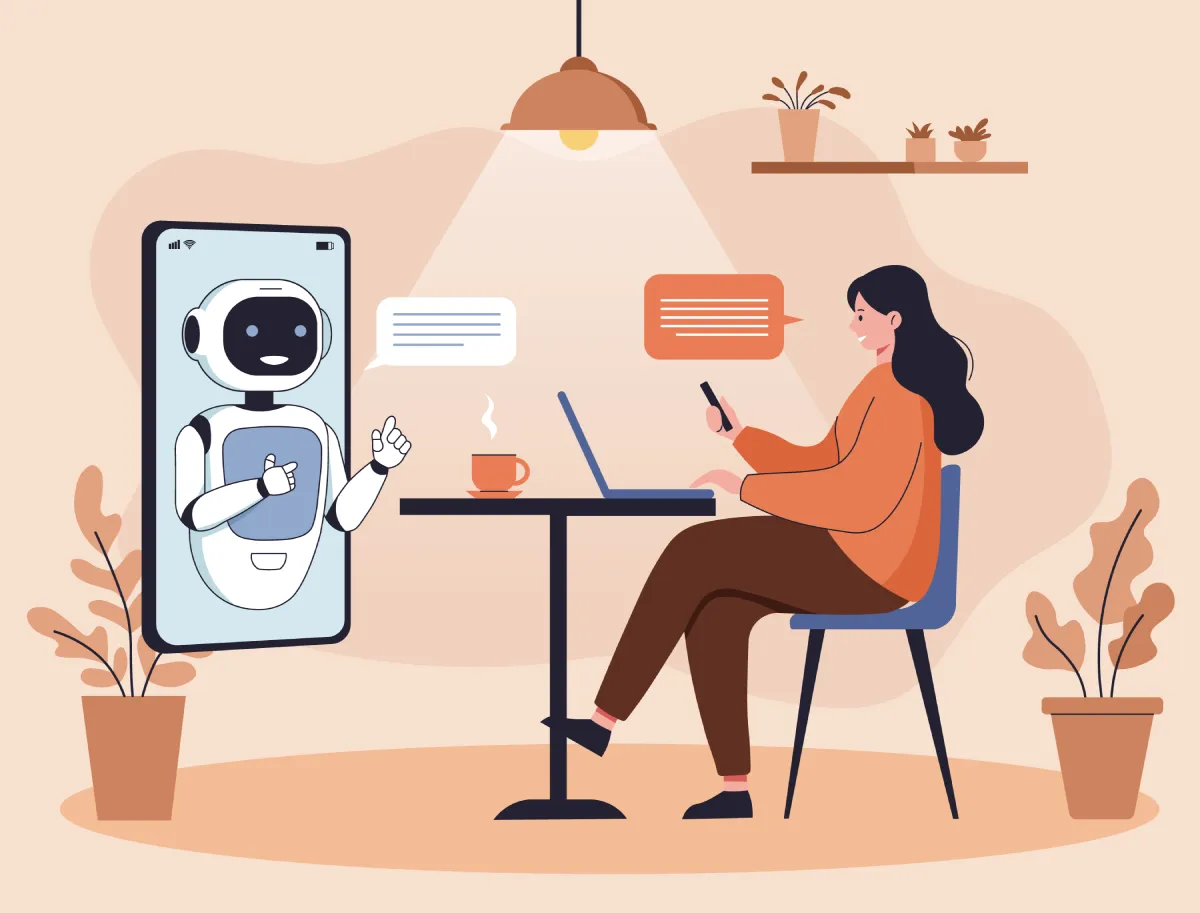
How AI Workspaces and Autonomous Agents Are Actually Changing the Way We Work Online
For a long time, working on the web has meant juggling tools. You open one tab to research, another to write, a third to design something, and maybe a fourth to organize everything. It works—but it’s messy, slow, and mentally draining.
That’s starting to change in a big way.
The rise of the AI Workspace, combined with Autonomous AI Agents, is reshaping how modern workflows operate. Instead of switching between tools and manually pushing tasks forward, we’re moving toward systems that can actually handle the work for us—end to end.
And for anyone who values productivity and efficiency, this shift is hard to ignore.
From Tool Stacks to an AI Workspace
Let’s start with the core idea: an AI Workspace.
Think of it as an all-in-one workspace where everything you need—writing, research, automation, presentation creation—lives in one place. Instead of building your own stack of disconnected apps, the platform itself becomes your working environment.
Traditionally, even a simple task like writing a blog post might involve:
- Googling for research
- Drafting in a document editor
- Using another tool for editing or rewriting
- Creating visuals somewhere else
- Manually putting everything together
It’s not just inefficient—it constantly breaks your focus.
An AI workspace removes that fragmentation. Platforms like HIX.AI are designed to centralize these tasks so you can go from idea to output without jumping between tools. Everything flows inside one system, which makes a noticeable difference in speed and mental clarity.
Autonomous AI Agents: Not Just Assistants Anymore
We’ve all used AI assistants that respond to prompts. But Autonomous AI Agents take things further.
Instead of waiting for step-by-step instructions, these agents can take a goal and figure out how to complete it on their own.
This is where the idea of an AI Super Agent comes in.
Rather than saying:
“Write me an outline”
You can say:
“Create a full content package for this topic”
And the system can:
- Research the topic
- Build a structured outline
- Write the content
- Optimize it
- Turn it into other formats (like slides or summaries)
This is real AI Task Automation—not just generating text, but actually executing a workflow.
You’re no longer micromanaging the process. You’re setting the direction and letting the system handle the details.
Why Mixture-of-Agents (MoA) Matters
Behind the scenes, one of the most interesting developments is the Mixture-of-Agents (MoA) model.
Instead of relying on a single AI model to do everything, MoA uses multiple specialized agents working together. Each one is good at a specific type of task.
It’s a bit like having a small digital team:
- One agent focuses on research
- Another handles writing
- Another refines structure or clarity
- Another deals with formatting or output
These agents collaborate, which leads to better results overall.
The benefit is simple:
- More accurate outputs
- Better handling of complex tasks
- Higher quality across multi-step workflows
This is one of the reasons modern AI systems feel significantly more capable than earlier tools—they’re not working alone.
The End of Constant Context Switching
One of the biggest productivity killers in digital work is context switching. Every time you move between tools, your focus resets slightly.
Over time, that adds up.
This is where all-in-one workspace platforms stand out. By keeping everything in one place, they let you stay in flow.
For example, inside a single AI workspace, you can:
- Write an article
- Instantly convert it into a presentation
- Edit and refine it
- Export or share it
Tools like HIX.AI Slides make this especially practical. Instead of rebuilding content manually, you can transform it into slides in seconds—without leaving the environment.
That kind of continuity is what makes these systems feel genuinely efficient, not just “AI-powered.”
AI Task Automation That Actually Feels Smart
Automation isn’t new. But older automation systems were rigid—you had to define every step in advance.
Modern AI Task Automation is different.
Because it’s powered by intelligent agents, it can:
- Adjust based on context
- Handle unexpected inputs
- Make decisions mid-process
That means workflows don’t have to be perfectly mapped out beforehand. The system can figure things out as it goes.
In practical terms:
- Marketers can generate and adapt campaigns faster
- Developers can automate documentation and repetitive tasks
- Content creators can scale output without burning out
It’s less about replacing work and more about removing friction.
What This Looks Like in Real Workflows
This shift isn’t theoretical—it’s already showing up in how people work.
Content Creation
Writers can go from idea to finished article (and even repurpose it into slides or summaries) in a fraction of the time.
Marketing
Campaign assets, SEO content, and research can be handled within a single system.
Business Operations
Routine tasks—reports, summaries, documentation—can be automated without complex scripting.
Education & Presentations
Materials can be created, structured, and visualized quickly, especially with tools like AI slide generators.
Across all of these, the pattern is consistent: fewer steps, fewer tools, faster output.
A Shift in How We Think About Work
What’s really changing here isn’t just the tools—it’s the way we approach work itself.
Instead of thinking:
“What tools do I need?”
The mindset becomes:
“What do I want to achieve?”
An AI Workspace paired with an Autonomous AI Agent bridges that gap. It takes your goal and translates it into execution.
That’s a big shift.
You move from being the person doing every step… to the person guiding the system that does.
Where This Is Heading
We’re still early in this transition, but the direction is clear.
AI workspaces will become:
- More personalized
- More autonomous
- More integrated with other systems
And AI Super Agents will get better at handling complex, multi-layered tasks without constant input.
The long-term outcome? Workflows that feel less like managing software and more like directing outcomes.
Final Thoughts
The combination of AI Workspace platforms, Autonomous AI Agents, and Mixture-of-Agents (MoA) systems is changing how modern web workflows function at a fundamental level.
By bringing everything into an all-in-one workspace and enabling real AI Task Automation, these tools remove many of the inefficiencies we’ve just accepted for years.
If you’re already comfortable with tech, the advantage is obvious: less time managing tools, more time focusing on results.
And that’s ultimately what this shift is all about.


Leave a Reply