
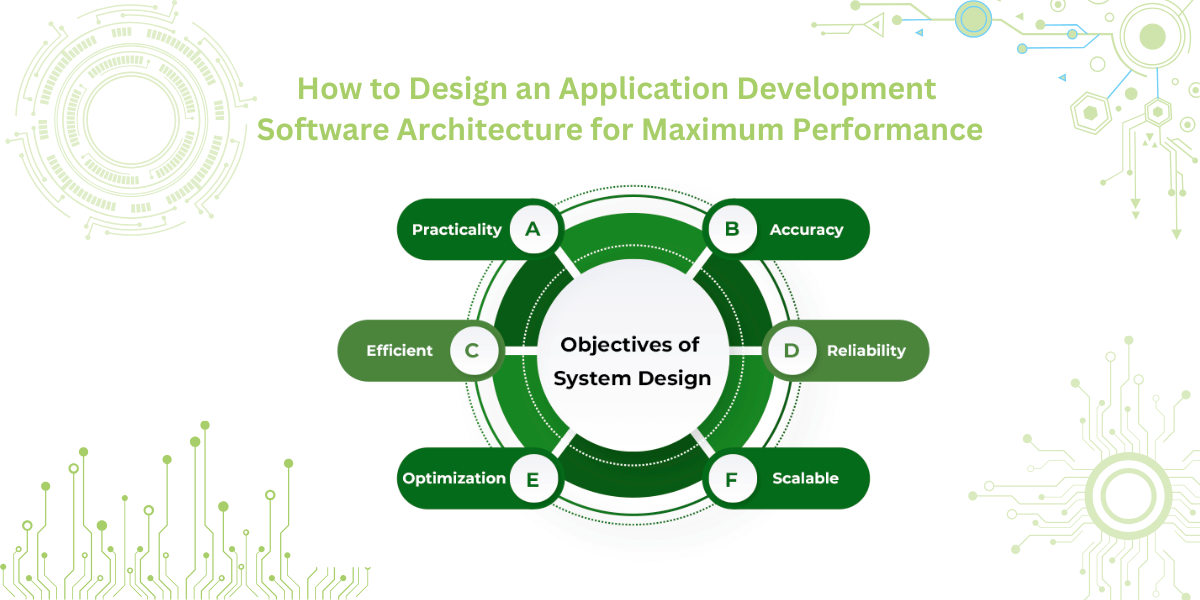
How to Design an Application Development Software Architecture for Maximum Performance
Almost 40% of users abandon a website if it takes more than 3 seconds to load. Did you know that? Performance is a critical element in web app development. It is paramount for user experience, retention, and business success. A well-designed architecture enables speed, scalability, and reliability.
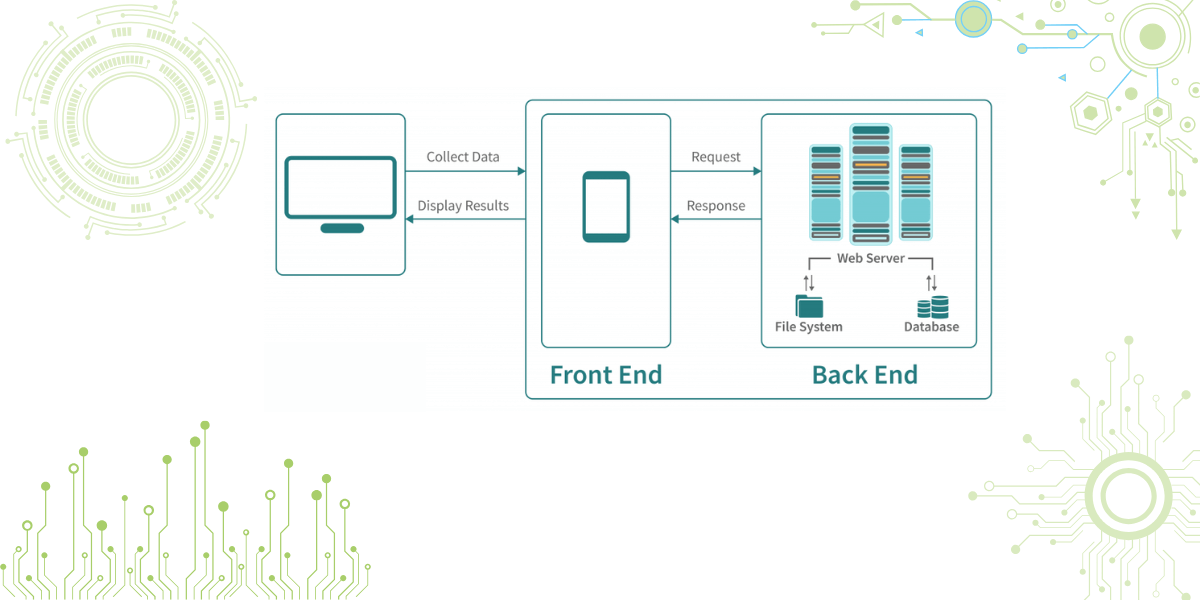
The web application architecture determines interaction models. It includes the frontend, backend, database, and APIs. A poorly constructed application will perform poorly. It can pose security threats. Scaling will also be difficult. Developers must understand the custom web application development process, performance expectations, user expectations, and business goals. This helps mitigate these issues.
I will walk you through the steps to build a high-performing web app. This includes frontend optimization, backend strategies, database efficiency, and scalability. Security best practices and monitoring tools will also be discussed. If you’re approaching this from a mobile angle—especially Android—it helps to pair architecture decisions with a clear learning path for tooling, Kotlin fundamentals, debugging, and performance basics; an app development guide is a solid place to start before you map those fundamentals onto your own app’s architecture and monitoring strategy. Understanding the app development process and choosing the right programming languages are essential for efficiency. We will carve out a strategy for performance testing as well.
You will also see how optimized UI components and powerful data management tools improve frontend performance. Ext JS offers these advantages. Let’s get started.
What is Web Application Architecture?
Web application development architecture defines how different components interact. It includes the frontend, backend, database, and APIs. A well-structured architecture increases performance, security, and scalability. Poor architecture leads to slow loading speeds, crashes, and security risks. Web app developers must focus on the development process to ensure efficiency and reliability.
Importance of Selecting a Robust Framework
Choosing the right application development software is crucial for a smooth app development journey. It provides ready-to-use components, scalability, and security features. This speeds up work for professionals, making code less rigorous and easier to optimize and maintain. To streamline development, many teams rely on the best app development software available today.
Why Ext JS is a Leading Choice
Ext JS enables cross-platform development. The platform is modernized and includes a rich library of UI components. It supports responsive design and manages sensitive information securely. A single codebase works for desktops and mobile app development, making it both fast and secure. Businesses looking to choose app development software often consider Ext JS due to its efficiency and comprehensive toolset.
Comparison with Angular and React
Angular is best for big apps with a clear structure but many moving parts. React is dynamic and flexible; however, it requires external libraries to function fully. For developers seeking a progressive JavaScript framework, Vue.js is another popular choice.
Ext JS has everything ready to use—no extra setup required. This reduces dependencies and speeds up the app development process. Teams using project management apps can integrate Ext JS seamlessly into their workflow. For efficiency, scalability, and performance, Ext JS remains the best choice.
Understanding Performance Requirements
Web application performance is critical. Users dislike slow apps. So do businesses. Developers must understand performance requirements. They should determine key metrics, user behavior, and business needs to ensure smooth experiences. You can use project management tools to manage data to build web applications.
Core Performance Metrics
Performance metrics track speed and efficiency. Key metrics for software development are:
- Page Load Time – Time taken to fully display a page.
- Time to First Byte (TTFB) – Time between server request and first byte sent.
- First Contentful Paint (FCP) – Time when first content appears.
- API Response Time – Speed at which APIs send and retrieve data.
- Throughput & Scalability – Ability to support many users without lag.
These metrics help analyze performance, predict issues before they escalate, and improve search engine optimization by ensuring fast loading times.
User Expectations
Users expect fast, smooth experiences. Research shows that 53% abandon a page if it takes over 3 seconds to load. They expect:
- Quick and seamless navigation.
- Minimal delays and loading times.
- Consistent performance across devices and web browsers.
Slow apps cause high bounce rates and lower engagement, leading to business apps underperforming in competitive markets.
Business Needs and Performance
A well-functioning application is crucial for businesses. It improves customer retention, revenue, and reputation. Businesses expect applications to:
- Handle high traffic without crashing.
- Guarantee data security.
- Scale as demand increases.
Choosing the Right Architecture
Choosing the correct architecture is vital. It determines performance capability, scalability, and security. The correct solution enables maximum effectiveness. It ensures efficiency and easy maintainability.
Key Factors to Consider
- Scalability – Can it support increased traffic?
- Performance – Does it achieve acceptable load time?
- Security – Is the data safe? Are attacks prevented?
- Flexibility – Can third-party tools be used?
- Maintenance – Is it manageable and upgradeable?
Popular Architecture Choices
- Monolithic Architecture – Straightforward but difficult to scale. Ideal for small applications.
- Microservices Architecture – Scalable and flexible. Suitable for larger applications but intricate.
- Serverless Architecture – Less expensive but provides minimal oversight. Ideal for varying workloads.
The right architecture ensures the web application functions quickly. It remains protected and scalable.
Optimizing Front-end Development
A fast front end is critical for sales. It enhances customer satisfaction and service delivery. Gone are the days of waiting for slow pages. High bounce rates are now a thing of the past. A good front-end design increases user retention.
- Minimize HTTP Requests – Reduce scripts, images, and stylesheets.
- Use Lazy Loading – Load images and content only when necessary.
- Optimize Images – Compress files and use the WebP format.
- Reduce JavaScript and CSS Files – Bundle and minify files to make them lighter.
- Implement Caching – Save frequently requested data to reduce server load.
Why Use Ext JS?
Ext JS shortens the development cycle. It provides ready-to-use UI components.
The rendering engine is strong. It positively affects performance.
Fast retrieval time, precise processing, and effective restriction management accelerate device performance.
A well-structured frontend improves performance. It enhances client happiness. It increases website traffic.
Effective Backend Strategies
A properly optimized backend is incredibly important for business apps and web solutions. It ensures efficient web application development using web technologies and a low code platform where applicable. A well-developed system handles requests effectively, minimizing response delays.
Async processing and queue systems reduce queueing delays. Cache strategies using Redis or Memcached decrease database requests, enhancing database management and increasing data retrieval speed. As a result, device performance improves.
RESTful or GraphQL application programming interfaces streamline frontend-backend communication. Optimizing and writing code while splitting modules improves maintainability. Following best practices like the SOLID principles ensures efficiency.
Containerization with Docker simplifies deployment, and orchestration tools like Kubernetes improve the ability to deploy apps efficiently. However, depending on specific performance requirements and infrastructure goals, exploring various Kubernetes alternatives can help teams find a more tailored fit for their unique deployment needs. The backend framework choice, such as Node.js, Django, or Spring Boot, impacts scalability. Understanding the top frameworks for mobile app development is essential for selecting the right technology stack to ensure performance and growth. A well-designed user interface enhances the overall user experience, and integration with a web browser ensures seamless interaction, supported by cloud-native storage for reliable data handling at scale.
Additionally, version control systems help manage code changes effectively, preventing conflicts. A properly optimized backend, combined with modern tools, guarantees smooth handling of large traffic volumes.
Scalability and Load Balancing
Scalability ensures a web application handles growing users. It does this without affecting performance of web development. Horizontal scaling adds more servers. Vertical scaling enhances server resources.
Load balancing distributes traffic evenly across servers. It prevents overload on any single server. Tools like Nginx, HAProxy, and AWS ELB assist in this process.
Auto-scaling on AWS, Azure, or Google Cloud adjusts resources automatically. This depends on traffic levels. CDNs reduce server load. They store and serve content from locations closer to users.
Effective scalability planning improves performance. It reduces or eliminates downtime. It guarantees a smooth user experience under increased traffic.
Database Design and Optimization
Effective databases maximize performance, reliability, and scalability. Speed is ensured by reducing execution time through indexing.
Redundancy is minimized through normalization. Denormalization optimizes read-heavy operations.
Execution time is reduced using EXPLAIN statements and optimized JOIN operations. Partitioning large datasets increases access speed.
Database load is reduced by caching frequently accessed data. Redis or Memcached helps in this process.
Scalability is improved by sharding databases across multiple servers.
Choosing between SQL (PostgreSQL, MySQL) and NoSQL (MongoDB, Cassandra) depends on the workload.
Efficient database connections are ensured through connection pooling.
Regular performance monitoring prevents bottlenecks. Tools like New Relic or pgAdmin help in this process.
Security Considerations
Security is at the core of web application architecture. Authentication and authorization mechanisms ensure data safety. OAuth, JWT, or RBAC are commonly used. Sensitive information is protected through encryption. TLS/SSL secures data transmission. Passwords are stored securely using bcrypt or Argon2 hashing algorithms.
APIs are secured using rate limiting and input validation. This reduces the risk of injection attacks. Additional security measures prevent XSS (Cross-Site Scripting) and CSRF (Cross-Site Request Forgery) attacks.
Security audits and penetration testing assess risks. Compliance with GDPR and OWASP Top 10 strengthens security. Web Application Firewalls (WAF) and Intrusion Detection Systems (IDS) prevent malicious attacks. A secured architecture builds trust. It guarantees information integrity.
Monitoring and Performance Testing
An optimized web application is maintained through continuous monitoring and performance testing.
Real-time monitoring is done using servers. Tools like Prometheus, Grafana, and Datadog provide insights. They track database performance and application uptime. ELK stacks like Elasticsearch, Logstash, and Kibana log errors. They help track anomalies.
Bottlenecks are detected through automated tracking. User interactions are analyzed. Slow points are identified using simulated traffic clusters. Tools like JMeter, LoadRunner, and k6 assist in this process.
Performance monitoring tools include RUM (Real User Monitoring). Testing and monitoring at regular intervals improve reliability. They enhance responsiveness. Alerting tools notify teams before failures occur. This prevents negative user impact.
Conclusion
Web application design is complex. It considers several factors. These include frontend design, backend logic, database interaction, and security. Backend optimizations provide the most value. Scalability enables the system to grow with demand.
Carefully planned database designs improve query speed. Encrypting sensitive information keeps data secure. By following these methods, friction in user experience is minimized. Performance testing helps resolve issues early. This prevents serious problems.
Decisions like clustering frameworks and architecture tools impact long-term performance. Frontend technologies like Ext JS enhance UI speed. They reduce response times. A well-structured web application ensures trustworthiness. It guarantees scalability and user satisfaction. A strong application leads to business success.
FAQs
Which architecture is better for performance: Monolithic or Microservices?
Microservices offer better scalability and flexibility, while monolithic is simpler but harder to scale.
What tools can help monitor and debug web application performance?
Prometheus, Grafana, Datadog, ELK Stack, New Relic, and JMeter help monitor and debug performance.
How can Ext JS optimize front-end performance?
Ext JS provides pre-built UI components, efficient rendering, and optimized data handling for speed.
Try Ext JS today and experience efficiency like never before!


Leave a Reply