

How Vibe Coders and Developers Can Launch Web Apps Faster with AI
A few years ago, launching a web product meant hiring developers, waiting weeks, and hoping the budget held. Today, a solo founder can open Claude Code, Codex or Cursor, describe an idea in just a prompt, and have a working landing page by lunch.
Building has become fast. Launching, however, is where many AI-built projects quietly stall. This guide walks through a simple path from idea to live product, and shows how to close the gap that most vibe coders discover too late.
The new way to build: vibe coding explained
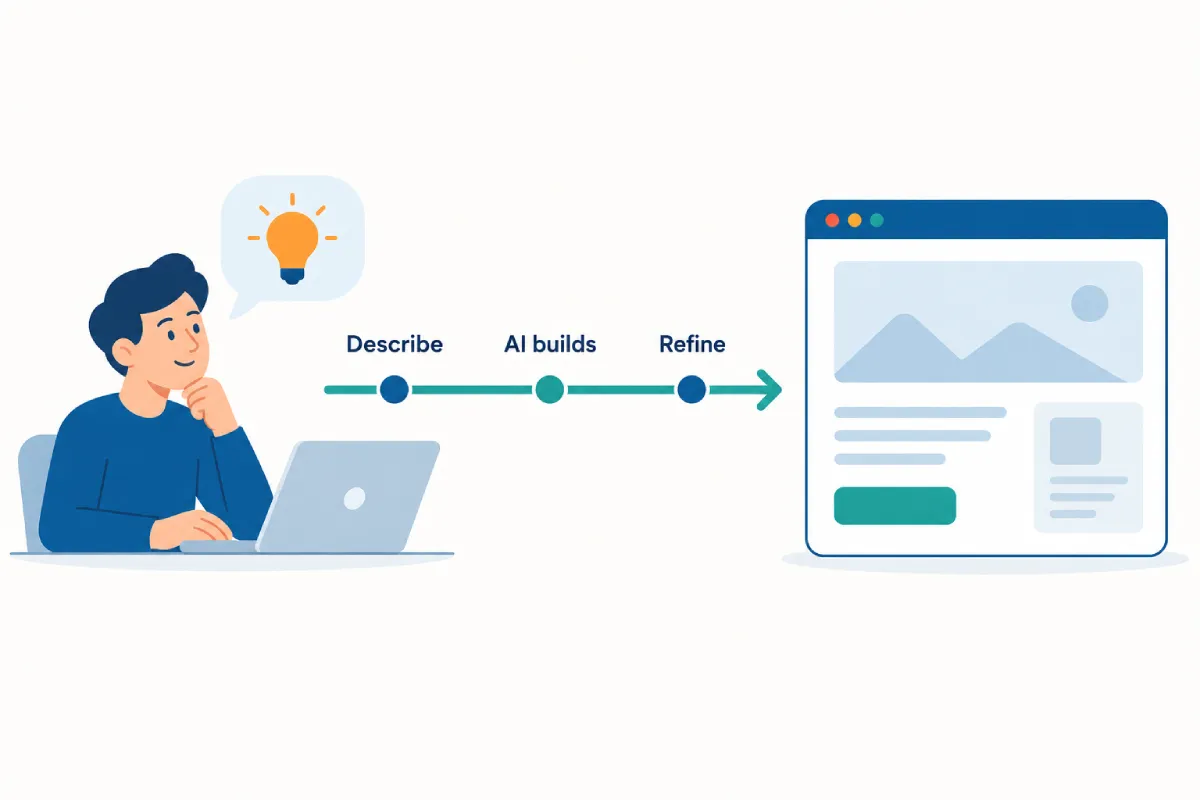
Vibe coding means describing what you want and letting an AI model write the code, then refining the result through conversation. You steer; the AI types. For solo founders and early-stage startups, the appeal is obvious: speed, low cost and no need for a large team.
This is no longer a niche habit. In its 2026 Developer Survey, Stack Overflow found that only 17.2% of respondents said they do not use AI tools, and among those using AI coding assistants or agents, 73% use them every day (Stack Overflow, 2026 Developer Survey).
The toolbox is broad. Terminal and editor-based agents such as Claude Code, Codex and Cursor help developers ship features and whole products quickly. App builders like Lovable, Bolt and Replit let people with little coding experience produce a working prototype from a single prompt. Whichever you pick, the first draft of your product is now cheap and fast.
Step one: validate before you build
The temptation with AI is to build everything at once. Resist it. The smartest use of these tools early on is testing whether anyone cares.
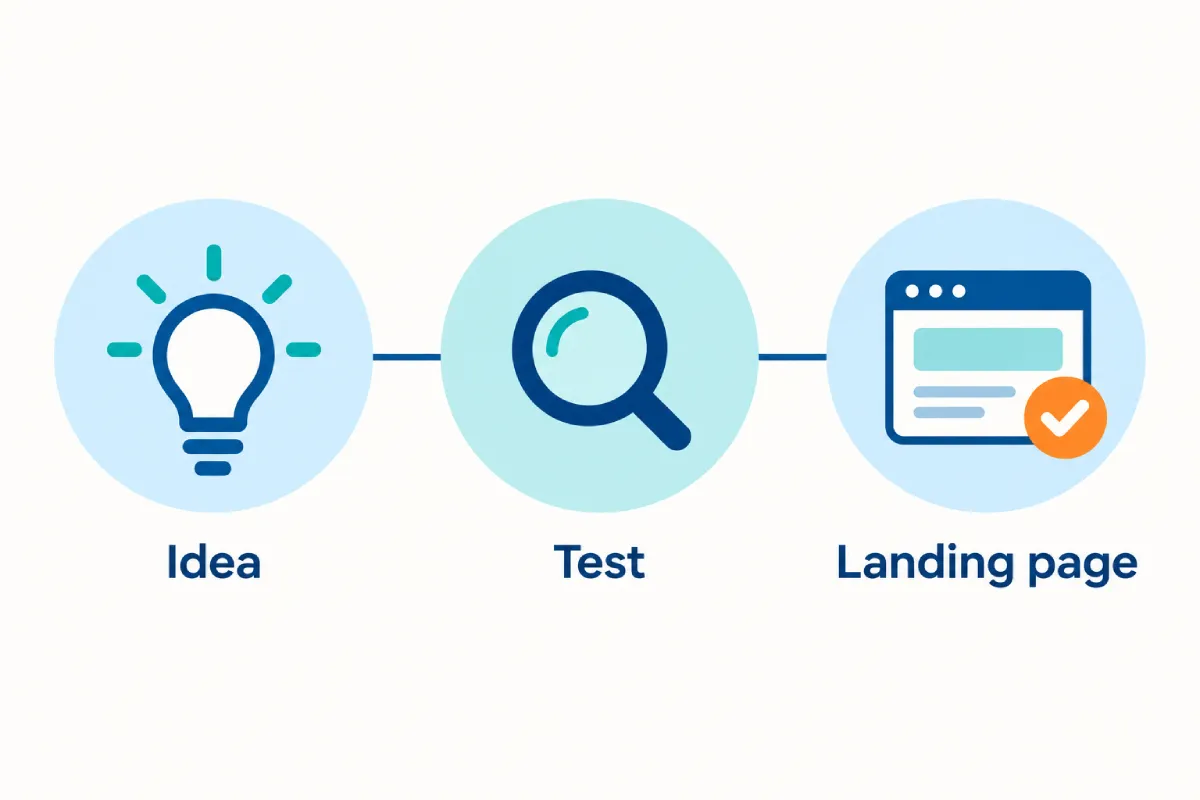
- Sharpen the idea: Ask an AI assistant to challenge your assumptions, define your target customer and list the single problem you solve.
- Start with a landing page: A simple page with a clear headline, a short explanation and one call to action (a waitlist or demo request) can be built in an hour.
- Keep v1 small: One problem, one audience, one action. Everything else can wait for feedback.
Step two: build the landing page or MVP with AI
Good results come from good prompts. Be specific about who the page is for, what the one goal is, and how it should look and feel. Iterate in small steps instead of requesting an entire product in one giant prompt: ask for the layout first, then the signup form, then the pricing section.
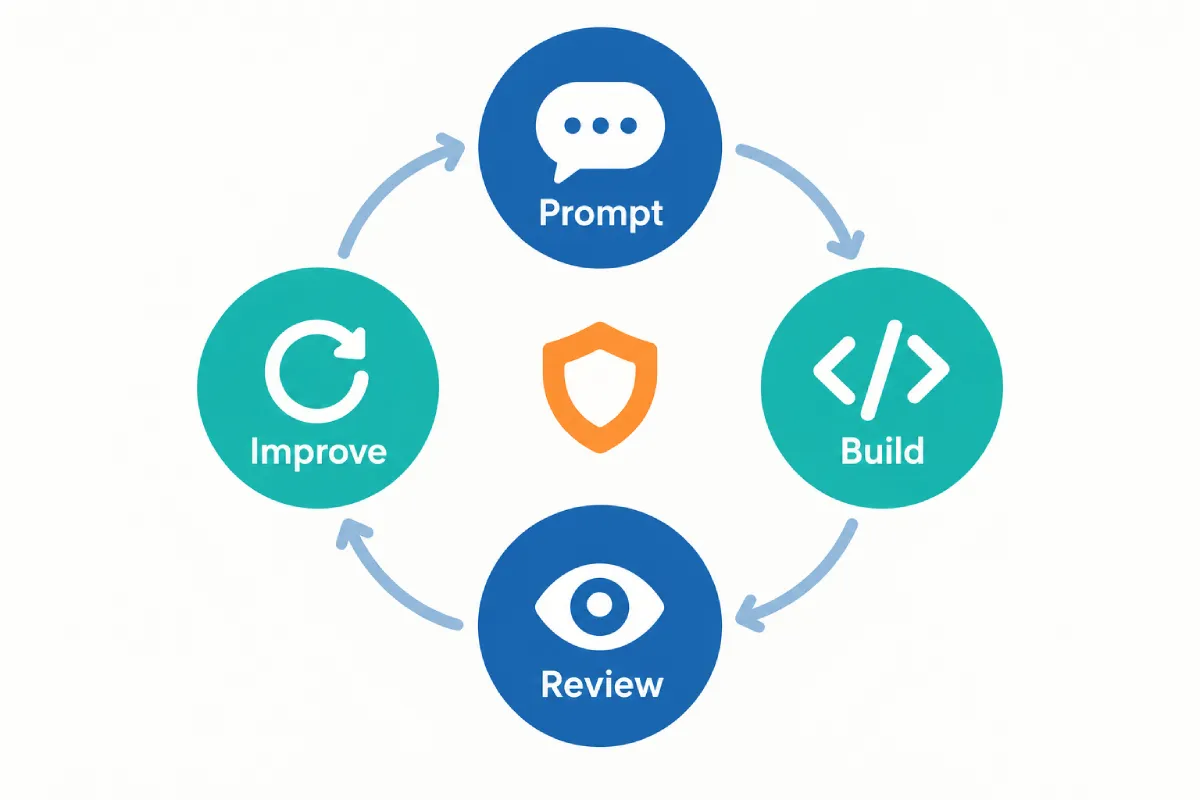
Most importantly, review what the AI gives you. Generated code can contain bugs, weak security and slow patterns. A quick pass over the logic, login flows and any place user data is stored is time well spent.
One May 2026 analysis, reported by cloud platform lowcloud, looked at about 380,000 apps built with tools like Lovable, Replit and Base44 and found roughly 5,000 reachable with no authentication at all, many holding sensitive data. Speed is only an advantage if what you ship is safe.
Step three: the gap nobody talks about, getting live
Here is where the excitement often fades. The app works on your laptop. The preview looks great. But a working localhost is not a product, because nobody else can open it.
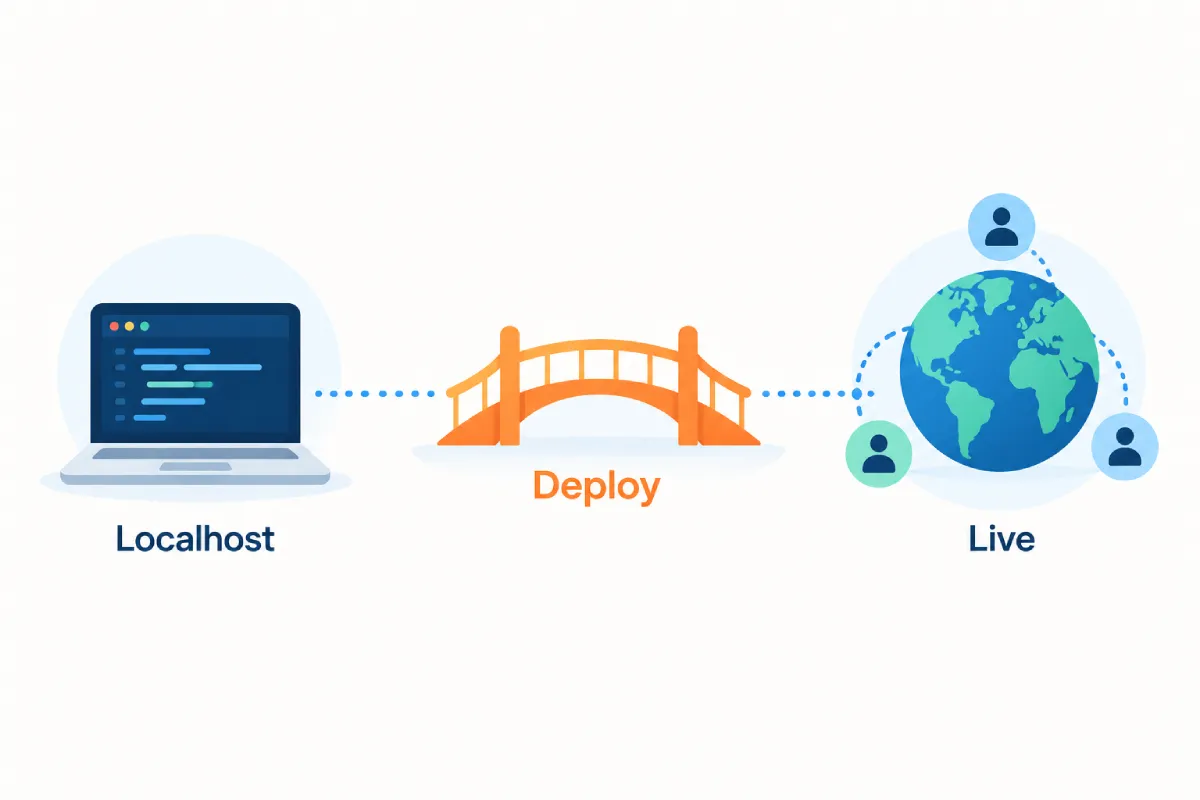
Going live means solving a list of unglamorous problems:
- Choosing hosting that can actually run your kind of app (a static page and a full-stack app with a database need different things).
- Moving secret keys and passwords out of the code and into environment variables.
- Connecting a custom domain and SSL, so visitors see a secure, professional address.
- Making sure the server runs the same versions of your tools as your computer does.
- Setting up a simple way to push updates, plus logs so you can see what breaks.
These are exactly the issues that make AI-generated apps work locally and fail in production. Typical culprits include hardcoded localhost addresses, missing environment variables and cross-origin (CORS) settings that were never updated for the live domain. Hosting guides from Superblocks and InstaWP list the same recurring causes.
You have a few routes. You can use the built-in publish button of your app builder, which is fast but ties you to that ecosystem. You can configure a cloud server yourself, which gives control but demands DevOps knowledge most founders do not have. Or you can use a agentic AI deployment platform that automates the heavy lifting.
Kuberns is one example of that third route.You connect your GitHub repository and the platform detects your tech stack, sets up the environment and deploys without Docker files or YAML pipelines. It also handles scaling, monitoring and rollbacks, and it supports front ends, back ends, databases and background workers in one workflow.
For a founder who built the product with an AI agent and has no DevOps team, that removes the step where momentum usually dies.
Whatever you choose, judge a platform on three things: how little setup it needs, whether it can grow with you, and how clearly it shows you what is happening after launch.
Step four: get to real users
Once your app has a live address, the real work starts. Do not wait for a perfect launch.
- Soft-launch first: Share with a small group of friends, colleagues or early supporters and watch how they use it.
- Go where your audience already is: That might be a niche community, a LinkedIn post, a founder group or direct outreach to ten ideal customers.
- Collect feedback and ship small updates: Fast fixes are the whole advantage of AI-assisted building, and easy deployment means a change can reach users the same day.
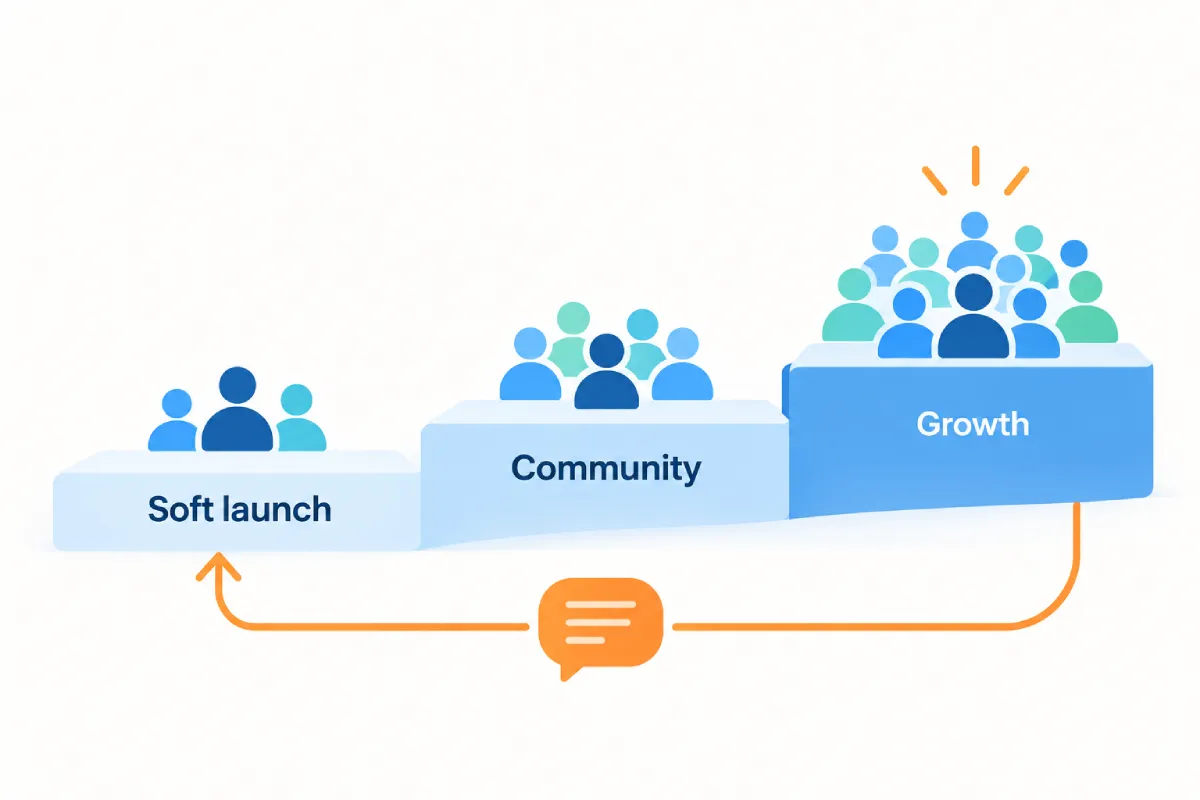
Hosting costs for small projects are usually modest while your audience is small, so there is little reason to delay. A live app with five users teaches you more than a polished app with none.
Common mistakes to avoid
- Skipping testing because AI wrote the code: Always click through the full user journey on the live site, not just the preview.
- Overbuilding before talking to users: More features rarely fix a lack of demand.
- Ignoring monitoring after launch: Without logs and alerts, you will hear about outages from angry customers instead of your dashboard.
- Leaving security for later: Check authentication, protect secrets and keep production data separate from test data.
Conclusion
AI has made it possible for one person to build in a weekend what once took a team months. The founders who win are not just those who build quickly, but those who get live quickly, learn from real users and keep improving.
So build with the AI tools you like, validate early, deploy with as little friction as possible, and put your product in front of people this week. The best app is the one your customers can actually use.


Leave a Reply