

Populating Your eCommerce Theme: Why Content Quality is the Final UX Frontier
Installing a premium WordPress or Magento theme is one of the most satisfying moments in any web build. You import the demo data, assign your brand colors, upload a high-resolution logo, and suddenly, your blank domain transforms into a stunning, retina-ready digital storefront. The typography is crisp, the mega-menus glide perfectly, and the mobile responsiveness is flawless.
But then the real work begins. You realize that behind those beautiful layout blocks and placeholder images lies the daunting task of writing actual content. For an online store, this doesn’t just mean a snappy homepage headline; it means drafting hundreds of unique product descriptions, detailed category pages, and comprehensive shipping policies. Faced with this massive bottleneck, many site owners and agency developers instinctively turn to generative text models to instantly fill the void. However, while this solves the immediate layout problem, pasting raw, algorithmic text into a high-end theme creates a jarring disconnect for the user. To preserve the premium feel of your storefront, you have to intentionally humanize ai outputs so that your carefully designed user interface isn’t dragged down by cheap, robotic copy.
The Friction Between Premium Design and Sterile Copy
When a shopper lands on an eCommerce site, they make snap judgments based on visual design within milliseconds. A high-performance theme builds instant credibility. But once that initial visual hurdle is cleared, the user starts reading to validate their trust. This is where automated content usually falls apart.
Generative models rely on statistical probability, meaning they default to the safest, most generic adjectives available. If you sell custom leather boots, an automated description will likely tell the buyer that the boots are “a revolutionary, high-quality solution for footwear.” It won’t mention the smell of the leather, how long the break-in period takes, or how the sole grips a wet sidewalk. When a beautifully designed product page is paired with hollow, hyperbolic text, the user experience breaks. The shopper immediately senses that the merchant didn’t care enough to accurately describe the product, which inevitably leads them to question the quality of the product itself.
Beyond user trust, search engines are increasingly hostile toward mass-produced, thin content. Google’s algorithms are actively filtering out repetitive product pages that offer no unique value beyond the manufacturer’s basic specifications. If your beautiful new store is populated entirely by predictable synthetic text, you will struggle to rank organically, no matter how fast your pages load.
Upgrading the Content Staging Workflow
Writing every single SKU from scratch isn’t a scalable reality for most small businesses or development agencies. Automation is absolutely necessary; it just needs to be managed correctly within the staging environment.
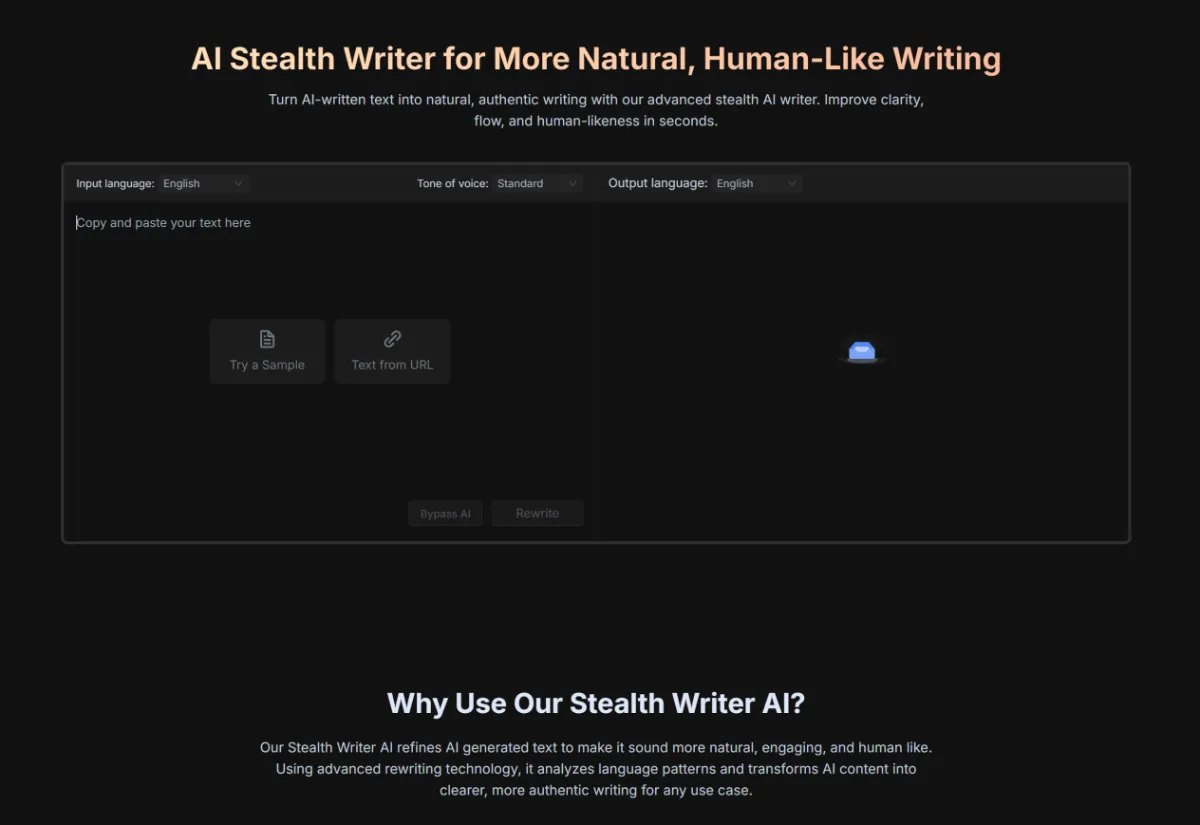
Instead of treating automated text as final publishable copy, modern web teams are integrating specialized content refinement tools directly into their pre-launch workflows. Think of it like image optimization. You wouldn’t upload a 5MB raw image file to your hero banner without compressing it first. Similarly, you shouldn’t upload raw synthetic text to your live database without refining its structure. By incorporating an AI Stealth Writer like BypassGPT into the content pipeline, developers and store managers can systematically strip away the unnatural phrasing of generative text. These platforms act as a structural bridge, breaking up monotonous sentence lengths, removing predictable transitional filler, and introducing the varied pacing that characterizes natural human speech. This allows you to rapidly populate your store’s database without sacrificing readability.
Practical Steps for Launching Better Copy
To ensure your new website’s messaging matches its visual excellence, adopt these practical content habits before taking your site live:
1. Anchor with Specific Variables Before processing your text, inject hard data. If you are generating a category page for outdoor gear, manually add the specific weight of the item, the exact fabric blend, and a realistic use-case scenario. When the refinement tool processes the draft, it will weave these concrete facts into a natural narrative, eliminating the vague fluff that typically plagues automated writing.
2. Optimize for Scannability Online shoppers do not read; they scan. Premium themes offer incredible layout tools—use them. Break up dense, AI-generated paragraphs by utilizing the icon boxes, accordion toggles, and feature lists built into your theme. Ensure your text varies in length, using short, punchy sentences for primary benefits and longer sentences for technical specifications.
3. Inject the “Founder’s Voice” Automated tools cannot invent your company history. On crucial pages like your “About Us” or “Brand Story,” you must mandate human intervention. Add an anecdote about why the store was founded, complete with the messy, authentic details that algorithms simply cannot replicate.
Completing the Digital Experience
A successful eCommerce launch requires a seamless marriage of form and function. Investing in a highly optimized, conversion-focused theme is the foundation, but the words that fill those templates are what ultimately persuade a visitor to pull out their credit card.
The integration of advanced refinement tools isn’t a shortcut to tricking algorithms; rather, it is a workflow enhancement designed to respect the end user. Ultimately, the objective of producing undetectable ai content is simply to remove the cognitive friction that robotic text causes. When you take the time to refine your automated drafts, you ensure that your brand’s unique voice shines through, delivering an engaging, trustworthy shopping experience that perfectly matches the quality of your web design.


Leave a Reply