
Room-by-Room Biophilic Plant Plans: Which Low-Maintenance Species Work Best Where
Key Takeaways:
- Matching the right plant to the right room — based on light, humidity, and function — is the core strategy that separates thriving biophilic spaces from neglected ones.
- Research shows that simply adding plants to a bare workspace can boost productivity by 15%, making the home office one of the highest-ROI rooms for biophilic investment.
- The NASA Clean Air Study confirms plants can filter harmful VOCs like benzene and formaldehyde, though real-world impact scales with the number of plants and ventilation conditions.
- Different rooms call for different plant traits: bedrooms need calm, low-light species like peace lilies; kitchens benefit from practical picks like herbs and aloe; bathrooms suit humidity-loving ferns and orchids.
- Low-maintenance doesn’t mean no-maintenance — success comes from starting small with one or two well-chosen plants and building from there, rather than overcommitting.
You’ve probably heard the buzz about biophilic design by now — bringing nature indoors to make your home feel calmer, healthier, and just… better. But here’s the thing most people get wrong: they treat it like a vibe, not a strategy. They buy a fiddle-leaf fig because it looks great on Instagram, stick it in a dark corner, and wonder why it’s dropping leaves two months later.
Here’s the truth: matching the right plant to the right room is what separates a thriving indoor jungle from a graveyard of good intentions. And the science behind why it works? That’s the part that really makes the case for going green — room by room.
Let’s break it down.
Why Biophilic Design Actually Works (The Data Behind the Trend)
Before we get room-specific, let’s talk about why this whole thing is worth doing in the first place — because the evidence is genuinely compelling.
A widely cited study out of the University of Exeter, conducted across commercial office spaces in the UK and the Netherlands, found that workers in environments that had been enriched with plants showed a 15% jump in productivity compared to those in bare, stripped-down “lean” spaces. Employees also reported better air quality, improved focus, and higher overall job satisfaction. That’s not a marginal improvement — that’s the difference between a good day and a frustrating one.
And it doesn’t stop at productivity. Back in 1989, the NASA Clean Air Study revealed that indoor plants do more than just swap carbon dioxide for oxygen — certain species were found to filter out harmful airborne chemicals including benzene, formaldehyde, and trichloroethylene, all of which show up regularly in everyday household items like furniture and building materials. Now, it’s worth being honest here: later research has pointed out that you’d need a lot of plants to replicate those results in a typical home with normal ventilation. But the underlying principle — that plants interact with the air around them in meaningful ways — still holds, and it’s a good reason to be thoughtful about which species you place where.
The takeaway? Plants aren’t just decoration. They influence how we feel, how we work, and the quality of the environment around us. That’s the whole backbone of biophilic design — and why it pays to be intentional about your choices.
If you want a solid foundation before diving into the room-by-room breakdown, it’s worth exploring which low-maintenance species are best suited to biophilic interior design — that guide covers the broader principles and gives you a strong starting shortlist to work from.
The Living Room: Your Statement Space
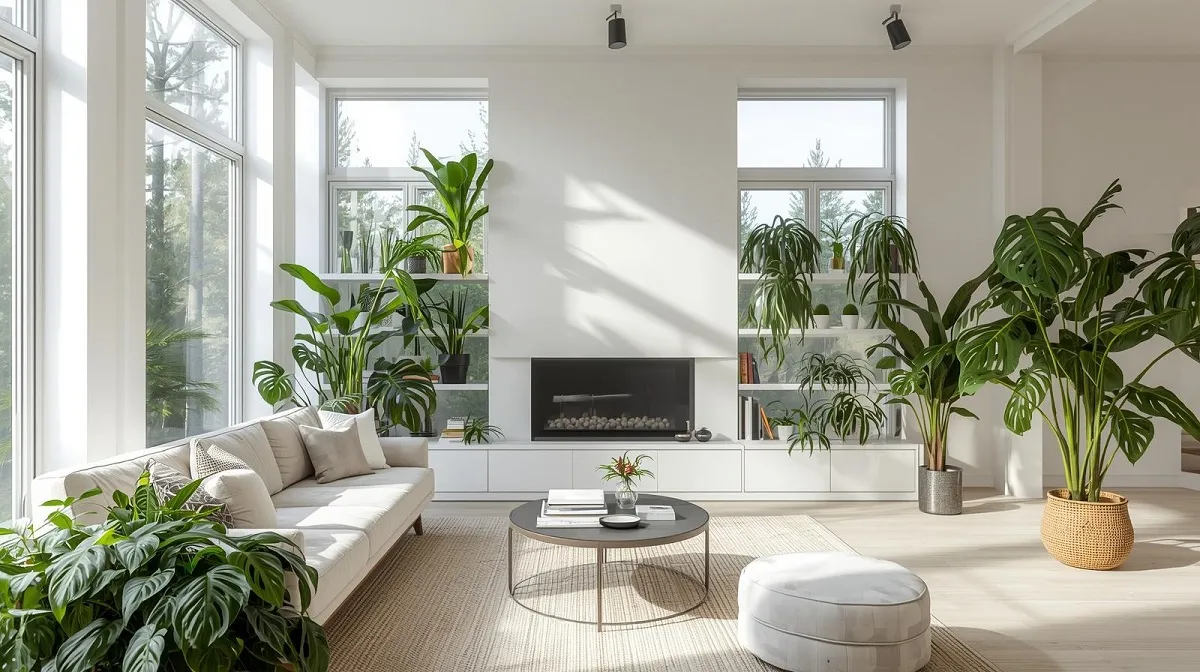
The living room is where biophilic design gets to flex. It’s a high-traffic, socially active space, which means plants here aren’t just visual — they’re actually part of how the room feels to be in.
What Works Here
You want something with visual impact that doesn’t demand daily attention. The snake plant (Sansevieria trifasciata) is practically indestructible — it thrives in low to bright indirect light, tolerates irregular watering, and has a clean, structural look that suits modern and traditional spaces alike. The pothos is another living room workhorse: it trails beautifully from shelves or hangs in corners, handles low light surprisingly well, and bounces back from the occasional forgotten watering.
For something with a bit more presence, a ZZ plant (Zamioculcas zamiifolia) adds a glossy, lush look without asking much in return. It’s drought-tolerant, adapts to low light, and genuinely looks like it costs three times what it does.
Placement Tip
Living rooms often get bright but indirect light through large windows. Keep your statement plants near — but not directly in — that light zone. Direct sun through glass can scorch leaves fast.
The Bedroom: Calm Over Drama
Sleep environments are all about reducing stimulation, so the plants you choose here should lean into that. Forget anything high-maintenance or visually chaotic.
What Works Here
The lavender plant is the obvious call — its scent has genuine relaxing properties, and it prefers sunny windowsills, which many bedrooms have. That said, it does need decent light and relatively dry conditions, so it’s not for every bedroom.
If your bedroom is on the darker side, go for a peace lily (Spathiphyllum). It’s one of the few flowering plants that genuinely thrives in low light, and it has a gentle, soft aesthetic that fits a restful space. It will even droop slightly when it needs water, which sounds annoying but is actually one of the most honest communication strategies in the plant world.
Spider plants are another bedroom favourite — they’re non-toxic (important if you have pets or kids), incredibly forgiving, and they produce little “spiderettes” that can be propagated into new plants, which is a satisfying bonus.
Placement Tip
Avoid placing plants directly on a nightstand where you might knock them over in the dark. A dresser top or a windowsill keeps them out of reach while still doing their atmospheric work.
The Kitchen: Practical Meets Decorative
The kitchen is where biophilic design gets to be genuinely useful. This is the one room where edible and herb plants make total sense — you get the visual benefit and the practical one.
What Works Here
A small pot of basil on a sunny windowsill is the classic move. It smells incredible, it’s edible, and it grows fast enough that you feel rewarded for paying attention to it. Just know that basil does need consistent warmth and light — it won’t survive a cold draught.
Mint is even easier and arguably more resilient, though it will try to take over if you let it. Keep it in its own pot and trim it regularly. Kitchens with a west-facing window are ideal.
For something purely decorative, pothos makes another appearance here — it’s happy trailing down from a high shelf near the cooker, tolerates the humidity fluctuations that kitchens produce, and won’t wilt if you forget to water it during a busy week.
Aloe vera is also worth considering in the kitchen specifically because of its first-aid value — a snapped leaf can soothe a minor burn almost immediately, and it’s basically impossible to overcare for if you keep it in a bright spot and water it sparingly.
Placement Tip
Avoid putting plants directly above the hob. Steam and heat spikes aren’t kind to most species. A windowsill or open shelf on the opposite wall is the sweet spot.
The Home Office: Focus and Flow
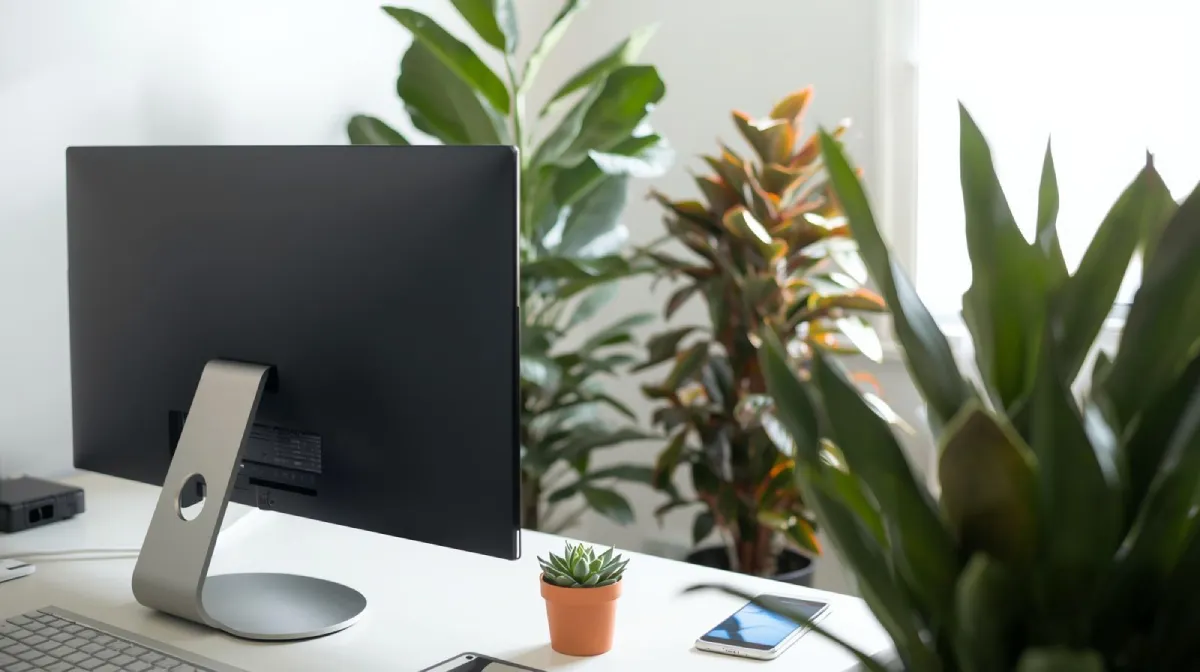
Here’s where that University of Exeter productivity data really lands. If there’s one room in the house where you have a clear, measurable reason to add plants, it’s your workspace.
The study found that even simply introducing greenery to a previously bare desk environment was enough to shift how workers felt and performed — and that’s in a commercial office context. In a home office where you have full control over the environment, the potential is even greater.
What Works Here
Desk-sized succulents are the obvious low-effort choice — they sit quietly, don’t need much water, and provide a small but consistent visual anchor. But if you want something with more presence, a rubber plant (Ficus elastica) in the corner of the room adds a bold, structured look without demanding much. It prefers indirect light and moderate watering, which suits most home office conditions.
The Chinese evergreen (Aglaonema) is another excellent pick — it tolerates low light, comes in a range of leaf colours from deep green to reddish-pink, and is genuinely forgiving of irregular watering. It’s the kind of plant that looks like you’re good at this stuff, even when you’re not.
Placement Tip
Position plants where they’re in your peripheral vision while you work, not directly behind your monitor. Research suggests that visual access to greenery — even at the edges of your field of vision — contributes to reduced mental fatigue.
The Bathroom: Humidity Heroes
Most people ignore the bathroom when it comes to biophilic design, which is a missed opportunity. Bathrooms are often warm and humid — conditions that many tropical plants absolutely love.
What Works Here
Ferns are the obvious choice. Boston ferns and maidenhair ferns both thrive in humid environments with indirect light, which describes most bathrooms pretty accurately. They’re lush, full, and give a genuinely spa-like feel to the space.
Orchids are worth considering if your bathroom gets reasonable light. They’re often seen as fussy, but in the right conditions — warm, humid, with bright indirect light and weekly watering — they’re actually quite reliable. And few plants match them for visual elegance.
For lower-light bathrooms, devil’s ivy (golden pothos) is reliable as ever. It doesn’t care much about light levels and actually appreciates the extra humidity.
Placement Tip
Keep plants away from direct shower spray. Consistent drenching is different from ambient humidity, and most plants prefer the latter.
A Few Final Notes on Making It Stick
The room-by-room approach works because it aligns the needs of the plant with the conditions of the space, rather than forcing either one to compromise. The plants that survive and thrive are the ones that belong where they’re placed.
A few principles worth keeping in mind:
Light is everything. Before you buy any plant, figure out the light situation in the room — direction, intensity, and duration. Most plant problems trace back to wrong light, not wrong care.
Low-maintenance doesn’t mean no-maintenance. Even the most forgiving plants need occasional watering, repotting, and dusting. The goal is reducing friction, not eliminating it entirely.
Start small. One or two well-chosen, well-placed plants will do more for a room than ten mediocre ones scattered around. Biophilic design is about quality of connection with nature, not quantity.
The science is clear: plants make us feel better, focus more sharply, and create environments that are genuinely more pleasant to live in. The room-by-room approach is simply the most effective way to get there — and to keep getting there without burning out on the maintenance.
Start with one room, one plant, one good spot. Then build from there.


Leave a Reply