

The Best KYB Software for Regulated Teams in 2026
Most KYB software solves a data problem. Very few solve the work problem.
That distinction matters because the bottleneck in business onboarding is rarely access to a registry. It is an analyst spending three hours pulling corporate documents, resolving a four-layer ownership structure across two jurisdictions, checking whether the business actually operates, then writing a rationale that will survive an audit.
Buy a data aggregator and that analyst still does all of it. This guide covers what separates KYB platforms in practice, eight options worth evaluating and how to test one before you commit.
What actually separates KYB platforms
First, separate two things that get sold as one. A KYB data provider supplies company information. KYB software orchestrates the process around that data, covering checks, policy logic, review routing and the evidence record.
Feature lists converge fast among the software providers. Almost every vendor claims registry coverage, UBO mapping and screening, so the differences show up in five places.
Where the data lands. Pulling from twelve providers is useless if your team reconciles the outputs by hand. Ask whether the platform normalizes registry, vendor and CRM data into one record, or just presents them side by side.
Who can change the workflow? If a threshold adjustment requires a vendor ticket or an engineering sprint, your policy will lag your risk. Configurability by the compliance team is a commercial question, not a technical one.
What the AI actually does. Document extraction and ownership resolution are genuinely well suited to AI. Final risk decisions are not. Look for tools that separate the groundwork from the judgment and support configurable human-in-the-loop review at whatever stage your policy requires.
What auditability looks like in practice. A regulator will ask how a decision was reached, and every agent action and policy decision needs to be traceable. If the answer lives across three systems and a Slack thread, you have a problem with no amount of automation fixes.
How ownership complexity is handled. Layered entities, nominee structures and cross-border chains are where onboarding stalls. Test with your hardest real case, not the vendor’s demo company.
1. Dotfile
Built for: global business verification where jurisdictional breadth is the constraint.
Dotfile connects to data providers across 200 or more jurisdictions and auto-routes to the best source per country, with access to over 400 million companies and support for 3,000-plus document types. It runs AI agents in parallel on tasks like screening, document checks and ownership tracing, resolving straightforward cases quickly and escalating complex ones with an audit trail. Verification strategy is editable by business users without engineering involvement.

Worth checking: a jurisdiction count is not the same as depth. Test the specific markets that matter to you, because registry quality varies widely between them.
2. Alloy
Built for: banks and fintechs that want identity decisioning and onboarding risk infrastructure in one layer.
Alloy is positioned as identity decisioning and risk infrastructure rather than a KYB specialist, which suits teams treating business onboarding as one decision type among several.

Worth checking: if corporate onboarding and UBO resolution are your primary workload rather than consumer identity, ask how the KYB layer is sourced and how much of the ownership work it resolves without help.
3. Fenergo
Built for: large banks running full client lifecycle management, where KYB is one stage inside a much longer regulated process.
Fenergo is positioned as enterprise client lifecycle management, covering onboarding through ongoing lifecycle events for large banks.
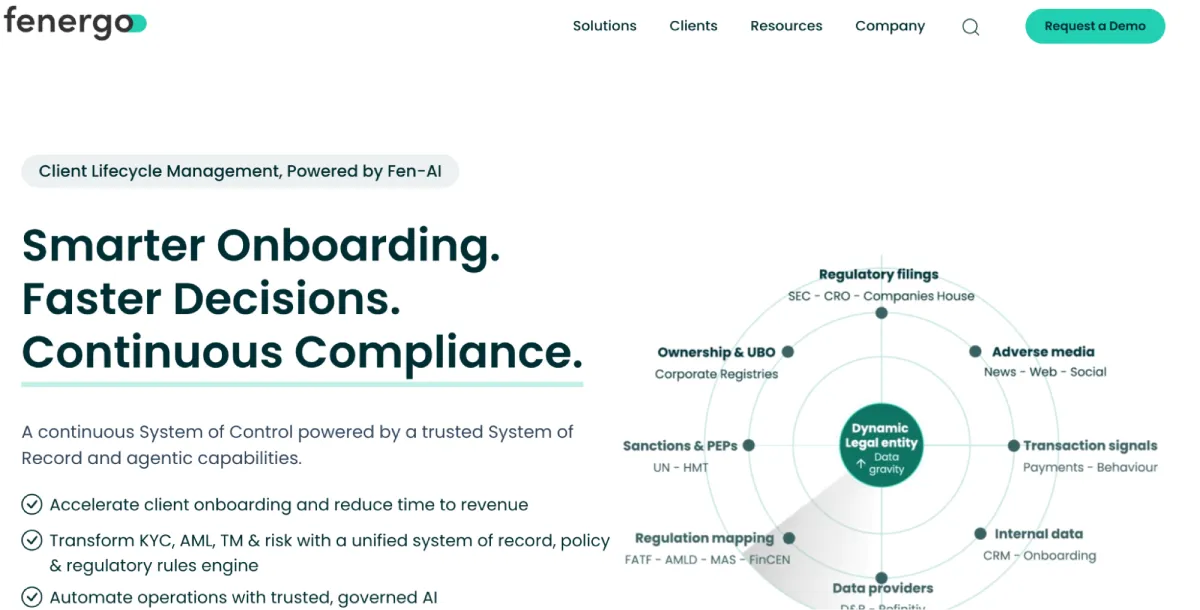
Worth checking: platforms at this tier are usually a program rather than a project. Ask for a realistic timeline and the internal resourcing required before comparing it with lighter platforms on price alone.
4. spektr
Built for: regulated teams that want configurable KYB workflows plus AI agents doing the analyst groundwork, with oversight kept where policy requires it.
spektr frames the category around a distinction worth testing: that most tools in this space aggregate KYB data and leave the process design to you. Its spektr KYB Onboarding is a workflow engine that verifies companies, maps ownership and orchestrates checks end to end, unifying dozens of international and local registries, KYB vendors and CRM systems into a single source of truth.
The AI layer is where the work problem gets addressed. Purpose-built agents including KYB AI, Doc Review AI and Website Checker AI enrich company profiles, review documents and flag anomalies, returning structured outputs and analyst reviews rather than assemblies. UBOs, layered entities and cross-border ownership are identified and verified automatically, with approvals or manual review routed based on the result.

Two things stand out for compliance buyers specifically. Workflows are no-code and configurable by the compliance team, which removes the engineering dependency that makes policy changes slow. And review gates are configurable at any stage, so the platform reduces repetitive manual work without moving the decision away from a person.
The governance credentials are unusually specific. spektr holds ISO 27001:2022, ISO 27701:2019, SOC 2 Type II attestation and ISO/IEC 42001:2023, the AI management system standard, with all data located in the EU and handled by EU-based staff.
Customers living on the platform include Pleo, Santander Leasing, Mercuryo, Nexi, Phantom, Monta and kompasbank. The company reports a 65 percent improvement in KYB conversion and completeness.
Worth checking: spektr was founded in 2023 and raised a $20 million Series A in April 2026, so it is a younger platform than the enterprise CLM incumbents here. Its spektrQ embedded specialist support model is also announced rather than long-established. If procurement weights vendor tenure heavily, factor that in.
5. Taktile
Built for: teams that already think in decision logic and want KYB to sit inside a broader automated decisioning layer.
Taktile comes from decision automation and has extended into KYB and KYC workflows, which suits teams that want onboarding decisions running on the same infrastructure as their other automated decisions.
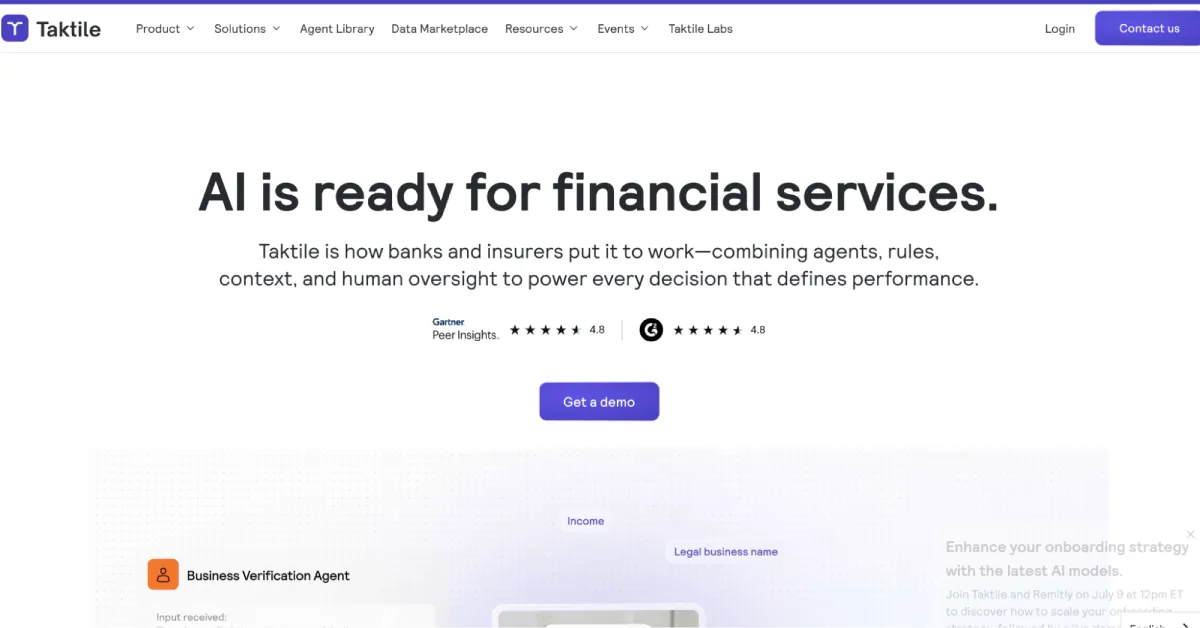
Worth checking: ask how much KYB-specific data orchestration and ownership resolution comes built in, versus logic you assemble on top of providers you source yourself.
6. Ondorse
Built for: teams that want policy expressed as code, with governance built into the onboarding flow.
Ondorse runs policy as code inside a no-code builder, auto-approving clean cases and auto-escalating on risk while orchestrating registries. Governance is a stated focus, including rule versioning and approvals, data lineage, role-based access, regional data residency and immutable audit trails. It serves banks, insurers and payment companies.

Worth checking: ask how ownership discovery performs against thin registries in your markets, since that is where KYB conversion usually breaks down.
7. Bits
Built for: Nordic-focused teams needing regional KYB and AML depth.
Bits is positioned around KYB and AML for fintechs with a Nordic concentration, which is worth weighing if most of your corporate customers sit in that region.
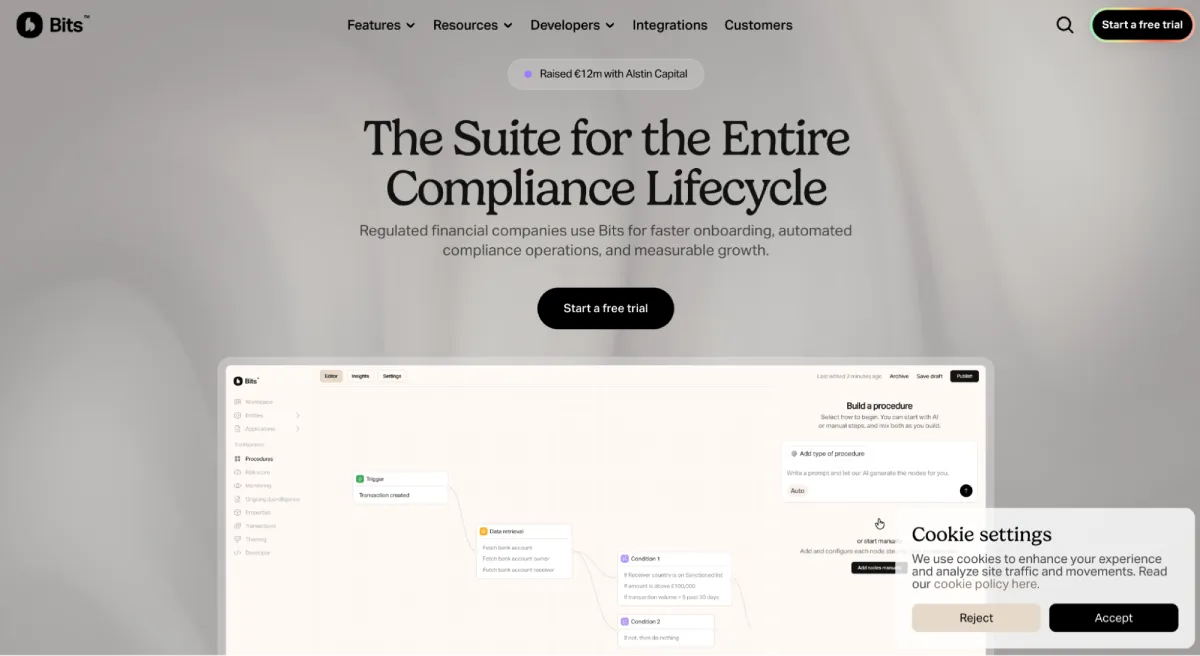
Worth checking: regional focus is an advantage inside the region. Ask about coverage if your expansion plan crosses out of it.
8. Strise
Built for: analytics-led AML work where the priority is risk assessment quality over onboarding UX.
Strise pulls from thousands of registries, maps ownership structures and scores risk so analysts spend their time on decisions rather than collection. A partnership with Signicat added identity verification to the stack.
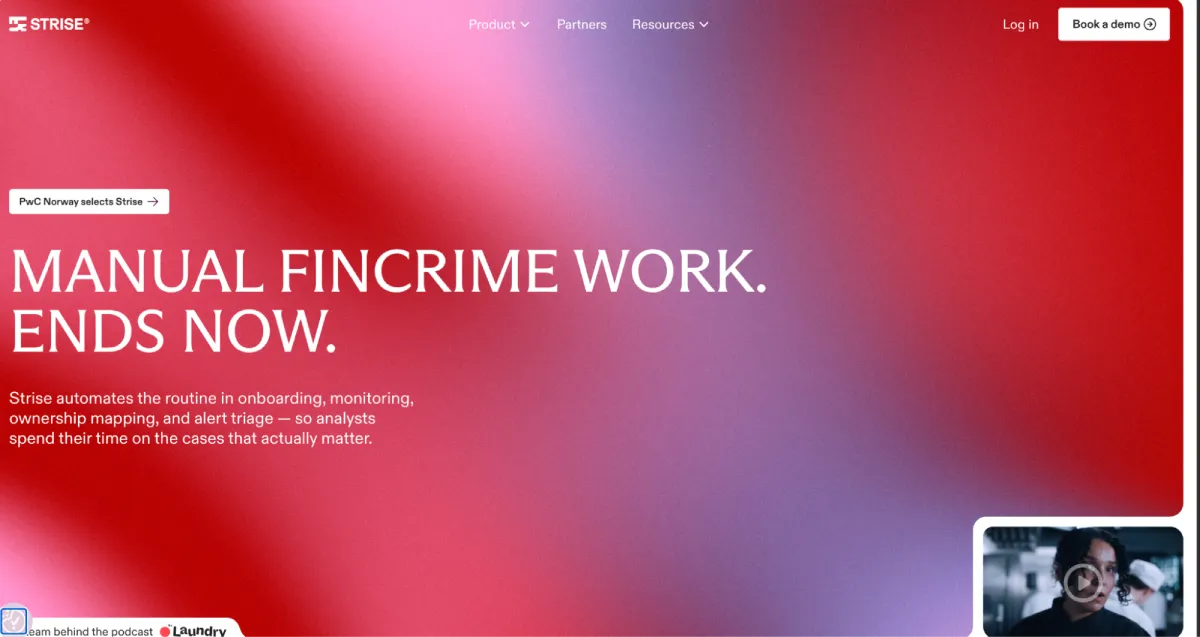
Worth checking: it leads with analytics rather than onboarding orchestration, so confirm how the customer-facing onboarding flow and case handover work against your process.
The AI governance question you cannot defer
If you operate in the EU, AI used in compliance decisions now sits inside a settled timeline rather than a proposed one.
The Digital Omnibus on AI was approved by the European Parliament on 16 June 2026 and the Council on 29 June 2026. It moved high-risk obligations for stand-alone Annex III systems from 2 August 2026 to 2 December 2027, and obligations for AI embedded in regulated Annex I products to 2 August 2028.
Three points matter for anyone buying KYB tooling now. Credit scoring is a named Annex III domain, so financial services teams should not assume the high-risk regime sits elsewhere. The obligations themselves did not change, only the dates, and they cover risk management systems, technical documentation, logging, human oversight and conformity assessment.
And the relief is narrow. The Article 4 AI literacy duty has applied since 2 February 2025, general purpose AI obligations have applied since August 2025, and most Article 50 transparency requirements still land on 2 August 2026.
The practical read is that logging, explainable decision records and documented human oversight are worth building into your selection criteria now. A vendor holding ISO/IEC 42001 is not a compliance guarantee, but it does indicate the AI management side has been independently examined.
How to pilot a KYB platform properly
Two to three weeks on one workflow tells you more than a quarter of demos. Set the measurement up before you start.
- Time to decision on straightforward cases and on your hardest ownership structures, measured separately
- False positive rate and how much analyst time each one consumes
- Applicant drop-off through the business onboarding flow
- Straight-through processing rate, with the review gates your policy actually requires switched on
- Audit export time, meaning how long it takes to produce a complete evidence record for one case
- Configuration test, where your compliance team changes a threshold without vendor help
Run your genuinely difficult cases through it. Every platform performs well on a single-director UK limited company, and none of your escalations look like that.
If you run a PSP or a marketplace where merchant onboarding and payment processing sit in the same operational flow, include those risk signals in the pilot so the test reflects how the team actually works.
Choosing between them
The right platform depends on which problem is actually costing you. If it is registry coverage, a data-led orchestration tool solves it. If it is lifecycle governance across a Tier 1 bank, enterprise CLM earns its implementation cost.
If it is analyst hours spent on document review, ownership mapping and writing rationales, then the question is which platform automates that groundwork while leaving the decision and the audit trail intact.
FAQ
What is the difference between KYB software and a KYB data provider?
A data provider returns registry and company information. KYB software orchestrates the process around it, including document checks, ownership resolution, policy logic, review routing and the evidence record. Buying the first and expecting the second is the most common mistake in this category.
Can AI make KYB decisions on its own?
It should not, and in a well-designed workflow it does not. AI handles extraction, ownership resolution, screening triage and case summaries, while people review exceptions and higher-risk cases. Configurable human review gates are what make the output defensible.
How do we handle complex ownership structures?
Test them during evaluation rather than after signature. Layered entities, nominee arrangements and cross-border chains are where onboarding time actually goes, so bring three real escalations to every vendor demo.
How often should business records be refreshed?
Use risk-based refresh cycles combined with event triggers. Changes in ownership, sanctions status or business activity should prompt review well before a fixed annual date arrives.
Does an ISO/IEC 42001 certification mean the AI is compliant?
No. It means the vendor’s AI management system has been independently certified against a recognized standard. That is useful evidence in a procurement review, not a substitute for your own governance work.


Leave a Reply